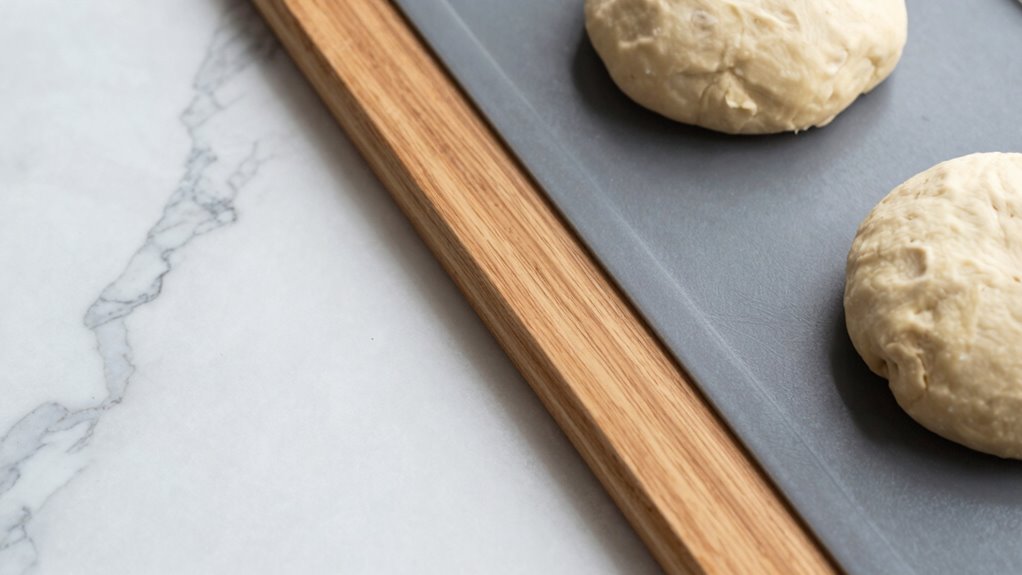
Choosing between marble, wood, and silicone for your dough affects temperature, stickiness, and handling. Marble keeps dough cool, slows gluten development, and produces firm, elastic textures but can be slick. Wood offers slight grip, absorbs moisture, and improves dough elasticity but needs careful cleaning. Silicone provides a non-stick, flexible surface that’s easy to clean and helps with rolling and shaping. Explore more to select the best surface for your baking needs.
Key Takeaways
- Marble’s high thermal conductivity keeps dough cool, slowing gluten development and maintaining elasticity, ideal for delicate pastries.
- Wooden surfaces’ porosity influences moisture transfer, affecting dough hydration, softness, and elasticity during handling.
- Silicone’s non-porous, flexible nature provides consistent dough feel, reduces sticking, and simplifies shaping and transferring.
- Marble requires gentle cleaning and careful handling to prevent damage, while silicone offers easy maintenance and durability.
- Surface choice impacts dough properties: marble stabilizes temperature, wood affects moisture absorption, silicone offers uniform handling.
How Marble, Wood, and Silicone Keep Dough at the Right Temperature
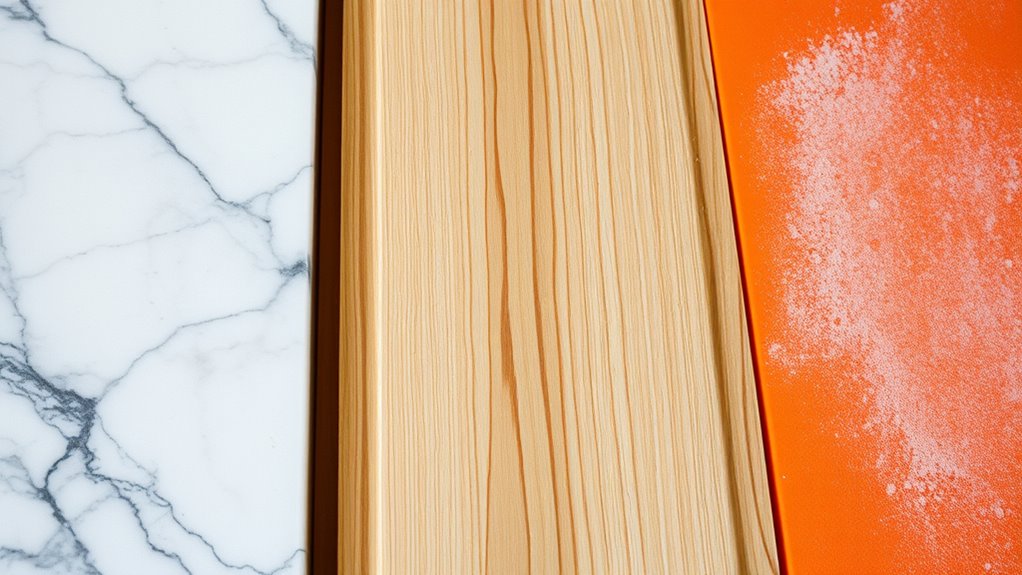
Have you ever wondered why certain surfaces are better for handling dough? It all comes down to how well they maintain the right temperature, which affects dough elasticity. Marble surfaces excel because they stay cool, helping prevent the dough from warming up and becoming too sticky. Their surface durability means they resist scratches and won’t warp over time, ensuring consistent temperature control. Additionally, proper surface sizing and load‑planning can maximize efficiency and prevent damage during use. Proper temperature regulation is essential for maintaining dough quality and consistency during preparation. Surfaces like marble are also favored for their thermal conductivity, which allows them to quickly absorb and dissipate heat, maintaining an optimal working environment. The material selection directly influences how effectively the surface can regulate temperature during dough handling. Understanding the thermal properties of different materials helps in choosing the best surface for specific needs. Wood, on the other hand, naturally insulates, offering a gentle, steady heat that keeps dough at ideal elasticity without sticking. Silicone provides an insulating layer too, though it’s less durable than marble or wood. It’s flexible and easy to clean, but may not withstand heavy use as well. Choosing the right surface hinges on how well it maintains temperature and its durability for long-term use.
How Surface Texture Affects Dough Stickiness and Handling

The texture of your working surface plays a crucial role in how easily dough sticks and how smoothly you can handle it. A rougher surface offers more grip, helping you control stickiness and prevent sticking issues, while a smoother surface minimizes adhesion, making handling more effortless. Your choice of surface texture directly influences stickiness control and ease of kneading. For example, a lightly textured wooden board can reduce dough’s tendency to stick without sticking too much, whereas a polished marble surface might require additional flour. Here’s a quick comparison:
| Surface Type | Texture Influence | Stickiness Control |
|---|---|---|
| Marble | Smooth, cool | Less grip, more slip |
| Wood | Slightly textured | Better grip, manageable stickiness |
| Silicone | Very smooth, flexible | Minimal stickiness |
| Glass | Very smooth | Difficult to control stickiness |
| Stone | Rougher, porous | Good grip, easier handling |
Choosing the right texture helps you manage dough’s stickiness and handling with confidence. Additionally, understanding electric dirt bikes can inspire alternative methods of sustainable energy, which may be useful for outdoor baking setups or camping trips. Moreover, using the appropriate surface can also help in reducing dough sticking issues, making your baking process more efficient. Proper surface selection can also influence the overall kneading experience, leading to better dough development and texture. Recognizing the importance of surface material can further enhance your baking results and workflow, especially when considering surface maintenance and durability over time.
How Marble’s Cool Surface Impacts Dough Temperature and Gluten

Placing dough on a marble surface can substantially influence its temperature and gluten development. Marble’s cool temperature helps keep the dough chilled, which slows down gluten formation. This is especially beneficial when working with delicate pastries or when you want to prevent overdevelopment of gluten that makes dough tough. The marble’s heat conductivity quickly absorbs heat from your hands or warm ingredients, maintaining a consistently low marble temperature. As a result, the dough remains cooler longer, allowing you to control the texture and elasticity more precisely. Additionally, marble’s thermal conductivity enhances its ability to regulate dough temperature effectively. This impact on temperature and gluten development makes marble ideal for tasks like lamination and delicate pastry work, where maintaining a cold environment helps achieve a tender, flaky crust. Its temperature regulation properties also contribute to more consistent results in various baking applications, especially when combined with proper insulation techniques to preserve the cold environment. Moreover, marble’s natural cooling capacity makes it a preferred choice for artisan bakers seeking precision in pastry textures.
How Wood Surfaces Influence Dough Feel and Moisture
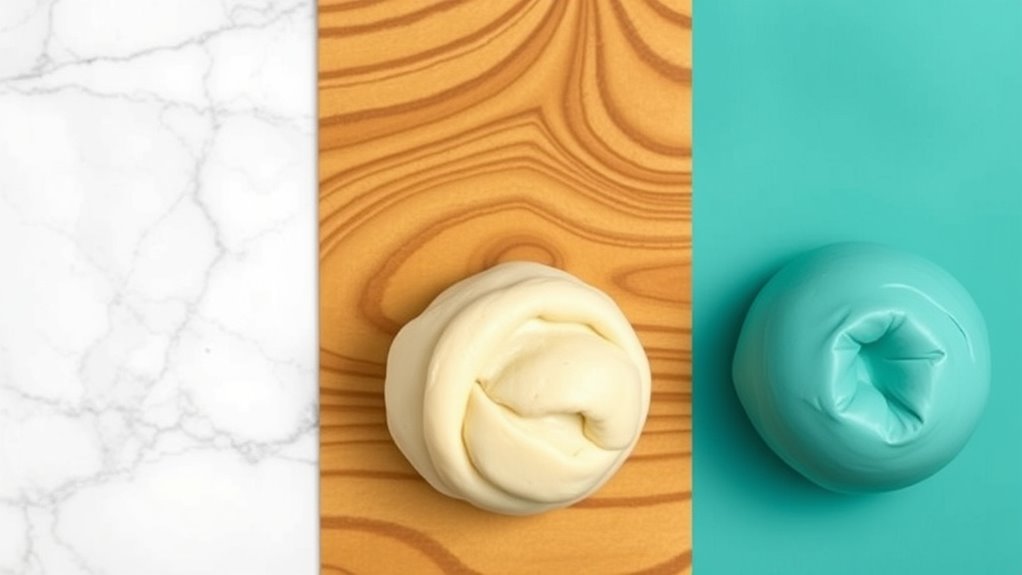
Wood surfaces naturally absorb some moisture from your dough, which can help improve its texture and elasticity. This moisture transfer influences how your dough feels during kneading and shaping. Understanding these properties allows you to choose the right wood surface for the perfect dough consistency. Additionally, surface absorption can vary depending on the type of wood, affecting how much moisture is transferred during use. Being aware of wood grain properties can help you select surfaces that best suit your baking needs. Recognizing the porosity of wood can further assist in selecting the ideal surface for different baking projects, as porosity levels determine how quickly and how much moisture is absorbed. Moreover, material characteristics play a crucial role in how a surface interacts with dough, impacting overall baking results.
Moisture Absorption Properties
Have you ever noticed how different surfaces affect your dough’s moisture and feel? Surface porosity plays a key role here. Wood’s porosity differences mean it can absorb moisture, altering dough hydration levels. Higher porosity surfaces tend to draw moisture away, leading to drier dough, while less porous ones retain more moisture. This absorption impacts how your dough feels and behaves during kneading. To illustrate, consider the following:
| Surface Type | Porosity Level | Effect on Moisture |
|---|---|---|
| Wood | Medium to High | Absorbs moisture, dries dough |
| Marble | Low | Minimal moisture absorption |
| Silicone | Very Low | No moisture absorption |
Understanding surface porosity helps you choose the right work surface for suitable dough consistency. In addition, Free Floating techniques can help you manage moisture levels by adjusting kneading and resting times for different surfaces. Recognizing the porosity differences of surfaces can also guide you in selecting materials that best suit the specific dough type you are working with.
Dough Texture and Feel
Since surface porosity affects how moisture interacts with your dough, it directly influences its texture and feel during mixing and kneading. A porous wooden surface absorbs some moisture, which can help control dough elasticity, making it feel softer and more pliable. This absorption prevents the dough from sticking excessively and encourages even kneading. In contrast, a less porous surface like marble offers minimal moisture absorption, resulting in a firmer, more elastic dough that resists sticking but may feel tougher. Silicone surfaces, with their non-porous nature, provide a consistent, smooth feel, allowing for predictable elasticity. Your choice of surface impacts how the dough responds during handling, affecting its moisture retention, elasticity, and overall tactile experience. Additionally, the material properties of each surface type influence how heat and moisture are transferred during working, further affecting dough behavior. Understanding the surface porosity helps in selecting the best surface for specific dough types and desired outcomes, especially when considering moisture control techniques for optimal results.
Why Silicone Mats Are Flexible and Non-Stick—and How They Help
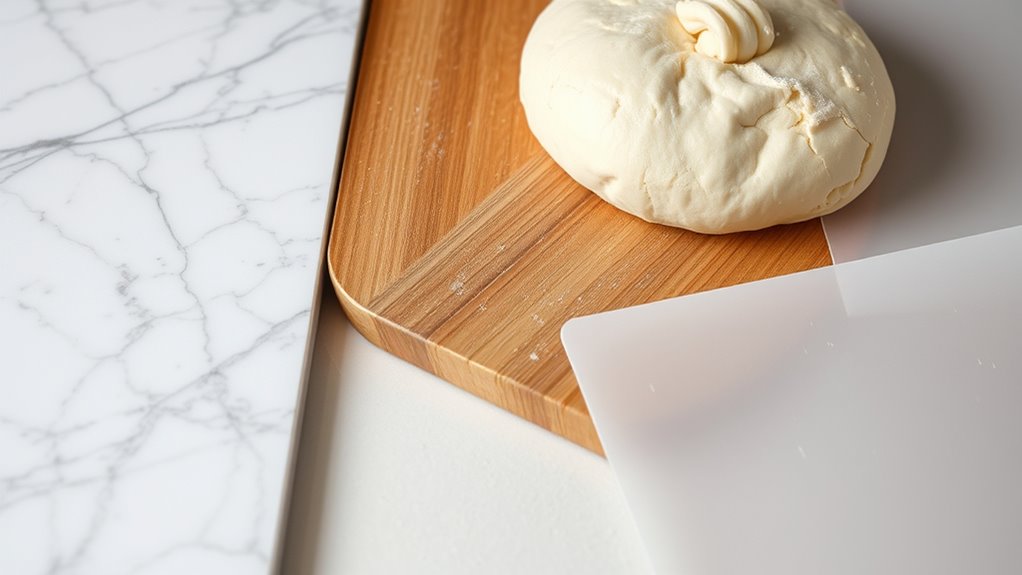
Silicone mats are a game-changer because they provide a non-stick surface that makes handling dough much easier. Their flexibility allows you to work on different shapes and sizes without hassle, and they can withstand high temperatures. These features help you achieve consistent results and simplify cleanup.
Non-Stick Surface Benefits
Ever wondered why silicone baking mats are so popular? Their non-stick surface offers clear advantages when working with dough. First, the non-stick coatings prevent dough from sticking, making cleanup easier and reducing the need for excess flour. Second, the surface durability ensures the mat withstands repeated use without degrading or peeling. Third, these mats promote consistent results by providing an even surface that won’t warp or crack. Fourth, their flexibility allows you to handle dough more easily, whether rolling or transferring. Overall, silicone mats combine the benefits of a non-stick surface with long-lasting durability, helping you work more efficiently and with less mess. This makes them a practical choice for both novice bakers and seasoned pastry chefs alike.
Flexibility for Easy Use
The flexibility of silicone baking mats makes them especially easy to work with, allowing you to handle dough more comfortably. Their pliability means you can easily lift, stretch, or reposition dough without cracking or tearing, thanks to their excellent dough elasticity. This flexibility also helps you roll out dough evenly without sticking, as the surface grip keeps the dough in place while you work. Unlike rigid surfaces, silicone mats conform to your movements, reducing strain and making tasks like shaping or cutting much simpler. Their non-stick nature combined with flexibility ensures you can manipulate dough smoothly, saving time and effort. Overall, silicone mats offer an adaptable surface that enhances your baking experience through superior dough elasticity and secure surface grip.
Temperature Resistance Features
Have you ever wondered how silicone baking mats can withstand high temperatures without losing their flexibility or non-stick qualities? Silicone mats are engineered for high surface durability, which helps preserve dough elasticity even under heat. Their temperature resistance features include:
- Tolerance up to 450°F (232°C), preventing warping or melting.
- Consistent non-stick surface, reducing dough sticking and tearing.
- Flexibility that remains intact after repeated use, aiding easy dough handling.
- Resistance to thermal expansion, maintaining shape and surface integrity over time.
This combination ensures your dough remains elastic and manageable, while the surface stays durable through heat cycles. Silicone’s temperature resistance enhances your baking experience, making it easier to work with dough without worrying about surface degradation.
How Easy Is It to Clean and Maintain Marble, Wood, and Silicone?
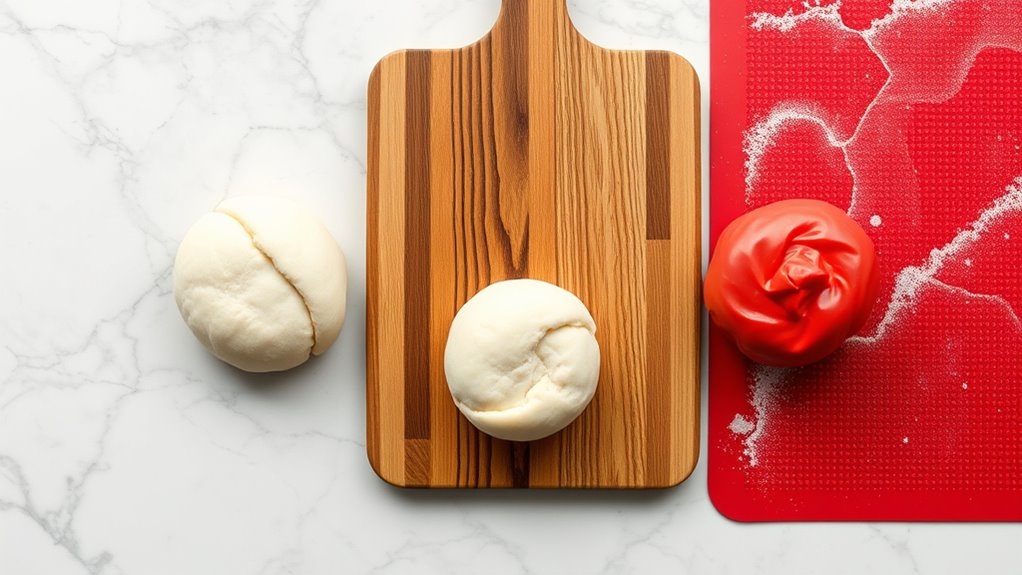
Cleaning and maintaining marble, wood, and silicone surfaces varies in ease, depending on their properties. Marble requires gentle cleaning with pH-neutral cleaners to prevent staining and etching. Regular wiping with a soft cloth and prompt spill cleanup are maintenance tips to keep it pristine. Wood surfaces need careful attention; avoid excessive water and use a damp cloth with mild soap. Periodic polishing helps maintain their appearance. Silicone, on the other hand, is highly easy to clean—simply wash with soap and water, and it resists stains well. Its non-porous nature makes maintenance straightforward. Overall, silicone offers the best cleaning ease, while marble and wood demand more careful upkeep to preserve their look and functionality.
What Are the Cost, Availability, and Eco Factors of Each Surface?
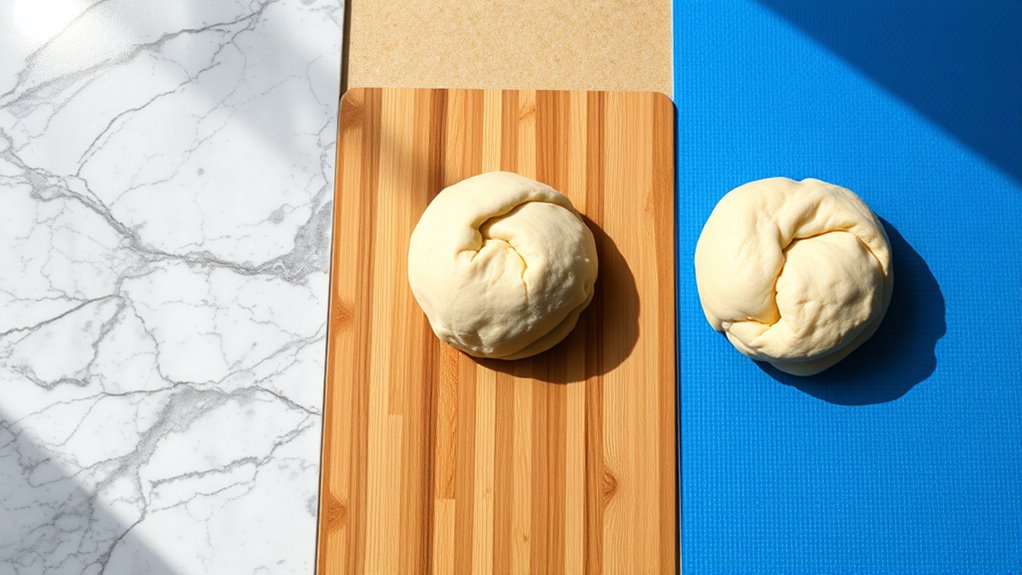
When comparing marble, wood, and silicone surfaces, their cost, availability, and eco impacts play a significant role in your choice. Your cost comparison reveals that silicone is usually the most affordable, while marble can be quite costly. Availability varies: silicone and wood are easy to find, but high-quality marble might be limited. Eco friendliness also differs: silicone is reusable and durable, making it eco-friendly over time. Wood is renewable but may involve deforestation concerns, and marble has a high environmental footprint due to quarrying. To summarize:
- Silicone: Low cost, high availability, eco-friendly when reused.
- Wood: Moderate cost, widely available, sustainable if sourced responsibly.
- Marble: High cost, limited supply, less eco-friendly.
- Overall, your choice hinges on balancing budget, accessibility, and eco considerations.
Practical Tips for Using Each Surface to Perfect Your Dough

To achieve a smooth, evenly textured dough, knowing how to work with each surface is essential. For marble, keep the dough cool and use gentle kneading to maintain dough elasticity. Lightly flour the surface to prevent sticking, but avoid excess flour dusting which can dry out your dough. On wood, apply moderate pressure, as its natural grain helps develop gluten structure. Flour dusting here is vital to prevent sticking without over-drying the dough. Silicone mats are flexible and non-stick, so minimal flour is needed; simply press and fold. Use the table below to guide your technique:
| Surface | Tip |
|---|---|
| Marble | Keep cool, gentle kneading, light flour dusting |
| Wood | Moderate pressure, develop gluten, dust lightly |
| Silicone | Minimal flour, press, fold, no sticking issues |
Frequently Asked Questions
Which Surface Type Is Best for Different Dough Types?
You should choose your surface based on dough type and your preferences. For delicate pastry dough, marble’s cool surface helps maintain texture differences, but it requires more maintenance to prevent staining. For bread dough, wood offers a traditional feel and good grip, though it needs regular oiling. Silicone is versatile, easy to clean, and ideal for sticky or versatile doughs, but it may not provide the same texture control as marble or wood.
How Do Surface Materials Affect Flavor Transfer?
You might think surface materials don’t affect flavor transfer, but they do. Marble’s cool surface can reduce dough sticking, yet it may absorb scents, leading to flavor contamination over time. Wood’s porous nature can also trap flavors, causing scent absorption and potential flavor transfer between batches. Silicone, being non-porous, minimizes scent absorption and flavor contamination, making it ideal for maintaining pure flavors. Picking the right surface guarantees your dough’s taste stays true.
Can Surface Choice Influence Dough Rising Times?
Yes, your surface choice can influence dough rising times by affecting dough temperature and moisture retention. A cooler surface, like marble, can slow down fermentation, while wood and silicone surfaces tend to retain warmth better, speeding up the rise. Moisture retention also varies; silicone surfaces help keep dough moist, promoting faster fermentation, whereas marble may draw moisture away, slightly delaying the process. Choose your surface based on your desired fermentation speed.
Are There Health Concerns With Any of These Surfaces?
Think of your kitchen surfaces as guardians of food safety and allergen concerns. With proper cleaning, marble, wood, and silicone are safe, but wood can harbor bacteria if not sanitized. Silicone is non-porous and easy to clean, reducing risks. Be mindful of allergens, especially if you use different surfaces for various ingredients. Ultimately, regular sanitation and careful surface choice safeguard your health and ensure safe, delicious baking.
How Durable Are These Surfaces Under Heavy Use?
You’ll find that marble, wood, and silicone surfaces vary in durability under heavy use. Marble can chip or scratch easily, requiring careful surface maintenance, especially to protect its temperature regulation. Wood is sturdy but may dent or crack with rough handling, needing regular upkeep. Silicone surfaces are highly durable, resisting damage from heavy use. Regular cleaning and mindful handling help maintain surface integrity across all options, ensuring they last longer.
Conclusion
Choosing the right surface can transform your baking experience. Marble keeps dough cooler, reducing stickiness and improving gluten development, while silicone mats offer unbeatable flexibility and non-stick ease. Did you know that over 60% of professional bakers prefer marble for precision? By understanding each surface’s benefits, you’ll craft better dough, save time, and enjoy baking more. Pick the one that suits your style, and watch your baking skills rise to new heights!