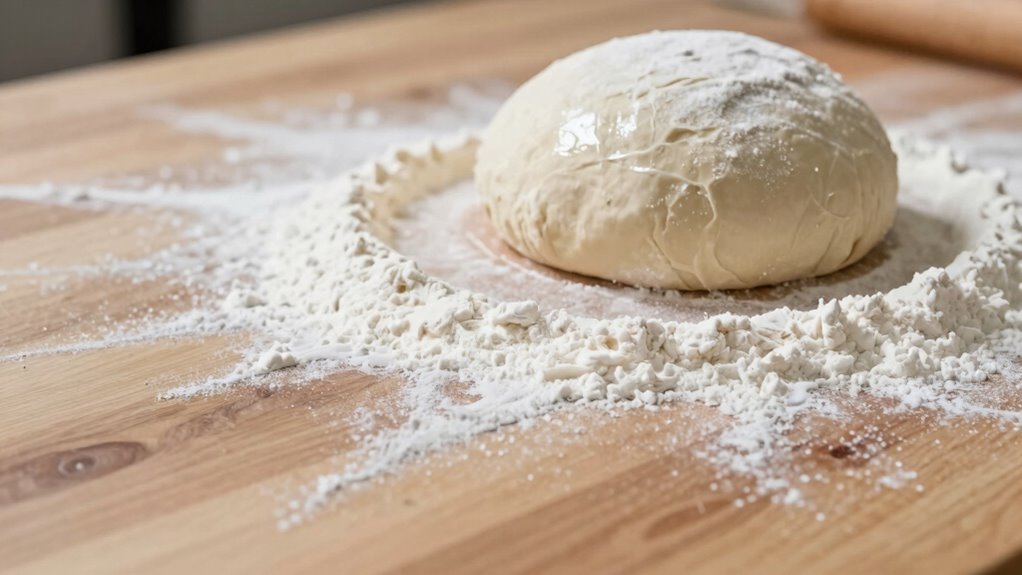

To prevent overflouring your counter and tough dough, use a light hand when dusting with flour—just enough to keep the dough from sticking, but not so much that it becomes stiff. Measure your flour carefully with a scale or spoon-and-level method to avoid adding too much initially. If the dough feels sticky, add a tiny bit more flour gradually. For more tips on perfect dough consistency, keep exploring the best techniques.

Get baking supplies delivered free with Prime
- Fast, free delivery on millions of items
- Prime Video, Amazon Music and more included
- Member-only deals all year
Key Takeaways
- Lightly dust your work surface with a small amount of flour to prevent sticking without overflouring.
- Use a gentle hand when sprinkling flour to avoid applying excess on your counter.
- Lift and fold the dough instead of adding more flour if it begins to stick.
- Measure flour precisely using a scale or spoon-and-level method to prevent unnecessary overflouring.
- Monitor dough texture regularly, adding minimal flour or water as needed to maintain ideal elasticity.

Overflouring your counter can make baking and dough handling more frustrating than necessary. When you add too much flour during the process, it impacts the dough’s texture, making it stiff, dry, and difficult to work with. To avoid this, it’s essential to focus on proper flour measurement and control how much you sprinkle onto your surface. Using too much flour not only toughens the dough but also makes it harder to achieve the desired consistency for your baked goods. The key is to use just enough to prevent sticking without overdoing it.
Start by measuring your flour accurately with a scale or using the spoon-and-level method. Weighing your flour is the most precise way to ensure consistency, especially if you’re aiming for a specific dough texture. If you don’t have a scale, spoon the flour into your measuring cup and level it off with a straight edge. Avoid scooping directly from the bag, as this can compact the flour and lead to over-measuring. Remember, the goal is to measure the right amount initially so you don’t need to add extra flour later.
When working on your dough, resist the temptation to sprinkle more flour onto the surface unnecessarily. Instead, lightly dust your work surface with a small amount of flour—just enough to keep the dough from sticking. Use a gentle hand; a little goes a long way. If your dough starts to stick too much, it’s better to lift and fold it rather than adding more flour. Overflouring can lead to a dense, tough dough, which can ruin the final baked product.
Pay attention to the dough’s texture during mixing and kneading. If it feels dry or crumbly, you might need a tiny splash of water or oil instead of extra flour. Conversely, if it’s sticky, a light dusting of flour should suffice. The goal is to achieve a dough that is smooth, elastic, and slightly tacky—not dry or overly sticky. This balance ensures an ideal dough texture that’s easier to handle and results in a better bake. Additionally, understanding the importance of color accuracy in your ingredients can help you better gauge the quality of your flour and other components for optimal baking results.
digital kitchen scale for baking
As an affiliate, we earn on qualifying purchases.
As an affiliate, we earn on qualifying purchases.
Frequently Asked Questions
What Is the Ideal Flour-To-Dough Ratio for Best Results?
You should aim for a flour-to-dough ratio of about 1:2 to guarantee ideal flour absorption and the right dough consistency. This balance prevents your dough from becoming too sticky or tough. Keep in mind, different flours absorb water differently, so adjust as needed. By maintaining this ratio, you’ll achieve a smooth, elastic dough perfect for baking without overflouring your surface or making your dough tough.
How Can I Tell if My Dough Is Too Tough?
If your dough feels very stiff and resists stretching, it’s likely too tough. Check its elasticity—if it snaps easily instead of bouncing back, it’s overworked. High flour absorption can cause this, making your dough dry and dense. To fix it, let the dough rest to relax the gluten, adding a splash of water if needed. Proper elasticity indicates a well-balanced dough, not too tough or overly stiff.
What Alternative Methods Can Prevent Sticking Without Overflouring?
Think of your dough surface as a delicate dance floor—too much flour and it’s stiff; too little and it sticks. To prevent sticking without overflouring, lightly oil or use parchment paper as a non-stick barrier. You can also dust your hands with a tiny bit of flour or cornstarch, or try a silicone baking mat. These flour alternatives help keep your dough smooth without turning it tough or dry.
Does Type of Flour Affect Overflouring Tendencies?
Yes, the type of flour affects your overflouring tendencies. Flours with higher gluten content, like bread flour, can be stickier and more prone to overflouring due to their sticky, elastic texture. Conversely, low-gluten flours, like pastry or cake flour, have a finer, softer texture and are less likely to cause overflouring. Choosing the right flour based on its gluten content helps you manage flouring better and prevent tough dough.
How Does Overflouring Impact the Final Baked Product?
Overflouring can reduce dough elasticity by making it too stiff, leading to a dense final product. Did you know that excess flour absorption can weaken gluten structure, resulting in a tougher texture? When you use too much flour, it hampers proper kneading and stretching, affecting the rise and crumb. To prevent this, use just enough flour to prevent sticking, allowing your dough to develop ideal elasticity for a light, airy bake.
flour sifter and measuring tools
As an affiliate, we earn on qualifying purchases.
As an affiliate, we earn on qualifying purchases.
Conclusion
To keep your dough tender and your counter from becoming a flour battlefield, remember, less is often more. Use just enough flour to prevent sticking, but don’t go overboard. Overflouring can turn your dough tough and your baking less enjoyable. Stay attentive and trust your instincts—balance is key. After all, you don’t want to throw good flour after bad. With a little practice, you’ll master the art of gentle handling and keep your baking sweet and successful.
As an affiliate, we earn on qualifying purchases.
As an affiliate, we earn on qualifying purchases.
Fall Picks
fall essentials
As an affiliate, we earn on qualifying purchases.