Kneading works best when you need a strong, elastic dough quickly, great for shaping firm breads like baguettes or sourdough. Stretch-and-fold is ideal for delicate, high-hydration doughs, offering gradual gluten development and better flavor. If you’re short on time, kneading speeds things up; for longer fermentation, stretch-and-fold supports a lighter, more flavorful crumb. To find out which method suits your bread best, explore the details that follow.
Key Takeaways
- Kneading quickly develops a strong gluten network, ideal for bread requiring immediate shaping and elasticity.
- Stretch-and-fold is gentler, perfect for high-hydration or delicate doughs needing gradual gluten development.
- Use kneading for time-efficient recipes with lower hydration doughs; stretch-and-fold suits long fermentation and flavor complexity.
- Kneading accelerates fermentation and crumb structure, while stretch-and-fold enhances flavor and dough extensibility over time.
- Choose kneading for quick, robust doughs; opt for stretch-and-fold to control fermentation, improve flavor, and handle high-hydration doughs.
What Are Kneading and Stretch-and-Fold? A Quick Guide
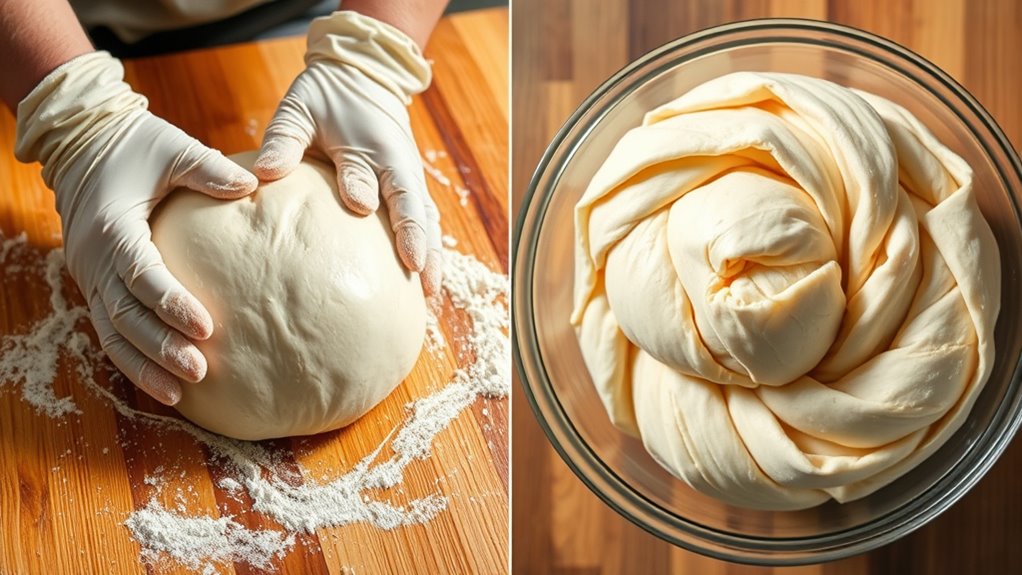
Have you ever wondered how bakers develop gluten in bread dough? It’s a vital step that influences fermentation control and flavor enhancement. Kneading involves pushing and folding the dough to strengthen gluten networks, giving bread its structure. This active process helps to align gluten strands, resulting in a more elastic dough ideal for shaping. Stretch-and-fold, on the other hand, is a gentler technique where you periodically stretch the dough and fold it over itself during fermentation. This method improves gluten development without overworking the dough, which can preserve delicate flavors. Both techniques aim to create a strong gluten framework, but each offers different benefits depending on the recipe. Understanding these methods helps you control fermentation and optimize flavor, ensuring your bread turns out perfectly every time. Additionally, choosing the appropriate technique can impact fermentation speed, making it a crucial consideration for bakers.
When Should You Knead Your Dough? Key Scenarios and Benefits
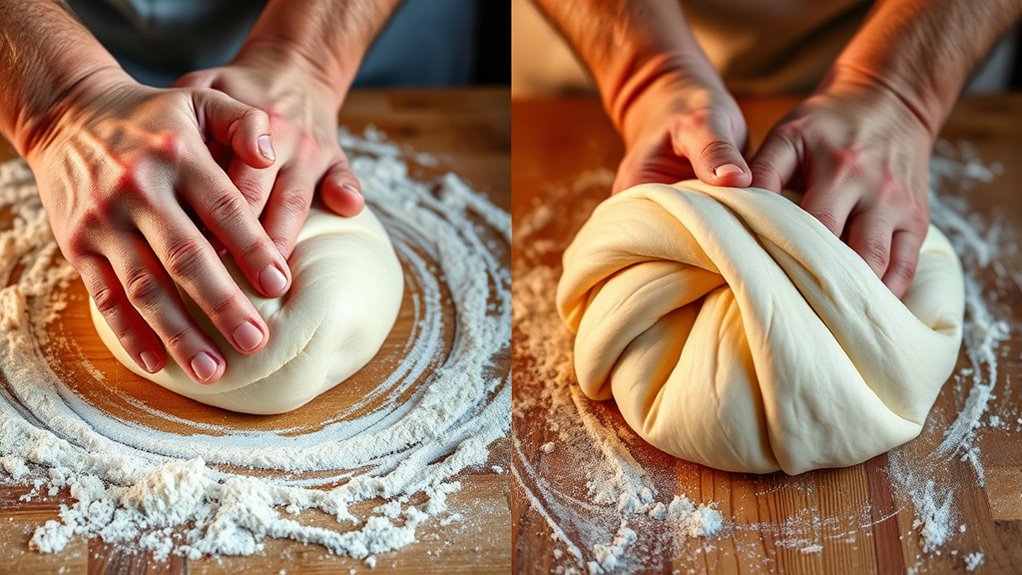
Knowing when to knead your dough can make a significant difference in the final bread quality. Typically, you should knead when your dough is in the early stages of dough fermentation, to develop gluten structure and guarantee proper rise. If you’re using ingredient substitution, such as replacing part of the flour with whole grains or alternative flours, kneading helps incorporate these changes evenly. Kneading is especially beneficial when you want a strong, elastic dough that retains its shape during proofing. It’s also ideal when working with recipes that require a sturdy gluten network, like baguettes or sourdough. Timing your kneading process correctly ensures maximum gluten development, improves dough strength, and results in a better crumb and texture in your final bread.
When Is Stretch-and-Fold the Better Choice? Top Situations and Advantages
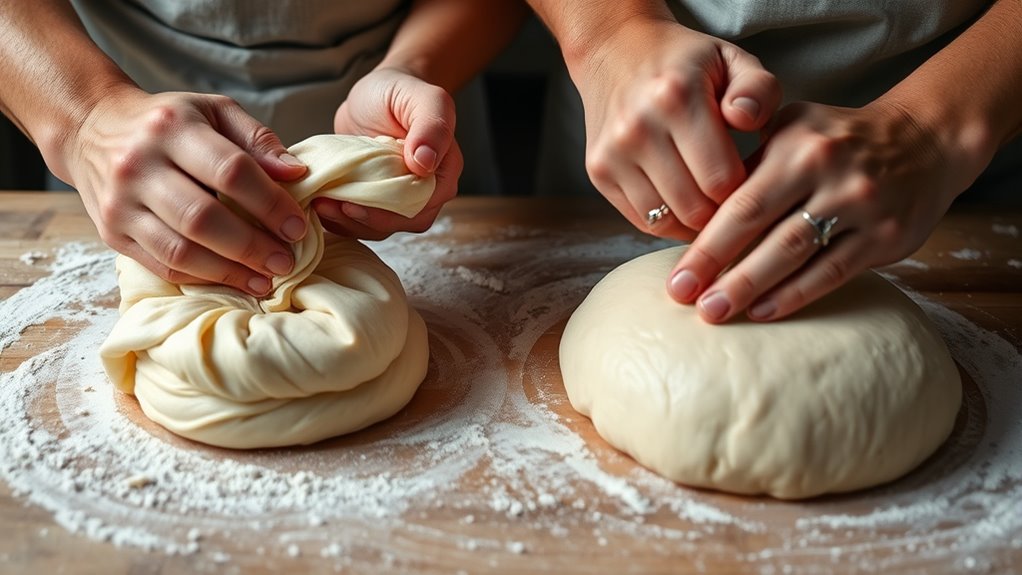
Stretch-and-fold is ideal when you want gentle dough handling that preserves its structure. It’s especially useful for no-knead bans or recipes that benefit from minimal manipulation. This method helps you achieve a well-developed gluten network without overworking the dough.
Gentle Dough Handling
Gentle dough handling becomes especially important when working with delicate or high-hydration doughs. These doughs are more prone to tearing and overworking, which can compromise gluten structure. Using stretch-and-fold techniques allows you to handle the dough delicately, reducing the risk of damaging the gluten network. This method is also effective for maintaining proper dough hydration levels, preventing excess moisture loss during shaping. Additionally, gentle handling supports fermentation control by minimizing unnecessary stress on the dough, allowing yeast activity to proceed smoothly. When you want to preserve the dough’s delicate texture and guarantee even fermentation, stretch-and-fold becomes your best option. It offers a controlled, gentle approach that’s ideal for achieving excellent results with sensitive or high-hydration batters.
Better For No-Knead Bans
When working with no-knead bread recipes, the choice between kneading and the stretch-and-fold method can considerably influence your results. Stretch-and-fold is often better when you want to control dough temperature and fermentation speed, especially if you prefer a gentler approach. It allows slower fermentation, which enhances flavor and gluten development without overworking the dough. This method is ideal if you want to avoid high dough temperatures that can accelerate fermentation too quickly. The table below highlights key advantages:
| Situation | Benefit |
|---|---|
| Long fermentation required | Gentle gluten development, flavor enhancement |
| Sensitive to dough temperature | Better control over fermentation speed |
| No-knead ban restrictions | Effective alternative for gluten development |
Additionally, the stretch-and-fold technique promotes optimal gluten development, leading to a better crumb structure in your bread.
How Do Kneading and Stretch-and-Fold Compare? Time, Effort, and Gluten

Kneading generally takes more time and effort, but it quickly develops gluten and creates a smooth dough. Stretch-and-fold, on the other hand, is less demanding but requires multiple sessions to build strong gluten. Understanding these differences helps you choose the best method for your schedule and desired bread texture. Additionally, the hydration level of your dough can influence which technique is more effective. For example, dough hydration impacts the extensibility and elasticity, affecting how each method performs.
Time Investment Differences
While both kneading and stretch-and-fold techniques require time and effort, they differ considerably in how they impact your schedule. Kneading typically takes a consistent, steady effort upfront, which can accelerate fermentation speed due to better dough elasticity. Stretch-and-fold, on the other hand, involves shorter, more frequent sessions spread over several hours, allowing you to fit it into a busy day. Imagine:
- Timing a quick knead to jump-start gluten development, speeding up fermentation.
- Pausing between stretch-and-folds, giving the dough time to relax and develop strength gradually.
- Checking dough consistency, noticing how each method influences elasticity and rise. Overall, kneading is more time-intensive initially but speeds fermentation, while stretch-and-fold spreads the effort, making it more flexible for your schedule. Additionally, understanding the free floating natural processes involved can help you choose the method that best suits your baking style.
Effort Required Levels
Both kneading and stretch-and-fold require effort, but they differ markedly in how demanding they are. Kneading involves continuous, vigorous motion, which increases dough elasticity quickly and can be physically tiring. It’s a hands-on process that demands sustained effort, especially with denser doughs. In contrast, stretch-and-fold is gentler and spread out over longer periods, requiring less immediate effort but more patience. While it takes less force at each step, you’ll perform multiple folds during fermentation, gradually developing dough elasticity. This method can be less tiring overall, but it may extend fermentation time. Your choice depends on your strength and schedule. Both techniques influence gluten formation differently, but effort levels mainly impact your comfort and energy during dough handling.
Gluten Development Effect
Since gluten development is essential for good bread structure, understanding how kneading and stretch-and-fold influence this process is crucial. Kneading quickly builds gluten networks through constant manipulation, shortening fermentation timing but risking overworking the dough. In contrast, stretch-and-fold gently encourages gluten formation over longer periods, promoting better flavor development. Imagine:
- Kneading as a vigorous workout that rapidly strengthens gluten but may compromise delicate flavors.
- Stretch-and-fold as a series of gentle lifts, gradually enlarging gluten networks.
- The longer fermentation with stretch-and-fold yields a more complex flavor profile, while kneading speeds up the process.
Ultimately, your choice affects both gluten development and fermentation timing, shaping the bread’s texture and depth of flavor.
Want to Master These Techniques? Essential Tools and Tips
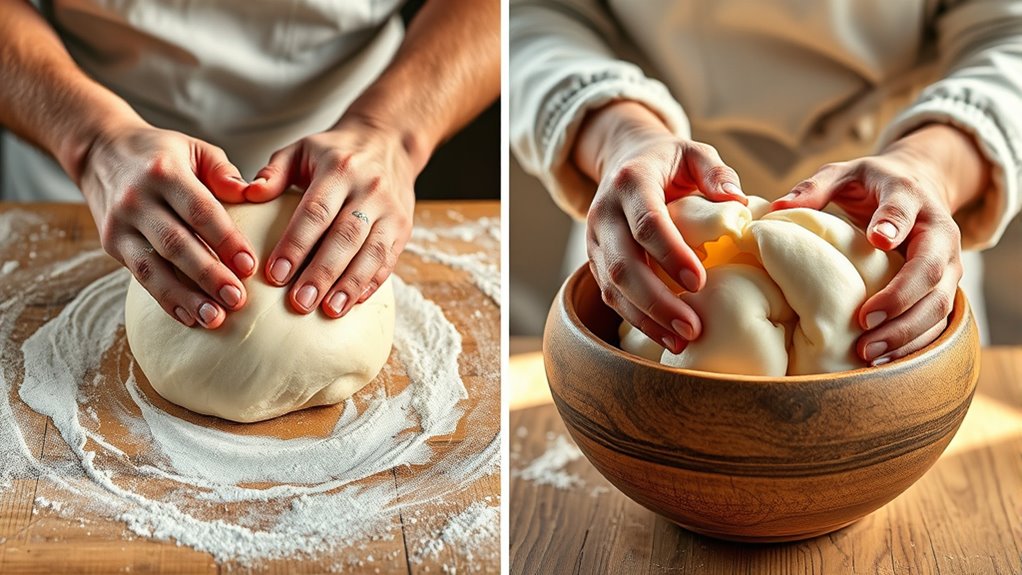
To effectively master kneading and stretch-and-fold techniques, having the right tools and tips can make all the difference. Invest in a sturdy bench scraper and a flexible dough scraper to handle the dough efficiently during shaping and folding. Using a digital scale ensures precise measurements, which is essential for artisan techniques rooted in baking science. Keep your workspace clean and lightly floured to prevent sticking without over-dusting, preserving dough elasticity. Temperature control is also key: use a thermometer to monitor dough and ambient conditions, optimizing fermentation. Watch tutorials from experienced bakers for practical insights, and practice patience—these techniques become more intuitive over time. With the right tools and a solid understanding of baking science, you’ll improve your skills and craft better bread every time.
Unsure Which Method Fits Your Bread? How to Pick the Right Technique
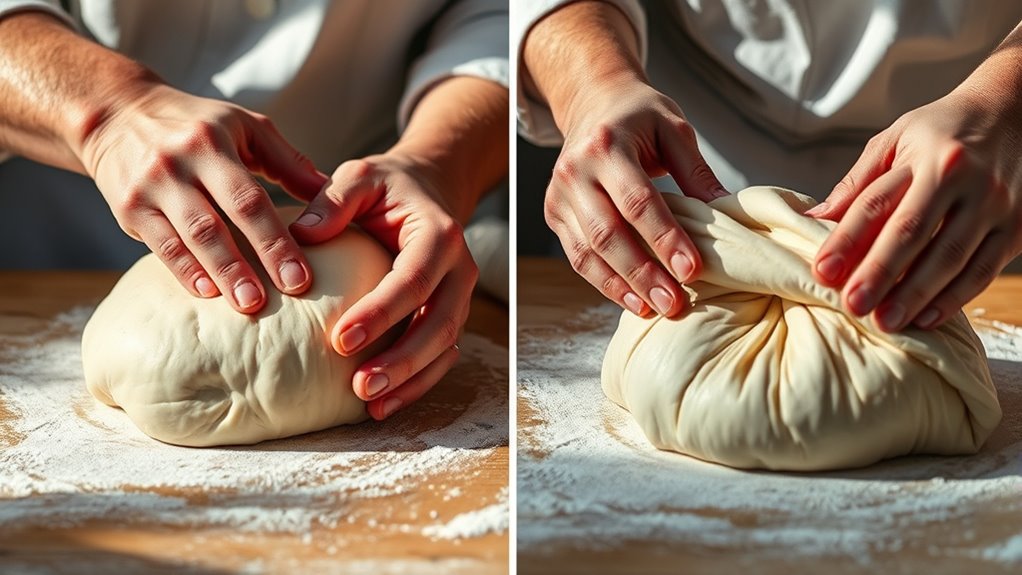
Choosing the right technique for your bread starts with understanding how kneading and stretch-and-fold methods influence the dough’s final texture and structure. If your dough has high hydration, stretch-and-folds often work better because they gently develop gluten without overworking it. For lower hydration doughs, kneading can be more effective, building strength quickly. Consider fermentation timing: if your dough needs longer fermentation, stretch-and-folds allow for better gluten development over time, enhancing flavor and structure. Proper gluten development is essential for achieving the ideal crumb and crust. Imagine these scenarios:
- A sticky, wet dough transformed smoothly with gentle stretch-and-folds.
- A firm, manageable dough kneaded thoroughly for a quick rise.
- A dough that benefits from slow fermentation, where gentle folds improve gluten without exhausting it.
Picking the right method depends on dough hydration, fermentation timing, and your desired final texture.
Frequently Asked Questions
Can I Combine Kneading and Stretch-And-Fold in One Recipe?
Yes, you can combine kneading and stretch-and-fold in one recipe. Start with a gentle knead to develop initial gluten and then switch to stretch-and-folds during fermentation to enhance dough elasticity. This approach helps improve dough texture and structure while allowing more control over fermentation timing. Just be mindful not to overwork the dough, and adjust fermentation times accordingly to achieve the best results.
How Do Hydration Levels Affect the Choice Between Kneading and Stretch-And-Fold?
Hydration levels dramatically influence your choice between kneading and stretch-and-fold, as they affect gluten development and dough elasticity. For high-hydration doughs, stretch-and-fold is your superhero, gently building gluten without overstretching. Lower hydration doughs benefit from kneading, which quickly develops gluten and creates stronger dough. Too much water? Stick with stretch-and-fold for better control. With the right technique, you’ll craft bread that’s as airy as a cloud, every time.
Are There Specific Dough Types That Respond Better to One Method?
You’ll find that high-hydration doughs with strong gluten development respond better to stretch-and-folds, which enhance dough elasticity without overworking it. Conversely, denser doughs, like bagels or certain sourdoughs, benefit from kneading to build gluten strength uniformly. Each method influences gluten development differently, so choose based on your dough type to achieve peak elasticity and structure.
How Does Ambient Temperature Influence the Effectiveness of Each Technique?
Ambient temperature impacts how well each technique works by affecting fermentation speed. In warmer environments, dough ferments faster, making stretch-and-fold more effective since it preserves gluten structure with less kneading. Cooler temperatures slow fermentation, so kneading helps develop gluten more quickly. You should adjust your method based on temperature, using stretch-and-fold in warm conditions to prevent over-proofing, and kneading in cooler settings to guarantee proper gluten development.
What Are Common Mistakes to Avoid With Each Method?
Don’t bite off more than you can chew—overworking dough is a common mistake with both methods. You might think more kneading or stretching makes it better, but it can lead to tough bread. Also, neglecting rest periods stops gluten development and weakens the dough. Be gentle and patient; let the dough rest to develop structure. Remember, patience is a virtue in baking, and rushing only spoils the loaf.
Conclusion
Choosing between kneading and stretch-and-fold is like picking the right dance partner—you’ll want the one that moves best with your style and dough. Both techniques have their moments to shine, depending on your bread type and schedule. By understanding their strengths, you’ll choreograph a perfect loaf every time. So, experiment, find what feels right, and let your bread rise to new heights—your baking journey is just beginning!