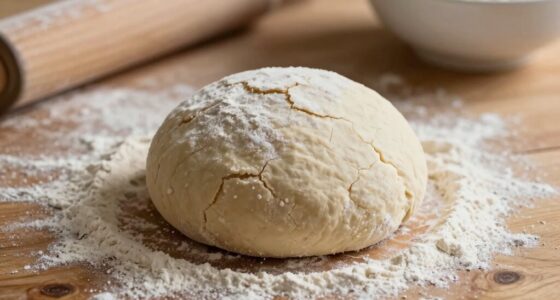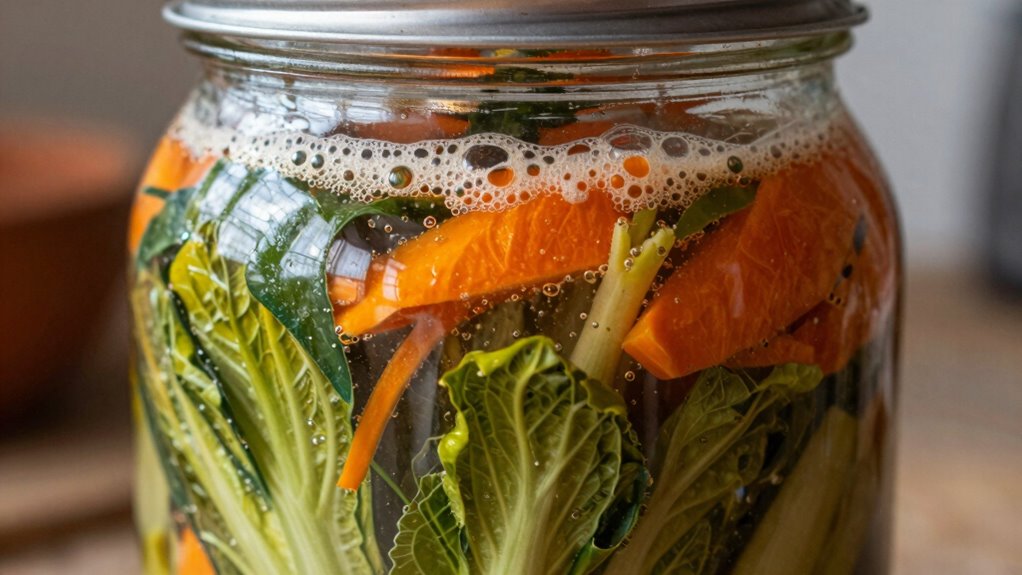

The “double in size” rule comes from traditional baking cues, but it’s not a reliable marker for fermentation completion. Yeast and bacteria cause dough or starter to expand through gas and bubble production, which can vary based on temperature, humidity, and ingredients. Relying only on size can lead to under- or over-fermentation. Tracking other signs—like aroma, bubble activity, and measurements—helps you judge more accurately. Keep exploring to learn better ways to time your fermentation perfectly.
Key Takeaways
- Size increase depends on multiple factors like microbial activity, temperature, and ingredients, not just fermentation time.
- Visual cues like doubling in size are unreliable; sensory signs and measurements provide more accurate indicators.
- Fermentation progress varies individually, so fixed time or size targets may lead to under- or over-fermentation.
- Monitoring pH, specific gravity, and aroma offers better control than relying solely on visual size changes.
- Patience and multiple observations ensure proper fermentation, preventing premature or delayed processing based on size alone.
Where Did the “Double in Size” Fermentation Rule Come From?
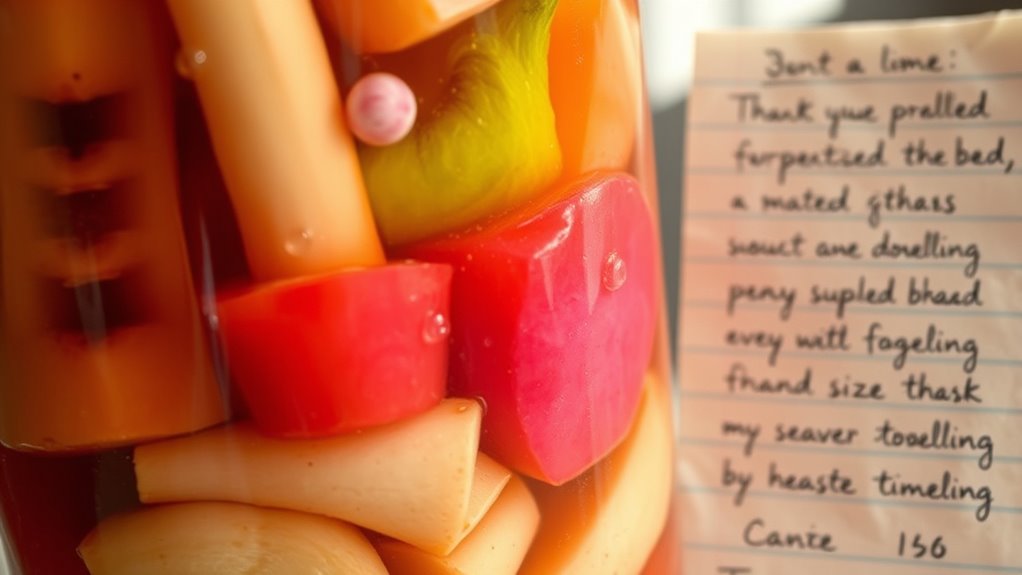
The “double in size” fermentation rule likely originated from traditional baking and brewing practices that observed how dough and starter cultures expand during fermentation. As yeast activity increases, fermentation speed accelerates, causing gas production that makes the dough rise. Bakers and brewers noticed that, under ideal conditions, the mixture roughly doubles in volume when fermentation is complete. This visual cue became a practical indicator, as it’s easier to observe than timing exact durations. The rule simplifies the process, providing a reliable signal that yeast activity has reached a desired level. While fermentation speed can vary based on temperature and ingredients, the double in size standard gave early bakers and brewers a consistent, straightforward way to judge when fermentation was ready.
How Do Yeast and Bacteria Cause Fermentation to Expand?
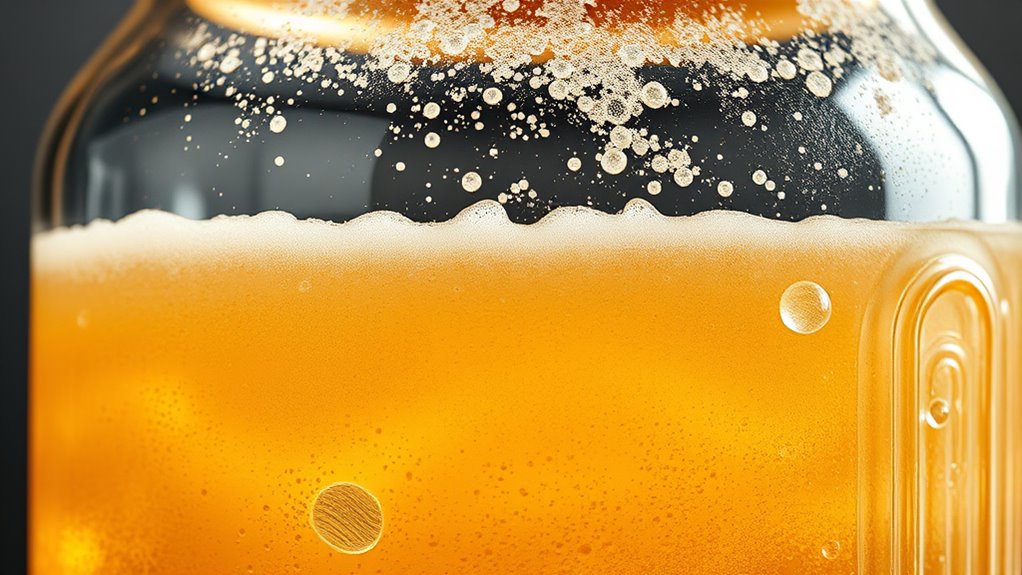
Yeast and bacteria are the primary drivers behind fermentation’s expansion. Their activity causes the mixture to grow in size as they convert sugars into gases, alcohol, and acids. You can observe this process through three key steps:
- Yeast activity increases as they consume sugars, producing carbon dioxide that forms bubbles and causes the mixture to rise.
- Bacteria growth releases additional acids and gases, further expanding the volume and developing complex flavors.
- The combined action of yeast and bacteria creates a bubbling, expanding environment, which is why fermentation appears to “double” in size, even if it doesn’t happen exactly on a timeline.
- The microbial activity involved in fermentation directly influences the rate and extent of expansion, making the process both dynamic and variable. Understanding fermentation helps clarify why timing can vary significantly between different batches.
- Recognizing the fermentation timeline is essential for achieving desired flavors and textures in your homemade products, especially when considering fermentation rates and environmental factors.
What Factors Speed Up or Slow Down Fermentation Growth?
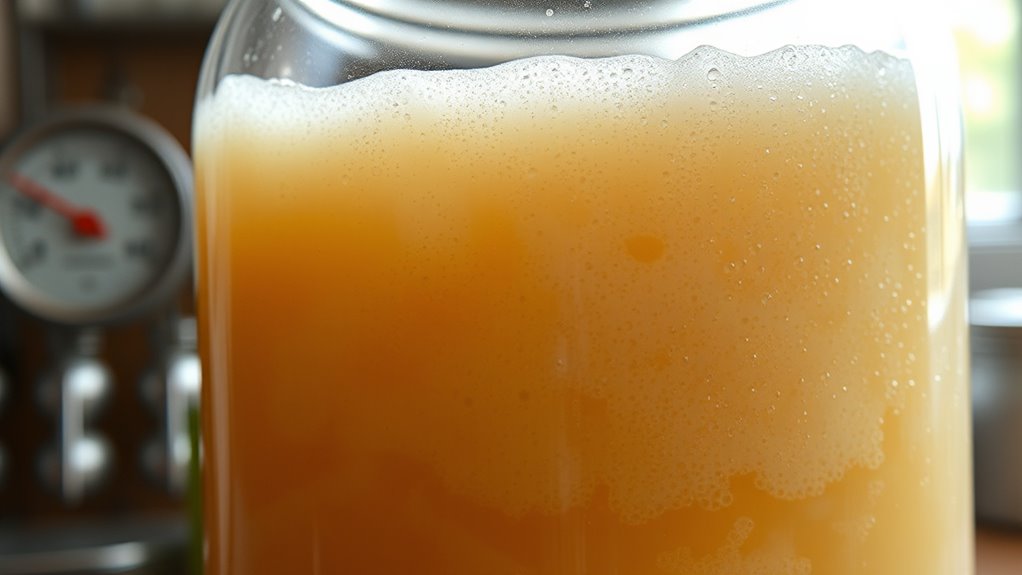
Several factors can influence how quickly fermentation progresses, either speeding it up or slowing it down. Your fermentation speed depends on several growth factors, including temperature, pH, and nutrient availability. Warmer temperatures generally accelerate yeast and bacteria activity, increasing fermentation speed, but too high can inhibit growth. Conversely, cooler environments slow down the process. The pH level also plays a vital role; maintaining an ideal range promotes healthy growth, while deviations can hinder it. Nutrients like sugars, vitamins, and minerals must be sufficient for microorganisms to thrive. Additionally, oxygen exposure can either promote or inhibit fermentation, depending on the type. Managing these growth factors carefully allows you to control fermentation rates, making it faster or slower based on your desired outcome. Understanding these factors, such as microbial activity, is essential for optimizing fermentation timelines and achieving consistent results. Being aware of environmental conditions helps in creating the optimal setting for predictable fermentation outcomes, as fluctuations can significantly impact the fermentation process.
Why Size Alone Doesn’t Show When Fermentation Is Ready?

Size alone doesn’t determine when fermentation is complete because the final volume or bubble production can be misleading. You need to observe other fermentation indicators to gauge progress accurately. Relying solely on the rise in volume might cause you to stop too early or too late. Instead, pay attention to:
Size alone isn’t enough; observe aroma, bubbles, and clarity for accurate fermentation progress.
- Changes in yeast activity, such as slowing bubble production or fewer foam bubbles.
- The smell—fermentation should develop a specific aroma, not overly sour or yeasty.
- The liquid’s clarity or consistency, which can indicate fermentation slowing down or stopping.
These signs are more reliable than size alone. Monitoring fermentation indicators helps you determine the true readiness, ensuring your product is properly fermented and safe to proceed.
Limitations of Relying Only on Volume to Judge Fermentation

Relying solely on volume to judge fermentation can be misleading because it doesn’t reflect the true state of the process. Visual and textural clues, like bubbles or surface changes, give more reliable signs of readiness. Keep in mind that environmental factors, such as temperature and humidity, also influence fermentation timing and should be considered.
Volume Doesn’t Indicate Readiness
While measuring fermentation volume can give a quick indication of progress, it doesn’t reliably tell you when the process is complete. Relying solely on volume ignores important signs like visual cues and aroma indicators. These subtle changes reveal more about fermentation status:
- Look for visual cues such as bubbles slowing or disappearing, or surface activity stabilizing.
- Smell for aroma indicators—fruity, sour, or yeasty scents can signal different stages.
- Trust your senses, not just the numbers—fermentation can plateau before finishing.
- Incorporate proper monitoring techniques to better gauge fermentation progress and avoid over or under fermentation.
Volume measurement is helpful, but don’t depend on it alone. Combining it with visual and aroma clues ensures you don’t prematurely stop or overferment. Recognizing these signs helps achieve consistent, quality results.
Visual and Textural Clues
Volume measurements alone can be misleading because they don’t reveal the full picture of fermentation progress. To accurately gauge readiness, you need to observe visual cues like bubbling activity, surface foam, and the appearance of the dough or mixture. These signs indicate how active the fermentation truly is. Textural signs are equally important; feel the dough’s elasticity, softness, or firmness. A well-fermented dough often feels airy and supple, not just larger in size. Relying solely on volume can cause you to overlook subtle but critical changes. Understanding fermentation by paying attention to visual cues and textural signs helps you avoid premature or over-fermentation, leading to better baking results. Recognizing fermentation stages through these signs allows for more precise timing and improved outcomes. This holistic approach helps you avoid premature or over-fermentation, leading to better baking results.
Environmental Factors Affect Timing
Environmental factors such as temperature, humidity, and airflow can substantially influence fermentation timing, often making volume measurements alone unreliable. In fermentation biology, environmental control is vital because these factors affect yeast activity and fermentation speed. Relying solely on how much your fermenter has expanded can lead to misjudgments. To better estimate fermentation progress, consider these:
- Temperature: Higher temperatures accelerate fermentation, while cooler conditions slow it down.
- Humidity: Excess humidity can cause mold or spoilage, affecting fermentation consistency.
- Airflow: Proper airflow regulates temperature and prevents off-flavors from stagnant air.
Monitoring these factors helps you understand fermentation more holistically, rather than just focusing on volume. Adjusting environmental controls ensures a consistent, predictable process aligned with fermentation biology. Recognizing the impact of environmental factors on fermentation can help you develop more reliable timing strategies.
Better Ways to Track Fermentation Progress
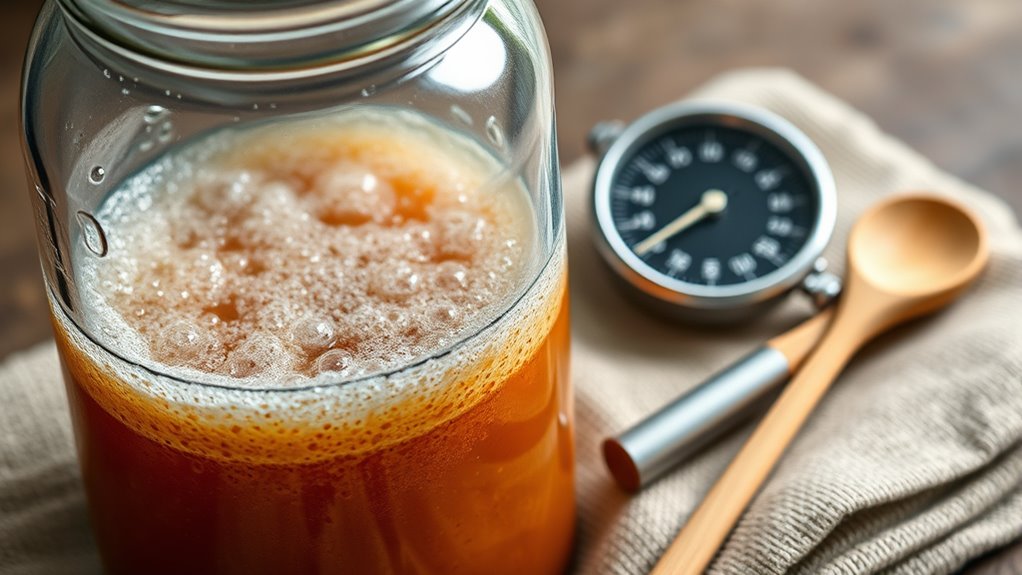
Tracking fermentation progress accurately can markedly improve your brewing or fermenting outcomes. Instead of relying solely on visual cues like size or bubbles, use fermentation indicators such as specific gravity readings or pH levels. These tools provide precise data, enhancing your timing accuracy. Monitoring these indicators helps you determine when fermentation is complete or needs adjustment. Consider the following methods:
| Method | Description |
|---|---|
| Specific Gravity | Measures sugar conversion, indicating fermentation stage |
| pH Testing | Tracks acidity changes for fermentation health |
| Visual Observation | Looks for bubbles or sediment, but less precise |
| Smell and Aroma | Detects fermentation activity, but subjective |
Using these approaches, you gain reliable insights, ensuring better control over your fermentation timeline. Additionally, understanding support breakfast options can help maintain energy levels during long fermentation sessions. Recognizing youngster choices and their influence on fermentation environments can also be beneficial for home brewers interested in cultural practices. Being aware of fermentation timelines and how they vary depending on ingredients and methods can further refine your process.
How Temperature and Environment Affect Fermentation Timing?
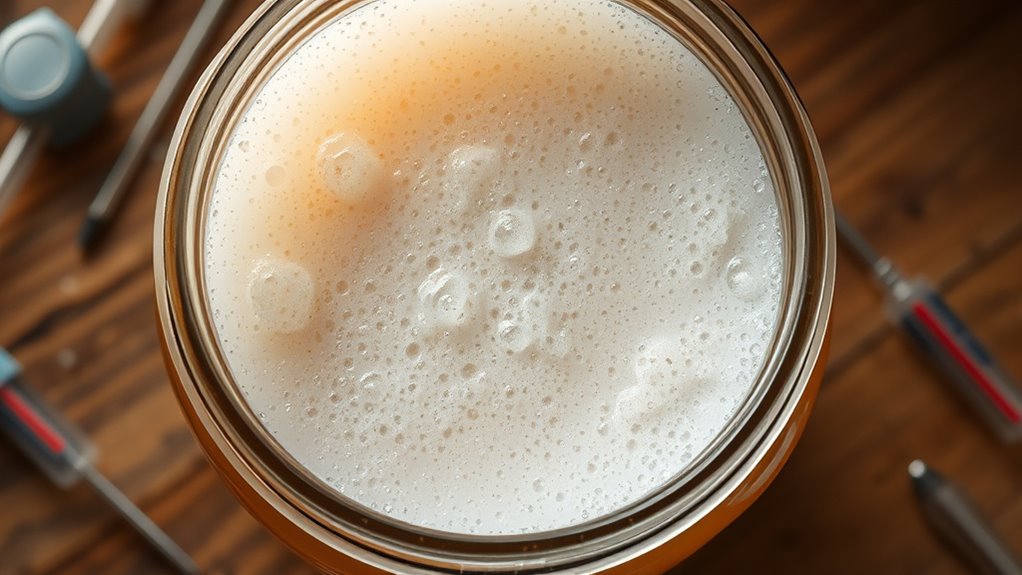
Your fermentation process is highly sensitive to temperature changes, which can speed up or slow down the timeline. Humidity and airflow also influence how evenly fermentation occurs and prevent unwanted mold. Maintaining a stable environment is key to achieving consistent and predictable fermentation results. Additionally, controlling environmental factors like humidity levels can help optimize the fermentation process. Variations in free floating conditions, such as air circulation and ambient temperature, can significantly impact the activity of the fermentation microbes and the final product quality. A thorough understanding of creative storytelling principles can also aid in documenting and sharing your fermentation journey for better reproducibility.
Temperature’s Impact on Fermentation
Temperature plays a crucial role in determining how quickly fermentation proceeds. Your ability to manage heat control directly impacts the fermentation timeline. When the temperature is ideal, yeast activity accelerates, leading to faster fermentation. Conversely, too much heat can cause undesirable flavors or stalled fermentation, while too little slows the process considerably. Understanding the temperature influence helps you predict and adjust timing accurately.
Consider these key points:
- Maintaining steady temperatures ensures consistent fermentation.
- Higher temperatures speed up yeast activity but risk off-flavors.
- Cooler environments prolong fermentation, requiring patience.
Humidity and Airflow Effects
Humidity and airflow considerably influence fermentation timing by affecting yeast activity and the environment within your fermentation vessel. Humidity effects can either help or hinder fermentation; too much moisture may promote mold or spoilage, while too little can cause premature drying of the surface. Proper airflow influence ensures fresh oxygen reaches the yeast, supporting healthy fermentation, but excessive airflow can dry out the wort or mash, slowing fermentation or creating undesirable surface films. Maintaining ideal humidity levels helps keep the environment stable, preventing unwanted microbial growth. Good airflow helps regulate temperature and removes excess CO2, promoting consistent fermentation. Adjusting humidity and airflow based on your specific fermentation setup allows you to better control timing, ensuring your yeast performs efficiently without risking contamination or uneven fermentation progress. Understanding fermentation environment factors can further optimize your process for better results. Additionally, monitoring microbial growth is crucial to prevent contamination and ensure a successful fermentation. Proper control of environmental conditions is essential for achieving consistent and predictable fermentation outcomes.
Environment Stability Importance
Maintaining a stable environment is essential because fluctuations in temperature can considerably speed up or slow down fermentation. When ambient control is off, yeast activity becomes unpredictable, leading to inconsistent results. To guarantee proper fermentation timing, focus on these key factors:
- Keep temperature steady—most yeast prefers a specific range for ideal activity.
- Avoid drafts or temperature swings that can disrupt yeast behavior.
- Use a thermometer or climate control tools to monitor and maintain consistent conditions.
- Proper environment stability minimizes the risk of contamination and ensures reliable fermentation progress.
- Incorporating temperature regulation techniques can further optimize fermentation outcomes.
Additionally, understanding fermentation kinetics helps predict how environmental factors influence timing and final product quality.
How Can You Tell When Fermentation Is Fully Done?
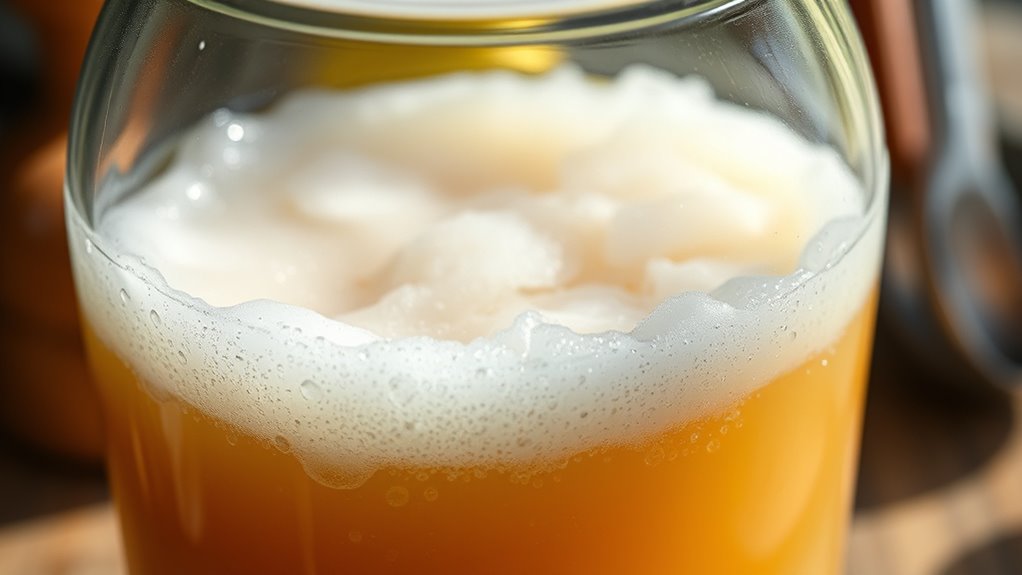
Knowing when fermentation is fully complete can be tricky, but there are clear signs to watch for. One key indicator is the activity level of your starter; if bubbling has slowed considerably and there’s no further foam or rise, fermentation is nearing completion. Additionally, rely on sensory cues—taste, smell, and appearance. The mixture should have a tangy aroma and a stable, developed flavor. Be cautious of fermentation myths suggesting you should wait until it doubles in size; size alone isn’t a reliable marker. Instead, focus on the absence of active bubbles and the consistency of the product. Once these signs are present, you can be confident your fermentation is finished, ready for the next step.
Tips for Timing Fermentation and Achieving Consistent Results
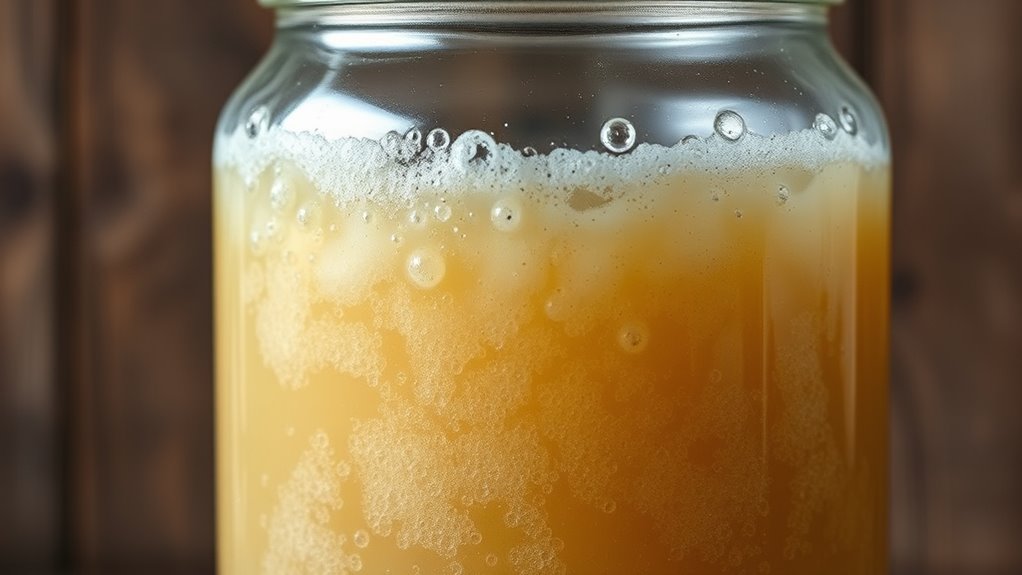
Timing your fermentation precisely can make all the difference in achieving consistent results. To improve your timing techniques, focus on key fermentation indicators like bubbles, aroma, and texture. These signs reveal how far along your process is without relying on arbitrary timers.
Here are three tips to help you time fermentation accurately:
- Observe fermentation indicators closely—look for bubbles and smell for tangy aromas that signal progress.
- Use a consistent environment—maintain stable temperature and humidity to ensure predictable timing.
- Record your observations—note how long each stage takes to develop, so you can replicate successful results in future batches.
Frequently Asked Questions
Can Fermentation Times Vary Between Different Recipes or Ingredients?
Yes, fermentation times can vary between different recipes or ingredients. Ingredient variability, such as moisture content or sugar levels, influences how quickly fermentation occurs. Additionally, recipe differences—like temperature, salt, or starter cultures—affect fermentation speed. You should monitor your fermentation rather than rely solely on time, as these factors can make the process faster or slower, ensuring ideal results for each unique batch.
How Do I Adjust Fermentation Timing in a Humid Climate?
Like a seasoned sailor steering unpredictable seas, you should adjust your fermentation timing in a humid climate by monitoring humidity impact and making temperature adjustments. Raise or lower the temperature slightly to control fermentation speed, as high humidity accelerates activity. Keep an eye on your dough or starter, and don’t rely solely on timing. Instead, trust visual cues and feel, adjusting your environment to achieve consistent, desired results.
What Are Common Signs of Over-Fermentation Besides Size Increase?
You’ll notice over-fermentation if bubbles formation becomes excessively vigorous or continuous, indicating active fermentation beyond the ideal stage. A sour aroma also signals over-fermentation, as the yeast and bacteria produce more acetic acid. Additionally, the texture might become overly slack or slimy. If you observe these signs, it’s best to slow down the process or refrigerate to halt fermentation, preventing off-flavors and spoilage.
Is It Possible for Fermentation to Be Complete Before or After Doubling?
Yes, fermentation can finish before or after doubling in size due to variations in fermentation speed and ingredient variability. You might find it’s ready sooner if your environment is warmer or if your ingredients ferment faster. Conversely, cooler temperatures or less active ingredients slow the process. Don’t rely solely on doubling as a timer—trust your senses, like taste and smell, to determine when fermentation is truly complete.
How Reliable Are Visual Cues Compared to Scientific Measurements?
Imagine watching a bubble gently rise in your ferment, but visual cues can be deceiving—like shadows on a wall. While visual accuracy offers helpful hints, measurement reliability remains superior for precise timing. You might see signs of activity, but relying solely on visuals risks misjudging fermentation progress. For best results, combine visual cues with scientific measurements, ensuring your fermentation reaches ideal timing and quality every time.
Conclusion
Remember, when it comes to fermentation, don’t just rely on the “double in size” rule—it’s a bit of a red herring. Instead, pay attention to other signs like bubbles, flavor, and texture. Fermentation is more art than clock-watching, so stay attentive and flexible. Keep your eye on the prize, and you’ll master the timing without breaking a sweat. After all, patience is a virtue, and good things come to those who wait.