To store specialty flours smartly, keep them in airtight, dark containers like glass jars or metal tins, and place them in a cool, dry spot in your pantry. For nut-based flours, refrigerate or freeze to prevent rancidity, while gluten-free and rice flours can usually stay at room temperature if properly stored. Regularly check for off-odor or clumping, and label your containers with dates. Want to master more tips? Keep exploring—your baked goods will thank you.

Get baking supplies delivered free — and shop member deals
- Fast, free delivery on millions of items
- Access to Prime Big Deal Days deals on October 6–7
- Prime Video, Amazon Music and more included
Key Takeaways
- Use airtight, opaque containers like glass jars or tins to protect flours from light, air, and moisture.
- Store in a cool, dark, dry place, or refrigerate/freezer nut-based flours for extended freshness.
- Label containers with purchase or opening dates to monitor freshness and prevent spoilage.
- Regularly inspect stored flours for off-odor, clumping, or discoloration; discard spoiled batches promptly.
- Organize your pantry to ensure good air circulation and easy access, maintaining optimal storage conditions.
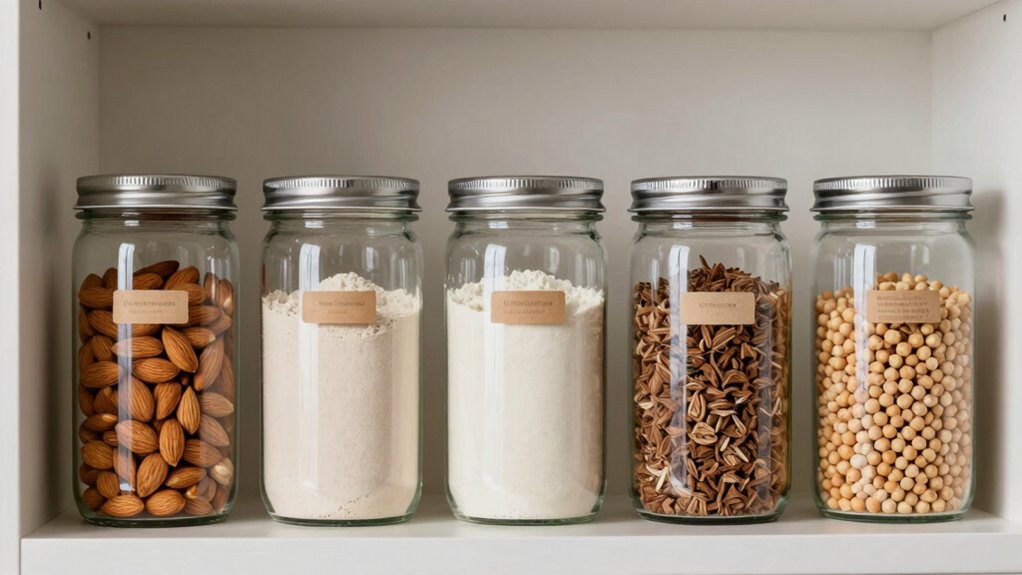
Storing specialty flours properly is vital to preserving their freshness and flavor, especially since they tend to be more delicate than all-purpose varieties. These flours, such as almond, coconut, or rye, often have shorter shelf lives and are more prone to spoilage if not stored correctly. To maximize their shelf stability, you need to pay attention to how you store them and the types of storage containers you choose. Proper storage helps prevent exposure to air, light, and moisture, which are the main culprits that accelerate spoilage and diminish quality.
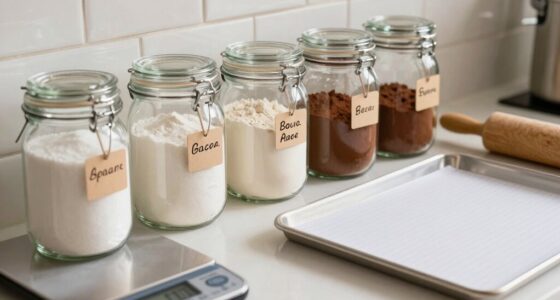
Using the right storage containers is essential. Airtight containers are your best bet, as they create a sealed environment that keeps out humidity and pests. Glass jars with tight-fitting lids, BPA-free plastic containers, or metal tins with secure seals work well. Avoid flimsy or porous containers that allow air or moisture to seep in, as these can compromise the flour’s freshness. When selecting storage containers, consider ones that are opaque or dark-colored, since light exposure can also degrade specialty flours over time. Clear containers are convenient for quick identification but store them in a dark cabinet or pantry to protect the flour from light. Additionally, choosing containers made from food-safe materials ensures your flour remains uncontaminated over time. It’s also helpful to keep a consistent organization system so you can easily monitor the age of your stored flours. Incorporating proper labeling techniques can help you keep track of freshness and avoid using expired products. Regularly inspecting stored flours for signs of spoilage is also a good practice to ensure quality.
Shelf stability varies among different types of specialty flours, so it’s wise to check storage guidelines specific to each variety. For example, nut-based flours like almond or cashew tend to have higher fat content, making them more susceptible to rancidity. These should be kept in the refrigerator or freezer for extended shelf life, especially if you don’t plan to use them within a few months. Conversely, some gluten-free or rice flours can usually be stored at room temperature if kept in a cool, dark place in an airtight container. Additionally, proper storage techniques can significantly extend the freshness of these delicate ingredients. Always label your containers with the date of purchase or opening so you can keep track of their freshness.
Temperature also plays a significant role in maintaining the quality of your specialty flours. A cool, dark, and dry spot in your pantry or cupboard is ideal for most varieties. If you notice a change in smell or appearance—such as a sour aroma or clumping—it’s a sign that the flour has gone bad. In such cases, discard it to avoid any unpleasant surprises in your baking. Proper storage conditions are crucial for preserving the unique flavors and textures of specialty flours over time. Creating an optimal environment can also help prevent the development of off-flavors caused by spoilage or rancidity. Ensuring proper air circulation around your stored flours can help maintain their freshness longer. Ultimately, your goal is to create an environment that extends the shelf life of your specialty flours while preserving their unique flavors and textures. With proper storage containers and careful attention to shelf stability, you’ll guarantee your specialty flours stay fresh and ready whenever inspiration strikes.
airtight glass storage jars for flour
As an affiliate, we earn on qualifying purchases.
As an affiliate, we earn on qualifying purchases.
Frequently Asked Questions
How Long Do Specialty Flours Typically Last?
Specialty flours generally last 6 months to a year if stored properly. Their shelf stability depends on storage containers you use—airtight containers keep out moisture and pests, extending freshness. Keep them in a cool, dark place away from sunlight and heat. Proper storage guarantees your specialty flours stay fresh longer, so you get the best baking results. Regularly check for signs of spoilage before using.
Can I Freeze Specialty Flours for Longer Storage?
Yes, you can freeze specialty flours to extend their shelf life, preserve freshness, and prevent spoilage. Picture sealing your flours in airtight packaging options—such as vacuum-sealed bags or sturdy containers—and placing them in the freezer. This technique keeps flavors intact, maintains quality, and prevents pests. Just remember to label and date the packages for easy tracking. Freezing is an effective way to prolong your flours’ usability and enjoy baking at your convenience.
Do Different Flours Require Different Storage Methods?
Yes, different flours require different storage methods to maximize their shelf life. For example, nut or seed flours benefit from airtight storage containers in the refrigerator or freezer to prevent rancidity, while white or all-purpose flour can be stored in a cool, dark pantry. Always use appropriate storage containers to keep moisture and pests out, ensuring your flours stay fresh longer and maintain their quality.
How Can I Tell if Flour Has Gone Bad?
Don’t judge a book by its cover, but with flour, trust your senses. If it smells sour, has mold, or shows discoloration, it’s gone bad. Check shelf life indicators on the packaging, but also depend on storage container choices—airtight containers keep moisture out and slow spoilage. When in doubt, toss it. Fresh flour ensures your baked goods turn out perfect every time.
Are There Environmentally Friendly Storage Options for Specialty Flours?
Yes, you can choose eco-friendly packaging options for storing specialty flours. Opt for biodegradable containers made from materials like bamboo, glass, or recycled plastics, which reduce environmental impact. These containers keep your flour fresh while being sustainable. By selecting eco-friendly packaging, you support eco-conscious living and help cut down plastic waste. It’s a simple, effective way to store your specialty flours responsibly and environmentally friendly.
dark metal tins for specialty flour
As an affiliate, we earn on qualifying purchases.
As an affiliate, we earn on qualifying purchases.
Conclusion
Now that you know the secrets to storing specialty flours, you can keep them fresh and flavorful, just like a master baker. Think of it as your own Little Red Riding Hood journey—avoiding the wolf of spoilage in the dark woods of improper storage. With these simple tips, you’ll always be ready to create bakery-quality treats, turning everyday ingredients into magic. Embrace smarter storage, and let your culinary adventures flourish with the wisdom of the ages.
reusable food-safe storage containers
As an affiliate, we earn on qualifying purchases.
As an affiliate, we earn on qualifying purchases.
flour storage container with date label
As an affiliate, we earn on qualifying purchases.
As an affiliate, we earn on qualifying purchases.
Halloween Picks
halloween
As an affiliate, we earn on qualifying purchases.