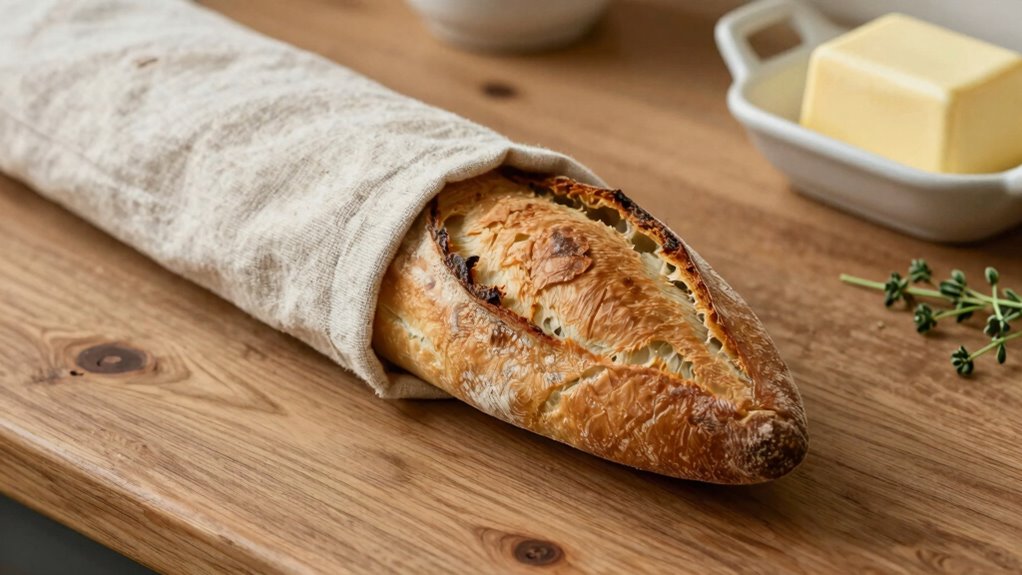

To store bread without killing the crust, keep it in a paper bag or wrap it lightly in a cloth at room temperature to allow airflow and prevent excess moisture buildup. Avoid plastic wrap, which traps moisture and softens the crust. Using a bread box strikes a balance between keeping the crust crispy and protecting the crumb. If you’re curious about more tips on preserving that perfect crust, there’s plenty more to explore.

Get baking supplies delivered free with Prime
- Fast, free delivery on millions of items
- Prime Video, Amazon Music and more included
- Member-only deals all year
Key Takeaways
- Store bread in a paper bag or cloth to maintain crust while controlling humidity.
- Keep bread at room temperature in a bread box for balanced airflow and crust preservation.
- Avoid plastic wrapping for long-term storage to prevent moisture buildup that softens the crust.
- Reheat bread in an oven or toaster to restore crispness after storage.
- Slice bread only when needed to reduce crust exposure and preserve texture.
Storing bread properly can make a significant difference in keeping it fresh and delicious for as long as possible. If you want to preserve that perfect crust while maintaining the soft, airy interior, you need to understand how bread baking techniques influence its texture, especially in relation to gluten development. When you bake bread, gluten development is key to creating a structure that holds moisture and gives the bread its shape. Proper gluten formation results in a crust that’s both crispy and resilient, so if you want to keep that crust intact without turning it into a soggy or chewy mess, you must handle storage carefully.
Proper storage preserves crust and texture, highlighting the importance of gluten development and careful handling.
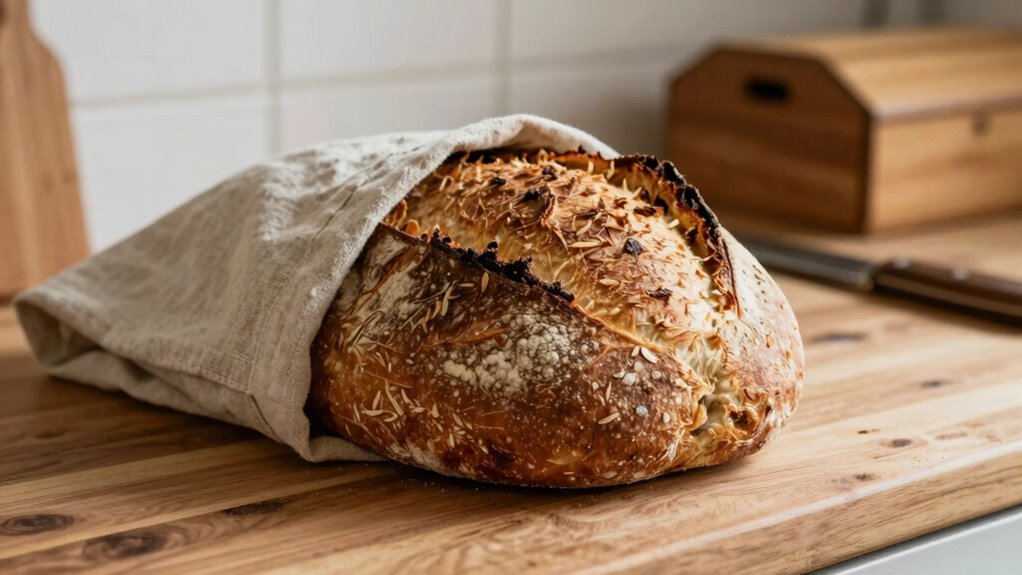
The way you store bread immediately after baking can either preserve or ruin its crust. For instance, wrapping bread tightly in plastic can trap moisture, making the crust soft and losing that desirable crunch. Conversely, leaving bread exposed to the air allows the crust to stay crisp but risks drying out the crumb quickly. The trick is to strike a balance. You can slice the bread and store it in a paper bag, which helps retain the crust’s crispness while preventing excess moisture buildup. If you’re planning to eat the bread within a day or two, that method works well. But if you want to keep it longer, consider storing it in a bread box—an environment that offers just enough airflow to maintain the crust’s texture while protecting the bread from drying out too fast.
Another effective technique involves controlling humidity levels, since excessive humidity can soften the crust and reduce its crunchiness. When bread is stored in overly humid conditions, the crust can soften, losing its crunch. On the other hand, if it’s too dry, the crust becomes overly hard or even brittle. To prevent this, some bakers recommend lightly wrapping the bread in a cloth and keeping it at room temperature. This method allows the crust to stay crisp without sacrificing freshness. If you want to reheat bread without losing that crust, just briefly toast or warm it in an oven. This reheating process helps restore the crust’s original texture by reactivating the surface’s moisture and gluten network, giving you that fresh-baked feeling even days later.
Understanding how gluten development influences both the structure and crust formation will help you choose the best storage method. Proper storage isn’t just about keeping bread; it’s about respecting the craftsmanship behind each loaf. When you pay attention to these details, you’ll keep that crust crispy and flavorful, making every slice as enjoyable as the first. Additionally, being mindful of bread storage environments can greatly extend the shelf life of your bread while preserving its desirable qualities. Recognizing the importance of crust preservation can help you develop a more consistent approach to enjoying your baked goods at their best. To further enhance your bread storage techniques, consider experimenting with different storage methods to find what works best for your specific type of bread and environment.
As an affiliate, we earn on qualifying purchases.
Frequently Asked Questions
Can I Freeze Bread Without Damaging the Crust?
Yes, you can freeze bread without damaging the crust by using proper freezing techniques that focus on crust preservation. Wrap the bread tightly in plastic wrap or aluminum foil to prevent freezer burn and moisture loss. For extra protection, place it inside a resealable freezer bag. When you’re ready to enjoy it, let it thaw at room temperature, keeping the crust intact and fresh, just like when you first bought it.
How Long Can Bread Stay Fresh Without Refrigeration?
You can keep bread fresh for about 2-3 days without refrigeration, but for ideal bread preservation and crust maintenance, store it in a paper bag or bread box at room temperature. Avoid plastic, which traps moisture and softens the crust. If you want longer shelf life, consider freezing it. Proper storage helps maintain that desirable crust and keeps your bread tasting fresh longer.
Does Storing Bread in Plastic Keep the Crust Crispy?
Storing bread in plastic doesn’t keep the crust crispy; it actually traps moisture, making the crust soft and chewy. While plastic storage is great for keeping bread fresh longer, it’s not ideal for crust preservation. If you want a crispy crust, consider storing bread in a paper bag or bread box. These options allow the bread to breathe, helping maintain that desirable crunch while keeping the inside fresh.
What Are Alternative Storage Methods for Artisanal Bread?
You can preserve artisanal bread’s freshness and crust by storing it in a paper bag or wrapping it in a clean towel. These methods allow the bread to breathe, preventing moisture buildup that softens the crust. For longer storage, consider freezing the bread in an airtight container or wrapping it tightly in plastic wrap before freezing. Always reheat the bread to enjoy that freshly baked texture and flavor.
How Does Humidity Affect Bread Crust Preservation?
Think of humidity as the Goldilocks factor—too much, and your crust turns soggy; too little, and it becomes stale. Humidity directly impacts the moisture balance, influencing crust preservation. Maintaining an ideal humidity level helps keep the crust crisp while preventing the bread from drying out or becoming gooey. You’ll want a breathable storage environment that balances moisture, ensuring your artisanal bread stays fresh with that perfect, bakery-quality crust.
As an affiliate, we earn on qualifying purchases.
Conclusion
Storing bread properly keeps that delightful crust intact, so it stays crispy and fresh for days. Remember, about 60% of bread’s flavor is in its crust—so losing it means losing a lot of the bread’s character. By choosing the right storage method, like a paper bag or bread box, you preserve that perfect crunch you love. Keep these tips in mind, and every slice will taste as fresh as the day you bought it!
As an affiliate, we earn on qualifying purchases.
As an affiliate, we earn on qualifying purchases.
Halloween Picks
halloween
As an affiliate, we earn on qualifying purchases.