

Refrigeration helps some desserts by enhancing flavors, preserving freshness, and maintaining their smooth textures, like ice creams and cheesecakes. However, it can hurt others, such as delicate pastries or baked goods, by making them soggy or rubbery. Temperature changes affect their structure and taste, so knowing when and how long to refrigerate matters. To master this balance and keep your desserts at their best, keep exploring the details behind proper storage.

Get baking supplies delivered free with Prime
- Fast, free delivery on millions of items
- Prime Video, Amazon Music and more included
- Member-only deals all year
Key Takeaways
- Refrigeration enhances flavors and preserves textures in mousse, cheesecakes, ice creams, and layered desserts by setting ingredients and preventing spoilage.
- Delicate baked goods like éclairs or pastries can become soggy or lose their crispness when refrigerated.
- Proper timing and temperature control prevent moisture buildup that can degrade texture or cause sogginess.
- Over-refrigeration can diminish airy textures and cause desserts to become dense or rubbery.
- Storage techniques and duration are crucial to maintaining the intended quality, flavor, and texture of different desserts.
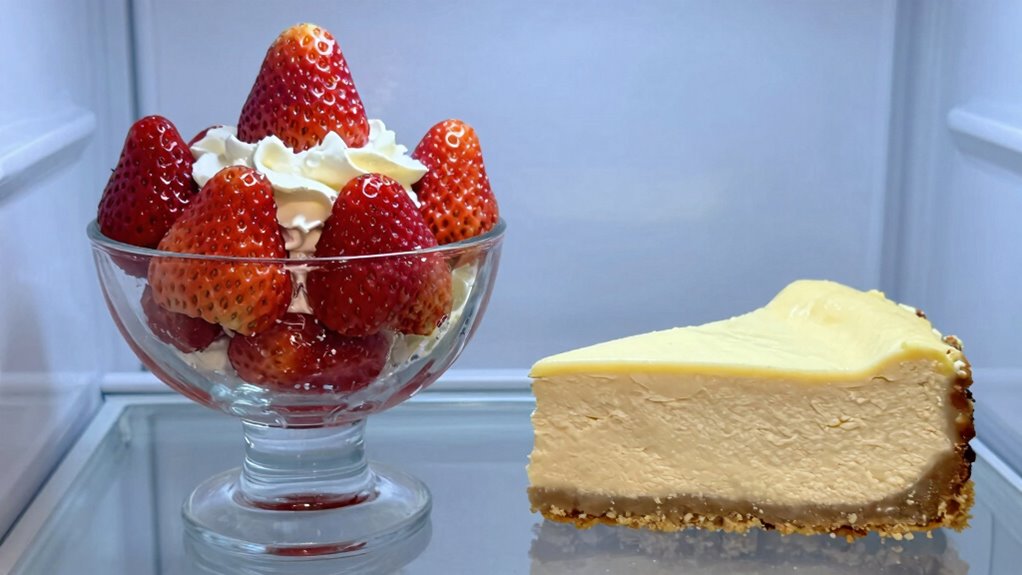
Refrigeration plays an essential role in preserving the freshness and texture of desserts, ensuring they stay delicious longer. When you refrigerate certain treats, you’re not just cooling them down; you’re actively enhancing their flavor and maintaining their ideal texture. For example, chilled cheesecakes or mousse-based desserts often taste better after refrigeration because the cold heightens their flavors, making the sweetness richer and the ingredients more pronounced. In these cases, refrigeration acts as a flavor enhancer, allowing complex notes to develop and giving you a more satisfying bite.
However, not all desserts respond well to refrigeration. Some rely heavily on their original texture or temperature to deliver the intended experience. For delicate pastries like éclairs or cream puffs, refrigeration can cause the exterior to become soggy or the filling to lose its airy consistency. The moisture in the fridge can break down the crispness or cause the dessert to become rubbery, ultimately hurting the texture. In these cases, refrigeration does more harm than good, stripping away the original qualities that made the dessert appealing. Additionally, moisture control is crucial in preventing unwanted changes in texture during storage. Proper storage techniques can help maintain the intended texture and flavor of sensitive desserts.
Temperature sensitivity also influences how refrigeration impacts desserts. For ice creams and gelatos, cooling is essential, and refrigeration preserves their creamy, smooth texture. But for baked goods like cookies or cakes meant to be served at room temperature, refrigeration can make them dense or dry out the crumb. When you refrigerate these items, the moisture can be drawn out or redistributed in a way that diminishes their original texture, making them less enjoyable. For such desserts, it’s often best to store them in a cool, dry place rather than the fridge. Proper temperature management can prevent overexposure to cold and help retain their best qualities.
Additionally, some desserts benefit from refrigeration only temporarily—such as fruit tarts or layered parfaits—where the cold helps set the ingredients and improve flavor integration. But if left in the fridge too long, these desserts can become overly firm or develop unwanted textures, like a soggy crust or a watery filling. Timing becomes essential; refrigeration should be used strategically to optimize flavor enhancement without compromising texture. Furthermore, understanding temperature sensitivity is key to maintaining the ideal quality of various desserts. Properly managing refrigeration time and conditions can make a significant difference in the final experience, especially when considering the impact of cold on delicate layers and fillings.
Frequently Asked Questions
How Does Refrigeration Affect the Texture of Different Desserts?
Refrigeration affects the texture of desserts by influencing ice crystal formation and temperature sensitivity. When you refrigerate, ice crystals can grow larger, making frozen desserts like ice cream gritty or icy. For delicate desserts, too low a temperature can cause them to become rubbery or lose their airy texture. You need to control the temperature carefully to preserve the ideal texture, especially for desserts sensitive to temperature changes.
Can Refrigeration Change the Flavor of Delicate Desserts?
Imagine storing a delicate lemon mousse in the fridge overnight; refrigeration can subtly change its flavor. It may preserve the flavor better, preventing spoilage, but it can also dull the aroma, reducing freshness. Proper refrigeration helps with flavor preservation, maintaining the dessert’s intended taste, and can even enhance aroma by slowing down spoilage processes. However, over-refrigeration risks dulling delicate flavors, so timing and temperature matter.
Why Do Some Desserts Become Soggy After Refrigeration?
You notice some desserts become soggy after refrigeration because moisture from melted ice cream or condensation seeps into them, weakening their structure. For example, melted ice cream can create excess moisture that soaks into cake layers, while hardened custard can release water as it warms slightly. This moisture compromises texture, making desserts feel damp or soggy. To prevent this, store desserts properly and cover them tightly to minimize moisture exposure.
Does Refrigeration Impact the Appearance of Desserts?
Refrigeration can be a double-edged sword for desserts’ appearance. It may preserve their vibrant colors, keeping them looking fresh as a daisy, but it can also dull their presentation aesthetics if not stored properly. Condensation or temperature fluctuations cause surfaces to lose their shine and crispness. To keep your desserts eye-catching, make sure they’re well-covered and stored at consistent temperatures, helping them stay as beautiful as they are delicious.
Are There Desserts That Should Never Be Refrigerated?
Some desserts, like certain frozen desserts, should never be refrigerated because cold temperatures can ruin their texture and flavor. Similarly, room temperature treats such as certain cheesecakes or delicate pastries may become soggy or lose their appeal if refrigerated. You should avoid refrigerating these desserts to preserve their original texture and taste. Always check specific storage instructions, but generally, keeping these at room temperature makes sure they stay delicious.
Conclusion
Remember, not all desserts are created equal when it comes to refrigeration. Like a delicate dance, some desserts thrive in the cold, their flavors deepening and textures firming up, while others suffer, losing their magic to the chill. So, next time you’re tempted to stash that treat in the fridge, ask yourself: are you preserving its essence or crushing its soul? Sometimes, the best desserts are meant to be enjoyed at room temperature, where their true character can shine.
Halloween Picks
halloween
As an affiliate, we earn on qualifying purchases.