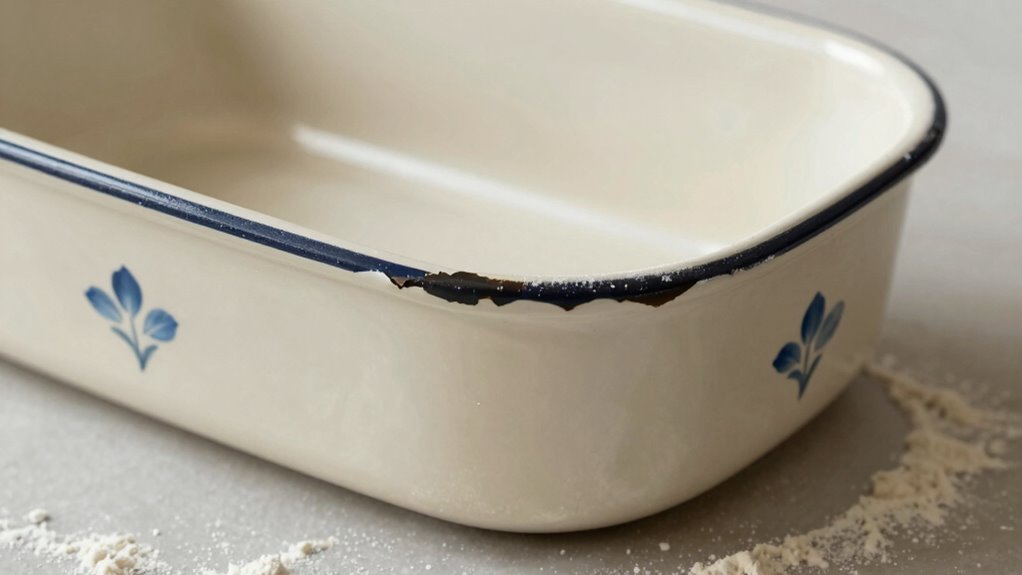

Enamel can chip during bread baking if you handle it roughly, drop it, or expose it to sudden temperature changes. Using metal utensils or applying force can also cause damage, especially if the surface has minor manufacturing flaws. To keep your enamelware in good shape, handle it gently, support it carefully, and avoid impacts. If you’re curious about how to prevent chips and maintain your cookware, there’s more to discover below.
Key Takeaways
- Impact stress from dropping or knocking during bread baking can cause enamel chipping.
- Sudden temperature changes, like pouring cold liquids into hot enamelware, may lead to cracks or chips.
- Using metal utensils or applying excessive force during handling increases the risk of damaging the enamel surface.
- Improper stacking or storage without protective liners can cause scratches and chips over time.
- Gentle handling and gradual temperature adjustments help prevent impact and thermal stress that cause enamel chipping.
Why Does Enamel Chip? Common Causes Explained
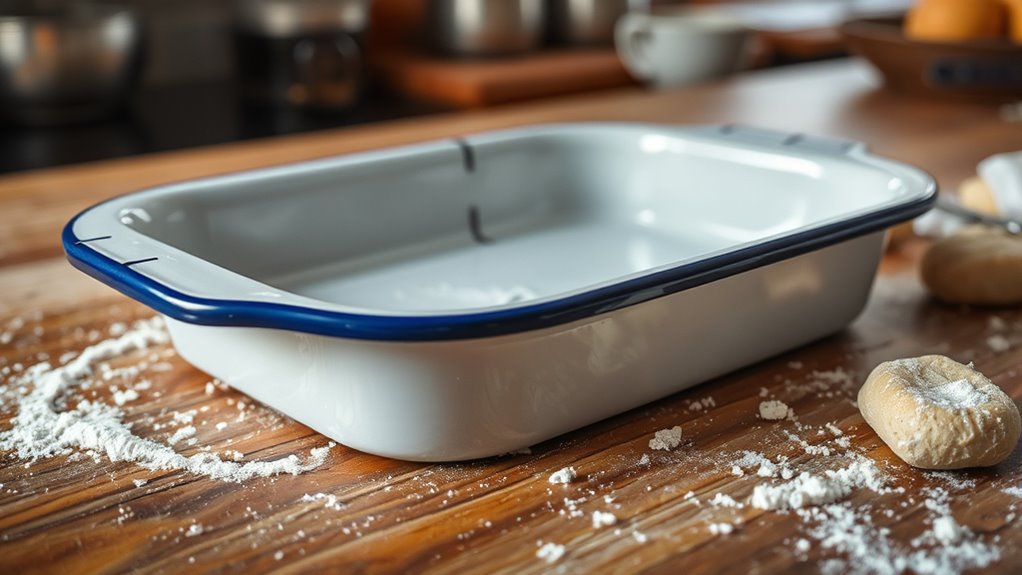
Enamel chipping often happens when your baking equipment experiences sudden impacts or rapid temperature changes. One common cause is that enamel durability varies depending on manufacturing quality; lower-quality enamel may be more prone to chipping. Manufacturing defects, such as uneven application or weak bonding between the enamel and metal, can also compromise its strength. These flaws create weak spots that are more susceptible to cracking under stress. Additionally, using metal utensils or applying excessive force can weaken the enamel over time. Even minor impacts from dropping or knocking the bakeware can cause chips, especially if the enamel isn’t properly fused during production. manufacturing quality plays a significant role in the durability of enamelware and can influence its resistance to chipping. Being aware of these factors helps you understand why your enamelware might chip and how manufacturing issues contribute to its fragility. Understanding manufacturing quality and defects can also shed light on how different manufacturing processes affect durability. Furthermore, proper handling and maintenance are essential to prolong the lifespan of enamelware.
How to Handle Enamelware to Prevent Chipping
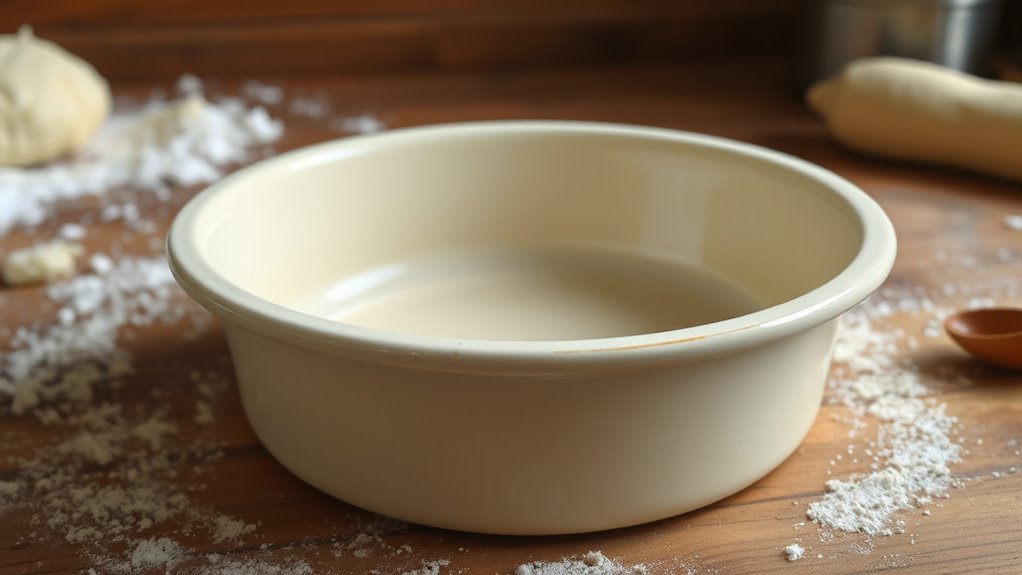
To keep your enamelware in good condition and prevent chipping, handling it carefully is key. Use proper handling techniques by lifting rather than dragging or dropping your cookware. Always support the base and sides when moving it, especially when it’s full or hot. Avoid sudden impacts or knocking against hard surfaces, which can cause chips. Enamelware care also means avoiding temperature shocks—don’t pour cold liquids into hot cookware or vice versa. Use gentle utensils like wooden or silicone to prevent scratching the surface. Store your enamelware securely, ensuring it doesn’t bump into other pots or sharp objects. Additionally, consider incorporating smart home automation to monitor and alert you to potential hazards around your cookware, helping to prevent accidents and damage. Understanding the properties of enamelware can further help you handle it properly and extend its lifespan. For example, protective coatings can help reinforce the surface against chips and scratches. Being aware of enamel durability helps in choosing the right handling methods and care routines. By following these handling techniques, you help preserve the integrity of your cookware and prevent chips, extending its lifespan and maintaining its appearance.
Cleaning and Maintenance Tips for Enamelware
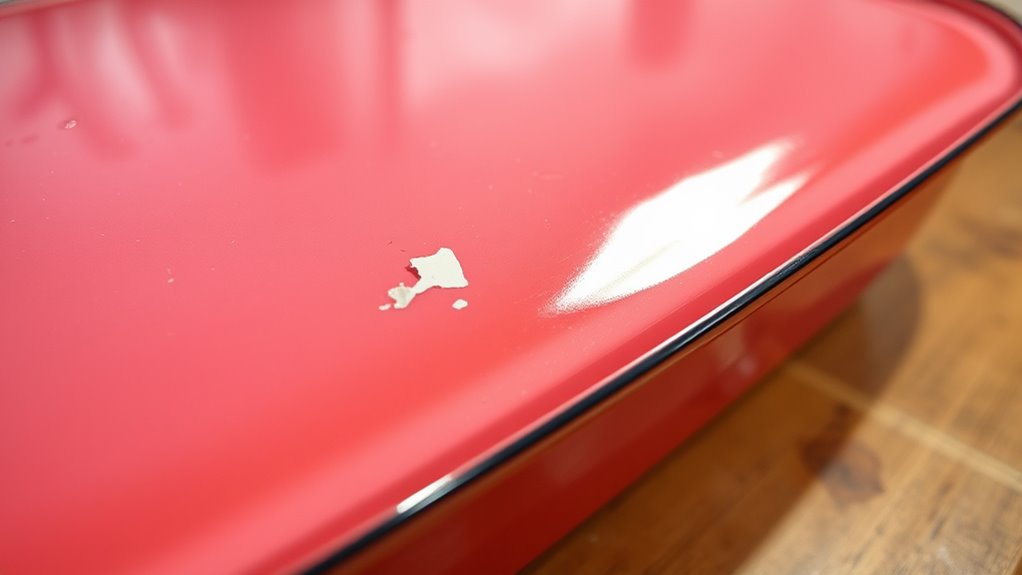
Keeping your enamelware in top condition requires regular cleaning and proper maintenance. Use gentle cleaning techniques, such as hand washing with warm water and mild dish soap, to prevent damaging the enamel. Avoid abrasive scrubbers or steel wool, which can scratch the surface and cause chips. After cleaning, dry the cookware thoroughly to prevent rust or corrosion. Establish maintenance routines that include inspecting for chips or cracks regularly, so you can address issues early. When washing, don’t soak enamelware for long periods, as this can weaken the material. Proper color preservation helps maintain the appearance and longevity of your enamelware. Additionally, understanding Free Floating concepts can help you manage your backyard or outdoor space more effectively. Store your items in a dry, safe place to avoid accidental impacts. Following these simple cleaning techniques and maintenance routines ensures your enamelware stays durable and looking good for years to come. Regularly checking for hidden damage can help prevent minor issues from escalating into more significant problems. Incorporating gentle cleaning practices minimizes the risk of causing enamel chips and helps extend the lifespan of your cookware.
How to Repair Small Chips and Cracks in Enamelware
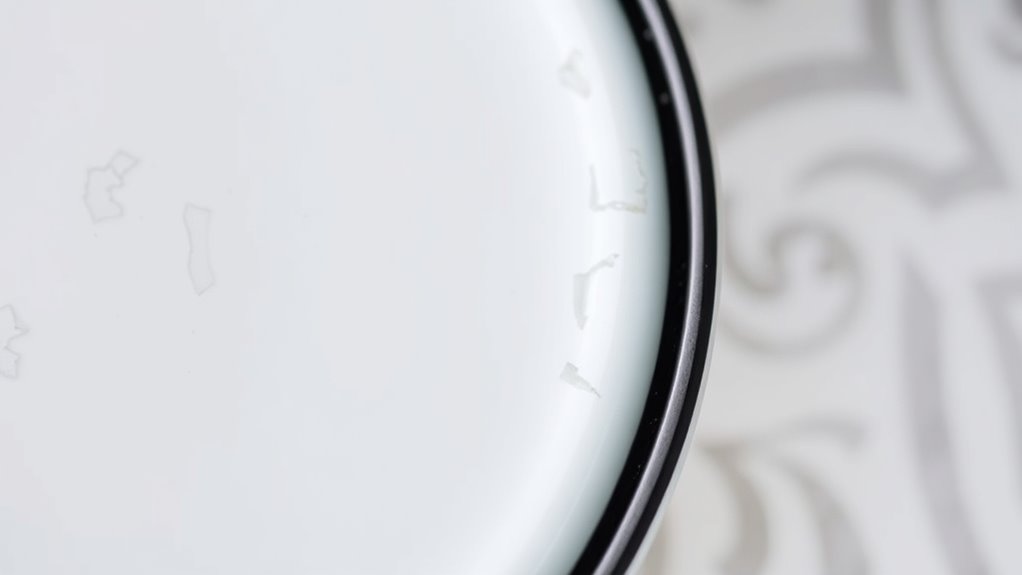
When you notice small chips or cracks in your enamelware, addressing them promptly can prevent further damage. For minor issues, DIY fixes like using enamel repair kits can fill chips and seal cracks effectively. Clean the area thoroughly before applying the repair compound, following the kit instructions carefully. Proper preparation can also help prevent future damage and extend the life of your cookware. Regular maintenance, including gentle cleaning and avoiding metal utensils, can reduce the risk of enamel chipping over time. For larger or more severe damage, professional repair is advisable to restore the integrity of your enamelware. Here’s a quick reference:
| Repair Type | Materials Needed | Best Use Case |
|---|---|---|
| DIY Fixes | Enamel repair kit, sandpaper | Small chips, minor cracks |
| Professional Repair | Specialized enamel fillers | Large cracks, structural issues |
| Prevention Tips | Soft cloth, gentle cleaners | Ongoing maintenance |
| Repair Process | Clean, sand, apply filler | Ensuring proper adhesion |
| Final Finish | Smoothing, curing | Seamless appearance |
Following these steps can extend your enamelware’s lifespan. Additionally, understanding the causes of enamel chipping can help you take preventative measures to maintain your cookware in good condition.
Storage Tips to Protect Your Enamelware
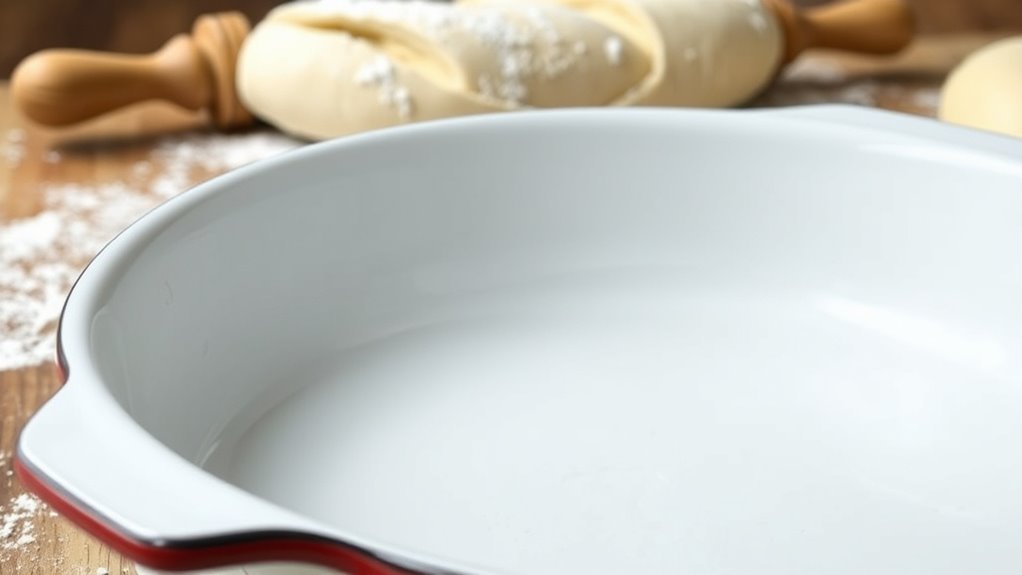
To keep your enamelware in top shape, store it in stable conditions away from extreme temperatures. Avoid sudden changes in heat or cold, which can cause chips or cracks. Using protective liners can also help prevent scratches and damage during storage. Additionally, choosing the appropriate storage methods can extend the lifespan of your enamelware. Proper temperature regulation during storage is essential to prevent thermal stress that could compromise the enamel’s integrity. Regularly inspecting your ware and understanding material properties can further help prevent damage over time.
Proper Storage Conditions
Proper storage is essential for safeguarding your enamelware from chips and cracks. To protect its decorative appeal and ensure food safety, store your enamel pieces in a dry, stable environment. Avoid stacking heavy items directly on top, which can cause damage. Use padding or soft cloths between items to prevent scratches. Keep your enamelware away from extreme temperatures and humidity, as these conditions weaken the material. Here’s a quick guide:
| Storage Tip | Why It Matters | Best Practice |
|---|---|---|
| Store in a dry place | Prevents rust and damage | Use a cupboard with low humidity |
| Avoid stacking directly | Prevents chipping and cracking | Use padding between items |
| Keep away from extreme temps | Preserves integrity and safety | Store at room temperature |
| Use soft liners | Protects decorative appeal | Line shelves with soft cloths |
Maintaining proper environmental conditions also helps extend the lifespan of your enamelware. This care guarantees your enamelware remains beautiful, functional, and safe for food. Additionally, avoiding impact stress during handling minimizes the risk of chipping or cracking over time.
Avoid Sudden Temperature Changes
Sudden temperature changes can quickly damage your enamelware by causing it to crack or chip. Thermal shock occurs when hot and cold items come into contact with the surface too quickly, stressing the enamel. To prevent this, avoid exposing your cookware to rapid temperature fluctuations. Don’t transfer it directly from the freezer to a hot oven or pour cold liquids into a hot dish. Let your enameled piece gradually warm up or cool down to minimize stress on the material. Always allow your cookware to reach room temperature before cleaning or reheating. Proper upfitting techniques can also help ensure the longevity of your enamelware. Incorporating indigenous wellness practices such as mindful handling and respecting the natural materials can further enhance the durability of your cookware.
Use Protective Liners
Using protective liners when storing your enamelware can considerably reduce the risk of chipping and scratching. To protect your cookware, consider these tips:
- Place silicone baking mats or parchment paper between stacked pieces to prevent direct contact.
- Wrap delicate items in soft cloths or bubble wrap for extra cushioning.
- Store enamelware in a dry, stable environment, avoiding areas prone to temperature fluctuations.
- Be mindful of outdoor conditions that can impact the integrity of your enamelware, especially if stored in sheds or garages exposed to moisture and temperature changes. Understanding environmental factors can help in designing environments that minimize stress and potential damage to sensitive items.
Silicone baking mats and parchment paper act as barriers, preventing scratches caused by friction. These simple measures help preserve the enamel’s surface and extend its lifespan. Always handle your enamelware gently when stacking or moving, and use protective liners to keep it in top condition for baking and storage.
What to Do When Enamel Chips or Cracks Occur?
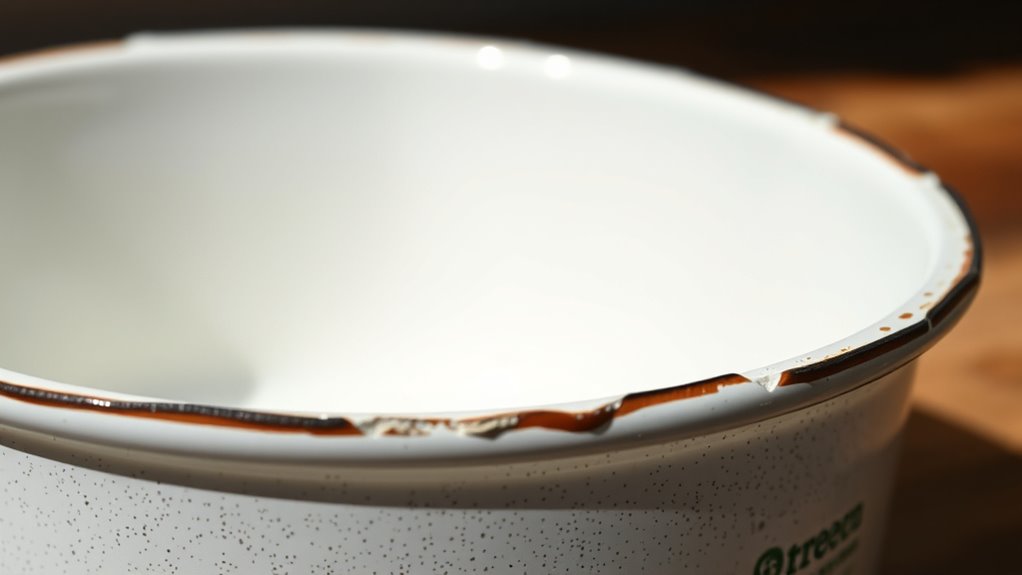
When your enamel cookware develops chips or cracks, it’s important to act promptly to prevent further damage or safety risks. First, inspect the affected area carefully. Minor chips can sometimes be smoothed with gentle enamel repair kits, but avoid using metal tools that could worsen the damage. If the crack is significant, consider discontinuing use to prevent food contamination and further deterioration. To prevent future chips, handle your cookware gently, avoid sudden temperature changes, and use protective liners when baking. If repairs are necessary, follow manufacturer instructions precisely to ensure proper chip prevention and to maintain the integrity of your cookware. Remember, addressing chips early helps prolong your cookware’s lifespan and keeps your baking safe and enjoyable.
Frequently Asked Questions
Can Enamel Chipping Affect Food Safety?
Yes, enamel chipping can affect food safety if the chipped area exposes metal, which might lead to food contamination. You should perform enamel repair promptly to prevent further damage. When enamel chips, bacteria can hide in the cracks, increasing the risk of contamination. Always inspect your cookware regularly, clean it properly, and avoid using damaged pieces to keep your food safe and prevent potential health issues.
Are There Specific Brands More Prone to Chipping?
While no brand is immune, some with a reputation for less rigorous manufacturing quality might be more prone to chipping. You should consider well-established brands known for durability and craftsmanship, as their products often undergo stricter quality control. Be mindful of handling and care instructions, as even the best-enamelware benefits from gentle use. Ultimately, investing in reputable brands can reduce the risk of chipping, ensuring your bread baking experience remains smooth and enjoyable.
Is Enamelware Suitable for Microwave Use?
Enamelware isn’t suitable for microwave use due to its limitations. You should avoid putting it in the microwave because the metal core and enamel coating can cause sparks or damage your appliance. Instead, opt for microwave-safe containers made of glass or microwave-safe plastics. Always check the manufacturer’s guidance, as some enamelware might have specific instructions, but generally, it’s best to keep enamelware out of the microwave to prevent damage or safety hazards.
How Does Temperature Change Impact Enamel Durability?
You’ll be surprised to learn that rapid temperature changes can cause enamel to crack or chip. When heated, thermal expansion stresses the glaze adhesion, especially if you cool it suddenly. This weakens the enamel’s surface, making it more prone to damage. To protect your cookware, avoid drastic temperature shifts and always allow it to cool gradually, ensuring the enamel remains durable and chip-free over time.
Can Enamel Chips Cause Health Hazards Over Time?
Chipped enamel can pose health hazards over time, as it may expose you to underlying metal or porcelain. If you notice chipped enamel, it’s crucial to address it promptly to protect your enamel health. Sharp edges from chipped enamel can also cause cuts or injuries. Regularly inspecting your cookware helps prevent issues, and replacing or repairing damaged pieces ensures you avoid potential health risks associated with chipped enamel.
Conclusion
Taking good care of your enamelware helps it last longer and keeps it looking great. Remember, enamel is durable but not indestructible; about 65% of chipped enamelware results from accidental drops or impacts. By following proper handling, cleaning, and storage tips, you can prevent most chips and cracks. Stay attentive to small damages, as addressing them early can save your cookware from more extensive damage and extend its lifespan for years to come.