Your choice of baking pan considerably influences cookie texture more than changing ingredients. Dark, non-stick pans absorb heat quickly, leading to crisper edges, while light or shiny pans reflect heat, resulting in softer cookies. Adjusting oven temperature and baking time based on your pan’s material helps guarantee the perfect outcome. Knowing how your pan interacts with heat allows you to control whether your cookies are chewy, crispy, or tender—keep exploring to master the art of pan selection.

Get baking supplies delivered free with Prime
- Fast, free delivery on millions of items
- Prime Video, Amazon Music and more included
- Member-only deals all year
Key Takeaways
- Dark, non-stick pans absorb heat quickly, creating crisper cookies, more than ingredient adjustments can achieve.
- Shiny or glass pans reflect heat, resulting in softer, chewier cookies regardless of recipe changes.
- Pan material’s heat conduction influences baking time and final cookie texture more than ingredient tweaks.
- Switching from a light to a dark pan significantly alters cookie crispiness without changing ingredients.
- Properly selecting pan type and color can control final cookie texture more effectively than modifying ingredients.
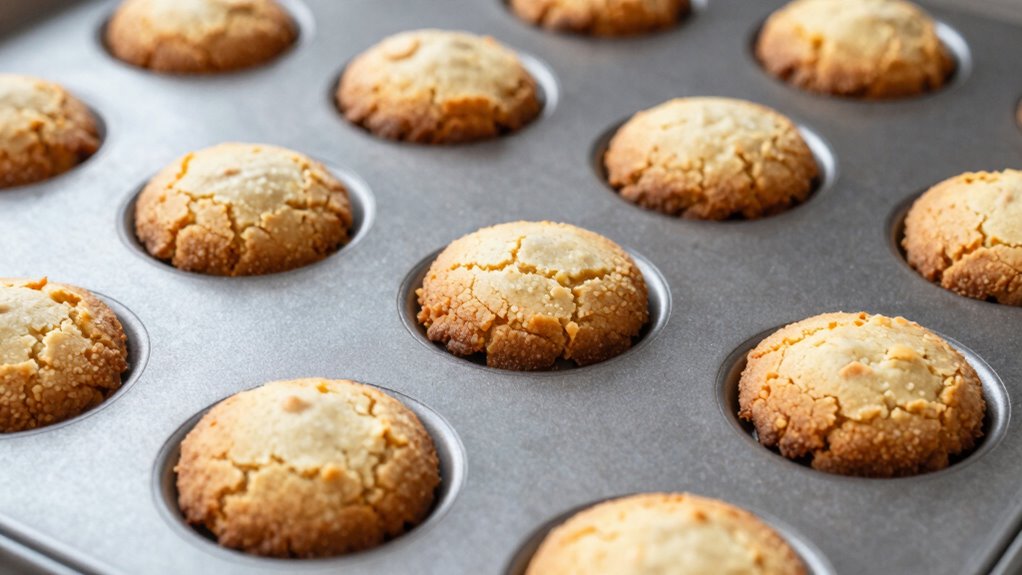
Choosing the right baking pan can dramatically alter the texture of your cookies, making the difference between a crispy edge and a chewy center. The baking surface you select plays a crucial role in how heat is transferred to your dough. For instance, dark, non-stick pans tend to absorb heat quickly, often causing cookies to brown faster and develop a crisper edge. Conversely, light-colored or shiny pans reflect heat, promoting a more even bake and a softer, chewier cookie. You might find that switching pans alone can change your cookie’s final texture without altering ingredients. It’s about understanding how the baking surface interacts with your oven heat. Recognizing the heat conduction properties of your baking pan helps you make more informed choices in your baking process.
Choosing the right pan influences cookie texture—dark pans browning faster, shiny pans baking more evenly.
Oven temperature is another key factor intertwined with your choice of pan. If you’re using a dark, heat-absorbing pan, you may need to lower the oven temperature slightly to prevent over-browning or burning. On the other hand, with a shiny or glass pan, you might need to increase the temperature marginally for the same level of doneness. The goal is to find a balance that works with your particular pan and oven setup. When you bake on a surface that conducts heat differently, the oven temperature becomes a tool to fine-tune your results. Additionally, understanding the thermal conductivity of your baking pan allows you to anticipate how it will influence your baking process.
Your choice of baking surface also affects baking time. A pan that conducts heat quickly will shorten your baking time, potentially leading to cookies that are underdone or unevenly baked if you don’t monitor carefully. Conversely, a pan that heats more slowly might require a longer bake, resulting in a different cookie texture. Knowing your pan’s characteristics, including its material composition, allows you to adjust baking times and temperatures accordingly, giving you more control over the final product. It’s not just about following a recipe; it’s about understanding how your equipment influences the process. By experimenting with different pans and noting their heat transfer qualities, you can refine your baking techniques for consistent results.
In the end, it’s clear that the right baking surface combined with proper oven temperature can make a bigger difference than the ingredients you use. The pan’s material and color shape how heat spreads through the dough, affecting the cookie’s crispiness, chewiness, or softness. By experimenting with different pans and adjusting your oven temperature, you’ll discover how to consistently produce cookies with the perfect texture. It’s a simple yet powerful way to elevate your baking game, transforming ordinary ingredients into extraordinary treats through smart equipment choices.
dark non-stick baking pans for cookies
As an affiliate, we earn on qualifying purchases.
As an affiliate, we earn on qualifying purchases.
Frequently Asked Questions
How Does Pan Material Affect Cookie Crunchiness?
Your pan material directly influences cookie crunchiness by affecting how heat transfers to the dough. A darker pan absorbs more heat, making cookies crisper, especially if you spread them thinly. Using an oven rack placement higher in the oven can also enhance crunchiness by exposing cookies to more direct heat. Additionally, thinner cookies tend to be crunchier, so your choice of pan and placement can help you control the cookie thickness and texture perfectly.
Can Pan Color Influence Cookie Baking Results?
Yes, pan color can influence your cookie baking results. Dark pans absorb heat more quickly, reducing baking time and potentially darkening cookie edges, which can alter the flavor and texture. Light pans reflect heat, leading to longer baking times and softer cookies. So, if you’re aiming for a specific cookie flavor and perfect baking time, choose your pan color carefully to achieve the desired results.
What Pan Shapes Are Best for Uniform Cookies?
You should choose shallow, wide baking pans with a smooth, even baking surface for uniform cookies. These pans help prevent cookie stacking issues by allowing heat to distribute evenly, resulting in consistent baking. Avoid tall or deep pans that can cause uneven heat and irregular shapes. Flat, larger pans provide ample space for cookies to spread out, ensuring they bake uniformly and look professional.
Does Pan Cleanliness Impact Cookie Texture?
Imagine you’re a baker in the 1800s, and yes, even then, cleanliness mattered. A dirty pan can cause uneven heat distribution, affecting cookie texture. Keep your pans spotless to prevent burnt spots or soggy bottoms. Proper oven insulation and placing your baking rack correctly ensure even baking. Dirty pans or poor placement can lead to inconsistent cookies, so always clean your pans thoroughly and consider how your oven’s insulation and rack placement influence heat flow.
How Does Preheating the Pan Alter Cookie Outcomes?
Preheating the pan impacts cookie outcomes by helping control cookie thickness and oven temperature. When you preheat, the cookie dough hits a hot surface instantly, encouraging even spreading and preventing excessive flattening. This results in thicker cookies and a better oven temperature balance. Without preheating, cookies may spread too much, becoming thinner and crisper. So, always preheat your pan to achieve consistent texture and ideal cookie thickness.
shiny glass baking pans for cookies
As an affiliate, we earn on qualifying purchases.
As an affiliate, we earn on qualifying purchases.
Conclusion
Choosing the right pan can transform your cookies, making them chewier or crispier with just a simple switch. Did you know that using a dark, non-stick pan can increase cookie browning by up to 20% compared to lighter pans? So next time you bake, consider your pan choice—it’s a small change with a big impact on texture. Experimenting with different pans could be the key to baking your perfect cookie every time.
cookie baking sheet with heat conduction
As an affiliate, we earn on qualifying purchases.
As an affiliate, we earn on qualifying purchases.
baking pans for crispy or chewy cookies
As an affiliate, we earn on qualifying purchases.
As an affiliate, we earn on qualifying purchases.
Halloween Picks
halloween
As an affiliate, we earn on qualifying purchases.