TL;DR
A kitchen stand mixer can make repeated baking tasks easier, especially mixing thick dough, creaming butter and sugar, and whipping egg whites or cream. Match its bowl and attachments to your usual recipes, check real-world performance and care instructions, and consider a hand mixer if you bake only now and then.
Match bowl size to your usual batch, and check how well the mixer handles small quantities.
Use the flat beater for general mixing, the whisk for air, and the dough hook for yeast dough.
Compare real-world performance and manufacturer batch limits; wattage alone does not predict mixing ability.
A hand mixer may suit occasional baking better when storage space and cleanup matter.
Verify care instructions, warranty terms, replacement parts, and attachment compatibility for the exact model.

Get baking supplies delivered free with Prime
- Fast, free delivery on millions of items
- Prime Video, Amazon Music and more included
- Member-only deals all year
See which baking jobs a stand mixer makes easier
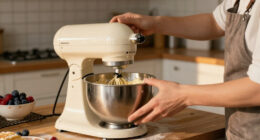
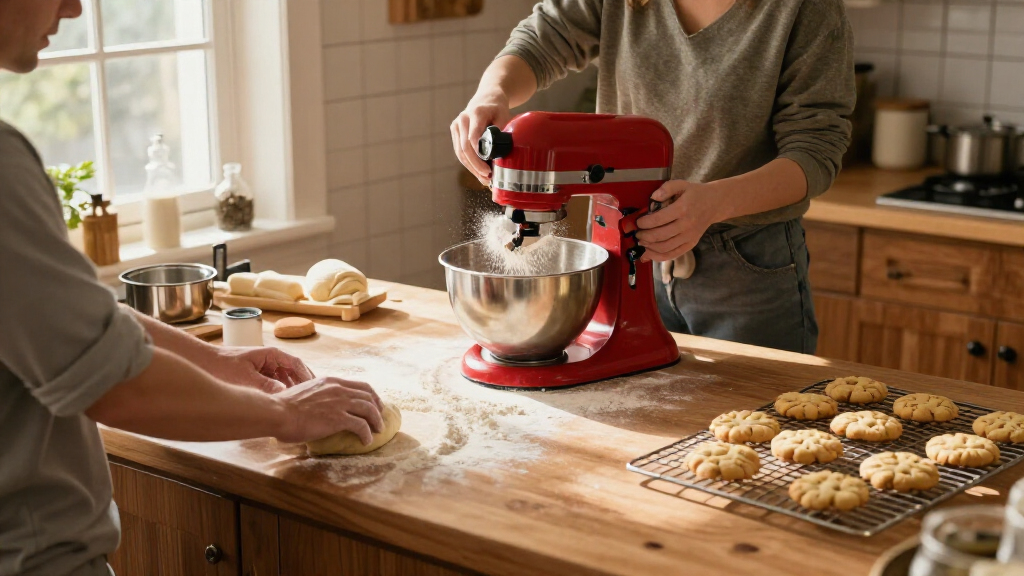
A kitchen stand mixer can make repeated baking tasks easier by holding the mixing attachment in motion while you measure, scrape, or prepare the next ingredient. It’s especially useful for thick cookie dough, creaming butter and sugar, and whipping egg whites or cream. A mixer saves hands-on effort; it doesn’t make baking technique automatic. Think about a Saturday when you’re making two dozen cookies. The mixer can cream softened butter and sugar while you line the trays, then bring the dough together without asking you to grip a hand mixer through a thick, sticky mixture. That matters most when the mixing itself is tiring or takes long enough to interrupt other steps. For one quick batch of pancake batter, though, a whisk may be faster and easier to wash; setting up a large appliance can cost more time than it saves. A stand mixer is a convenience tool, not a baking requirement. Many cakes, cookies, and breads can be made with a hand mixer or by hand, although a hand mixer may struggle with a dense dough. The tradeoff is between effort and overhead: a stand mixer reduces the work of sustained mixing, but brings purchase cost, storage, setup, and cleanup. You still need to scrape the bowl when flour clings to the sides, and cake batter can turn tough if you overmix it after adding flour. The machine’s consistency can help with a recipe, but it cannot judge when the batter is ready for you. The useful question is not “Can this machine bake everything?” but “Which jobs do I repeat?” If you bake bread every weekend, steady mixing may matter more than extra accessories because the machine takes on a demanding, recurring task. If you make a birthday cake twice a year, storage space and price may count more than a dough hook you rarely use. Frequency and effort together are a better guide to value than the number of recipes a mixer could theoretically make.Products Worth Considering

KitchenAid Artisan Series 5-Quart Tilt-Head Stand Mixer, Juniper (KSM150PS)

Cuisinart SM-50NAS 5.5-Quart Stand Mixer, 12 Speeds, White Linen

Cuisinart Chef's Classic Stainless Steel Cookware Set, 11-Piece
As an affiliate, we earn on qualifying purchases.
Choose attachments that fit the recipes you actually bake
The three common stand mixer attachments cover most home baking: a flat beater for general mixing, a wire whisk for adding air, and a dough hook for yeast dough. Start with the recipes you make most often, then check which attachments come with the model and which cost extra. The right attachment affects both the texture you can achieve and how much work the machine has to do. The flat beater handles cake batter, cookie dough, and frosting. It’s the workhorse for creaming butter and sugar until the mixture looks pale and fluffy. That step traps air in the butter, which helps provide lift in many baked goods; cold butter or an unsuitable beater can leave the mixture uneven. The wire whisk is for whipped cream and meringue, where you want a cloud of air rather than a dense paste. The dough hook kneads yeast dough for bread or pizza, subject to the manufacturer’s batch and mixing-time guidance. It is designed to work a cohesive dough, but a heavy or oversized batch can put more strain on the mixer than a light cake batter does. For example, if your Sunday routine is pizza night, a dough hook can keep your hands free while the dough gathers around it. If your favorite bake is pavlova, the whisk matters more because incorporating air is central to the result. Optional accessories such as pasta makers and food grinders can expand a mixer’s uses, but compatibility varies by brand and product line; check the exact model and whether an attachment is included or sold separately. Their added versatility has a cost in money and storage, so it only pays off if you expect to use them. Use the right attachment, then follow the recipe. A whisk won’t knead bread, and a dough hook won’t whip cream into soft peaks. Even with the right tool, your timing matters: once flour enters a cake batter, mix only until it disappears. For a home baker making mostly cookies, the flat beater may see far more use than every optional gadget combined. Choosing for the attachments you’ll use regularly keeps the machine practical and avoids paying for a collection that stays in the cupboard.Compare size, mixing ability, and design before you buy
Choose a stand mixer by comparing your typical batch size, small-batch performance, stability, controls, and available space. Bowl capacity is only one clue: a large bowl can hold more, but the beater still needs to reach a small amount of ingredients effectively. These factors work together. A bowl that suits a double batch may be awkward for a single one, while a powerful mixer that moves across the counter can still be unpleasant to use.| What to compare | Why it matters | Example to check |
|---|---|---|
| Bowl and batch limits | Capacity labels alone don’t show how well the mixer handles small or dense batches. | Can it mix one batch of frosting without leaving butter stuck at the bottom? |
| Performance under load | Wattage alone cannot predict results across brands. | Look for reviews that assess dense dough and longer mixing times. |
| Stability and controls | A stable base helps with stiff mixtures; gradual starts can reduce splashing. | Will it stay planted while mixing your usual cookie dough? |
| Shape and access | Different designs suit different counters and mixing habits. | Can you remove the bowl and add ingredients comfortably? |
Decide whether a mixer earns its counter space
A stand mixer is most useful when you bake often, work with thick mixtures, or make larger batches; occasional bakers may get more value from a hand mixer. The trade is simple: less effort during mixing in exchange for higher cost, more storage needs, and extra cleanup. How often you bake determines how often the benefits repay those costs. Imagine two kitchens. One baker makes bread, cookies, and meringue every week; a heavy mixer can take over repetitive work and leave both hands free for other steps. With frequent use, the time and effort saved can add up. The other baker makes a single birthday cake each month and has to clear the counter to use the machine. For that person, setup and cleanup occur every time, but the hands-free benefit is less frequent; a hand mixer stored in a drawer may be the more practical choice. Before buying, measure the counter or cupboard where the mixer will live. These appliances are bulky, and lifting a heavy model from a low shelf can make “convenient” feel like a chore. If you need to move it before each bake, consider whether that friction will reduce how often you use it. Also think about your usual batch: a larger bowl helps with bigger quantities, but a small recipe can be awkward if the beater doesn’t reach the ingredients well. Some models offer beater-height adjustment or smaller bowls; confirm the feature for the exact model. A good fit for both your recipes and your kitchen makes regular use more likely.| Your baking routine | A likely fit |
|---|---|
| Weekly bread or several batches at once | Consider a stable stand mixer with suitable batch limits. |
| Occasional cakes and light batters | A hand mixer may cover your needs with less storage space. |
| Small recipes and limited counter space | Check small-batch mixing and where the appliance will live. |
Get better results by matching the mixer to your method
To get good results from a stand mixer, set it up securely, use the right attachment, add ingredients as your recipe directs, and stop when the mixture reaches the texture you need. The machine moves the beater; you still control the ingredients, timing, and batch size. Those choices matter because the same mixer can produce very different results when a recipe is overworked or the bowl is overloaded.- Set the mixer on a level, stable counter and check that the bowl and attachment are locked in place.
- Choose the flat beater, whisk, or dough hook for the job, then check your recipe against the manufacturer’s batch limits.
- Start at a low speed when adding flour or other dry ingredients to keep a pale cloud off your counter.
- Pause to scrape the bowl if ingredients collect along its sides or base.
- Stop mixing when the recipe’s visual or texture cue appears, and clean the parts according to the care instructions.