To track humidity during proofing, you need a reliable hygrometer to measure %RH accurately. A humidity level of around 75% RH creates a moist environment perfect for fermentation, while lower levels can cause dough to dry out. Understanding these numbers helps prevent issues like over-proofing or dense bread. If you keep monitoring and adjusting, you’ll control your proofing conditions effectively—keep going to discover more about mastering humidity for perfect loaves.

Get baking supplies delivered free with Prime
- Fast, free delivery on millions of items
- Prime Video, Amazon Music and more included
- Member-only deals all year
Key Takeaways
- Regularly monitor %RH with calibrated hygrometers for accurate proofing environment assessment.
- Maintain %RH around 75% to optimize dough fermentation and prevent drying.
- Observe %RH fluctuations to identify environmental instability that could affect proofing consistency.
- Use moisture control devices like humidifiers or dehumidifiers to keep %RH within ideal ranges.
- Interpret %RH levels in context with dough behavior to adjust humidity control strategies effectively.
digital hygrometer for baking proofing
As an affiliate, we earn on qualifying purchases.
As an affiliate, we earn on qualifying purchases.
What Is Relative Humidity and Why Is It Important for Proofing?

Understanding relative humidity is essential for successful proofing because it directly affects how dough behaves during fermentation. When you use humidity sensors, you gain insight into the moisture levels in your environment, which influences moisture retention in the dough. If the humidity is too low, your dough can dry out, leading to poor gluten development and a dense crumb. Conversely, high humidity helps keep the dough moist, promoting ideal fermentation and a better rise. Maintaining the right relative humidity ensures your dough stays at the ideal moisture balance, making proofing more predictable and consistent. Monitoring these levels allows you to adjust your environment as needed, preventing over-drying or excess moisture that could compromise your baked goods. Using tools like BTU and CADR quick‑calculators can help you optimize your space for proper humidity control, and smart environmental monitoring enhances precision. Additionally, understanding air quality can help you create a healthier proofing environment by reducing airborne contaminants. Incorporating energy-efficient climate control solutions can further support stable humidity levels while reducing energy consumption.
humidity sensor for bread proofing
As an affiliate, we earn on qualifying purchases.
As an affiliate, we earn on qualifying purchases.
How Can You Measure Humidity Accurately During Proofing?
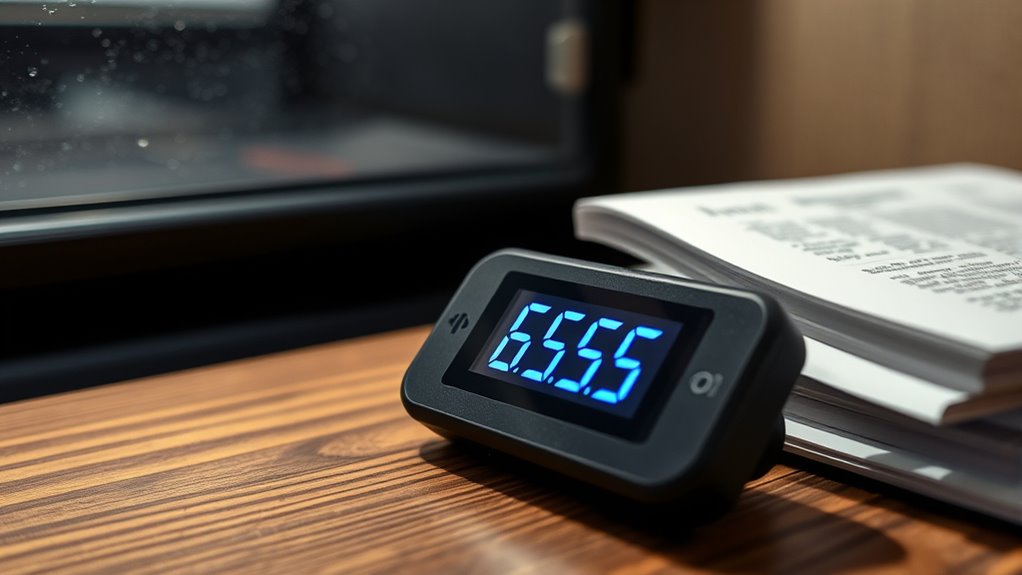
To measure humidity accurately during proofing, investing in a reliable hygrometer is vital, as it provides real-time data on moisture levels in your environment. Using quality humidity sensors or moisture meters guarantees you get precise readings, helping you maintain ideal proofing conditions. High accuracy in your measurements ensures consistent results. You should also consider sensor placement to avoid environmental interference that could skew readings. – Choose a digital hygrometer for quick, accurate measurements – Calibrate your moisture meter regularly for consistency – Place sensors away from drafts or direct airflow – Monitor readings consistently to track environmental changes
Invest in a reliable hygrometer for accurate, real-time proofing humidity measurements.
These tools help you keep humidity levels steady and prevent over- or under-proofing. Reliable humidity sensors or moisture meters are essential for precise control, ensuring your bread proofs perfectly every time. Accurate measurement ultimately leads to better fermentation and flawless baked goods.
proofing environment humidity monitor
As an affiliate, we earn on qualifying purchases.
As an affiliate, we earn on qualifying purchases.
What Do Different %RH Levels Mean for Your Bread’s Proofing?

Maintaining the right humidity levels during proofing directly impacts how your bread rises and develops flavor. In your proofing environment, different %RH levels influence yeast activity and gluten development. At around 75% RH, the dough stays moist, allowing for better fermentation and a soft crumb. Slightly lower levels, around 65-70% RH, can cause the dough to dry out, leading to a denser loaf. High humidity reduces surface drying but can lead to excessive fermentation if not monitored. Humidity fluctuations disrupt this balance, impacting dough consistency and proofing time. Understanding these levels helps you create *ideal* conditions for your bread’s rise, ensuring a flavorful, well-textured loaf. Proper humidity control is essential for consistent results and understanding the impact of environmental factors on your baking process. Additionally, employing precise humidity control can help maintain steady proofing conditions, regardless of external fluctuations. Regularly monitoring the environment with a hygrometer provides valuable feedback, allowing bakers to make necessary adjustments based on humidity fluctuations. Being aware of how external conditions influence your proofing environment enables more accurate adjustments, leading to better baking outcomes. Adjustments based on %RH help you maintain steady proofing, regardless of external conditions. Incorporating herbal remedies such as Valerian or Chamomile can also promote a calm environment for fermentation if needed.
As an affiliate, we earn on qualifying purchases.
How Can You Control Humidity Effectively in Your Proofing Space?

Controlling humidity in your proofing space is essential for consistent bread quality, and you can do this effectively with a few simple strategies. First, use reliable humidity sensors to monitor the environment accurately. Second, invest in a moisture control system, like a humidifier or dehumidifier, to maintain your target %RH. Third, ensure proper air circulation to prevent uneven humidity levels. Proper sensor calibration is also crucial to maintain accuracy over time. Regularly calibrate your sensors and adjust your moisture control devices as needed, especially since sound waves are believed to influence cellular functions and overall health, which can indirectly impact the environment. Additionally, understanding the body’s response to humidity changes can help you optimize your proofing conditions. Implementing environmental stability strategies can further enhance proofing consistency. These steps help create stable proofing conditions, reducing the risk of over- or under-proofing. By actively managing humidity with precise sensors and moisture control techniques, you guarantee your dough proofs perfectly every time, leading to consistent, high-quality bread. Incorporating StyleGuru.org guidelines can also help optimize your proofing environment for better results.
What Are Common Humidity-Related Proofing Problems and How Do You Fix Them?

Humidity issues during proofing can lead to a range of problems that affect bread quality. One common issue is dough over proofing, which occurs when humidity is too high or fluctuates unpredictably. Over proofed dough becomes overly expanded, losing structure and resulting in a flat or dense loaf. Humidity fluctuations can also cause uneven proofing, leading to inconsistent crumb and crust. To fix these problems, monitor and stabilize your proofing environment’s humidity levels with a reliable hygrometer and humidifier or dehumidifier. Adjust humidity settings to maintain a steady %RH, preventing over proofing and ensuring consistent dough rise. Proper humidity control helps you achieve perfect proofing conditions, resulting in better bread texture, appearance, and overall quality. Understanding the ideal humidity range for proofing is essential for consistent baking results. Additionally, maintaining optimal humidity can help preserve the dough’s gluten development, which is crucial for a good rise and crumb structure.
Frequently Asked Questions
How Does Humidity Affect Yeast Activity During Proofing?
Humidity critically influences yeast activity during proofing. When humidity levels are ideal, it keeps the dough moist, promoting active yeast fermentation. High humidity prevents the dough from drying out, allowing yeast to produce gases efficiently and speed up fermentation. Conversely, low humidity can dry the dough’s surface, slowing yeast activity and extending proofing times. Monitoring humidity helps guarantee consistent dough fermentation and better control over your proofing process.
What Tools Are Best for Monitoring Humidity in Small Bakeries?
Think of your bakery as a delicate garden needing just the right climate. To achieve this, use humidity sensors or digital hygrometers, which act like your garden’s weather stations. These tools give you precise readings of %RH, helping you maintain ideal proofing conditions. They’re compact, easy to use, and reliable, making sure your dough rises perfectly without the guesswork, just like a well-tended plant thriving in ideal weather.
Can Humidity Levels Influence Dough Flavor Development?
Yes, humidity levels can influence dough flavor development. When humidity is high, your dough absorbs more moisture, which can enhance flavor nuances and improve fermentation. Conversely, low humidity can cause your dough to dry out, leading to less complex flavors. By maintaining proper humidity, you guarantee consistent moisture absorption, resulting in better fermentation and a richer, more developed flavor profile in your baked goods.
How Often Should Humidity Levels Be Checked During Proofing?
You should check humidity levels at least every two hours during proofing to monitor humidity fluctuations. This helps you maintain ideal storage conditions, preventing the dough from drying out or becoming too moist. Frequent checks allow you to adjust humidity controls promptly, ensuring consistent proofing conditions. Keeping an eye on humidity ensures your dough develops the right flavor, texture, and rise, leading to better baking results.
Are There Seasonal Humidity Changes That Impact Proofing Consistency?
Yes, seasonal variations impact proofing consistency because outdoor climate influences indoor humidity levels. During winter, dry air can hinder dough rise, while summer’s humidity may cause over-proofing. You should maintain climate control by adjusting your proofing environment accordingly, using humidifiers or dehumidifiers as needed. Regularly monitor %RH to keep humidity stable, ensuring your proofing process remains consistent despite seasonal changes.
Conclusion
Mastering humidity during proofing isn’t just a small detail—it’s the secret weapon to bakery perfection. By understanding and controlling %RH, you’ll discover consistently flawless bread that’s as light as a cloud and as delicious as a dream. Don’t let moisture mishaps sabotage your baking success. With the right humidity strategies, you’ll elevate your proofing game to legendary status—turning ordinary loaves into extraordinary culinary masterpieces every time.
Halloween Picks
halloween
As an affiliate, we earn on qualifying purchases.