
The shape of your dough container plays a key role in fermentation because it affects how heat is distributed and retained, impacting dough expansion and proofing. Properly shaped containers support easier handling and allow for better monitoring of rising progress. They also influence how the dough interacts with the environment, which can affect gluten development and flavor. Keep exploring to discover more about how container design can improve your bread-making results.

Get baking supplies delivered free with Prime
- Fast, free delivery on millions of items
- Prime Video, Amazon Music and more included
- Member-only deals all year
Key Takeaways
- The shape of the container influences dough expansion and proofing efficiency, affecting final bread volume and texture.
- Container shape impacts ease of handling and monitoring fermentation progress.
- Properly shaped containers support uniform heat distribution, promoting consistent fermentation.
- The shape determines how well dough maintains its structure during fermentation, influencing crumb quality.
- Container design can facilitate or hinder heat and moisture retention, shaping fermentation outcomes.
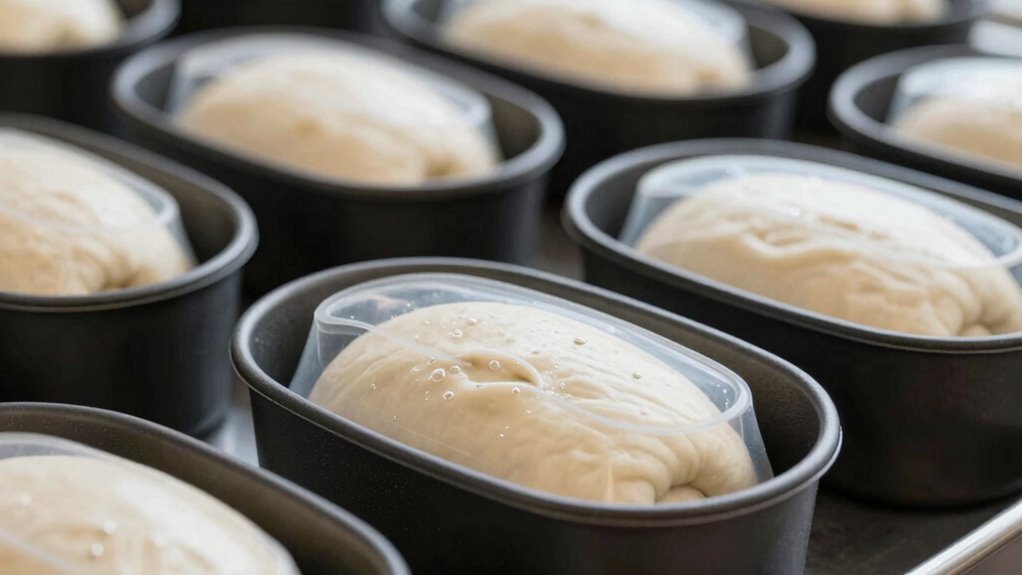
Using the right dough container can considerably impact the fermentation process, guaranteeing your bread develops the perfect flavor and texture. The choice of dough container materials plays a pivotal role in how your dough rises and develops during fermentation. For example, glass containers are non-reactive, allowing you to monitor the dough easily while providing even heat distribution. Plastic containers are lightweight and affordable, but they can sometimes retain odors or stain over time. Stainless steel, on the other hand, is durable and non-porous, making it a good choice for frequent bakers. Each material interacts differently with your dough, influencing how it ferments and how easily you can observe its progress. Additionally, some materials may influence the heat retention during fermentation, affecting the final bread quality. The interaction between container material and fermentation environment can also impact moisture retention, which is crucial for consistent bread texture. Proper insulation of your dough container can also help maintain an optimal fermentation environment, especially in fluctuating temperatures. This is particularly important when working in environments with variable ambient conditions, where maintaining a steady microclimate around the dough is essential for consistent results. Furthermore, selecting a container with the right shape can facilitate easier handling and better dough expansion during proofing.
Choosing the right dough container material influences fermentation, dough development, and how easily you can monitor your bread’s progress.
Beyond materials, fermentation temperature is another essential factor that shapes your bread’s outcome. Most doughs ferment best within a specific temperature range—usually between 75°F and 78°F (24°C to 26°C). If the environment is too cold, fermentation slows down, resulting in a dense crumb and underdeveloped flavors. Conversely, if it’s too warm, fermentation speeds up excessively, potentially leading to over-proofed dough that collapses or develops off-flavors. The container you choose can influence this temperature. For instance, a thick-walled container may insulate the dough, maintaining a steady temperature, while a thin or transparent container might allow heat to escape or fluctuate more easily. Proper container insulation can help stabilize fermentation conditions, especially in less controlled environments. It’s important to consider how your dough container interacts with your environment. If you’re fermenting in a colder space, selecting a container with better insulation or placing it in a warm spot can help guarantee consistent fermentation. Conversely, in a warm climate, a less insulating container might prevent overheating. You can also control fermentation temperature by covering your container with a damp towel or using a proofing box, but the container’s material and design still influence how well your dough maintains an ideal environment. Recognizing how biodiversity in baking environments influences fermentation can help bakers create more predictable and superior results.
In the end, the shape and material of your dough container, combined with careful control of fermentation temperature, directly impact the development of gluten structure, flavor, and crumb texture. Choosing the right container isn’t just about convenience; it’s about creating the perfect conditions for fermentation. By paying attention to these factors, you set yourself up for bread that’s perfectly risen, flavorful, and with the texture you desire. Small adjustments in your choice of container and environment can make a big difference in the final outcome of your baking.
dough proofing container with shape
As an affiliate, we earn on qualifying purchases.
As an affiliate, we earn on qualifying purchases.
Frequently Asked Questions
How Does Container Shape Affect Yeast Activity During Fermentation?
The shape of your dough container influences yeast activity by affecting heat retention and circulation. A rounded container promotes even shape heat distribution, preventing hot spots that can slow fermentation. Insulation in the container helps maintain consistent warmth, encouraging active yeast growth. When you choose a shape that retains heat well and promotes proper insulation, you guarantee a steady fermentation process, resulting in better dough rise and flavor development.
Can Container Material Influence Dough Flavor Development?
Did you know that the material of your dough container can influence flavor development? You notice how container aesthetics and material durability matter—they impact heat retention and gas exchange, affecting fermentation. For example, glazed ceramic offers a neutral environment, enhancing subtle flavors, while stainless steel’s durability ensures consistent results. Selecting the right material helps develop complex flavors, making your bread more aromatic and flavorful.
Do Different Shapes Lead to Uneven Fermentation?
Different shapes can lead to uneven fermentation because they affect dough elasticity and temperature regulation. For instance, tall, narrow containers may trap heat unevenly, impacting yeast activity, while wide containers promote even temperature distribution. These differences influence how dough rises and ferments, so choosing the right shape helps maintain consistent fermentation. You can improve results by selecting containers that support even heat and allow dough to stretch smoothly.
How Does Container Size Impact Fermentation Time?
Larger containers slow down fermentation, while smaller ones speed it up, because of dough elasticity and gas retention. When you use a bigger container, the dough has more space to expand, which takes longer to ferment fully. Conversely, smaller containers limit expansion, leading to quicker fermentation. So, by choosing the right size, you control fermentation time, ensuring ideal gas retention and dough elasticity for perfect results every time.
Are There Specific Container Shapes Best for Sourdough?
For sourdough, round containers with high sides work best because they promote even fermentation and preserve the dough’s shape. Aesthetically, simple glass or ceramic containers look nice and let you monitor the process. Maintaining the right fermentation temperature is easier in these shapes, as they help retain heat and moisture. Avoid wide, shallow containers, which can cause uneven fermentation and affect the dough’s rise.
insulated bread fermentation container
As an affiliate, we earn on qualifying purchases.
As an affiliate, we earn on qualifying purchases.
Conclusion
Choosing the right dough container is like picking the perfect dance partner; it guides your dough through a smooth, rhythmic fermentation. The shape and material influence how your dough rises, breathes, and develops flavor. When you select wisely, you’re setting the stage for a beautiful performance—crisp crusts, airy crumb, and all. So, pay attention to your container, and let it be the silent conductor of your baking symphony.
As an affiliate, we earn on qualifying purchases.
stainless steel proofing container
As an affiliate, we earn on qualifying purchases.
As an affiliate, we earn on qualifying purchases.
Halloween Picks
halloween
As an affiliate, we earn on qualifying purchases.