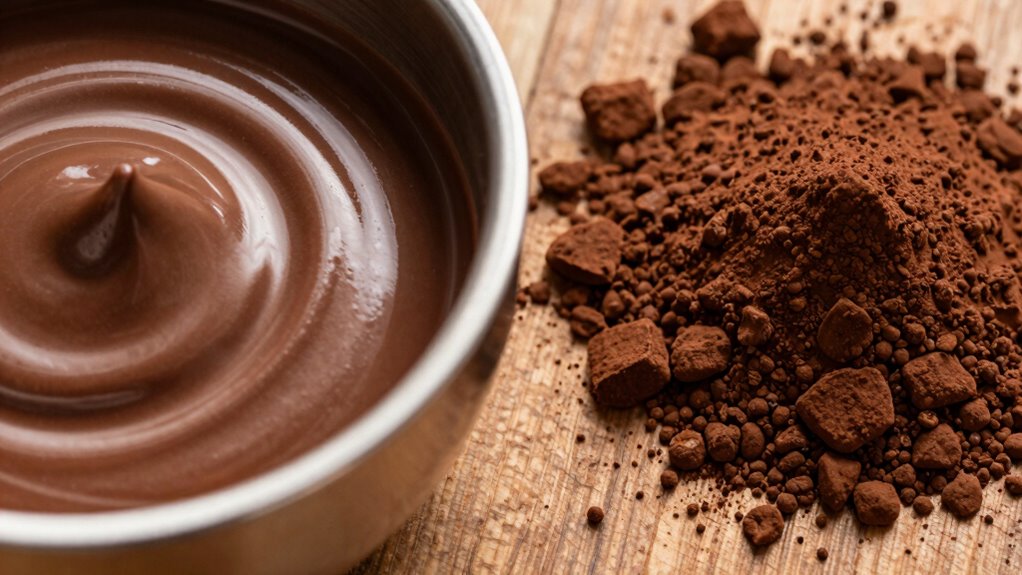

A melanger helps you refine texture and grind ingredients into a smooth, uniform mix, essential for high-quality chocolates and confections. Refining focuses on achieving that perfect, silky consistency by reducing particle size and exposing flavors, while grinding breaks down larger particles and enhances flavor development. Knowing when to switch from refining to grinding and adjusting settings guarantees the best results. Keep exploring; you’ll discover how to master these techniques for perfect confections.
Key Takeaways
- Refining texture involves reducing particle size until smooth and uniform, improving mouthfeel and appearance.
- Grinding focuses on breaking down ingredients further to create a fine, paste-like consistency.
- Refining typically occurs after initial grinding to achieve the desired smoothness and gloss.
- Proper balance between grinding and refining ensures optimal particle size and flavor development.
- Monitoring temperature and particle size helps transition effectively from grinding to refining stages.
What Does a Melanger Do in Confection Making?
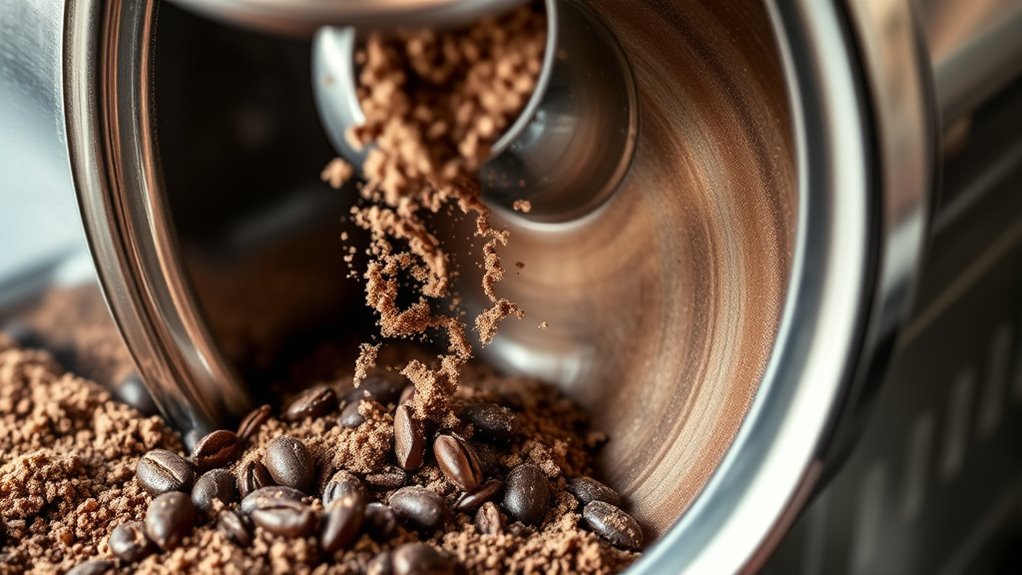
A melanger plays a vital role in confection making by grinding and refining ingredients into a smooth, uniform mixture. It helps develop the right texture and consistency, essential for high-quality chocolates and confections. During the process, you can incorporate tempering techniques by controlling temperature and crystallization, which ensures a glossy finish and crisp snap. Additionally, a melanger enhances flavor pairing by thoroughly blending ingredients, allowing subtle flavors to meld seamlessly. This mixing process reveals complex flavor profiles and improves overall taste. The chemical reactions that occur during conching and tempering are crucial for mastering texture and flavor development. Understanding these processes allows for better control over the final product’s quality. Mastering its use is also crucial for achieving professional-quality confections with perfect texture and flavor harmony. Furthermore, proper use of a melanger can help optimize the particle size, resulting in a smoother mouthfeel and better melt-in-the-mouth experience.
Why Is Refining Texture Important in Chocolate?
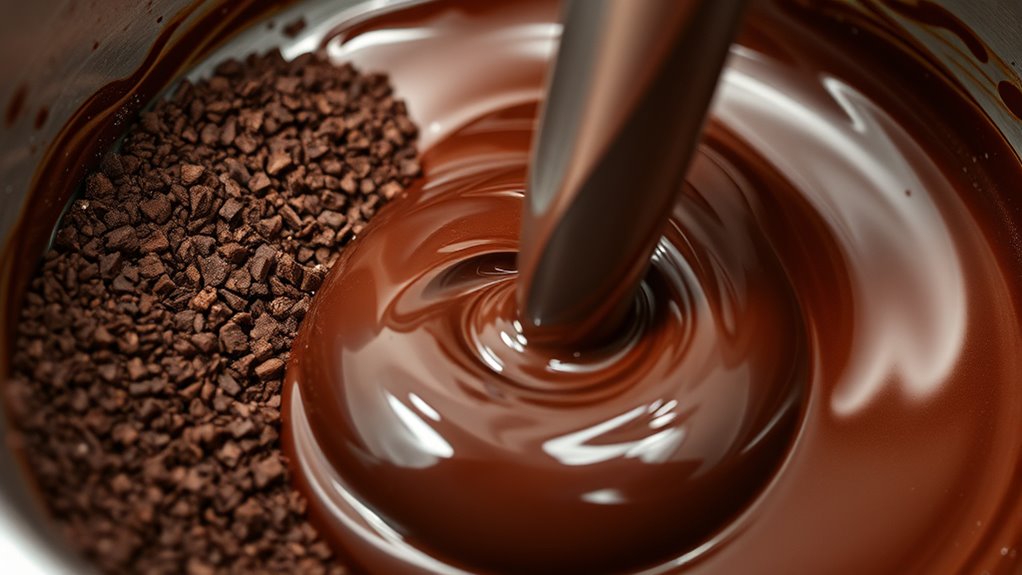
Refining the texture of chocolate directly impacts its mouthfeel and overall quality. When you focus on proper refining, you guarantee a smooth, creamy consistency that enhances the tasting experience. This step influences how the chocolate melts in your mouth, making it more pleasurable and luxurious. A well-refined texture also simplifies the tempering process, helping you achieve a glossy finish and crisp snap. Additionally, ingredient selection plays a vital role; high-quality ingredients respond better to refining, resulting in a refined, well-balanced product. Skipping or rushing this step can lead to gritty or uneven textures, undermining both appearance and taste. The use of advanced refining techniques can further improve the uniformity and finesse of the final product. Proper project management support ensures consistency and quality control throughout the process, ultimately leading to a superior chocolate. Incorporating quality control measures during refining helps identify and correct inconsistencies early on. Understanding the refining process and its impact on texture is essential for achieving a polished, professional-quality chocolate. Moreover, paying attention to equipment maintenance ensures optimal performance and results during refining. Ultimately, refining texture isn’t just about aesthetics—it’s fundamental for creating a polished, professional-quality chocolate.
How Does Grinding Break Down Particles for Better Flavor?

When you grind chocolate, you reduce the size of the particles, which helps release more flavor compounds. Smaller particles also increase the surface area exposed, allowing better interaction with other ingredients. This process enhances the overall richness and depth of your finished chocolate. Additionally, controlling the grind can help prevent the development of undesirable odors that may result from over-processing. Proper grinding techniques are essential for achieving the desired texture and flavor profile in your chocolate, similar to the complexities seen in biography development of multifaceted characters. Recognizing the importance of consecration in the process can deepen your understanding of how tradition and spiritual significance influence craftsmanship.
Particle Size Reduction
Ever wonder how grinding enhances flavor? It primarily works through particle size reduction, which improves homogenization and uniformity. When you grind ingredients, you break down larger particles into smaller, more consistent pieces. This process promotes better particle dispersion throughout the mixture, ensuring flavors blend evenly. Smaller particles increase the surface area exposed to heat and moisture, allowing for more efficient extraction of flavors, oils, and aromas. This not only boosts taste but also creates a smoother texture. By controlling particle size, you also prevent uneven mixing and separation over time. Overall, particle size reduction is essential for achieving a harmonious, flavorful blend, making your ingredients more accessible to extraction and enhancing the final product’s quality.
Surface Area Exposure
Grinding increases the surface area of ingredients by breaking larger particles into smaller fragments, exposing more of their inner surfaces. This enhanced particle exposure allows flavors, aromas, and oils to be released more efficiently during processing. A greater surface area means more contact with heat, moisture, or other ingredients, which intensifies the flavor development. When particles are broken down, their increased surface area enables enzymes and chemical reactions to occur more rapidly, improving texture and taste. This process is also influenced by the particle size distribution, which affects how evenly ingredients are broken down and how consistent the final texture will be. This is especially important in chocolate and spice processing, where flavor extraction relies on maximizing particle exposure. Additionally, controlling the grind size helps manage flavor extraction and prevents over-processing that could lead to undesirable textures. By controlling grinding, you optimize surface area, ensuring ingredients are more accessible for flavor enhancement, resulting in a richer, more complex final product.
When Should You Switch From Refining to Grinding?
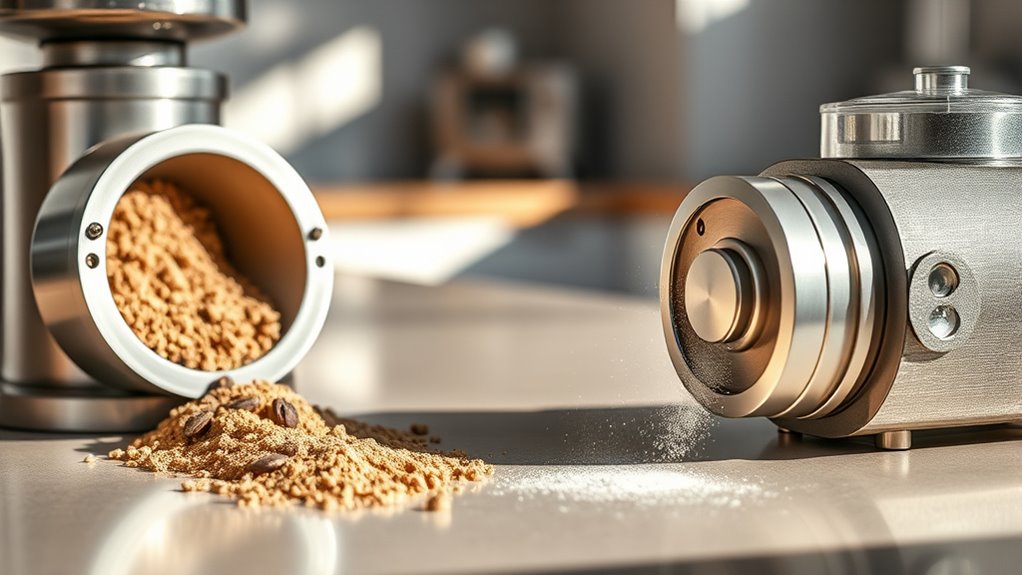
Deciding to switch from refining to grinding depends on the chocolate’s desired texture and your progress. When the mixture reaches a smooth, paste-like consistency with minimal gritty particles, it’s time to switch. Keep an eye on temperature control, as overheating can alter flavor and texture. During refining, gradually increase motor speed to improve particle size reduction. Once the mixture is sufficiently smooth and cohesive, lowering the motor speed for grinding helps refine the texture further without introducing heat. If you notice the temperature rising too much or the mixture becoming too warm, pause and cool it down. Monitoring heat management during processing is crucial to prevent flavor degradation and ensure optimal texture. Additionally, observing particle size reduction can help determine the ideal point to transition between refining and grinding, ensuring you achieve the right balance between texture and flavor. Proper equipment maintenance also plays a vital role in maintaining consistent processing efficiency, which can help you achieve the desired results more reliably. Recognizing the subtle cues in texture development allows for better control over the final product. Knowing when to switch ensures you achieve the right balance between refining and grinding, resulting in ideal texture and flavor.
What Are the Best Techniques and Settings for Texture and Grind?

To achieve the perfect chocolate texture and grind, you should focus on selecting the right techniques and adjusting your machine settings accordingly. Start by choosing a consistent speed that promotes even grinding without overheating the chocolate. Next, tweak your temperature settings to optimize tempering techniques and enhance flavor development. Consider these steps:
- Use a medium to low speed for smooth, uniform texture.
- Adjust the temperature gradually to avoid overheating and preserve temper.
- Incorporate pauses for scraping to ensure even grinding.
- Monitor the consistency, stopping when the desired fineness and gloss are achieved.
- Pay attention to the passive voice in your instructions to make your directions clearer and more direct.
- Additionally, understanding the home energy implications can help optimize your equipment for better efficiency and safety during the refining process. Proper technique not only improves the final product but can also reduce energy consumption and extend the lifespan of your equipment.
- Maintaining proper temperature control is essential for consistent results and preventing machine wear. Being aware of financial literacy can also assist in choosing energy-efficient equipment that aligns with your budget and long-term savings.
Avoid These Common Mistakes and Tips to Master Your Melanger
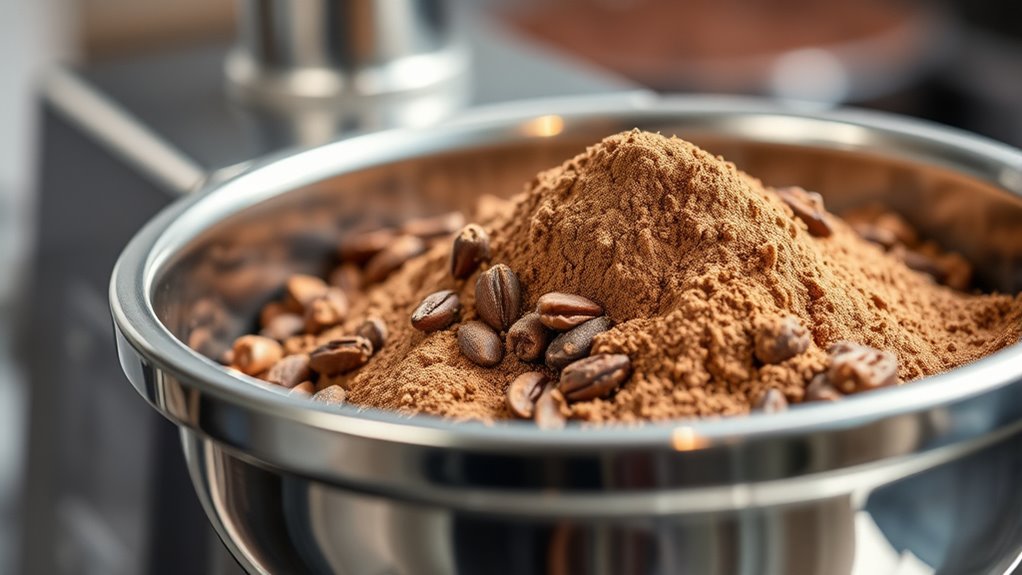
Even with the right techniques and settings, common mistakes can hinder your progress and affect the quality of your chocolate. One mistake is ignoring proper tempering techniques, which are vital for glossy appearance and a good snap. Skipping or rushing tempering can lead to dull, streaky chocolate with poor flavor development. Another pitfall is over-processing or under-processing your ingredients, resulting in uneven texture or lost flavor nuances. Be attentive to consistency, and don’t open the melanger too often, which cools the mixture and interrupts grinding. Additionally, avoid adding ingredients at the wrong time, as this can compromise flavor development. Proper temperature control is essential for achieving the ideal texture and shine in your finished product. Maintaining consistent processing times helps prevent over- or under-processing, ensuring a smoother final product. Mastering these tips helps guarantee your chocolate is smooth, shiny, and bursting with flavor, elevating your craftsmanship and final product quality.
Frequently Asked Questions
How Do Different Materials Affect Melanger Performance?
Different materials considerably impact your melanger’s performance by affecting texture consistency and efficiency. Harder materials, like stone or stainless steel, promote smoother, more uniform results, while softer or uneven ingredients can slow down the process and cause inconsistent texture. Your choice of material influences how well ingredients are refined, so selecting the right one guarantees ideal performance and a smoother, more consistent end product.
Can the Melanger Be Used for Non-Chocolate Ingredients?
Yes, you can use your melanger for alternative ingredients like nuts, seeds, or spices. It’s great for flavor infusion, allowing you to create unique pastes or blends. Just be sure to clean it thoroughly between uses to prevent cross-contamination of flavors. Using it for non-chocolate ingredients broadens its versatility, making it a handy tool for experimenting with different textures and taste combinations for your culinary creations.
What Maintenance Is Required for Optimal Melanger Operation?
To keep your melanger running smoothly, follow regular cleaning routines to prevent residue buildup and guarantee ideal performance. You should also check and lubricate the moving parts as needed to reduce wear and tear. Always unplug the machine before cleaning or maintenance, and use gentle, food-safe cleaners. Proper care extends the lifespan of your melanger and guarantees consistent results every time you use it.
How Does Ambient Temperature Influence Refining and Grinding?
Ambient temperature critically influences your melanger’s refining and grinding process. Higher temperatures can cause the ingredients to soften, speeding up the process but risking over-heating and uneven texture. Conversely, cooler temperatures slow down the grinding, potentially leading to a less refined product. Temperature effects also impact consistency and efficiency, so maintaining a stable ambient influence guarantees ideal results and prevents overheating or under-processing during your chocolate making.
Are There Safety Precautions When Operating a Melanger?
Did you know that accidental contact with moving parts causes over 30% of melanger injuries? When operating a melanger, always wear safety gear like gloves and goggles to protect yourself. Make sure you’re familiar with the emergency shutdown procedure before starting. Never bypass safety features, and stay attentive during use. These precautions help prevent accidents and guarantee safe, effective grinding and refining.
Conclusion
Now that you’ve learned how a melanger refines texture and grinds ingredients, you’ll see it’s more than just a machine—it’s your secret weapon for perfect confections. Sometimes, the best results come from a little patience and a dash of intuition, like discovering that extra splash of vanilla or a surprise crunch in your chocolate. With each batch, you’ll find those small tweaks turn your treats into delightful surprises, making every creation uniquely yours.