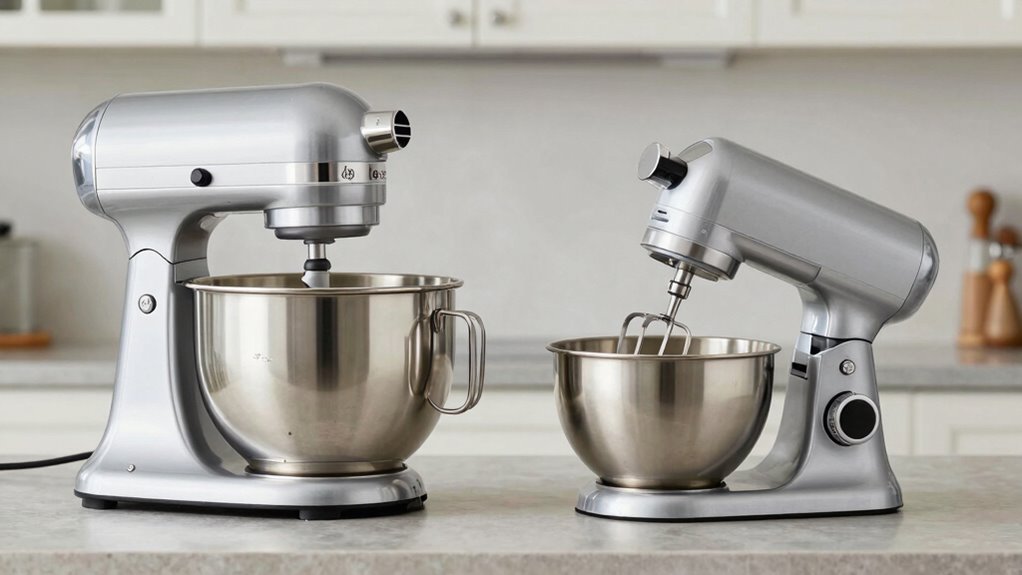

Bowl-lift mixers typically provide better stability during heavy-duty mixing because of their heavier build, wider base, and lower center of gravity. Their lifting mechanism helps keep large, heavy bowls steady, while the design minimizes vibrations and wobbling. Tilt-head mixers are more compact and easier to access, but they tend to wobble more when handling thick dough or high speeds. To explore how these differences could impact your kitchen tasks, continue exploring the details.
Key Takeaways
- Bowl-lift mixers generally offer greater stability during heavy-duty mixing due to their heavier build and wider, weighted bases.
- Tilt-head mixers have a higher center of gravity when the head is tilted, which can reduce stability during vigorous or high-speed tasks.
- The lower, more balanced center of gravity in bowl-lift models minimizes wobbling and vibrations during operation.
- Moving the tilt-head during use can shift the CG, potentially causing wobbling, unlike the fixed bowl position in bowl-lift designs.
- Overall, bowl-lift mixers provide better stability for handling large, heavy ingredients and demanding mixing tasks.
How Are Bowl-Lift and Tilt-Head Mixers Designed Differently?
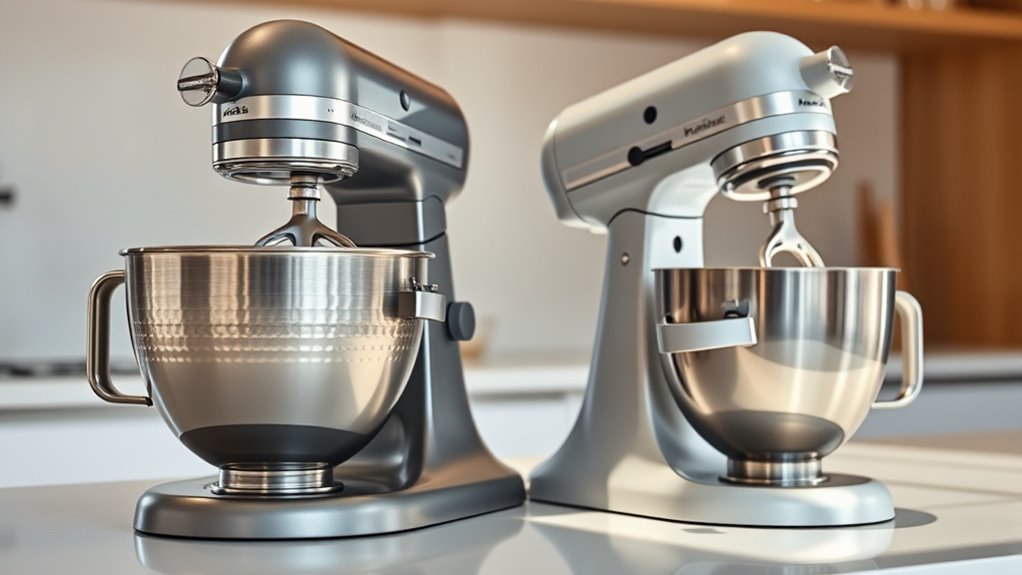
Bowl-lift and tilt-head mixers differ primarily in how their bowls are attached and accessed. Bowl-lift mixers feature a sturdy, vertical lifting mechanism that raises the bowl into place, offering a robust design aesthetic and often a more industrial look. They typically have larger bowls, making them suitable for heavy-duty tasks. Tilt-head mixers, on the other hand, allow you to tilt the mixer head back to access the bowl easily. Their design aesthetics lean toward sleek, modern styles with smooth contours. Both types come in various color options, so you can match your mixer to your kitchen decor. The design differences influence not just appearance but functionality, giving you options that suit both your style preferences and mixing needs. Additionally, motor power can vary significantly between the two, affecting their ability to handle different mixing tasks efficiently. Understanding ergonomic design can help you choose the most comfortable and practical option for everyday use.
Why Does the Center of Gravity Matter for Mixer Stability?
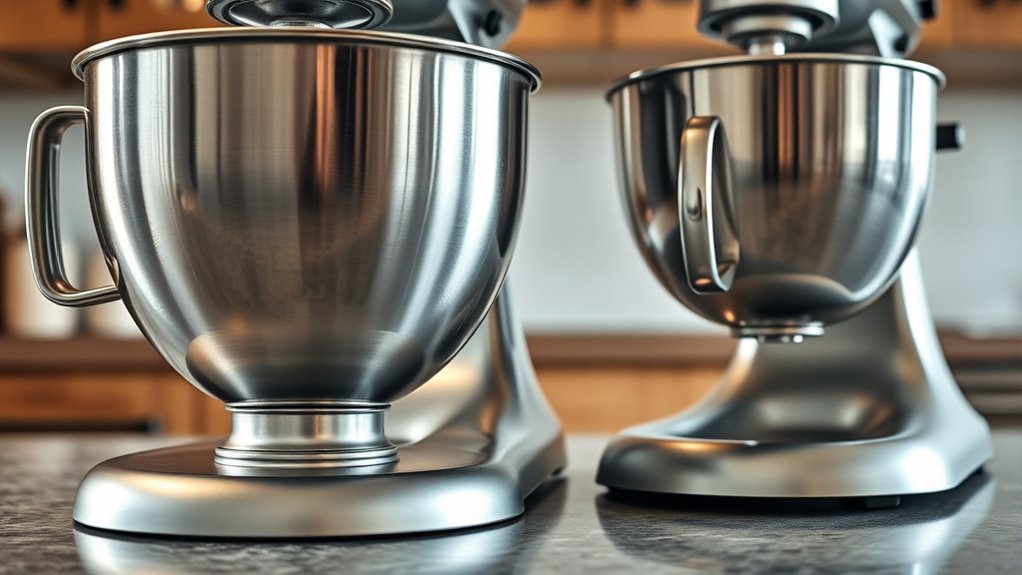
The placement of the center of gravity considerably impacts a mixer’s stability during operation. When the center of gravity is low and centered, the weight distribution is balanced, reducing the risk of tipping or wobbling. A higher or uneven center of gravity shifts the weight to one side, making the mixer more prone to instability, especially when mixing heavy ingredients or operating at high speeds. This is particularly relevant for bowl-lift mixers, where the weight of the bowl and contents raises the overall center of gravity. By understanding how the center of gravity affects stability, you can better appreciate why a well-balanced design minimizes movement and ensures safer, more efficient mixing. Proper weight distribution keeps your mixer steady through all your culinary tasks. Design considerations play a crucial role in enhancing overall stability and safety during use. Additionally, weight distribution is a key factor influencing the overall balance and performance of the mixer, especially when considering Free Floating mechanisms that allow for better balance adjustments. Recognizing the importance of center of gravity placement can help in selecting a mixer that offers optimal stability for your specific needs.
How Do Bowl-Lift Mechanisms Help Keep Your Mixer Steady?
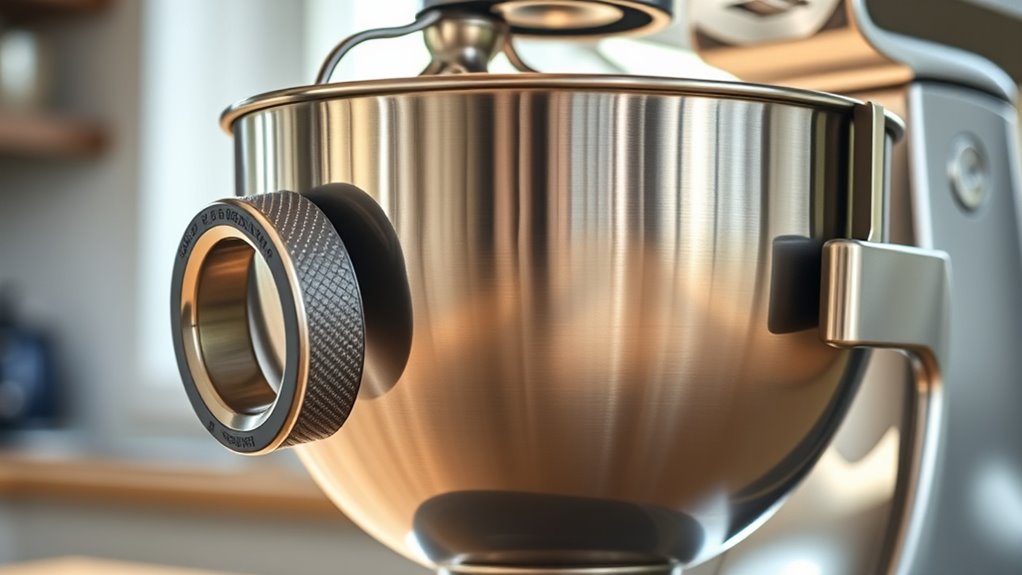
Bowl-lift mechanisms enhance stability by providing a stable base design that keeps the mixer steady during use. They also feature secure bowl locking to prevent slipping or shifting, even when mixing heavy ingredients. Additionally, the balanced weight distribution helps maintain the mixer’s position, making your baking process smoother and safer. Moreover, many models incorporate anti-slip pads that further prevent movement on your countertop during operation. Incorporating proper appliance placement can also help minimize vibrations and enhance stability during use. Additionally, weight distribution plays a crucial role in maintaining stability during operation, especially when handling dense mixtures. Integrating smart home fitness technology can also offer insights into your appliance’s performance and ensure optimal operation. Furthermore, ensuring proper maintenance and cleaning can prolong the stability and lifespan of your mixer.
Stable Base Design
Since stability is essential when mixing heavy ingredients, bowl-lift mechanisms play a key role in keeping your mixer steady. They create a stable base by properly distributing weight, lowering the center of gravity for enhanced balance. When you lift the bowl with a bowl-lift design, the heavier mass rests directly over the base, preventing tipping or wobbling during vigorous mixing. This design ensures the overall weight is centered, reducing the risk of movement that could cause spills or accidents. The sturdy construction of the base, combined with the strategic placement of the lifting mechanism, provides a firm foundation. Additionally, luggage & bags considerations such as a stable base are crucial for ensuring equipment remains secure during use. The mechanical advantage of the bowl-lift system makes it easier to handle larger or heavier bowls without compromising stability. As a result, you can focus on your mixing without worrying about instability, especially when handling dense or large batches.
Secure Bowl Locking
Secure bowl locking mechanisms play a crucial role in keeping your mixer stable during operation. When you engage the bowl locking, it firmly secures the bowl in place, preventing wobbling or slipping. This stability feature ensures consistent mixing and safety. Imagine the bowl lock as a sturdy clamp that holds your ingredients steady. Here’s a visual:
| Locking Mechanism | Stability Feature | Effect on Mixer |
|---|---|---|
| Clamps tightens | Prevents movement | Keeps bowl steady |
| Locks in position | Reduces vibrations | Enhances safety |
| Easy to engage/disengage | Fast setup | Quick, secure fit |
Additionally, the ventilation considerations in your setup can influence the overall stability and safety of your kitchen appliances. Proper ventilation helps dissipate heat generated during heavy use, maintaining the performance of the mixer and preventing potential overheating issues that could compromise stability. Regularly checking the stability features of your mixer ensures dependable operation during heavy mixing tasks, giving you confidence and control. Incorporating maintenance routines can further improve the longevity and reliability of your mixer, ensuring consistent performance over time. Ensuring that your mixer is well-maintained and that all mechanisms are functioning properly can also contribute to its overall stability and longevity.
Balanced Weight Distribution
Balanced weight distribution is essential for maintaining your mixer’s stability during operation. Bowl-lift mechanisms excel because they position the weight closer to the center of gravity, reducing wobbling and tipping risks. Proper weight distribution guarantees the mixer stays steady, even when handling heavy ingredients. Here’s how they help:
- They shift the bowl’s weight downward, lowering the center of gravity.
- The sturdy lifting arm supports even weight spread, minimizing imbalance.
- The design evenly distributes weight around the base, preventing tilting.
- It reduces vibrations caused by uneven weight, keeping the mixer stable. Understanding the importance of stability in baking can help you appreciate why these design features matter.
Does Head Movement Affect a Mixer’s Balance?

When you move the mixer’s head during operation, it can shift the machine’s balance and stability. This movement might cause vibrations or wobbling, affecting how smoothly it runs. Understanding how head movement impacts stability helps you choose the right mixer for your needs. Being aware of simple, room-by-room solutions can also help you set up your kitchen for safer and more efficient use.
Impact of Head Movement
Head movement can profoundly influence a mixer’s stability, especially during vigorous mixing tasks. When you adjust the head, it can shift the center of gravity, affecting balance. Consider these factors:
- Variations in motor speed can cause the head to jerk or wobble if not well-secured.
- Accessory compatibility impacts how securely attachments stay in place during head movement.
- An unstable head may lead to uneven mixing or even tipping over.
- The type of head movement—tilting or lifting—can exert different forces, influencing the overall stability.
For ideal performance, ensure your mixer’s head is designed to handle your chosen motor speed and accessories. Proper head design minimizes wobbling, maintaining balance and safety during operation.
Stability During Operation
The movement of the mixer’s head during operation can considerably impact its stability, especially when dealing with high-speed mixing or heavy ingredients. A robust design ensures your motor performance remains consistent without wobbling or shifting. Tilt-head mixers often have a lower center of gravity, making them more stable when the head moves. In contrast, bowl-lift models rely more on their base stability, which can be affected if the entire head shifts. Your ergonomic design choices also influence stability—comfortable, well-balanced mixers reduce unnecessary movement. Consider this comparison:
| Feature | Tilt-Head Mixer | Bowl-Lift Mixer |
|---|---|---|
| Head movement impact | Less stability during heavy use | More stable during operation |
| Motor performance | Consistent, smooth operation | Slightly affected by head shifts |
| Ergonomic design | Easier to control, less wobble | Heavier, less ergonomic |
| Stability | High, if well-built | Depends on base and lift mechanism |
| Best for heavy loads | Moderate | Excellent for heavy ingredients |
Additionally, the center of gravity plays a crucial role in overall stability during operation. Proper weight distribution can enhance the stability of the mixer, especially during vigorous mixing cycles.
Which Mixer Is More Stable When Mixing Heavy Dough?

Choosing the right mixer for heavy dough depends largely on its stability during operation. Generally, bowl-lift mixers tend to be more stable because their design offers a lower center of gravity and better weight distribution. Here are key points to deliberate on:
- Motor efficiency: Bowl-lift models often have more powerful motors, providing consistent torque for heavy dough.
- Aesthetic design: Tilt-head mixers look sleeker, but may wobble under heavy loads.
- Base stability: A heavier, wider base in bowl-lift models reduces movement.
- Ease of control: Bowl-lift mixers maintain stability even at higher speeds, preventing spills or accidents.
- Design robustness: The structural integrity of bowl-lift models ensures they can handle prolonged heavy-duty mixing without compromising stability.
- Additional features: Many bowl-lift mixers include anti-vibration technology, which further enhances their stability during demanding tasks.
Ultimately, if you frequently work with heavy dough, a bowl-lift mixer offers superior stability, especially when considering motor efficiency and design robustness.
How Do Weight and Build Quality Impact Mixer Balance?
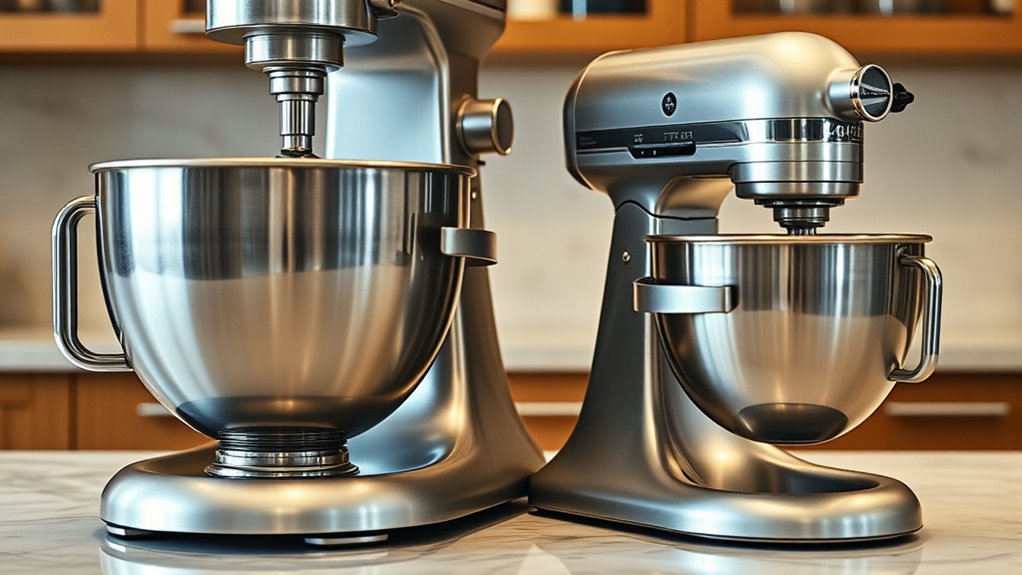
The weight distribution of your mixer affects how stable it feels during operation, especially when handling heavy ingredients. A well-balanced build prevents wobbling and reduces strain on the motor. Durable materials also play a key role in maintaining overall stability and ensuring your mixer lasts longer.
Weight Distribution Effects
Weight distribution and build quality play crucial roles in how stable and balanced a mixer remains during use. Proper weight placement affects the center of gravity, influencing overall stability. If the weight is concentrated higher or unevenly distributed, your mixer may wobble or tip during operation. To improve stability:
- Make certain the base is heavy enough to counterbalance the mixer head.
- Opt for a design with a low center of gravity to prevent tipping.
- Check that the weight isn’t overly concentrated in the upper parts.
- Confirm the build quality promotes even weight distribution across the frame.
Build Material Durability
Build material durability directly influences a mixer’s overall stability by determining how well it maintains its shape and withstands stress during operation. High-quality materials offer better material resilience, ensuring the mixer resists warping or cracking over time. This durability extends component longevity, meaning fewer repairs and consistent performance. A sturdy build supports weight distribution and prevents wobbling or tipping, especially under heavy loads. Consider the table below to see how different materials compare:
| Material | Resilience | Longevity |
|---|---|---|
| Steel | High | Long |
| Aluminum | Moderate | Moderate |
| Plastic/Composite | Low to Moderate | Short to Moderate |
Choosing a mixer with durable build materials ensures stability, reliability, and a longer lifespan.
Can Vibration and Noise Show if a Mixer Is Stable?
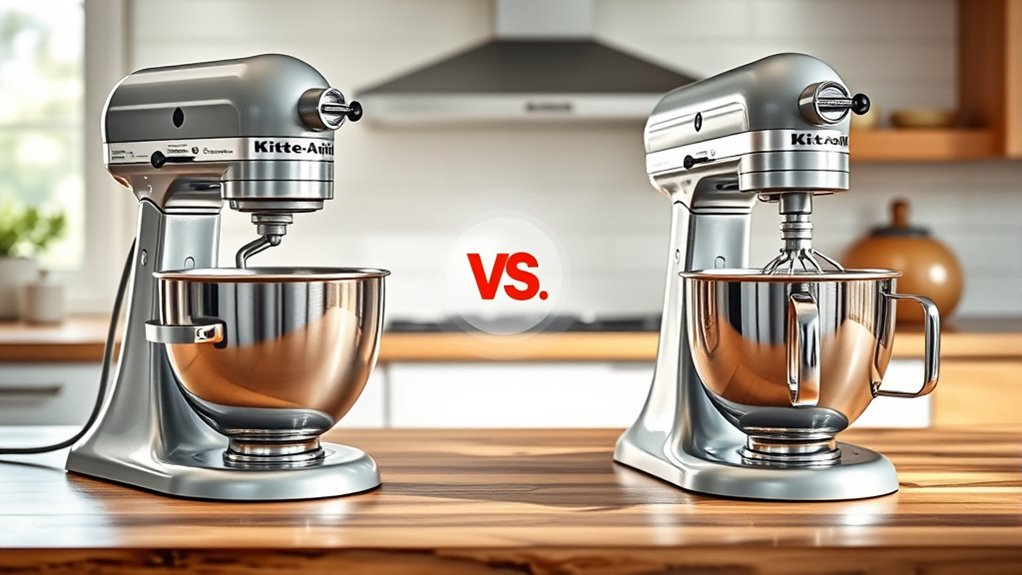
Ever wonder if vibration and noise can reveal whether a mixer is stable? Vibration indicators and noise detection are useful clues. If your mixer vibrates excessively, it could signal poor stability or an uneven surface. Listen for unusual noises, like rattling or grinding, which may also point to imbalance. To assess stability, consider these:
Excessive vibration and unusual noises indicate mixer instability and potential safety issues.
- Notice persistent or intense vibrations during operation.
- Observe if noise levels increase with speed.
- Check if vibrations cause the mixer or countertop to shake.
- Identify rattling sounds that don’t subside.
These signs help determine if your mixer is stable enough for safe, efficient use. Vibration and noise are straightforward indicators that can save you time and prevent damage, making them essential checks before heavy mixing tasks.
What Do Users Say About Mixer Stability in Real Life?

Have users noticed consistent stability issues with their mixers during everyday use? Many report that a wobbling bowl or shifting head affects user comfort and confidence, especially when mixing heavier doughs. They often mention increased motor noise as a sign of strain, which can signal instability. Some users find that bowl-lift models feel sturdier, reducing vibrations and allowing for smoother operation. Others prefer tilt-head designs for easier access, but note that stability can vary based on the brand and build quality. Overall, user feedback emphasizes that a stable mixer minimizes noise and vibration, making daily tasks less frustrating. When a mixer feels solid and steady, it boosts confidence, reduces fatigue, and improves the overall baking experience.
How Do Setup and Placement Influence Stability?
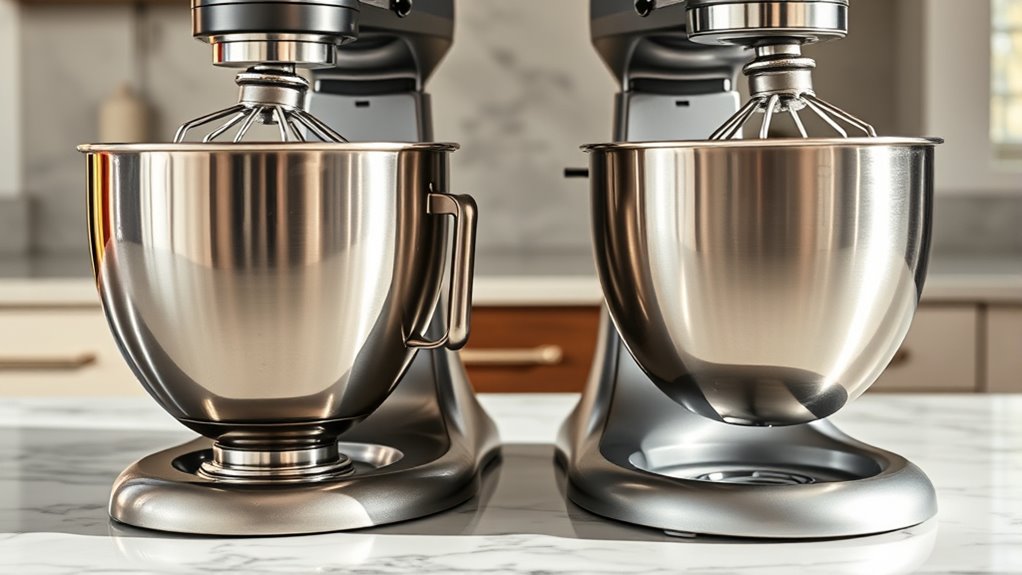
The way you set up and place your mixer plays a crucial role in its stability during operation. Proper countertop placement guarantees safety and efficiency. Here are four key considerations:
- Choose a flat, sturdy countertop surface to prevent wobbling.
- Keep the mixer centered to distribute weight evenly.
- Avoid placing it near edges where it could tip or fall.
- Make certain there is adequate clearance around the mixer for easy access and movement.
Which Type of Mixer Is Overall More Stable?
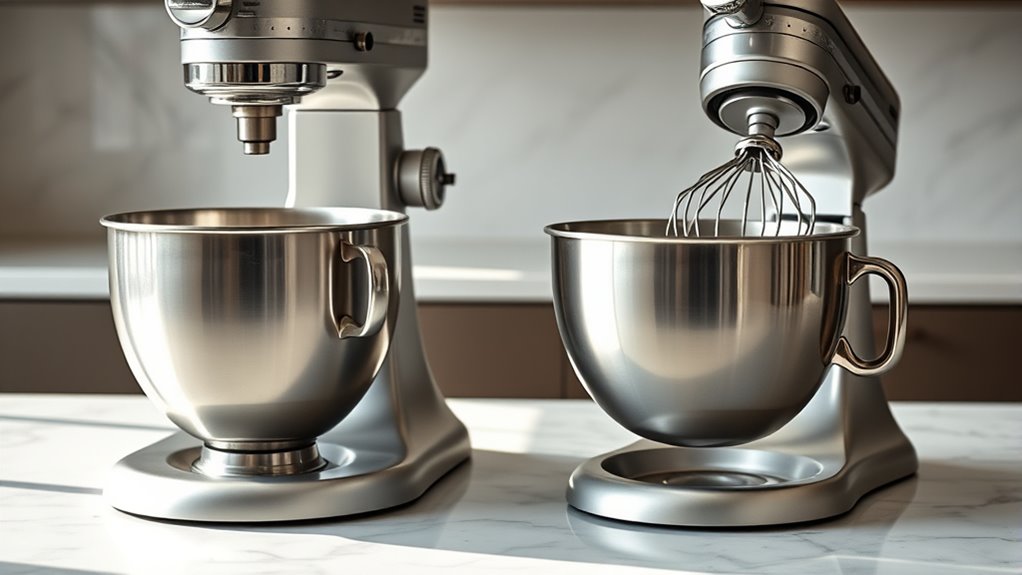
When comparing bowl-lift and tilt-head mixers, bowl-lift models generally offer greater stability during operation. Their sturdy base and heavier build reduce wobbling, especially when handling thick batters. This stability benefits motor efficiency, as the motor doesn’t work as hard to maintain position. Aesthetic appeal also favors bowl-lift designs, often appearing more robust and professional. Consider this table:
| Feature | Bowl-Lift Mixers | Tilt-Head Mixers |
|---|---|---|
| Stability | Higher, due to weight | Moderate |
| Motor Efficiency | Better, less vibration | Slightly less |
| Aesthetic Appeal | More industrial, sturdy | Sleeker, modern |
| Ease of Access | Less convenient | More accessible |
| Price | Usually higher | Usually lower |
Frequently Asked Questions
Do Different Brands of Bowl-Lift and Tilt-Head Mixers Vary in Stability?
Yes, different brands of bowl-lift and tilt-head mixers can vary in stability. You’ll notice that brand consistency influences how well the mixer handles heavy loads, especially if it has a powerful motor. Higher-quality brands often design their mixers for better weight distribution and sturdiness, making them more stable during use. So, when choosing, consider the motor power and brand reputation to guarantee you get a mixer that stays stable under pressure.
How Does the Size of the Bowl Affect Overall Mixer Stability?
Did you know that larger bowls can increase a mixer’s stability by up to 30%? The size of the bowl directly impacts overall stability because bigger bowls alter weight distribution, making the mixer less top-heavy and more balanced. When choosing a mixer, consider how bowl size influences stability, as a well-balanced, appropriately sized bowl helps prevent wobbling and enhances safety during heavy mixing tasks.
Are There Specific Features That Enhance Stability in Commercial Mixers?
You’ll find that specific features like high motor power and balanced weight distribution markedly enhance commercial mixer stability. A powerful motor prevents vibrations during heavy mixing, while even weight distribution keeps the mixer steady on your countertop. Look for sturdy, non-slip feet and a low center of gravity, as these features work together to reduce wobbling and ensure smooth operation, especially during prolonged or intensive use.
Can Accessories or Attachments Impact the Stability of Either Mixer Type?
Sure, attachments can make or break your mixer’s stability—ironic, isn’t it? When you add compatible attachments, you might think your mixer’s sturdiness improves, but poor weight distribution can cause wobbling or tipping. With bowl-lift models, heavy attachments shift weight downward, enhancing stability, while tilt-heads can become top-heavy. So, choose wisely, and remember, compatibility and distribution are your best friends for a steady mix.
How Does Repeated Use Over Time Influence a Mixer’s Stability?
Repeated use over time can diminish your mixer’s stability due to wear and tear on its components. You’ll notice increased vibration effects, which may cause the mixer to wobble or shift during operation. Regular maintenance and checking for loose parts help maintain stability. If you ignore these signs, the machine’s performance worsens, making mixing less efficient and potentially damaging the motor or attachments. Stay attentive to ensure consistent stability.
Conclusion
Ultimately, choosing between a bowl-lift and tilt-head mixer is like selecting a sturdy ship for stormy seas—you want stability to weather the chaos. While bowl-lift models anchor your baking adventures with their solid stance, tilt-heads offer flexibility with a gentle balance. Think of it as a dance between strength and agility. Whichever you pick, remember that a well-placed setup and mindful operation keep your culinary voyage steady as a lighthouse in the fog.