To achieve fudgy brownies, you should gently fold wet ingredients into dry ones with minimal stirring to keep the batter dense and moist. For cakey brownies, you need to whisk eggs and sugar until fluffy, then fold in dry ingredients, incorporating more air for a lighter crumb. The way you mix determines the texture, so adjusting your technique will help you get the perfect brownie—there’s more to discover if you keep going.
Key Takeaways
- Fudgy brownies are made with minimal mixing to preserve density, while cakey brownies are whisked more to incorporate air.
- Gentle folding for fudgy textures prevents over-aeration, whereas beating eggs and sugar creates a lighter, airy crumb.
- Overmixing fudgy batter can produce a more cake-like texture, while careful mixing ensures desired density.
- Cakey brownies often involve creaming eggs and sugar first to build structure, contrasting with the minimal mixing for fudgy types.
- Mixing techniques directly influence the crumb structure, with less mixing yielding fudgy and more mixing resulting in cakey textures.
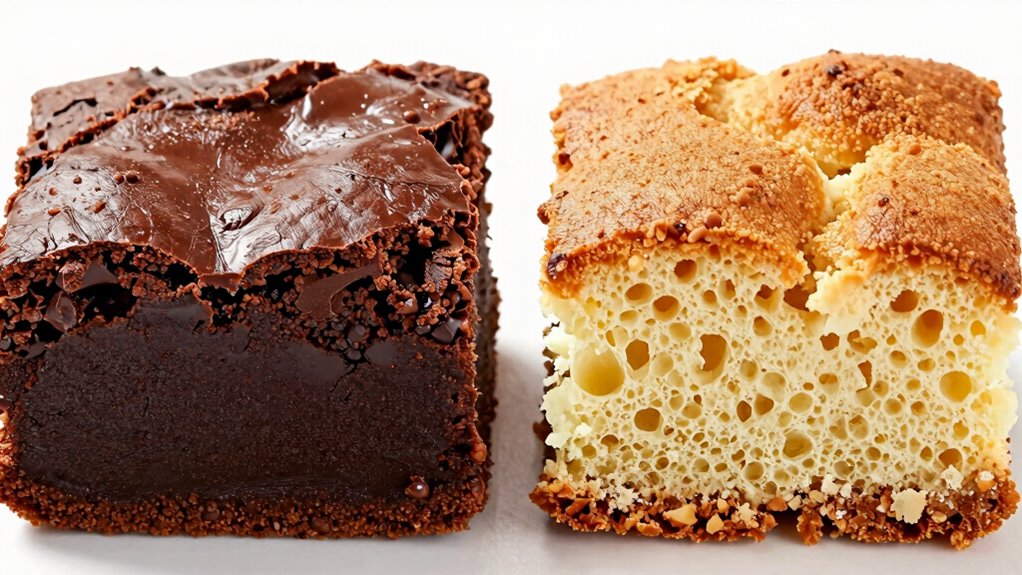
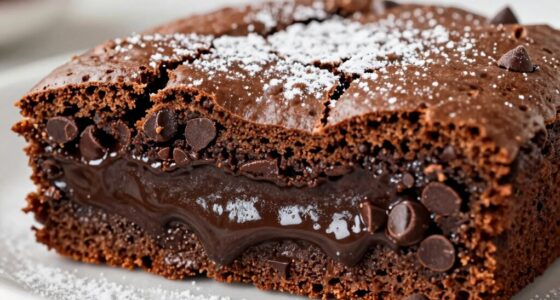
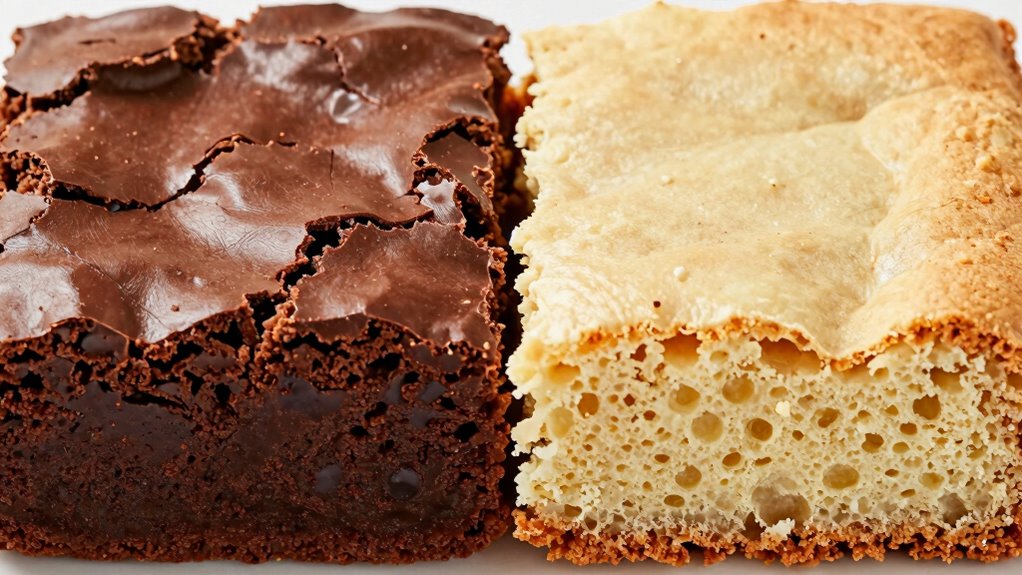
Have you ever wondered what makes a brownie truly perfect? It all comes down to the texture, which is heavily influenced by the mixing method and the ingredients you choose. When you’re aiming for that ideal fudgy or cakey brownie, understanding how these factors create distinctive textures is key. The texture contrast—the way moist, dense areas meet lighter, crumbly parts—defines the overall experience. To achieve a fudgy brownie, you want a dense, chewy interior with just enough structure to hold its shape. Cakier brownies, on the other hand, should feel light and airy, almost like a small slice of cake. The trick lies in how you mix your ingredients and what you swap out along the way.
If you want to make a fudgy brownie, you’ll typically use less flour and more fat—think butter or oil—and incorporate melted chocolate or cocoa powder for richness. The mixing method here is gentle; you fold the wet ingredients into the dry just enough to combine, avoiding overmixing. This keeps the batter thick and dense, creating that inviting, fudgy texture. You might even experiment with ingredient substitution, like using melted unsweetened chocolate instead of cocoa powder, to amp up the richness and moisture. These tweaks help maintain a moist, dense crumb while intensifying flavor. Conversely, for a cakey brownie, you’ll want to increase the flour and incorporate a leavening agent like baking powder. The mixing process involves more aeration—whisking the eggs and sugar until fluffy before folding in the dry ingredients. This introduces air into the batter, resulting in a lighter, more voluminous crumb. Ingredient substitution can also play a role here; using yogurt or buttermilk in place of some of the fat can add moisture and lift, giving your brownies that tender, cake-like quality.
Your choice of mixing method directly impacts the texture contrast you desire. Overmixing the batter for a fudgy brownie can lead to a more cake-like outcome, as it incorporates excess air and weakens the dense crumb. Conversely, under-mixing for a cakey brownie might result in uneven pockets and a less uniform rise. Adjusting ingredients through substitution offers another layer of control—adding a bit of cornstarch can help achieve a softer crumb, while swapping butter for oil can make the brownie more moist and dense. Ultimately, understanding these subtle differences allows you to tailor your recipe to your preferred texture. Whether you prefer that decadent fudginess or a light, airy bite, the key lies in how you mix and what ingredients you decide to swap.
Frequently Asked Questions
Can I Make Fudgy Brownies With a Cakey Texture?
You can make fudgy brownies with a cakey texture by adjusting your ingredients and techniques. To achieve a more fudgy consistency, use less flour and add more butter or chocolate for richness. Keep the baking temperature lower to prevent a rise that turns them cakey. Remember, the chocolate richness and proper baking temperature are key to balancing fudgy density with a slightly lighter, cakey feel.
How Does Baking Time Affect Brownie Density?
Baking time is the key to brownie density; think of it as a delicate dance. If you bake too long at a consistent oven temperature, your brownies become denser and more cake-like. Using a smaller pan speeds up baking, making them fudgier, while a larger pan extends baking time, resulting in a lighter texture. Keep an eye on the clock and your oven temperature, and you’ll master your perfect brownie.
What Ingredients Influence Fudginess Versus Cakiness?
You’ll find that high chocolate richness and fat content, like butter and melted chocolate, make your brownies fudgier. Using less flour and more fat creates a dense, moist texture, while more flour and less fat produce a lighter, cakier brownie. Adjusting these ingredients influences the overall fudginess or cakiness, so experiment with chocolate richness and fat to get your perfect brownie consistency.
Can Mixing Technique Change the Brownie Texture?
Yes, your mixing technique can change the brownie texture. Using a gentle folding method preserves air bubbles, resulting in fudgier brownies, while mixing at a higher speed integrates more air, creating a lighter, cakier texture. Additionally, adjusting the baking temperature influences the outcome—lower temps keep brownies dense and moist, while higher temps produce a crumbly, airy finish. Pay attention to your mixing speed and baking temperature to control your brownie’s texture.
Are There Substitutions to Achieve Both Textures?
Yes, you can achieve both textures by making substitutions. To make fudgy brownies, try adding more butter or chocolate, and use alternative sweeteners like honey or maple syrup for richness. For cakey brownies, incorporate a bit more flour and baking powder, and explore gluten-free options such as almond or rice flour. Adjusting these ingredients lets you customize your brownies for either a dense, fudgy bite or a light, airy crumb.
Conclusion
So, now that you know the secret behind fudgy and cakey brownies, which will you choose for your next batch? Will you embrace the dense, chocolatey richness or go for the airy, tender crumb? The real question is, are you ready to experiment and uncover your perfect match? The baking world is full of surprises—trust yourself, and don’t be afraid to explore. After all, the sweetest discoveries come from trying something new.