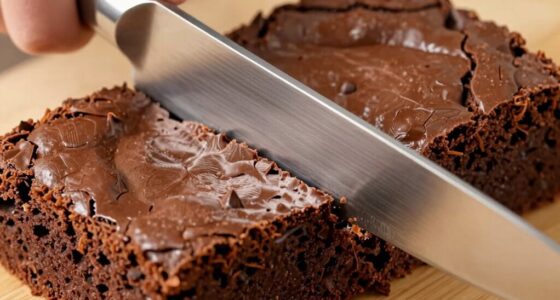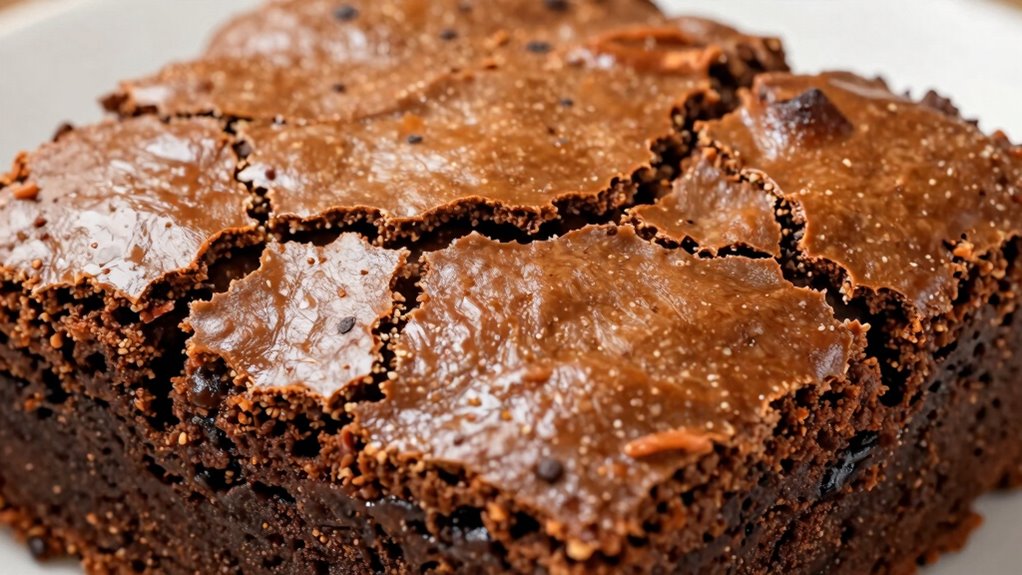

The shiny, crackly brownie top forms through a mix of browning reactions, primarily the Maillard reaction and caramelization, influenced by sugar, fats, and egg proteins. High baking temperatures and proper oven control help develop these effects, while ingredient ratios and batter consistency also matter. Using the right pan and ensuring thorough sugar dissolving create the glossy, crackly surface you love. If you want to uncover the full science behind that perfect brownie crust, keep exploring.
Key Takeaways
- Maillard reaction and caramelization create the flavorful, shiny, crackly crust on brownies.
- Proper sugar dissolution and ingredient balance promote smooth crystallization and surface gloss.
- High baking temperatures and precise timing develop the crackly, shiny top without overbaking.
- Fats and egg proteins form a glossy film that enhances surface shine and texture.
- Batter consistency, moisture level, and pan choice influence the crust’s crackliness and reflective shine.
non-stick brownie pan
As an affiliate, we earn on qualifying purchases.
As an affiliate, we earn on qualifying purchases.
Why Does Browning Happen? Understanding Maillard Reaction and Caramelization
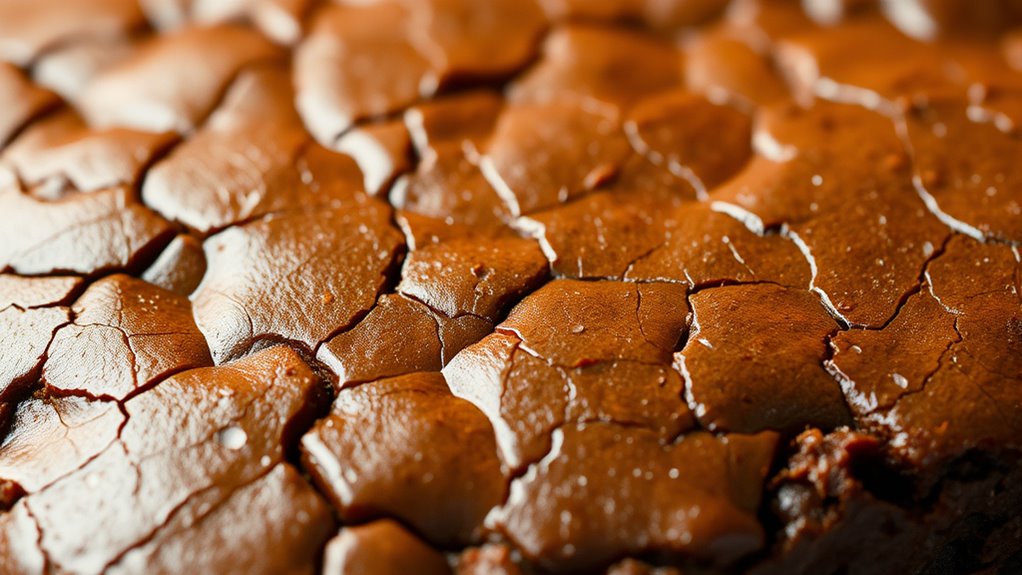
Browning occurs during baking because of chemical reactions that transform sugars and amino acids into new compounds with rich flavors and appealing color. This process, mainly through the Maillard reaction and caramelization, enhances flavor and creates that irresistible crust. When you substitute ingredients, like using different sugars or adding flavor enhancers, you can influence how browning develops. For example, replacing regular sugar with brown sugar adds molasses, intensifying caramelization and boosting flavor. The Maillard reaction is affected by factors like temperature, pH, and ingredient composition, meaning even small ingredient substitutions can change the browning outcome. Understanding these reactions helps you control the flavor enhancement and appearance of your baked goods, ensuring a golden, crackly top that’s both visually appealing and delicious. Additionally, proper temperature control plays a crucial role in achieving optimal browning and crust development.
baking thermometer for oven
As an affiliate, we earn on qualifying purchases.
As an affiliate, we earn on qualifying purchases.
How Do Sugar and Fats Help Create That Shiny, Crackly Surface?
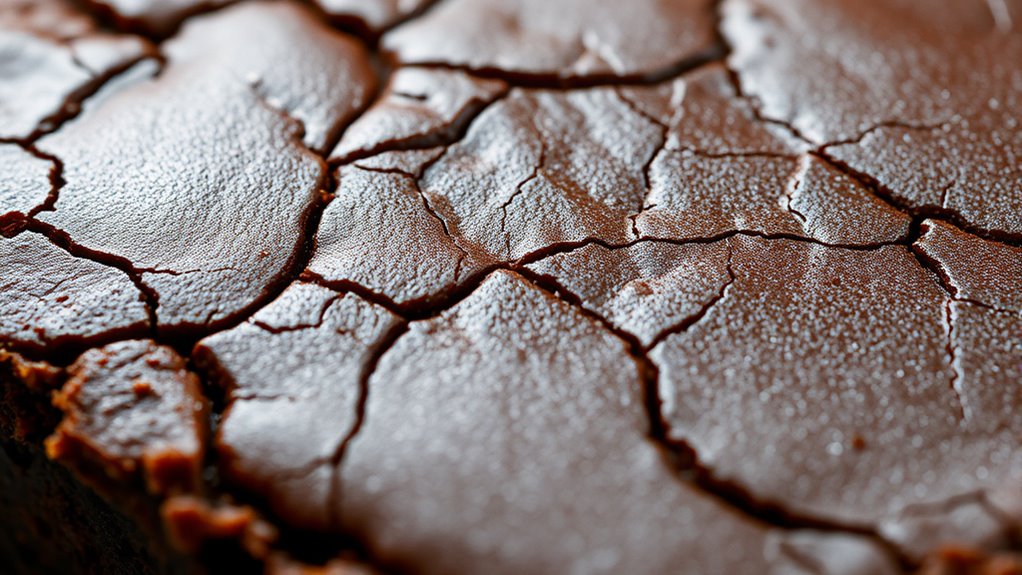
The shiny, crackly surface of a brownie results from the combined effects of sugar and fats during baking. As the sugar heats, it undergoes sugar crystallization, forming a thin, glossy crust that creates that signature shine. Fats in the batter help promote this process by coating sugar molecules, making crystallization smoother and more uniform. Additionally, fats can undergo fat oxidation, which contributes to flavor development and influences the surface’s texture. When baked at the right temperature, the sugar’s surface forms a brittle, crackly layer that reflects light, giving that shiny appearance. The balanced interaction between sugar’s crystallization and the oxidation of fats ensures the surface remains crisp and glossy without becoming too dark or tough. Moreover, the presence of high heat accelerates these processes, ensuring a perfect shiny and crackly top, while proper baking time allows these reactions to develop fully. Proper temperature control is crucial for achieving the ideal crackly texture and shine, as it influences both the rate of sugar crystallization and fat oxidation. Understanding how heat transfer affects these reactions can help bakers fine-tune their baking process for optimal results.

ChefAide 5 Pieces Silicone Spatula Set, Food Grade Rubber Spatula, Upgrade Strong Handle with Ergonomic Grip, Heat Resistant Up to 600°F for Nonstick Cookware, Cooking
Premium 100% Food Grade Silicone: The silicone spatula set is made of healthy and friendly material, resistant to…
As an affiliate, we earn on qualifying purchases.
As an affiliate, we earn on qualifying purchases.
What Role Do Egg Proteins Play in the Brownie’s Texture and Shine?

Egg proteins play a crucial role in shaping the brownie’s texture and shine by forming a network that holds moisture and structure. When you whisk eggs into your batter, their proteins unfold and link together, creating a supportive matrix. This network helps trap fats and sugars, contributing to a tender yet firm crumb. Additionally, egg proteins influence the surface shine of your brownie. As the batter bakes, these proteins coagulate and form a thin, glossy film on top, enhancing the shiny appearance. The proteins’ ability to coagulate at the right temperature ensures a smooth, attractive crust. Without egg proteins, your brownies might lack the firmness and glossy surface that make them visually appealing and texturally satisfying. They’re essential for both the structure and that inviting, shiny finish. Proper baking techniques help ensure the proteins coagulate optimally, resulting in a better crust and shine. Understanding the protein coagulation process can further improve your baking results.
baking sheet for brownies
As an affiliate, we earn on qualifying purchases.
As an affiliate, we earn on qualifying purchases.
How Do Oven Temperature and Baking Time Shape the Brownie Top?
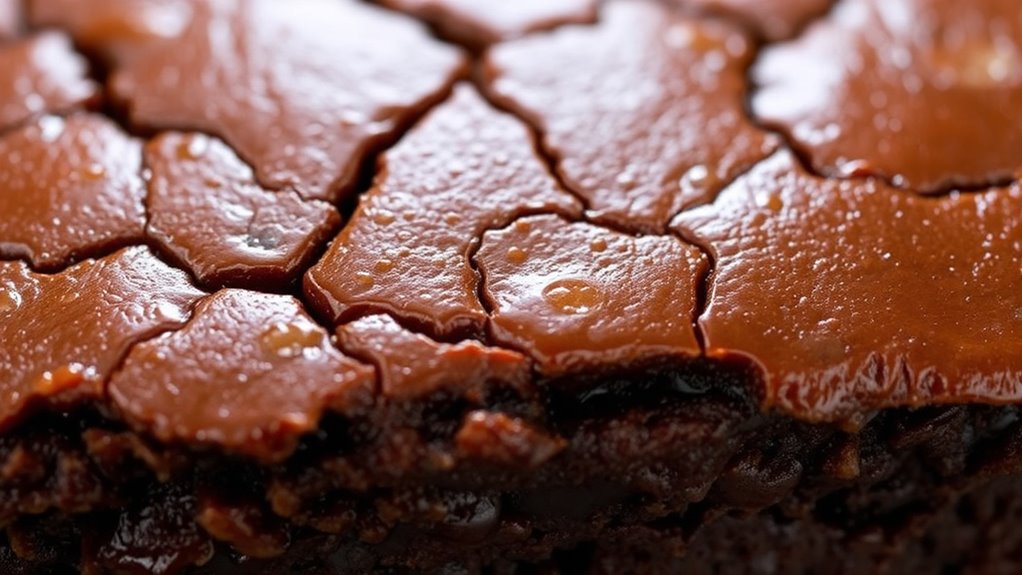
Your oven temperature and baking time directly influence the crackliness and texture of your brownie top. Higher heat or longer baking can create a crisp, crackly surface, while lower temperatures produce a softer crust. Understanding these factors helps you perfect your ideal brownie top every time. Additionally, controlling the baking environment ensures consistent results and prevents over- or under-baking. Being mindful of oven calibration can further improve your baking outcomes by ensuring your oven heats accurately. Monitoring baking conditions, such as humidity and airflow, can also impact the final texture of your brownie top, leading to more consistent and desirable results. Paying attention to oven temperature accuracy can help you better predict how your brownies will turn out, especially since family photoshoot fails can sometimes result in unexpected, humorous outcomes that you might want to avoid in baked goods.
Oven Temperature Effects
Oven temperature and baking time play essential roles in determining the texture and appearance of brownie tops. Higher temperatures cause the surface to caramelize quickly, creating that shiny, crackly crust reminiscent of classic brownie history. Conversely, lower temperatures yield a softer, matte top. Different chocolate variations also respond uniquely: dark chocolate develops a richer sheen, while milk chocolate may produce a subtler finish. To help visualize, consider this table:
| Temperature Range | Effect on Brownie Top |
|---|---|
| 325°F – 350°F (160°C – 177°C) | Softer, less crackly, more fudgy |
| 375°F – 400°F (190°C – 204°C) | Crispy, shiny, crackly surface |
| 350°F (177°C) | Balanced, traditional crackly top |
| 400°F (204°C) | Over-baking risks, very shiny, thick crust |
Adjusting oven temp influences the final look, highlighting how baking choices shape your brownie’s iconic top.
Baking Duration Impact
Baking duration, combined with oven temperature, directly influences the appearance and texture of your brownie top. If you bake too long, the shiny, crackly layer can become overly crisp, reducing the desired texture contrast between the crust and the fudgy interior. Conversely, underbaking might leave the top dull and soft instead of shiny and crackly. The right baking time enhances flavor development by allowing sugars and proteins to caramelize properly, intensifying sweetness and richness. Longer baking at the correct temperature creates a balance where the top develops that signature shiny crackly layer while maintaining a tender bite underneath. Adjusting your baking duration ensures you achieve the ideal texture contrast and flavor complexity that make crackly brownie tops so irresistible. Proper oven calibration can also ensure consistent results, helping you fine-tune baking times for perfect brownies every time. Additionally, understanding how baking duration interacts with oven heat can help prevent over- or under-baking by aligning your process with your specific equipment, and considering the use of quality bakeware can further influence the outcome.
Does Batter Thickness and Moisture Content Affect the Crust’s Appearance?
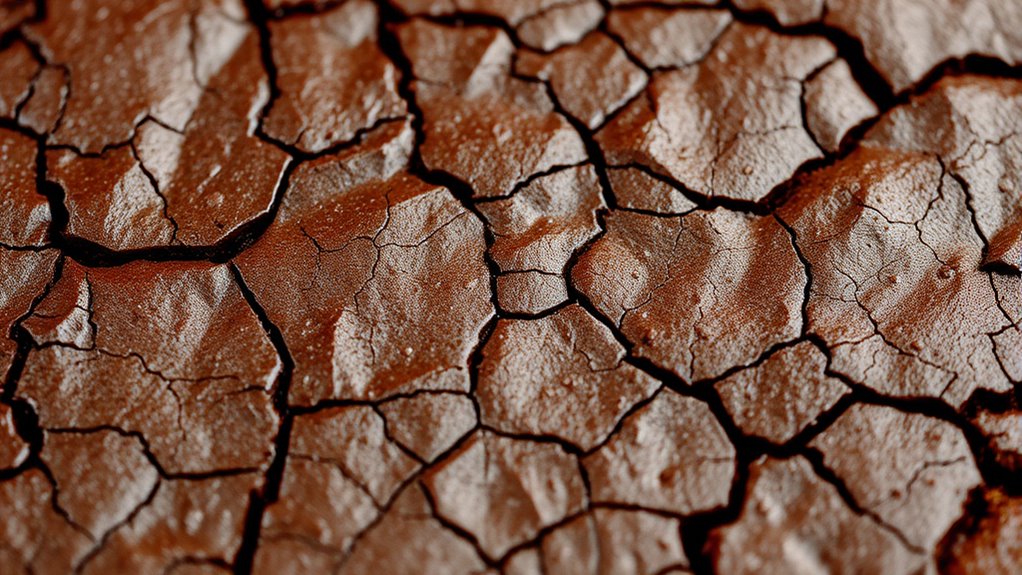
The thickness of your batter and its moisture content play essential roles in shaping the crust’s appearance on a brownie. A thicker batter tends to produce a denser, shinier crust because it traps more steam and moisture during baking, creating that glossy finish. Conversely, a thinner batter spreads more easily, leading to a thinner crust that may be less shiny. Moisture levels directly influence this process; higher moisture content results in a more pronounced crust as steam escapes slowly, forming that crackly top. Batter consistency is key—if it’s too runny, the crust may be dull and uneven. For a shiny, crackly surface, aim for a batter with balanced moisture and a slightly thicker, viscous texture. This ensures the crust develops that desirable glossy, crackly appearance. Batter consistency is critical in achieving the perfect brownie crust, as it directly impacts how the crust forms and reflects light. Additionally, understanding how baking conditions influence moisture retention can help optimize the crust’s final look, ensuring it remains consistent through different baking environments.
Why Does Sugar Concentration and Dissolving Matter for That Perfect Finish?

Have you ever wondered why the sweetness and texture of your brownie crust vary even when using the same recipe? It all comes down to sugar concentration and dissolving. When sugar dissolves properly, it creates a smooth, glossy surface that promotes even moisture evaporation during baking. If the sugar isn’t fully dissolved, sugar crystallization can occur, leading to a grainy or uneven crust. Too much sugar can cause rapid moisture loss, resulting in a crackly, shiny top, while too little may produce a dull, less crisp finish. Achieving the right balance guarantees consistent moisture evaporation and prevents unwanted sugar crystallization. This delicate process directly influences that shiny, crackly layer you love, making your brownies look beautiful and taste perfect. Precision and automation in baking techniques can help control sugar dissolving and temperature for optimal results. Proper temperature control encourages complete sugar dissolution, ensuring a smoother surface and better crust quality. Additionally, understanding the role of sugar concentration can help bakers fine-tune their recipes for consistently stunning results. Furthermore, employing baking science principles allows for better control over the crystallization process, ensuring a consistent and attractive topping every time.
How Do Baking Techniques and Pan Choices Influence the Crust’s Shine?
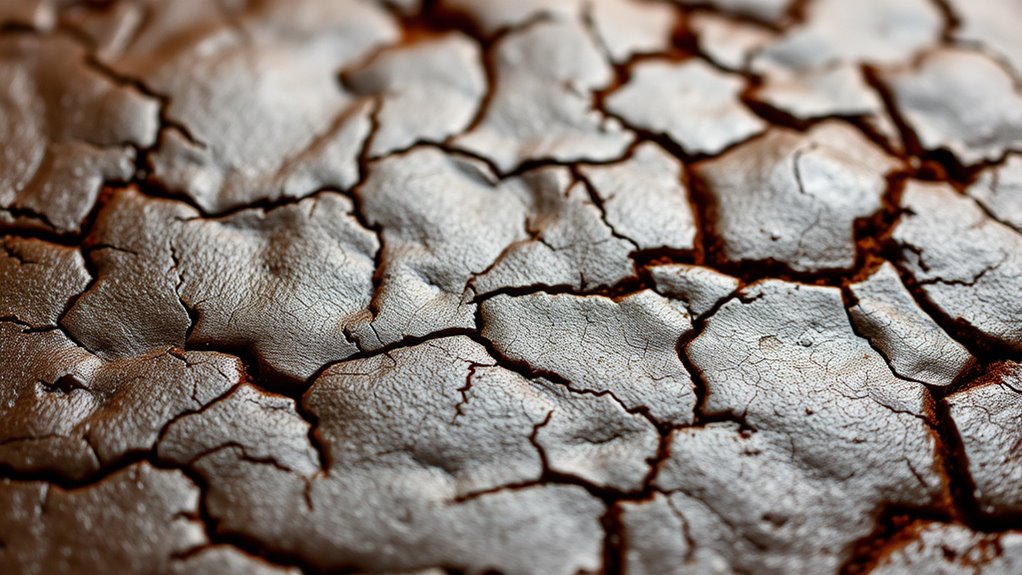
Your choice of baking techniques and pan can considerably impact the shine of your brownie crust. Using a metal pan, especially one with a dark or shiny finish, helps conduct heat evenly, promoting a glossy, crackly top that enhances chocolate flavor. A glass or ceramic pan may produce a softer, less shiny crust due to different heat absorption. Additionally, the type of pan influences texture variation—metal pans typically yield a crisper, shinier surface, while silicone or non-stick pans may result in a duller appearance. Baking at the right temperature and duration also matters; higher heat encourages caramelization and surface gloss. Heat conduction plays a crucial role in achieving that desirable shiny crust. Proper baking temperature ensures the Maillard reaction occurs optimally, contributing to the crust’s shine. Overall, selecting the proper pan and technique ensures a shiny, flavorful crust with the perfect balance of texture and chocolate richness.
What Are the Best Tips for Achieving a Crackly, Shiny Brownie Top?

To get that perfect crackly, shiny brownie top, focus on proper mixing techniques that incorporate air and guarantee even distribution. Keep a balanced ratio of sugar and fat in your batter, as this influences the crust’s appearance and texture. Ultimately, control your baking temperature carefully—baking too hot or too cold can prevent that glossy, crackly finish from forming.
Proper Mixing Techniques
Achieving a crackly, shiny brownie top starts with the way you mix your batter. Use gentle, consistent motions to incorporate ingredients without overmixing, which can affect the chocolate flavor and texture contrast. Whisk the wet ingredients thoroughly to create a smooth, glossy mixture, then gently fold in the dry ingredients just until combined. Avoid beating vigorously, as this can incorporate excess air and weaken the crackly top. Incorporating a small amount of sugar at the right stage helps develop that characteristic shiny surface. Proper mixing ensures a balanced distribution of cocoa and chocolate flavors while promoting the ideal crust. By paying attention to how you combine your ingredients, you set the foundation for a brownie with that perfect crackly, shiny top and rich chocolate flavor.
Sugar and Fat Balance
A proper balance of sugar and fat is essential for creating that crackly, shiny brownie top. Too much sugar can lead to excessive sugar crystallization, making the surface overly hard or uneven. Meanwhile, enough fat helps with fat melting, creating a smooth, glossy finish. To achieve the perfect layer, consider these tips:
- Use the right amount of sugar to prevent crystallization issues.
- Incorporate enough fat to promote even melting and a shiny appearance.
- Mix ingredients thoroughly but avoid overmixing, which can affect sugar crystallization.
- Slightly underbake to allow the crackly top to set and develop that glossy sheen.
Balancing sugar and fat ensures the surface forms that desirable, crackly, shiny crust you love.
Baking Temperature Control
Controlling the baking temperature is key to developing that signature crackly, shiny brownie top. Keep your oven at around 325°F (160°C) to guarantee even heat distribution, which helps form that glossy crust. Higher temperatures can cause rapid surface evaporation, leading to cracks or dullness. Using different chocolate varieties, like dark, milk, or bittersweet, influences the crust’s sheen and flavor enhancements, so choose based on your desired taste profile. For a more pronounced shine, consider lightly brushing the top with a simple syrup or melted chocolate before baking. Monitoring your oven and adjusting the temperature as needed ensures the perfect balance between crackliness and glossiness, resulting in a visually stunning and delicious brownie top.
Frequently Asked Questions
Can Adding Ingredients Like Corn Syrup Improve the Shiny Crust?
Yes, adding ingredients like corn syrup can improve the shiny crust. Corn syrup contains glucose, which hinders sugar crystallization, resulting in a smoother, shinier surface. It also affects surface tension, helping the batter form a glossy, crackly top as it bakes. By preventing large sugar crystals from forming, corn syrup creates a more uniform and appealing crust, giving your brownies that desirable shiny, crackly finish.
How Does Humidity Affect the Crackly Top Formation?
Humidity impact plays a significant role in crackly top formation. When humidity is high, moisture in the air can prevent the surface from drying out quickly, leading to a softer, less crackly crust. To achieve that signature crackly top, you need proper moisture control; keep your oven dry and avoid opening it too often. This way, you help the surface dry evenly, forming that desirable shiny, crackly layer.
Does Mixing Techniques Influence the Shiny Surface?
Your mixing techniques markedly influence the shiny surface of brownies. Using gentle folding preserves batter aeration, creating a silky, smooth top, while overmixing can deflate the batter and result in a dull, less shiny crust. Incorporating air into the batter with proper mixing methods helps develop that characteristic crackly, shiny layer. So, be mindful of how you mix—light, careful movements produce the best crackly brownie tops.
What Is the Ideal Oven Rack Position for Crust Development?
For ideal crust development, you should place your oven rack in the middle position. This placement guarantees even heat distribution, allowing the heat to reach all sides of your brownie evenly. If you want a crisper top, try positioning it closer to the top heating element, but avoid the very top rack to prevent burning. Proper oven placement helps you achieve that shiny, crackly brownie top you’re aiming for.
Can Alternative Sweeteners Replicate the Classic Shiny Top?
While sugar alternatives can add sweetness, they often lack the natural caramelization needed for that classic shiny top. To mimic the glossy finish, you might try adjusting your baking temperature slightly higher, but be cautious—this could affect texture and bake time. Some sugar substitutes don’t produce the same crust, so experimenting with small batches helps you find the right balance for a beautiful, glossy brownie surface.
Conclusion
Now that you know the science behind that irresistible crackly brownie top, you’re practically a baking wizard. With the right balance of ingredients, temperature, and technique, you can conjure up a shiny, crackly masterpiece that would make even professional bakers jealous. So go ahead, experiment and perfect your recipe—your brownies are destined to be legendary, turning every bite into a moment of pure, crispy bliss. Get ready to impress everyone with your baking superpowers!