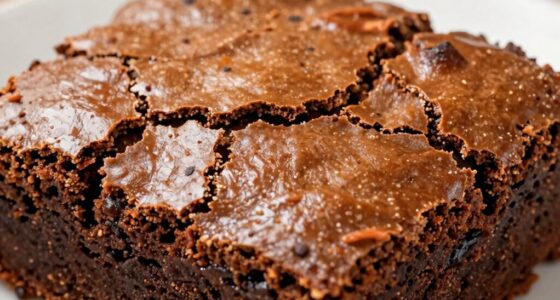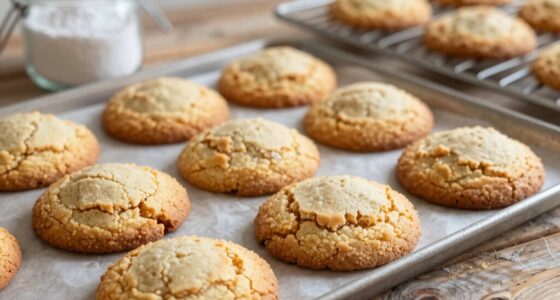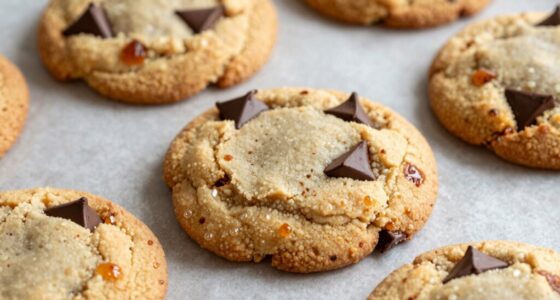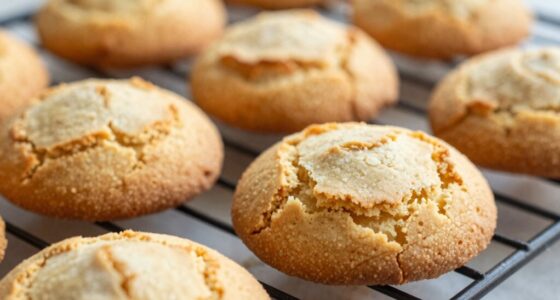

Chocolate chips sink to the bottom because your batter might be too runny or greasy, which makes it unable to hold the chips in place. Properly coating your chips with flour or cocoa powder helps them stick better, and a thicker dough also prevents sinking. Baking at a slightly higher temperature can set the batter faster, trapping the chips. Keep these tips in mind—you’ll discover even more ways to keep your chips evenly distributed.
Key Takeaways
- Large or uncoated chocolate chips are more likely to sink due to their weight and poor adhesion to dough.
- Runny or greasy batter reduces support, causing chips to settle at the bottom during baking.
- Overmixing the dough can dislodge chips, making them more prone to sinking.
- Insufficient chilling of the dough allows chips to sink before baking sets the structure.
- Baking at too low a temperature can delay setting, increasing the chance of chips sinking to the bottom.

If you’ve ever noticed chocolate chips sinking to the bottom of your cookie dough or batter, you’re not alone. It’s a common baking frustration that can leave your treats uneven and less appealing. The good news is, understanding why this happens and how to prevent it can make a big difference. One key factor involves your baking techniques, but ingredient substitutions also play a crucial role.
First, the way you mix your batter has a big impact. When you add chocolate chips to your dough, if you don’t incorporate them properly, they tend to settle during baking. Overmixing can help distribute the chips evenly, but avoid overdoing it, as too much mixing can alter the texture of your cookies. Gently folding in the chips just before baking ensures they’re evenly dispersed without sinking. Additionally, chilling your dough before baking can help. Cold dough is thicker and provides more resistance, giving the chips less chance to sink during the baking process.
Another factor influencing sinking is the type of ingredients you use. Ingredient substitutions can make a difference. For example, replacing some of the butter or oil with ingredients that add more structure—like yogurt or applesauce—can create a denser batter that holds the chips in place better. You might also try using mini chocolate chips instead of larger ones, as their smaller size distributes more evenly and are less likely to sink. When choosing your chocolate chips, opt for high-quality, well-coated chips that adhere better to the dough, reducing the likelihood of sinking. Using proper mixing techniques can also help ensure an even distribution of chocolate chips throughout your batter.
Your baking temperature and time also matter. Baking at a slightly higher temperature can help set the dough faster, trapping the chips in place before they have a chance to sink. Be cautious not to overbake, as that can lead to dry cookies, but a slightly higher temperature within reason can improve chip distribution. Using an oven thermometer ensures your oven runs at the correct temperature, which helps maintain consistent results.
Finally, consider the composition of your batter. If it’s too runny or greasy, chocolate chips are more prone to sinking. Adjust your recipe by modifying the amount of liquid or fat to create a thicker, more stable batter. Sometimes, simply adding a tablespoon of flour or cocoa powder to your chocolate chips before mixing can help them stick better to the dough, preventing them from sinking.
Frequently Asked Questions
Can the Type of Chocolate Chip Affect Sinking?
Yes, the type of chocolate chip can affect sinking. Higher-quality chocolate often has a different fat and cocoa content, which influences how it interacts with batter. Chip shape also matters; flatter or more irregular shapes tend to sink more easily than uniform, rounded chips. So, choosing good-quality chocolate and considering chip shape can help prevent sinking and ensure your baked goods turn out perfect.
Does the Batter’s Temperature Influence Chip Sinking?
Batter temperature boosts batter viscosity, which can be a game-changer. When your batter is too warm, it thins, making it easier for chips to sink due to their dense, doughy dominance. To keep chips perched, chill your batter, thickening it and balancing chip density. This simple switch keeps chocolate chips afloat, ensuring even distribution and delightful bites in every baked good.
Are There Specific Ingredients That Prevent Sinking?
Yes, using high-quality chocolate chips can help prevent sinking, as they hold their shape better during baking. Incorporate ingredients like flour or cocoa powder to coat the chips, reducing their tendency to sink. Also, choose a sturdy baking pan to guarantee even heat distribution, which supports proper chip placement. These steps enhance your baked goods’ appearance and texture, making sure the chips stay evenly distributed throughout your treat.
How Does Mixing Technique Impact Chip Distribution?
Your mixing technique greatly impacts chip distribution. When you mix at a slow speed, you prevent breaking the chips and keep batter consistency smooth, which helps distribute the chips evenly. Quickly mixing or overmixing can cause the chips to sink or clump together. Focus on gentle, even mixing to maintain batter consistency, ensuring your chocolate chips stay suspended throughout the batter, resulting in a more uniform, delicious treat.
Do Baking Time and Temperature Affect Chip Placement?
Baking time and temperature control definitely impact chip placement in your baked goods. If you bake at too high a temperature or for too long, the chocolate chips may sink or melt unevenly. To prevent this, keep the oven temperature steady and avoid overbaking. Shorter baking times at the right temperature help chips stay evenly distributed, ensuring your treats look and taste perfect with chips nicely embedded throughout.
Conclusion
Now that you know why chocolate chips sink, you can take steps to prevent it. Will you choose to coat your chips in flour or try a different baking method? With a little effort, you’ll get perfectly distributed chocolate chips in every bite. Don’t let sinking chips ruin your favorite recipes—try these tips and enjoy evenly chocolatey treats every time. After all, isn’t baking about creating the best possible results?