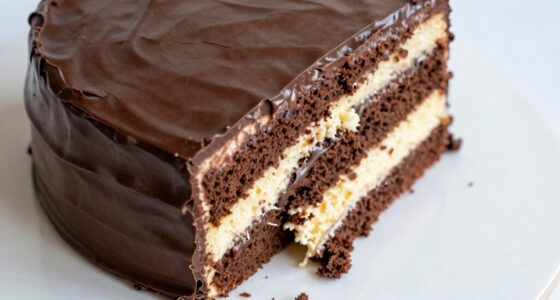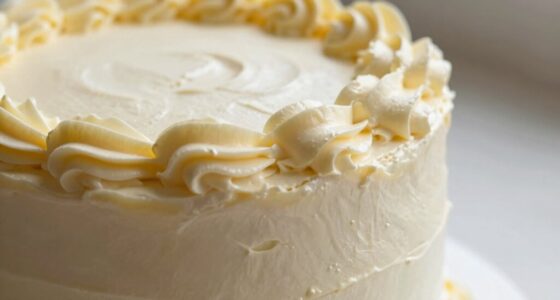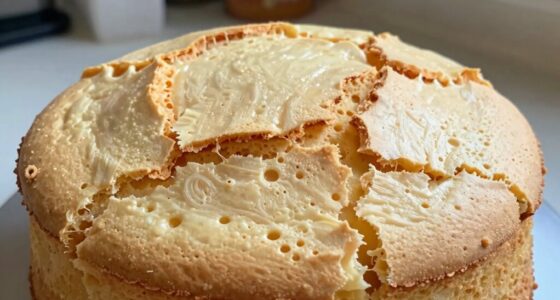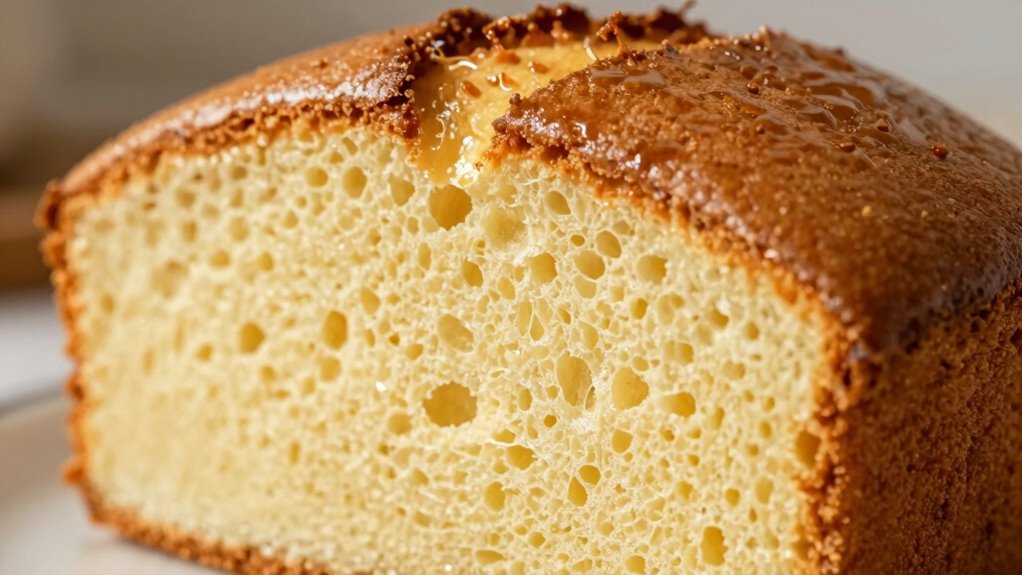
To keep your cake layers tender without losing strength, focus on precise baking temperatures using an oven thermometer, and gently mix ingredients like buttermilk or yogurt to add moisture without overworking the batter. Use gentle folding to preserve air bubbles and select frostings that complement moisture, like cream cheese or whipped buttercream. Proper storage, such as airtight containers or brushing with simple syrup, also helps maintain freshness. Keep these tips in mind, and you’ll create perfectly tender, resilient cake layers every time.

Get baking supplies delivered free with Prime
- Fast, free delivery on millions of items
- Prime Video, Amazon Music and more included
- Member-only deals all year
Key Takeaways
- Use moisture-rich ingredients like buttermilk or yogurt to maintain tenderness without compromising structure.
- Avoid overmixing batter to prevent dense layers and preserve lightness.
- Bake at the correct temperature with an oven thermometer for even heat and moisture retention.
- Store cooled layers properly in airtight containers and consider brushing with simple syrup to lock in moisture.
- Choose frostings that add moisture and avoid heavy or overly sweet options that may weigh down the cake.
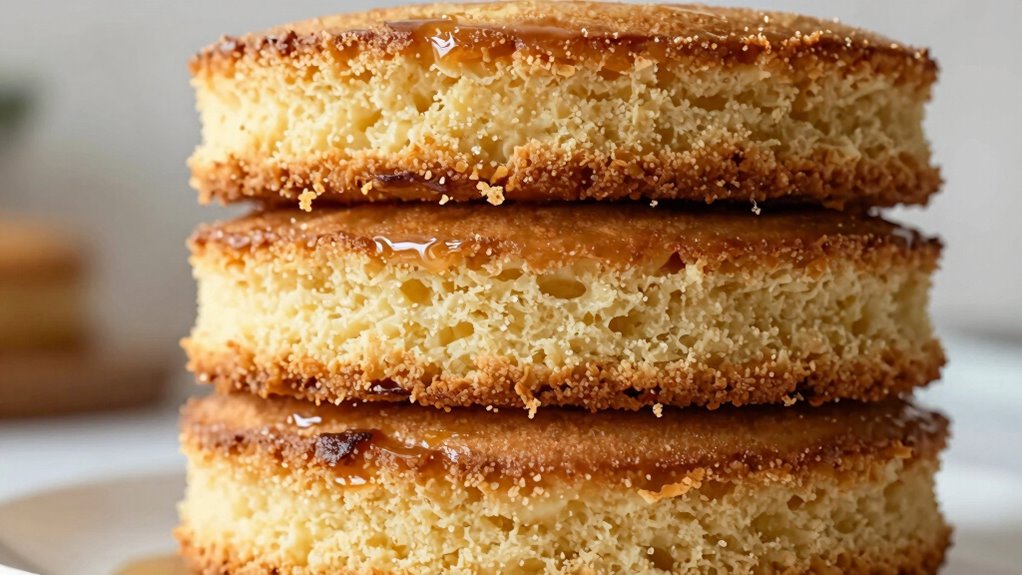
Keeping cake layers tender is crucial for a moist and enjoyable dessert, and it all starts with the right techniques. One of the most important factors is controlling your baking temperature. Baking at the correct temperature ensures the heat penetrates evenly, preventing the layers from becoming dry or overcooked. Use an oven thermometer to verify your oven’s temperature, as many home ovens tend to run hotter or cooler than the dial indicates. Baking at the right temperature not only maintains moisture but also promotes a light, tender crumb that’s perfect for layering. Additionally, temperature regulation plays a vital role in preserving the delicate balance between moisture and structure in your cake. Proper oven calibration can make a significant difference in your baking results.
Controlling oven temperature ensures even baking and a tender, moist cake crumb for perfect layers.
Another key to tender cake layers is paying attention to your ingredients and mixing methods. Incorporate ingredients like buttermilk or yogurt, which add moisture and tenderness without sacrificing strength. When mixing your batter, avoid overworking it; gentle folding preserves the air bubbles that help keep the cake light and tender. This careful handling prevents dense, tough layers that can ruin the overall texture of your cake.
Frosting flavors also play a role in how the cake’s texture and moisture are perceived. Opt for frostings that complement the cake and enhance its moistness, such as cream cheese or whipped buttercream. These frostings add a layer of richness and help lock in moisture, keeping the layers tender longer. Be mindful of the type of frosting you choose, as heavy or overly sweet options can weigh down the layers, making them feel denser and less tender. Using a simple, smooth frosting can help preserve the cake’s delicate crumb.
Controlling your baking temperature is imperative, but so is proper storage. Once baked and cooled, store your cake layers in airtight containers or wrap them tightly with plastic wrap. This prevents them from drying out and losing their tender quality. If you need to assemble the cake later, consider lightly brushing the layers with simple syrup or flavored liquids, which can boost moisture and reinforce the tender texture. This is especially effective if your cake has been stored for a day or two. Additionally, proper storage techniques help maintain the cake’s moisture and texture over time.
As an affiliate, we earn on qualifying purchases.
Frequently Asked Questions
Can Using Oil Instead of Butter Affect Cake Tenderness?
Using oil instead of butter can make your cake layers more tender because oil adds moisture and prevents gluten development, resulting in a softer crumb. Oil substitutes, like vegetable or canola oil, are popular butter alternatives for moist cakes. However, keep in mind that oil may reduce the structure slightly, so balance it with proper mixing. Overall, oil helps maintain tenderness without sacrificing too much strength, especially when used thoughtfully.
Does the Type of Flour Influence Cake Layer Softness?
Think of flour as the foundation of your cake—using cake flour, with its low protein content, keeps the layers tender and soft. I once swapped all-purpose flour for cake flour in a recipe, and the difference was like switching from rough sandpaper to silk. Lower protein levels mean less gluten development, resulting in a delicate, airy crumb that maintains softness without sacrificing strength.
How Does Humidity Impact Cake Layer Texture?
Humidity effects profoundly influence your cake layer texture. High humidity can make your cake overly moist, causing it to become dense or soggy, while low humidity might dry it out, making it crumbly. To maintain ideal moisture retention, you should store your cake in a cool, airtight container and avoid exposing it to fluctuating humidity levels. Proper handling helps keep your cake tender yet firm, ensuring a perfect balance in texture.
Should I Adjust Baking Time to Keep Layers Tender?
You don’t need to adjust baking time to keep layers tender; focus instead on your baking temperature and mixing techniques. Baking at a slightly lower temperature ensures gentler heat, preventing over-drying. Use gentle mixing to incorporate ingredients without developing too much gluten, which can toughen the cake. Remember, sometimes you need to tread water carefully—small adjustments can make a big difference in achieving tender, yet sturdy layers.
Can Adding Extra Eggs Make the Cake Layers More Tender?
Adding extra eggs can make your cake layers more tender, as eggs provide moisture and improve the crumb. However, too many eggs might make the cake dense or rubbery, so consider egg substitution options like applesauce or dairy alternatives to maintain tenderness without compromising strength. These substitutions add moisture and richness, helping your cake stay tender yet sturdy, especially if you’re aiming to avoid over-reliance on eggs.
As an affiliate, we earn on qualifying purchases.
Conclusion
Now that you know how to keep your cake layers tender without sacrificing strength, you’re all set to impress your friends with a perfectly baked treat. Remember, a little patience and the right ingredients make all the difference—think of it as your secret recipe for success, much like a trusty scroll from the royal library. So go ahead, get baking, and enjoy every delicious, tender bite. Your cake will be the talk of the town!
As an affiliate, we earn on qualifying purchases.
As an affiliate, we earn on qualifying purchases.
Halloween Picks
halloween
As an affiliate, we earn on qualifying purchases.