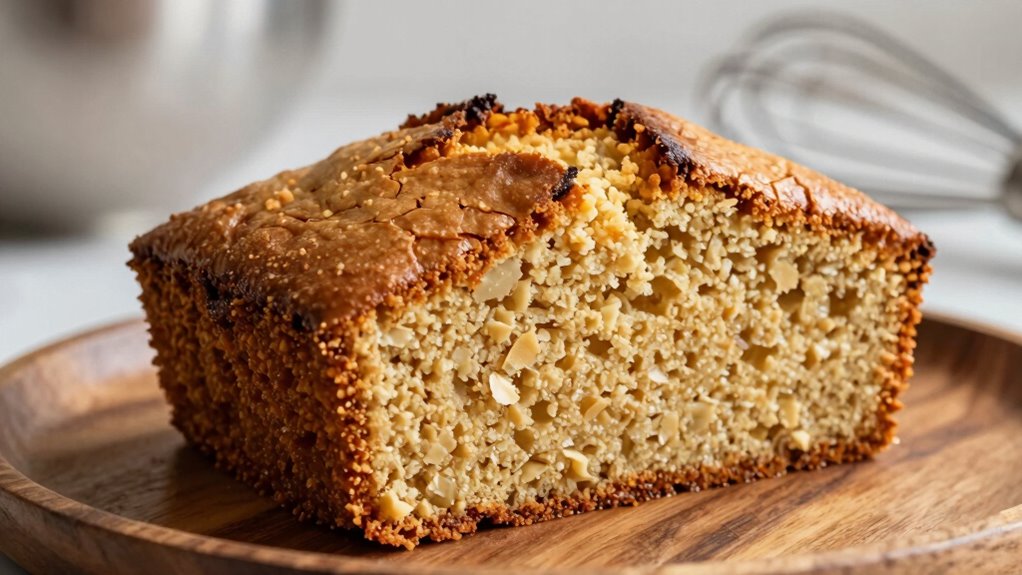

Your cake may turn out dry even if you follow the recipe because of overbaking, incorrect ingredient ratios, or using the wrong pan size and oven temperature. Too much baking time or high heat causes moisture loss, while improper measuring or missing moisture-enhancing ingredients like yogurt or sour cream can dry out the batter. Using the right pan and ensuring your oven is properly calibrated helps, and mastering these factors will keep your cakes moist and fluffy. Keep exploring for detailed tips on moistening your baking!
Key Takeaways
- Overbaking or incorrect oven temperature can cause moisture loss, leading to a dry cake even if the recipe is followed.
- Using improper pan size or material may result in uneven baking and dryness.
- Not monitoring baking time or relying solely on time rather than doneness tests can cause overbaking.
- Insufficient moisture-rich ingredients like yogurt or sour cream reduce tenderness and moisture retention.
- Failing to store or wrap the cake properly allows moisture to escape, resulting in dryness.
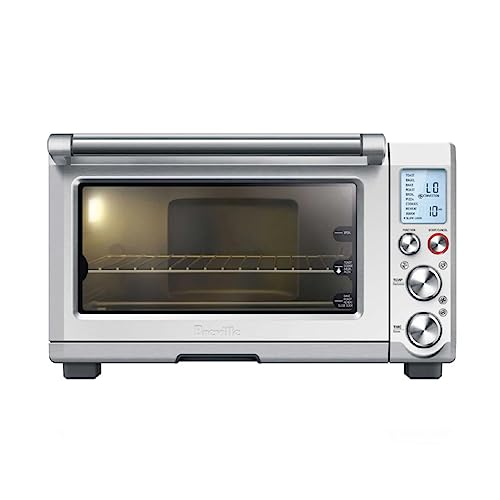
Breville BOV845BSS Smart Oven Pro Countertop Oven, Brushed Stainless Steel
The Breville Smart Convection Oven Pro with Element iQ System is a high performance countertop oven; Home cooks...
As an affiliate, we earn on qualifying purchases.
Why Do Cakes Turn Out Dry Even When You Follow the Recipe?
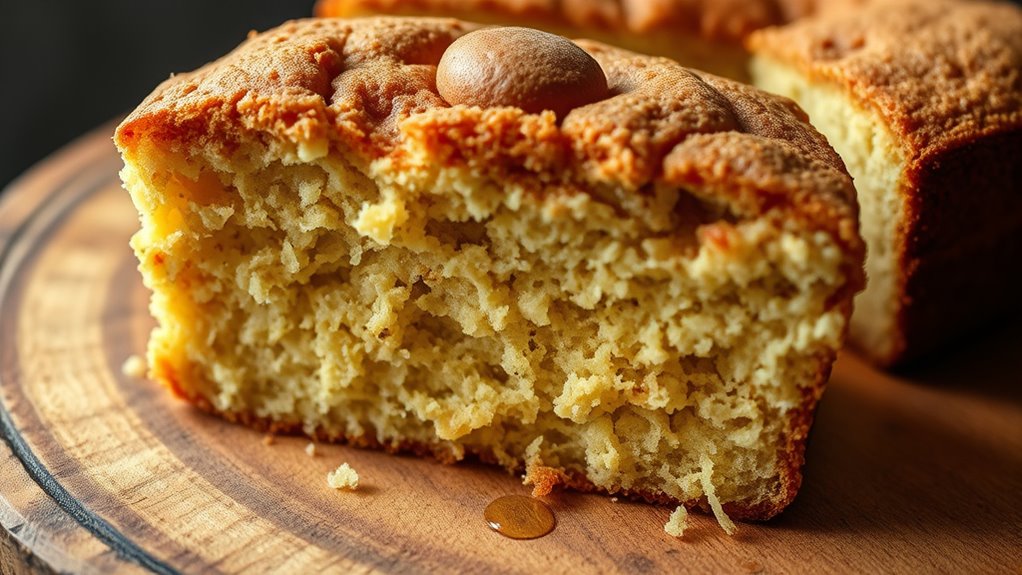
Even when you follow a recipe precisely, your cake can still turn out dry. One reason is ingredient substitutions that may seem minor but affect moisture levels, like swapping butter for oil or using low-fat dairy. These changes can reduce the cake’s tenderness and moisture. Additionally, tweaking flavor variations, such as adding extra cocoa powder or spices, can inadvertently dry out the batter if not balanced with enough liquid. Overmixing the batter also intensifies gluten development, resulting in a denser, drier crumb. Sometimes, using ingredients at the wrong temperature or substituting ingredients without adjusting other components can throw off the moisture balance. Paying close attention to ingredient quality and maintaining proper proportions helps keep your cake moist, no matter what flavor variations or substitutions you choose. Proper baking techniques like adjusting baking time and temperature can also significantly impact moisture retention. Moreover, understanding the role of ingredients in moisture retention can help you make better substitutions and achieve a moist, tender cake. Being aware of ingredient interactions can further improve your baking results and prevent dryness.

Emeril Lagasse Extra Large French Door Air Fryer Toaster Oven Combo, 24 Cooking Functions and Digital Controls, 7 Accessories Included, Stainless Steel Finish, 26QT Capacity
A VERSATILE AIR FRYER AND MULTI-COOKER COMBO: Elevates practically any meal, from air frying quick after-school snacks to...
As an affiliate, we earn on qualifying purchases.
How Do Ingredient Ratios Affect Your Cake’s Moistness?
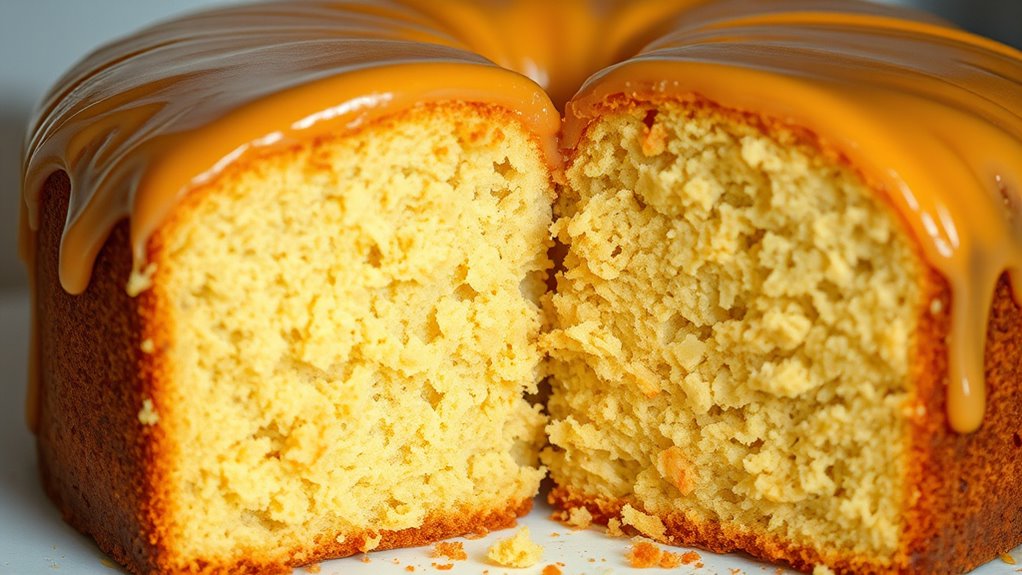
The ratios of ingredients in your cake batter play a crucial role in determining its moistness. When ingredient balance favors too much flour or sugar, the cake can turn out dry or dense, losing that tender crumb you want. Conversely, adding extra fat or liquid helps retain moisture, making the cake soft and luscious. Achieving proper ingredient ratios ensures flavor harmony, so no single component overwhelms the others. For example, the right balance of eggs, oil, and liquids works together to lock in moisture and improve texture. Adjusting these ratios thoughtfully can prevent dryness and create a cake that’s moist and flavorful from edge to center. Additionally, understanding the role of emulsifiers can help improve batter stability and moisture retention. Proper ingredient measurements are essential for consistent results, especially when aiming for optimal moistness. Using accurate measuring tools can greatly improve the precision of your ingredient ratios, leading to better moisture control. Remember, precise proportions are key to controlling moisture and ensuring a harmonious taste. Incorporating techniques such as proper mixing methods can further enhance batter consistency and moisture preservation. Paying attention to baking time and temperature also plays a vital role in preventing dryness and maintaining moistness throughout the cake.

BLACK+DECKER Crisp 'N Bake Air Fry Countertop Convection Toaster Oven, Medium Capacity, 4-Slice, 5-in-1, Fits 9” Pizza, 30-Min Timer, Bake, Broil, Air Fry, Toast, Keep Warm, Stainless Steel
5-IN–1 MULTIFUNCTIONAL COOKING- Enjoy versatile cooking with Air Fry, Bake, Broil, Toast, and Keep Warm settings. Perfect for...
As an affiliate, we earn on qualifying purchases.
Does Overbaking Make Cakes Dry? Here’s How to Prevent It
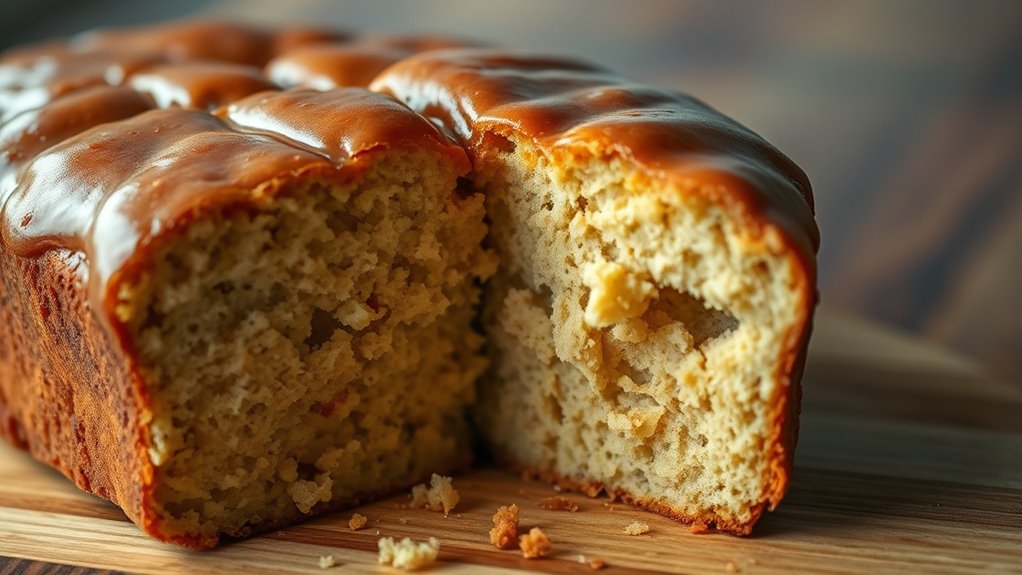
Overbaking is a common cause of dry cakes, so paying attention to proper baking times is essential. Make sure your oven temperature is accurate and matches what the recipe calls for, as even small deviations can lead to overbaking. Additionally, using the correct pan size helps guarantee your cake cooks evenly without drying out. To better understand how baking techniques impact cake moisture, it’s important to follow precise timing and temperature controls during the process. Proper heat distribution in your oven can also prevent uneven baking, which contributes to dryness. Monitoring your credit card processing setup can help ensure your baking equipment operates smoothly, avoiding unexpected issues that might affect your results. Understanding risk management strategies in baking can help you adapt and improve your results over time.
Proper Baking Times
If you leave your cake in the oven too long, it’s likely to turn out dry and crumbly. Proper baking times are vital to maintain moistness and cake flavor. To prevent overbaking, monitor your cake closely and use a toothpick test—remove it when it comes out clean. Remember, every oven varies, so adjust time accordingly. Here’s a quick guide:
| Baking Duration | Result |
|---|---|
| Too long | Dry, crumbly texture |
| Perfect | Moist, tender crumb |
| Too short | Underbaked, raw center |
Keeping an eye on baking time also affects decorating tips; a properly baked cake holds up better and looks more appealing. Precise timing helps you achieve the ideal cake, both in flavor and presentation. For consistent results, understanding how proper baking times influence moisture levels is essential, since baking temperature can also significantly impact your outcome.
Oven Temperature Accuracy
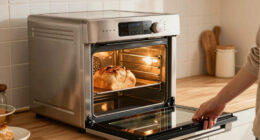
Even if you follow your recipe perfectly, inaccurate oven temperatures can still cause your cake to turn out dry. An oven that’s not properly calibrated may run hotter or cooler than the dial indicates, leading to overbaking or uneven baking. To prevent this, invest in an oven thermometer to check your oven’s actual temperature and adjust accordingly. Regular oven calibration** ensures your oven maintains a stable, accurate temperature, helping you avoid overbaking. Remember, even a few degrees difference can make a significant impact on moisture levels, so monitoring and maintaining temperature accuracy is essential for moist, tender cakes. Additionally, understanding how modern ceiling fans improve airflow can help you create a better baking environment by reducing humidity and promoting even heat distribution. Proper oven maintenance also plays a crucial role in ensuring consistent baking results. Incorporating accurate temperature control** methods can significantly improve your baking outcomes.
Using Correct Pan Size
Using the correct pan size is vital because a pan that’s too small or too large can cause your cake to overbake and turn dry. Many baking myths suggest that simply adjusting baking time solves dryness issues, but pan size plays a pivotal role. When your pan is too small, the batter is crowded, leading to overbaking edges while the center remains underdone. Conversely, a too-large pan spreads the batter thin, causing it to bake quickly and dry out. This impacts not only texture but flavor variations too, as overbaking diminishes moisture and richness. To prevent dryness, always use the recommended pan size in your recipe. Proper pan size ensures even baking, preserves moisture, and helps you achieve a moist, flavorful cake every time.
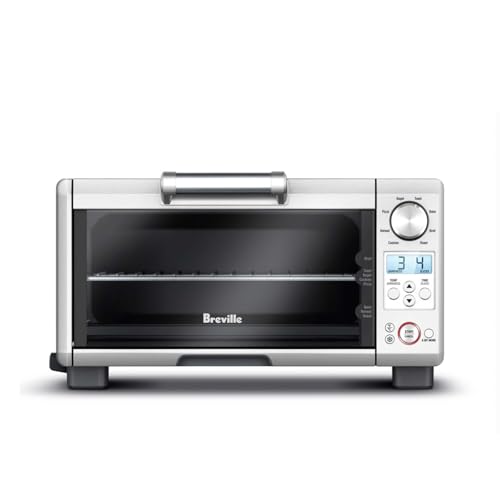
Breville BOV450XL Mini Smart Countertop Oven and Toaster Oven, Small, Brushed Stainless Steel
The Breville Mini Smart Countertop Oven and Toaster Oven with Element iQ System is for cooks interested in...
As an affiliate, we earn on qualifying purchases.
Why Is Oven Temperature Critical for a Moist Cake, and How Do You Calibrate It?
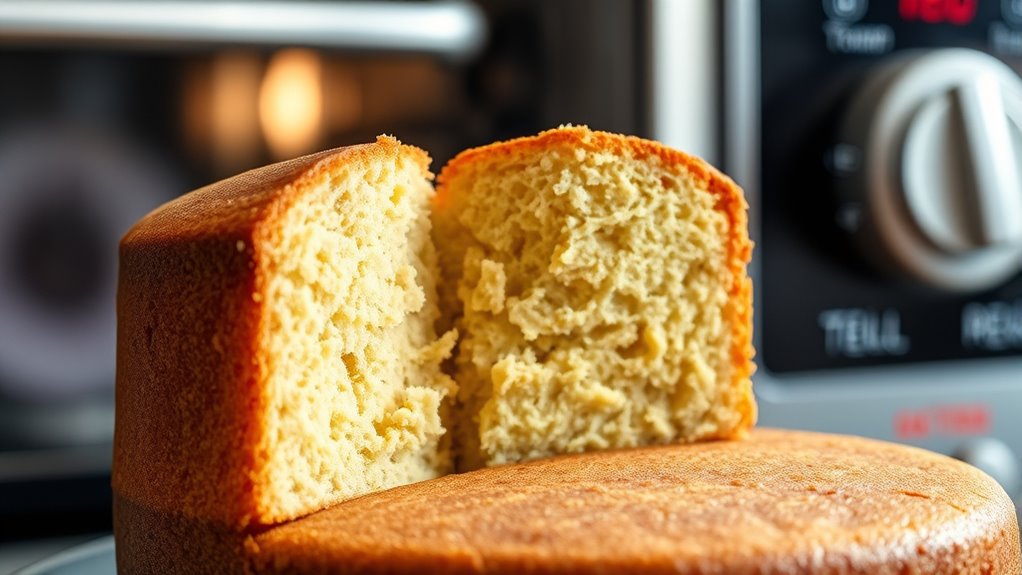
Your oven’s temperature accuracy directly impacts how moist your cake turns out. If it runs hot or cold, it can cause uneven baking or dry textures, even if you follow the recipe perfectly. Calibrating your oven guarantees your cake bakes at the right temperature, helping you achieve that perfect, moist crumb. Regularly checking your oven’s temperature with a reliable thermometer can help maintain accurate baking conditions. Additionally, understanding your oven’s temperature calibration process ensures consistent results over time. Being aware of your oven’s hot spots can also improve baking outcomes and prevent dry edges or uneven rises. Knowing how to detect oven inaccuracies allows you to adjust your baking process proactively.
Oven Temperature Accuracy
Oven temperature accuracy plays a crucial role in ensuring your cake turns out moist and tender. If your oven isn’t calibrated properly, you might think you’re baking at the right temperature, but your cake could be overcooked or dry. Consistent temperature is key to even baking. Use an oven thermometer to check if your oven’s internal temperature matches the dial setting. If it doesn’t, perform an oven calibration to improve temperature consistency. Here’s how it impacts your baking:
| Situation | Effect on Cake | Solution |
|---|---|---|
| Oven runs hot | Dry, overbaked cake | Calibrate oven for accuracy |
| Oven runs cool | Undercooked, dense cake | Adjust oven settings |
| Inconsistent temperature | Uneven baking | Regular oven calibration |
| No thermometer used | Uncertain results | Invest in an oven thermometer |
Calibrating Your Oven
Since even small temperature discrepancies can substantially affect your cake’s moisture level, calibrating your oven is essential for consistent results. Proper oven calibration guarantees your oven’s temperature accuracy matches the dial, preventing overbaking or underbaking. To calibrate, you can:
- Place an oven thermometer in the center rack and compare the reading to your set temperature.
- Adjust your oven’s calibration setting if available, or contact a professional for precise correction.
- Regularly check the thermometer, especially if you notice uneven baking or changes in your cake’s texture.
Accurate oven calibration helps you maintain the right baking environment. By ensuring your oven’s temperature accuracy, you’ll produce moist, perfectly baked cakes every time without unnecessary trial and error.
Effects on Cake Moisture
When your oven’s temperature isn’t accurate, it can cause your cake to come out dry, even if you followed the recipe perfectly. An oven that’s too hot can bake the cake too quickly, sealing moisture inside but causing the edges to become tough and dry. Conversely, a temperature that’s too low might result in uneven baking, leading to a dense texture that loses moisture. This affects not just the cake’s overall moistness but also its flavor, making it less vibrant. Additionally, dry cakes can make decorative icing look dull and less appealing. Proper calibration guarantees even baking at the right temperature, preserving moisture, enhancing cake flavor, and creating a smoother surface for decorating. Ultimately, accurate oven temperature is key to a moist, flavorful cake with beautiful icing.
How Does Using the Right Ingredients Improve Cake Moisture?
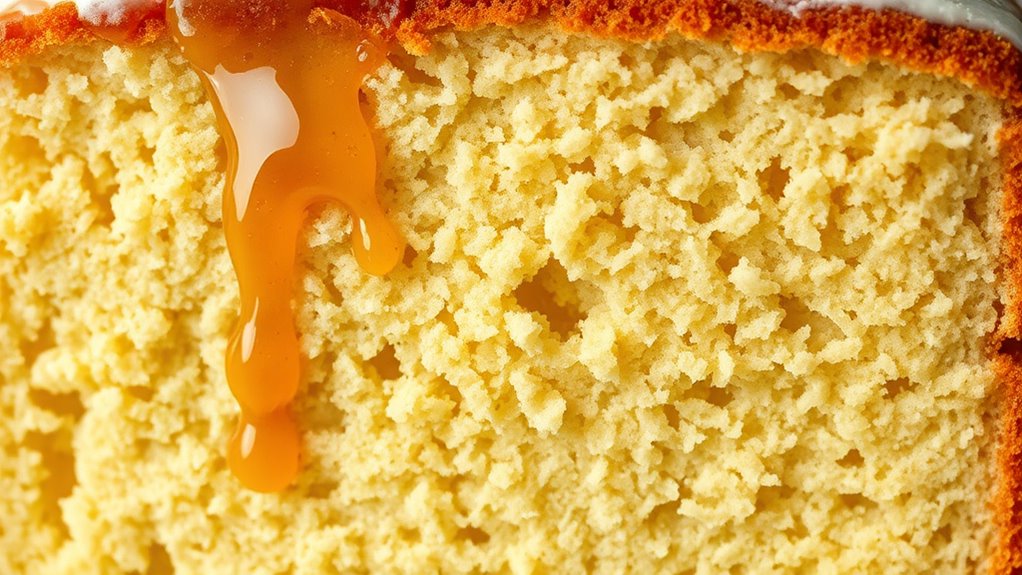
Using the right ingredients is essential for keeping your cake moist because each component plays a key role in retaining moisture and providing structure. Choosing quality ingredients or making ingredient substitutions can markedly impact your cake’s texture. For example, swapping oil for butter can add moisture, while adding sour cream or yogurt enhances tenderness. Proper ingredients also support flavor enhancement, making your cake taste richer and more satisfying.
Keep these tips in mind:
- Use oils or dairy to boost moisture retention
- Opt for ingredients that improve flavor without drying out
- Incorporate moisture-rich substitutes like applesauce or buttermilk
How Can You Keep Your Cake Moist During and After Baking?
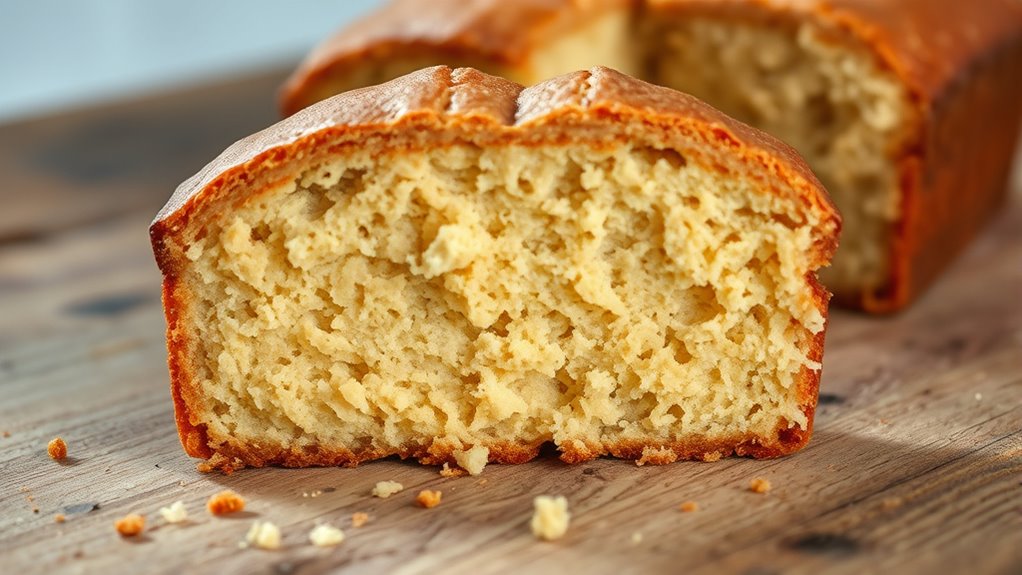
To keep your cake moist during and after baking, it’s important to pay attention to proper techniques throughout the process. Start by avoiding overbaking, which can dry out the cake and diminish its flavor. Use a toothpick test to ensure it’s just done. Incorporate ingredients that enhance moisture, like sour cream or yogurt, to boost cake flavor and tenderness. After baking, let your cake cool properly before applying frosting; this prevents moisture loss. When frosting, consider using techniques that seal in humidity, such as crumb coating or adding simple syrup before frosting. These frosting techniques help retain moisture and improve the overall cake flavor, making each bite moist and delicious. Proper handling and thoughtful frosting choices keep your cake fresh longer.
How Do Pan Size and Material Impact Cake Moisture?
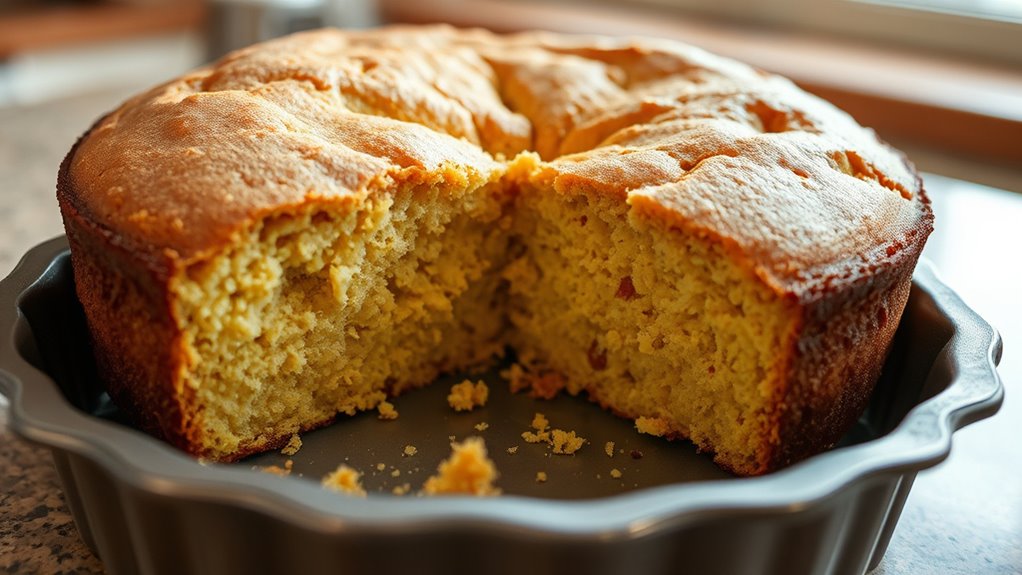
The size and material of your baking pan play essential roles in determining how moist your cake turns out. A larger or shallower pan leads to a thinner cake that dries out faster, while a smaller, deeper pan keeps moisture trapped inside. The pan material also matters; metal pans heat quickly and can cause edges to over-bake, drying out the cake. Conversely, glass or ceramic pans distribute heat more evenly, helping maintain moisture. To optimize moistness, consider:
- Using the correct pan size specified in the recipe
- Choosing pans made of glass or ceramic for gentle heat distribution
- Avoiding overfilling or underfilling pans to prevent uneven baking
What Mixing Techniques Help Preserve Moisture and Improve Texture?
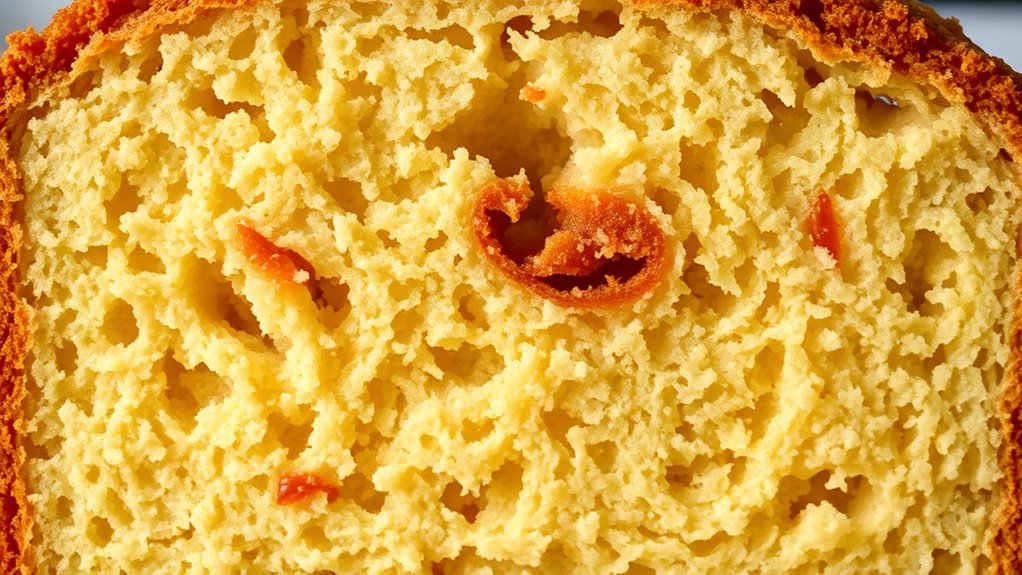
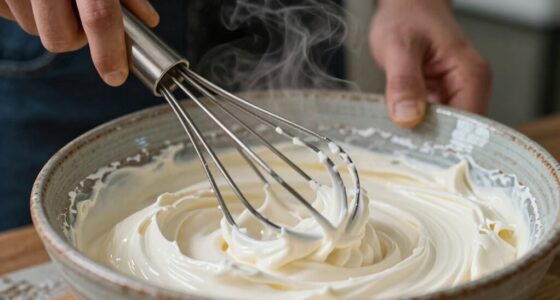
Proper mixing techniques can make a noticeable difference in keeping your cake moist and giving it a better texture. When you mix ingredients, avoid overmixing, which can develop gluten and make the cake dense and dry. Instead, gently fold and mix just until ingredients are combined. Use the creaming method by beating butter and sugar until light and fluffy; this helps trap air and retain moisture. Incorporate liquids gradually to ensure even moisture distribution. Be careful not to overmix once you add flour, as this can lead to a tougher crumb. These mixing techniques support moisture preservation and create a tender, moist cake with a fine crumb. Precision and gentle handling during mixing are key to achieving ideal texture and moisture in your baked goods.
How Can You Store and Serve Your Cake to Keep It Fresh and Moist?
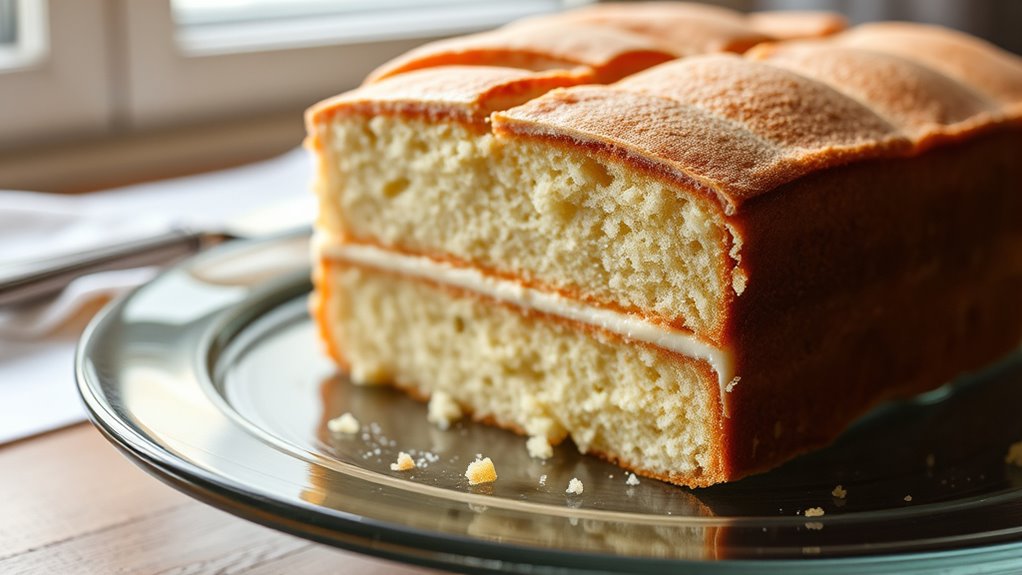
Storing your cake correctly is essential to maintaining its freshness and moistness. To keep your cake flavor vibrant and frosting techniques intact, consider these tips:
Proper storage keeps your cake fresh, moist, and delicious.
- Wrap the cake tightly in plastic wrap or foil to prevent air exposure, which dries out the cake.
- Store it in an airtight container at room temperature for up to two days, or in the fridge for longer shelf life.
- When serving, bring the cake to room temperature to enhance flavor and softness, ensuring frosting techniques look appealing and taste better.
Avoid exposing your cake to direct sunlight or heat, which can dry it out. Proper storage and serving techniques preserve moisture, keep the cake moist, and ensure every slice remains delicious.
Frequently Asked Questions
Can Substituting Ingredients Affect My Cake’s Moisture Level?
Yes, ingredient substitutions can affect your cake’s moisture impact. When you swap ingredients like oil for butter or applesauce for eggs, it can change how moist or dry your cake turns out. Some substitutions add extra moisture, while others might dry it out. Always consider how the new ingredient interacts with the recipe, and adjust other ingredients if needed, to maintain the right moisture level.
How Does Altitude Influence Cake Moisture and Baking Time?
Did you know that baking at high altitudes can reduce moisture in your cake by up to 25%? At higher elevations, you need to make altitude adjustments, like increasing liquids and decreasing baking powder, to keep your cake moist. Also, expect longer baking times because the lower air pressure causes baked goods to rise faster, so you’ll need to monitor your cake closely to prevent it from drying out.
Are There Specific Baking Utensils That Help Retain Moisture?
Using non-stick pans or silicone molds can help retain moisture in your cake. Non-stick pans prevent sticking and uneven heat, keeping the cake moist. Silicone molds distribute heat evenly, reducing dry spots and helping your cake stay tender. These utensils also make it easier to remove the cake without crumbling. By choosing the right baking tools, you enhance moisture retention and enjoy a softer, more delicious cake every time.
Does Adding Extra Fat or Liquids Improve Cake Moistness?
Adding extra fat or liquids can definitely improve your cake’s moistness. You might try ingredient swaps like adding a bit more butter or oil, or incorporating ingredients like sour cream or yogurt for extra moisture. These adjustments also open up possibilities for flavor variations, making your cake richer and more tender. Just be careful not to overdo it, as too much can alter the texture or cause it to sink.
How Does Refrigeration Impact the Cake’s Texture and Moisture?
Refrigeration can negatively impact your cake’s texture and moisture. The cold causes moisture to escape, making the cake dry and crumbly over time. Refrigeration effects include staling and a change in texture, often drying out baked goods. To retain moisture, wrap your cake tightly before refrigerating, but try to enjoy it within a couple of days. For best freshness, store at room temperature if you’ll consume it soon.
Conclusion
To keep your cake moist, focus on proper ingredient ratios, oven temperature, and baking time. Did you know that over 60% of bakers report their cakes turn out dry despite following recipes? By understanding these factors and adjusting your techniques, you can achieve a tender, moist cake every time. Remember, small changes make a big difference—so keep experimenting and enjoy delicious, moist treats!