The way you layer and add ingredients greatly impacts your cake’s moisture and tenderness. Start by mixing your wet ingredients first to make sure of even hydration, then gradually incorporate dry ingredients to avoid overmixing. Adding fruit fillings or syrups between layers can boost internal moisture, while frosting should act as a sealant rather than a barrier. Paying attention to these steps helps lock in moisture, resulting in a soft, juicy cake—discover more tips to perfect your bake.
Key Takeaways
- Add wet ingredients first to ensure even hydration and better moisture distribution throughout the batter.
- Incorporate moisture-rich ingredients like fruit fillings or yogurt in specific layers to lock in internal moisture.
- Mix ingredients gently and at appropriate stages to prevent overmixing, which can lead to dryness.
- Layer ingredients strategically, placing moist elements between dry layers to retain moisture during baking.
- Finish with the icing or frosting carefully, avoiding a moisture barrier that can cause the cake to dry out.
Why Moisture Matters So Much in Cakes
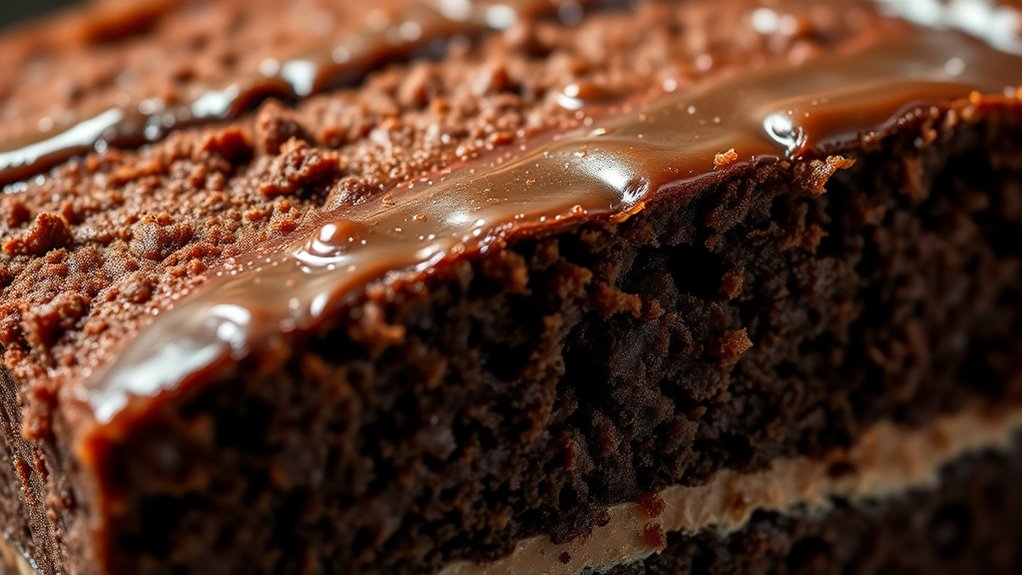
Moisture is essential in cakes because it directly affects their texture and overall enjoyment. When you consider ingredient substitution, it’s important to choose options that enhance moisture retention, ensuring your cake stays tender and fresh. Without enough moisture, cakes turn dry and crumbly, losing their appeal. Proper moisture levels help develop a soft crumb and a moist bite, making every slice satisfying. Using ingredients like yogurt, applesauce, or even a splash of milk can boost moisture retention without compromising flavor. Understanding how moisture behaves allows you to tailor recipes for the perfect consistency. Proper moisture management is crucial for achieving a bakery-quality cake at home. Additionally, selecting the right ingredient order can influence how well moisture is retained during baking. For example, incorporating liquid ingredients at the right stage ensures even distribution and better moisture retention. Being mindful of ingredient interactions can also help prevent dryness and improve overall texture. Recognizing how baking techniques impact moisture retention allows bakers to adapt their methods for the best results. Ultimately, keeping your cake moist not only improves taste but also extends its freshness, making it more enjoyable for everyone.
How Ingredient Order Affects Cake Moisture

The order in which you add ingredients influences how moisture develops in your cake. Mixing wet ingredients at different times and using specific techniques can help lock in moisture better. Understanding how layering moisture sources and timing impact the process lets you bake a moister, more tender cake. Additionally, detecting passive voice in your instructions can improve clarity and effectiveness. Properly managing the ingredient sequence can also enhance the cake’s overall texture and moistness. Incorporating proper mixing techniques ensures even distribution of ingredients for consistent moisture throughout the cake. Being mindful of ingredient order can make a significant difference in achieving the desired moistness and crumb quality. Recognizing the importance of layering moisture sources helps optimize the cake’s tenderness and freshness.
Layering Moisture Sources
How you layer ingredients in your cake can greatly influence its moisture level. Placing fruit fillings between moist cake layers adds internal moisture, keeping the cake tender and flavorful. Be mindful of when you add fillings: too early, and they may seep into the cake, making it soggy; too late, and they might not integrate well. When applying frosting, consider its role as a moisture barrier—adding a thin layer of crumb coat helps seal in moisture and prevents the frosting from absorbing excess liquid from fillings. Proper layering ensures that moisture is distributed evenly throughout the cake, enhancing texture and flavor. Additionally, understanding the project management involved in preparing your ingredients can help ensure consistent results. Being aware of ID Times can also guide you in timing your steps for optimal moisture retention. By thoughtfully arranging your ingredients, you create a moist, delicious cake with perfect cookie management from top to bottom.
Timing of Wet Ingredients
Timing is crucial when adding wet ingredients to your cake batter, as the order can considerably impact moisture distribution and overall texture. Adding liquids like milk, oil, or eggs at the right stage ensures even hydration and prevents overmixing. If you make ingredient substitutions, such as swapping applesauce for oil, adjust the timing to maintain moisture balance. Proper storage methods also matter; keep wet ingredients sealed and at appropriate temperatures to prevent moisture loss before mixing. Incorporate liquids gradually, allowing them to fully integrate before adding more. This careful timing helps ensure your cake retains moisture evenly throughout, resulting in a tender crumb. Paying attention to when you add wet ingredients makes a noticeable difference in cake moistness and overall quality.
Mixing Techniques and Moisture
Mixing techniques play an essential role in guaranteeing your cake stays moist and tender. Proper mixing promotes even batter aeration, which helps prevent dense spots and promotes moisture retention. When you mix ingredients thoroughly but not excessively, you encourage air bubble formation that lightens the batter without deflating it. Overmixing can break down air bubbles, reducing batter aeration and leading to a drier cake. Conversely, undermixing can cause uneven distribution of ingredients, affecting moisture balance. Using gentle folding or mixing at the right stage ensures ideal air incorporation, resulting in a softer, moister crumb. Paying attention to your mixing method and order of ingredients directly influences how moisture is preserved during baking, making your cake tender, moist, and consistently delicious.
The Best Sequence for Moist, Delicious Cakes

Achieving a moist, delicious cake starts with following the right sequence of steps. Begin by gathering your ingredients, noting that ingredient substitutions can influence moisture levels—using oil instead of butter, for example, can keep your cake softer. Add wet ingredients like eggs, milk, and oil first, blending them thoroughly before incorporating dry ingredients. This order ensures even distribution and better moisture retention. Incorporating smart appliances or connected tools can help monitor ingredient consistency and mixing precision. Using modern baking technology can also help achieve more consistent results. Once baked, proper storage methods are essential; wrapping your cake tightly or keeping it in an airtight container prevents moisture loss. Avoid refrigerating unless necessary, as it can dry out the cake. Following this sequence, combined with mindful ingredient choices and storage, helps you create consistently moist, flavorful cakes every time.
Simple Tips to Lock in Moisture Every Time
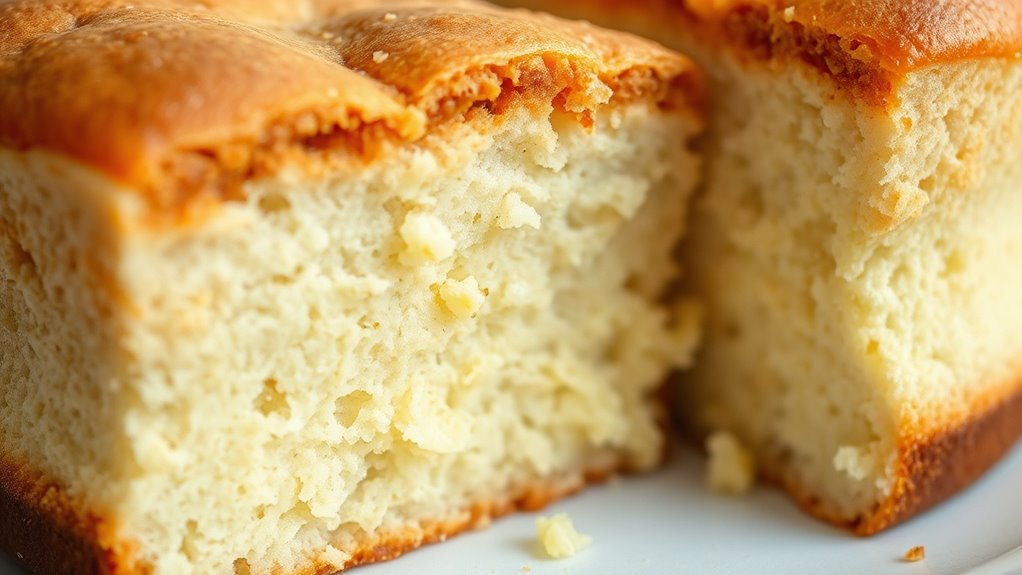
To lock in moisture every time, start by choosing ingredients that naturally retain moisture, like applesauce or yogurt, instead of dry alternatives. Proper frosting techniques also help seal in freshness—cover your cake with a thin layer of frosting to lock in steam and prevent drying out. When storing your cake, use airtight containers or wrap it tightly with plastic wrap to maintain humidity. Keep the cake at room temperature if you’ll consume it within a couple of days, or refrigerate it in a sealed container for longer storage. Avoid exposing your cake to air or direct sunlight, which can cause it to dry out faster. These simple tips—smart ingredient choices, effective frosting, and proper storage—ensure your cake stays moist and delicious every time. Proper storage methods also help maintain optimal moisture levels and prevent spoilage.
Troubleshoot Common Moisture Problems in Cakes

Why do some cakes turn out dry or dense despite your best efforts? Often, it’s due to improper moisture balance or overmixing. If you notice dryness, try adjusting your fruit fillings; too much acidic fruit can dry out the cake, so balance it with moisture-rich ingredients. When your cake is dense, it might be overbaked or contain too much flour. Also, consider your icing techniques—an uneven or overly thick layer can create a barrier that makes the cake feel dry. To troubleshoot, focus on the ingredient order to retain moisture and avoid overmixing. Incorporating fruit fillings carefully to add moisture naturally, and using gentle icing techniques to keep the cake tender, are essential steps. Small adjustments can make a big difference in achieving moist, delightful cakes. Additionally, understanding Free Floating can help in creating a balanced environment that promotes even baking and moisture retention throughout your cake. Proper ingredient layering plays a crucial role in maintaining moisture levels during baking, ensuring a tender and moist final product. Recognizing baking environment factors such as humidity and oven calibration can further improve your results.
Tips for Baking Soft, Juicy, Tender Cakes
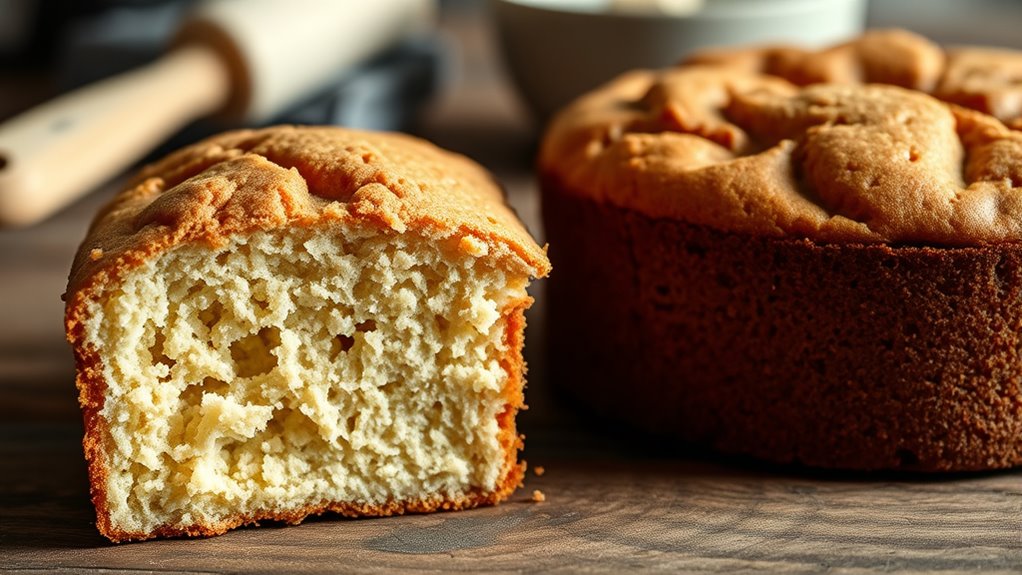
Baking soft, juicy, and tender cakes starts with selecting the right ingredients and mastering proper techniques. To achieve the ideal texture, be mindful of sugar crystallization; mixing sugar thoroughly helps prevent graininess and guarantees smooth moisture retention. Incorporate ingredients in the correct order to promote even flavor infusion, which enhances juiciness and depth. Use room temperature ingredients to aid in proper blending, resulting in a tender crumb. Don’t overmix the batter, as this can develop gluten and make the cake dense. Baking at the right temperature preserves moisture, keeping the cake soft and juicy. Finally, avoid overbaking—remove the cake as soon as a toothpick comes out clean—to lock in moisture and maintain tenderness.
Frequently Asked Questions
Can Ingredient Substitutions Affect Cake Moisture Levels?
Yes, ingredient substitutions can affect your cake’s moisture levels. Changing ingredients may alter gluten development, which influences how moist and tender your cake turns out. For example, swapping for different flours or liquids impacts moisture retention. Additionally, substituting sugars can affect sugar crystallization, leading to drier or denser textures. Be mindful of these factors to maintain the desired moisture and texture in your cake.
How Does Oven Temperature Influence Cake Moisture Retention?
You might notice that oven temperature directly impacts your cake’s moisture retention. When you set it too high, the outside cooks too quickly, trapping moisture inside but risking a dry, tough crumb. Lower temperatures allow gentle baking, helping your cake retain moisture evenly. Finding the right oven temperature is key—too hot, and your cake dries out; just right, and it stays moist and tender all the way through.
Are There Specific Types of Flour That Improve Moisture?
You’ll want to choose flour with lower protein content, like cake flour, to improve moisture. Lower gluten development from reduced flour protein keeps your cake tender and moist. Higher-protein flours, like bread flour, build more gluten, which can make the cake denser and drier. Using the right flour guarantees your cake retains moisture, stays soft, and has a delicate crumb, making it irresistibly moist and delicious.
Does Altitude Impact How Moisture Interacts in Cake Baking?
Imagine your cake at high altitude, trying to hold onto moisture like a clingy ex with a leaky umbrella. Altitude effects cause faster moisture evaporation, making your cake dry and crumbly. You’ll need to adjust recipes—maybe add a bit more liquid or reduce baking time—to keep that moist, fluffy texture. So, yes, altitude impacts moisture interaction, and embracing those changes guarantees your cake stays delicious, not desert-dry.
Can Storage Methods Alter the Moisture Content of Baked Cakes?
Yes, storage techniques can alter the moisture content of baked cakes. To preserve moisture, you should store cakes in an airtight container or wrap them tightly with plastic wrap. Keep them at room temperature for short periods or refrigerate for longer storage. Proper moisture preservation prevents dryness and keeps your cake fresh. Avoid exposure to air or heat, which can cause the cake to dry out and lose its moist texture.
Conclusion
By paying attention to the order in which you add ingredients, you can discover the secret to moist, tender cakes that feel like a gentle hug in every bite. Think of your cake as a symphony—each ingredient plays an essential role, and when timed just right, they come together to create a masterpiece. So, follow these tips, and watch your cakes transform into irresistible treats that stay soft and juicy long after they cool.