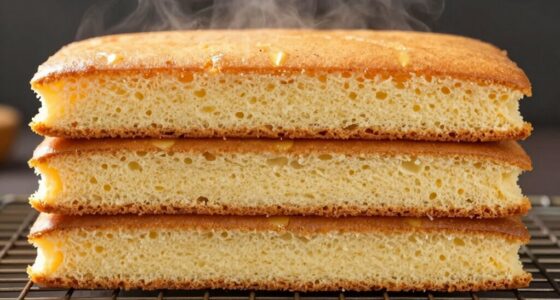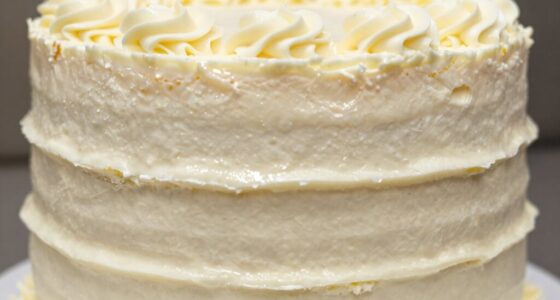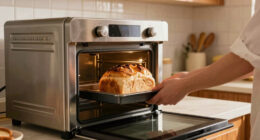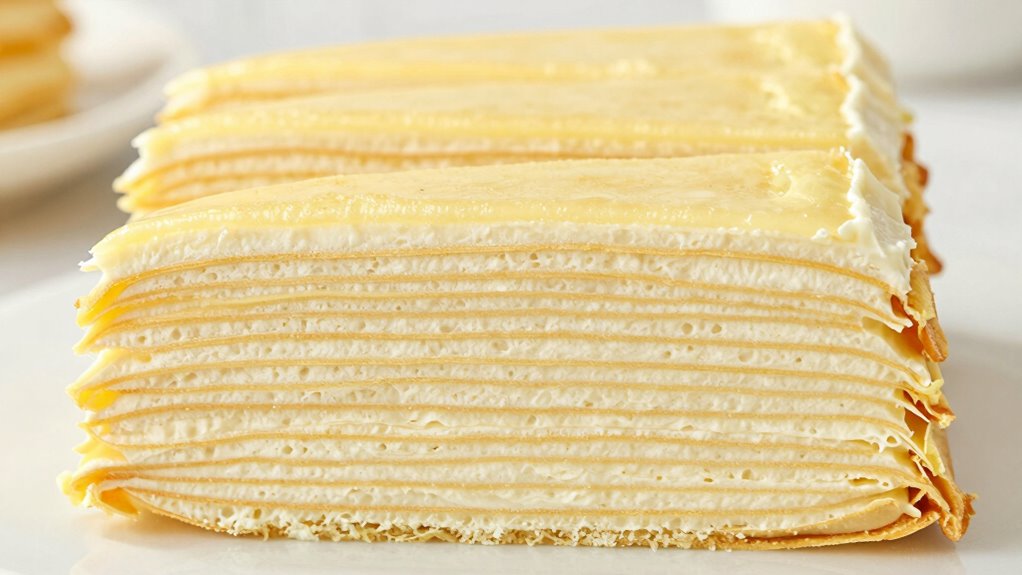

To get even cake layers without fancy tools, start by choosing pans with straight, tall sides for uniformity. Prepare your batter by sifting dry ingredients and mixing gently to avoid air bubbles. Pour the batter carefully, tapping the pan to level it, and use a spoon or spatula to smooth the top. Proper oven placement and avoiding sudden temperature changes help guarantee even baking. Keep practicing these simple steps, and you’ll master perfect layers with ease.
Key Takeaways
- Gently tap the filled pan on the counter to settle batter and promote even distribution.
- Use a spatula or the back of a spoon to spread batter smoothly and evenly.
- Pour batter slowly and steadily to prevent air bubbles and uneven layers.
- Rotate the pan while pouring or spreading to ensure uniform thickness.
- Maintain consistent batter thickness and avoid overmixing for better control and even layers.

Calphalon Titan Commercial Quality Natural Aluminum PFA Free Nonstick 13 x 9 Inch Cake Pan W/Lid
One nonstick cake pan with lid. Measures 13 x 9 inches.
As an affiliate, we earn on qualifying purchases.
As an affiliate, we earn on qualifying purchases.
Pick the Perfect Pan for Even Layers
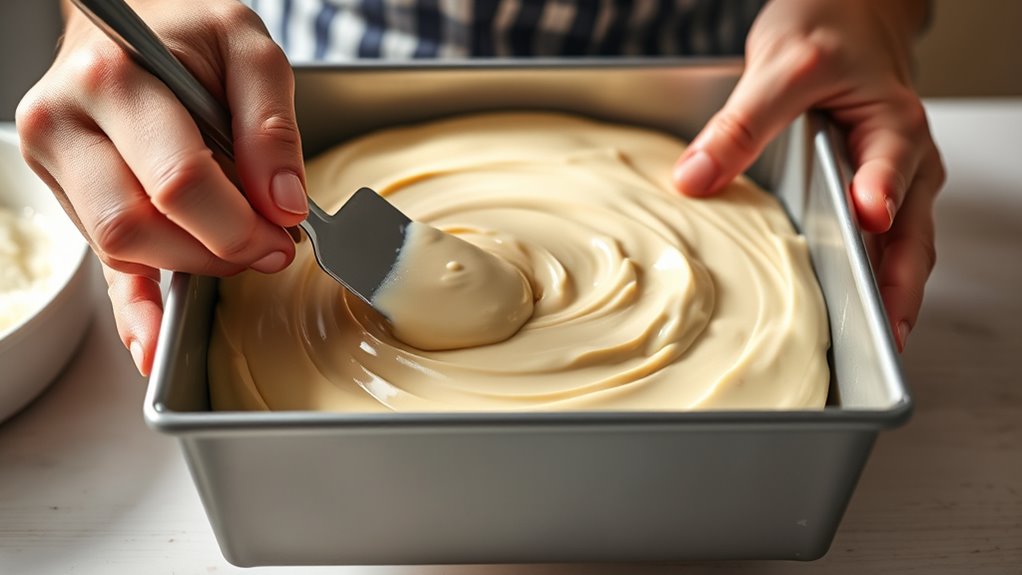
Choosing the right pan is essential for achieving even cake layers. When you select a pan with straight, tall sides, you help create uniform layers that make your cake look professional and appealing. Non-stick surfaces can also help with easy removal, reducing the risk of damaging your layers during decorating. Consider using different sized pans if you want to explore flavor variations; smaller or larger pans can give your cake a unique shape and presentation. If you’re experimenting with cake decorating, consistent layers are key to a polished look. The material of your pan, like metal or silicone, influences heat distribution, affecting how evenly your cake bakes. Proper heat distribution plays a significant role in ensuring your cake layers are evenly baked from edge to center. Picking the right pan sets a solid foundation for beautiful, evenly layered cakes, regardless of your decorating skills or flavor choices. Additionally, pan material influences how quickly and evenly heat is transferred, further enhancing the baking performance. Ensuring your oven is properly calibrated can help maintain the correct temperature, which is critical for consistent baking results to achieve evenly baked layers.

PUCKWAY Angled Icing Spatula, Stainless Steel Offset Spatula, Cake Spatula Set of 2 Black 6, 8 inch Blade
Two Professional Cake Decorating Spatulas: PUCKWAY offset spatula set comes in two different sizes: 6 inch and 8…
As an affiliate, we earn on qualifying purchases.
As an affiliate, we earn on qualifying purchases.
Prepare Batter for Smooth, Consistent Layers
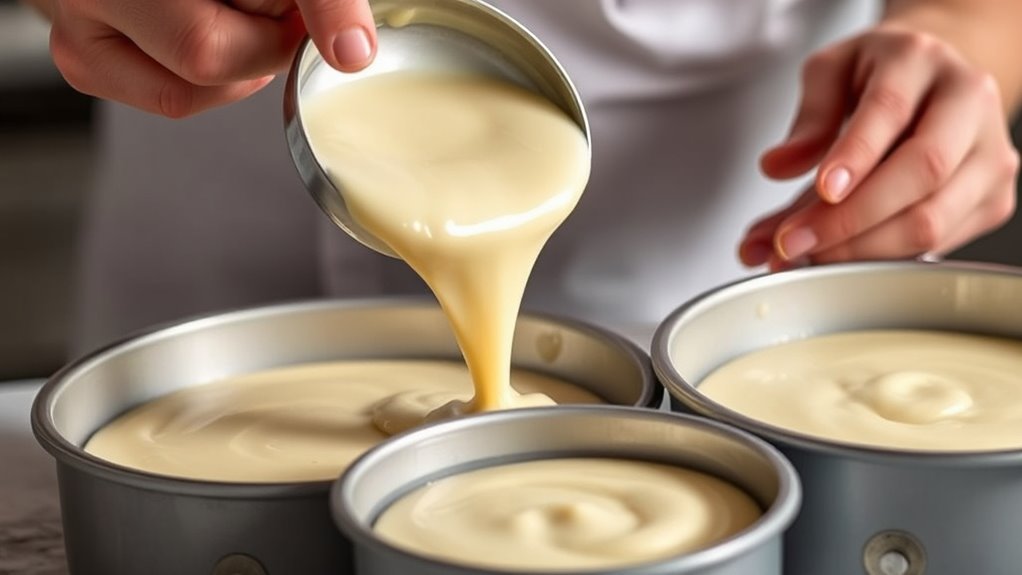
To achieve smooth, consistent layers, you need to start with properly prepared batter. Use a mixing method that guarantees your batter is well combined but not overmixed, which helps prevent air bubbles that can cause uneven layers. Sift your dry ingredients beforehand to avoid lumps, resulting in a silky texture ideal for cake decorating. Incorporate ingredients evenly to enhance flavor and ensure each layer tastes just right. For the best results, avoid rushing this step—patience leads to better consistency. Properly prepared batter spreads smoothly and evenly when poured, reducing the need for trimming later. This careful preparation not only improves the appearance of your cake but also enhances flavor, giving you a professional finish without fancy tools. Paying attention to batter consistency can make a big difference in the final outcome. Additionally, understanding the importance of precise measurements helps ensure each layer is uniform and well-constructed.
PUCKWAY Angled Icing Spatula, Stainless Steel Offset Spatula, Cake Spatula Set of 2 Black 6, 8 inch Blade
Two Professional Cake Decorating Spatulas: PUCKWAY offset spatula set comes in two different sizes: 6 inch and 8…
As an affiliate, we earn on qualifying purchases.
As an affiliate, we earn on qualifying purchases.
Tap the Batter to Level It
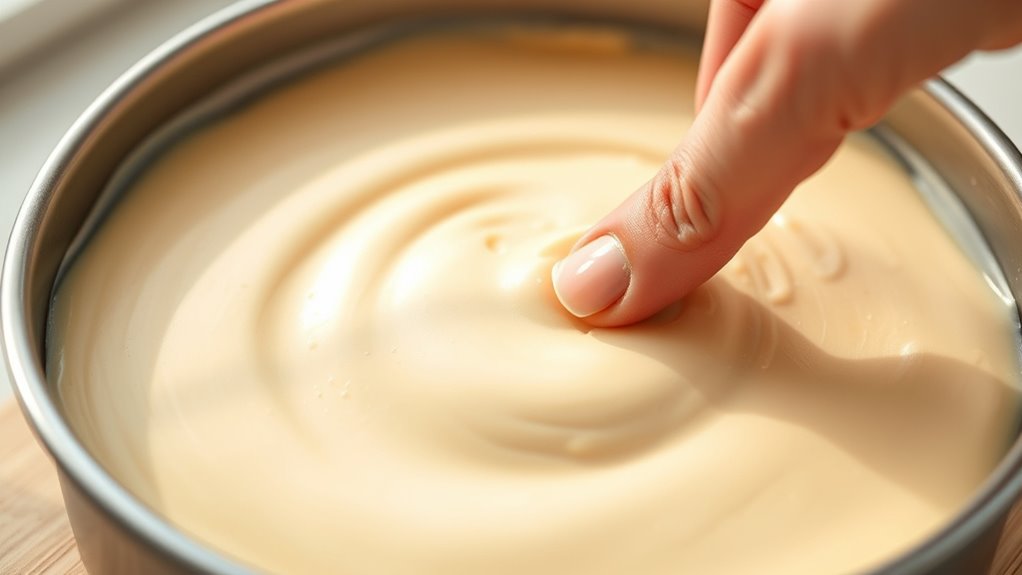
Have you ever noticed uneven cake layers even after pouring the batter? Tap the baking pan gently on the counter to help level the batter naturally. This simple cake leveling tip encourages the batter to settle evenly, reducing air bubbles and smoothing out minor height differences. Make sure your batter has the right consistency—neither too thick nor too runny—to facilitate even spreading. Once you pour the batter, give the pan a few light taps, then rotate it to distribute the batter more evenly. Avoid over-tapping, which can cause spillage or uneven distribution. This quick step promotes a more uniform layer without needing fancy tools, making your cake look professional and ensuring it bakes evenly. Just a few taps can make a big difference. Incorporating proper mixing techniques into your routine can help improve batter smoothness, similar to how tapping helps in achieving even cake layers. Additionally, understanding nanotechnology principles can inspire innovative baking tools that further enhance evenness and precision in the kitchen.

AcuRite 00620A2 Stainless Steel Oven Thermometer (150°F to 600°F)
Oven and grill safe for leave-in use while cooking
As an affiliate, we earn on qualifying purchases.
As an affiliate, we earn on qualifying purchases.
Divide and Pour Batter for Even Layers

After tapping the batter to level it, the next step is to divide it evenly among your cake pans. Ensuring consistent batter distribution helps achieve even cake layers. To do this effectively, consider these tips:
Divide batter evenly for uniform, perfectly layered cakes.
- Use a large spoon or ladle to scoop batter, maintaining batter consistency.
- Divide the batter into equal portions by eye or by weight for precision.
- Pour each portion gently to prevent air bubbles and uneven cake leveling.
- Check each layer’s height and adjust if needed to keep layers uniform.
- Keep in mind that batter consistency can impact how well the layers bake and set, so maintaining a uniform texture is essential. Additionally, using measuring tools can help improve accuracy in dividing the batter more evenly.
- For best results, consider using a kitchen scale to measure batter portions precisely, ensuring perfectly even layers.
- Remember that a consistent pouring technique also contributes to uniform layers and a professional-looking cake.
- Employing modern kitchen technology, such as digital scales and precise measuring devices, can further enhance your batter division accuracy and baking outcomes.
Spread and Smooth Batter by Hand

Once you’ve divided the batter evenly among the pans, the next step is to spread and smooth it by hand. Your goal is to achieve an even layer, which depends on your hand spreading techniques and batter consistency. Use gentle, sweeping motions, starting from the center and moving outward. Keep the batter slightly thick but spreadable to avoid sinking or unevenness. Adjust the batter consistency if needed—thicker batters are easier to control. To help, follow these tips:
| Hand Spreading Technique | Batter Consistency | Tips |
|---|---|---|
| Gentle sweeping | Slightly thick | Use the back of a spoon |
| Circular motions | Spreadable but firm | Avoid overworking the batter |
| Light pressure | Smooth finish | Keep hands moist to prevent sticking |
Additionally, maintaining the right batter consistency is key to achieving a smooth, even surface. Ensuring the batter has the proper mixing technique can also make a significant difference in the final result. Practicing consistent spreading pressure can help you achieve uniform cake layers every time. Developing a steady hand and understanding how different techniques affect batter distribution can further improve your results.
Ensure Even Baking and Proper Layer Alignment
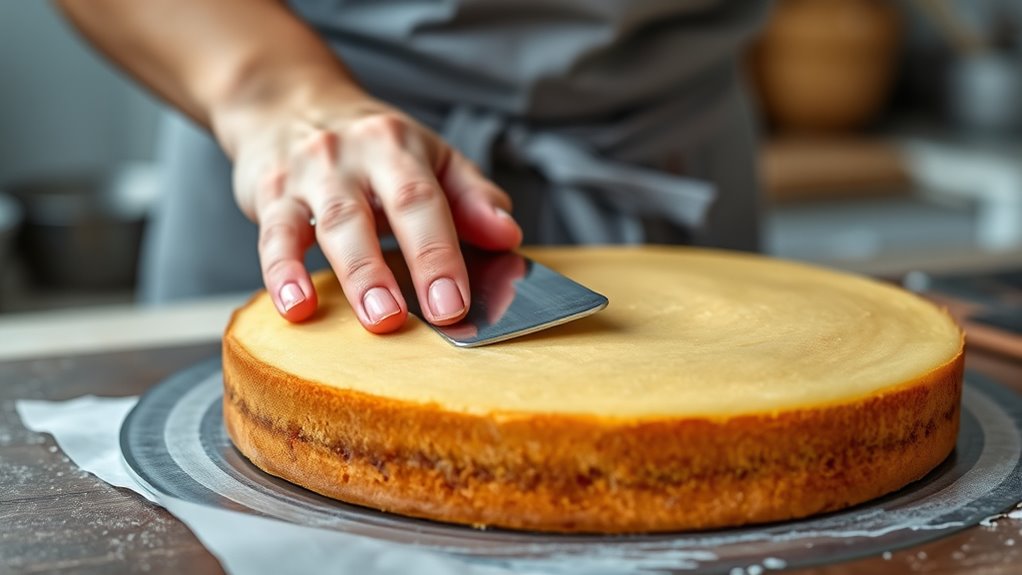
To guarantee even baking and proper layer alignment, it’s essential to position your cake pans correctly in the oven. Place pans on the middle rack for consistent heat and avoid overcrowding, which can cause uneven baking. Rotate the pans halfway through baking to ensure uniformity. Use a cake tester or toothpick to check for doneness—any moist crumbs indicate more time is needed. After baking, let cakes cool completely before decorating, which helps with layer stability. Store cakes properly by wrapping them tightly to prevent dryness. When stacking, align layers carefully to maintain symmetry. For decorating techniques, straight layers make piped designs easier and cleaner. Proper storage tips also prevent shifting or damage, ensuring your layers stay perfect for any finishing touch. Additionally, understanding oven temperature accuracy can significantly impact your results, so consider using an oven thermometer for precise baking conditions. Being aware of baking environment factors can help you troubleshoot and improve your baking consistency. Moreover, controlling baking conditions, such as humidity and airflow, can influence how evenly your cake layers bake. For best results, pre-measuring ingredients ensures consistent texture and baking performance.
Frequently Asked Questions
Can I Use a Regular Knife to Level My Cake Layers?
Yes, you can use a regular knife for cake leveling. To do this, carefully mark the uneven top with a toothpick or knife, then hold the knife parallel to the cake and gently saw back and forth to remove the dome. Use knife techniques like steady, even strokes to guarantee a flat, smooth surface. With patience, a simple knife can effectively level your cake layers without any fancy tools.
What’s the Best Way to Store Leftover Batter for Later Use?
Think of batter storage as saving a precious story for tomorrow. To preserve your leftovers, tightly cover the batter with plastic wrap or store it in an airtight container. Keep it in the fridge for up to 24 hours, but avoid freezing, which can affect texture. Proper leftovers preservation ensures your batter remains fresh, ready to turn into delicious cake layers when you’re ready to bake again.
How Do I Prevent Uneven Rising During Baking?
To prevent uneven rising during baking, focus on cake leveling and maintaining batter consistency. Make sure your batter is smooth and uniform, not too thick or thin. Use a spatula to evenly distribute the batter in your pans, and tap them gently on the counter to release air bubbles. Baking at the right temperature helps guarantee even rising, giving you perfectly level cake layers without extra tools.
Is There a Way to Fix a Domed Cake Layer?
To fix a domed cake layer, use a cake leveler or a serrated knife to carefully trim the top, creating an even surface. Before baking, store your batter properly and avoid overmixing to prevent uneven rising. After cooling, perform cake leveling to make certain each layer is flat. This method helps your cake look professional and stack neatly, giving you perfect, even layers every time.
Can I Use Household Items to Measure Batter Portions Accurately?
Yes, you can use household items like measuring spoons and kitchen scales to measure batter portions accurately. Measuring spoons are great for small amounts, ensuring each layer gets the same amount of batter. For larger quantities, a kitchen scale helps you weigh portions precisely, making your layers even. Combining these tools allows you to achieve consistency without fancy equipment, resulting in perfectly even cake layers every time.
Conclusion
So there you have it—your foolproof, no-fancy-tools-needed secret to perfect cake layers. Who knew that a little patience, a tap, and some even-handed spreading could turn your baking disaster into a layered masterpiece? No more excuses or expensive gadgets. Just follow these simple steps, and you’ll be the star baker, proudly serving up cakes that look like they took a pro’s time—and maybe even a pro’s tools. Enjoy the sweet victory!