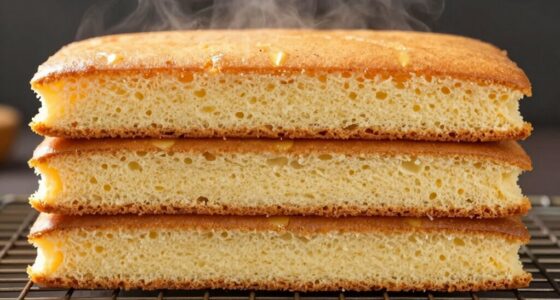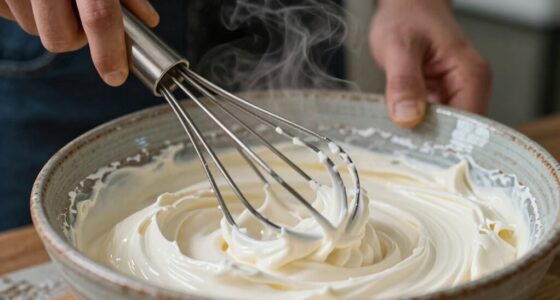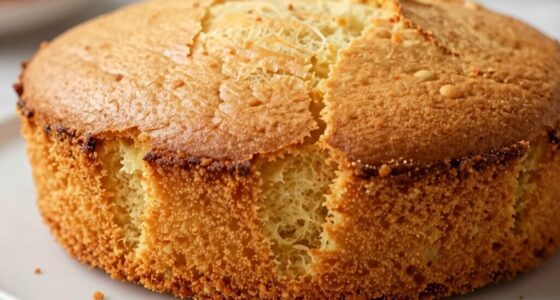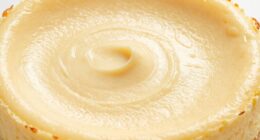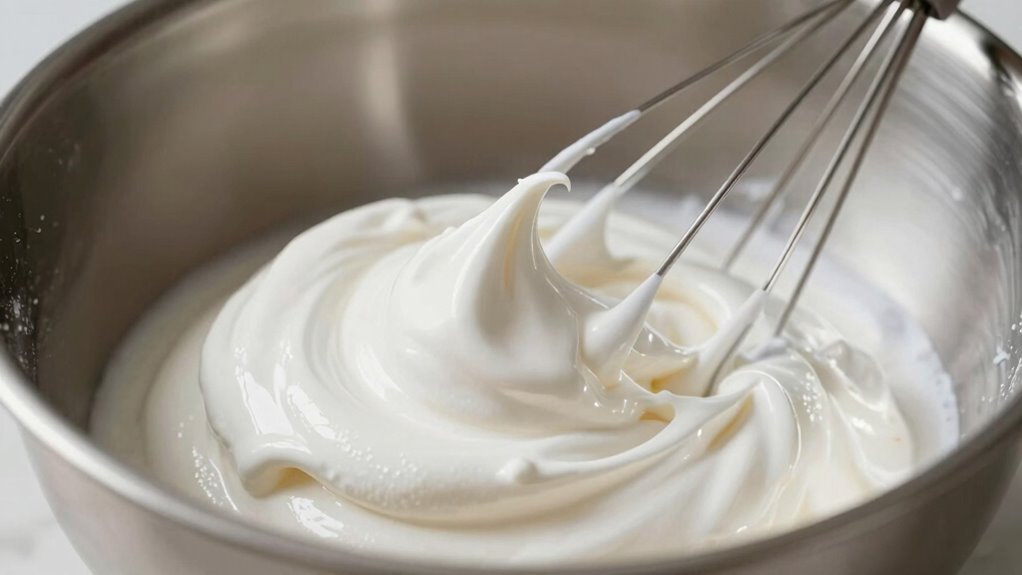

To whip egg whites to perfect peaks without overdoing it, start with fresh, room-temperature whites in a clean, dry bowl. Begin on medium speed until foam forms, then add a pinch of cream of tartar or lemon juice. Gradually increase to high while beating until glossy, soft peaks form. Stop as soon as the peaks hold their shape but aren’t stiff or dry. For more tips on shaping flawless peaks, keep exploring these essential techniques.
Key Takeaways
- Start beating egg whites on medium speed until foam forms, then increase to high for soft peaks.
- Add stabilizers like cream of tartar or lemon juice early to help maintain structure.
- Gradually incorporate sugar, one tablespoon at a time, ensuring complete dissolution before adding more.
- Watch for glossy, soft peaks that hold their shape; stop beating once these peaks form.
- Use gentle folding techniques to combine ingredients without deflating the whipped whites.

Have you ever wondered how to transform plain egg whites into fluffy, airy peaks? It’s a simple process, but achieving the perfect consistency takes a little practice and attention to detail. The key lies in understanding the right folding techniques and the proper way to add sugar. When you master these steps, you’ll prevent over-whipping and create perfectly structured meringue every time.
Start with fresh eggs, preferably at room temperature. Separate the whites carefully, making sure no yolk mixes in, as fat can prevent them from whipping properly. Use a clean, dry bowl—preferably metal or glass—and ensure there’s no grease or residue, which could hinder the formation of peaks. Begin beating the whites on medium speed until they start to foam. At this stage, you can add a pinch of cream of tartar or a few drops of lemon juice to stabilize the foam, making it easier to achieve glossy peaks.
Once the whites are foamy, increase to high speed and continue beating. As the mixture thickens, start adding sugar gradually, about a tablespoon at a time. Incorporate the sugar slowly to guarantee it dissolves completely, which is essential for creating shiny, stiff peaks. When adding sugar, do so gently to avoid deflating the whites. This step is vital because it directly influences the structure and stability of your meringue.
Now, for the folding techniques—this is where many beginners stumble. When your whites reach soft peaks, it’s time to incorporate other ingredients or gently transfer them into a batter. Instead of stirring vigorously, fold the mixture carefully using a spatula. To do this, slide the spatula down the side of the bowl, then lift and turn the whites over onto themselves. Rotate the bowl slightly and repeat. This gentle motion preserves the air bubbles you’ve whipped in, keeping the peaks intact and airy. Over-folding can deflate your whites, resulting in a dense or flat texture, so stop once you see that the mixture is uniformly glossy and holds stiff peaks.
Additionally, understanding the role of contrast ratio in your mixing process can help ensure your peaks are well-defined and stable.
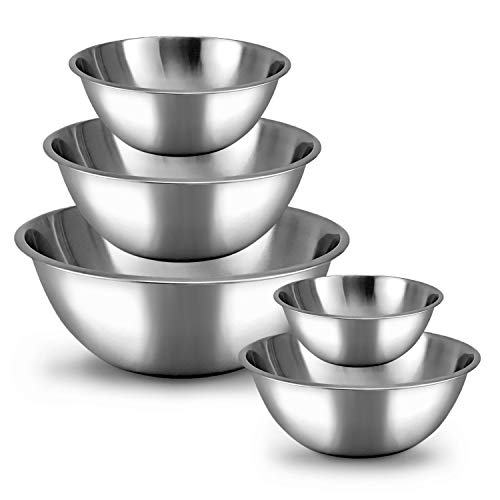
WHYSKO Meal Prep Stainless Steel Mixing Bowl (5-Piece Set) Home, Refrigerator, and Kitchen Food Storage Organizers | Ecofriendly, Heavy Duty, No Lids
Complete Mixing Bowls Set Ideal for meal prep, or making pancakes, our 5-piece nesting mixing bowls add convenience…
As an affiliate, we earn on qualifying purchases.
As an affiliate, we earn on qualifying purchases.
Frequently Asked Questions
Can I Use a Hand Mixer Instead of a Stand Mixer?
Yes, you can use a hand mixer instead of a stand mixer. A hand mixer is convenient and easy to handle, especially for smaller batches. Just make certain you use a high speed setting and keep the beaters moving evenly to get the best results. It might take a bit longer, but with patience, you’ll achieve stiff peaks just like with a stand mixer. Just watch closely to avoid over-whipping.
How Do I Prevent Egg Whites From Deflating?
To prevent egg whites from deflating, you should stop whipping once you reach stiff peaks. Over-whipping causes the air bubbles to burst, leading to deflation. Be gentle when folding the whipped whites into your batter, avoiding vigorous stirring that can deflate the peaks. Always use a clean, dry bowl and utensils, and whip at the right speed. This way, your egg whites stay airy and hold their shape.
Is It Necessary to Add Cream of Tartar?
You don’t always need cream of tartar to stabilize egg whites; alternative acids like lemon juice or vinegar work well. These stabilizing agents help achieve firm peaks without overbeating. If you prefer, you can skip cream of tartar entirely and use these alternatives to control the foam’s stability. Just add a few drops before whipping, and you’ll get beautifully whipped whites that hold their shape perfectly.
How Do I Store Whipped Egg Whites?
You should store whipped egg whites in an airtight container to keep them fresh. Use a clean, non-metallic container, like glass or plastic, to avoid any reactions that could deflate your whites. For best results, refrigerate and consume within 24 hours. Storage tips include gently spreading a plastic wrap or lid directly on the surface to prevent a skin from forming, ensuring your whipped whites stay fluffy and ready to use.
Can I Whip Egg Whites at Room Temperature?
You can whip egg whites at room temperature, and it’s a game-changer! When your egg temperature is perfect—around 68-70°F—whipping tools work their magic faster, creating those lofty, glossy peaks with ease. Room temperature eggs whip up more volume because the proteins bond better. Just make certain your eggs aren’t too warm, or you might compromise stability. So, get those eggs out, and let your whipping tools do their thing!

Hamilton Beach 6-Speed Electric Hand Mixer with Whisk, Traditional Beaters, Snap-On Storage Case, 250 Watts, White
NO MORE LOST BEATERS: The snap-on storage case that comes with the Hamilton Beach hand mixer neatly holds…
As an affiliate, we earn on qualifying purchases.
As an affiliate, we earn on qualifying purchases.
Conclusion
Now that you know how to whip egg whites to the perfect peak, you’ll be able to turn your baking into a work of art. Remember, it’s all about patience and watching for that ideal moment when the peaks stand tall and proud—like a crown atop your creation. With practice, you’ll master this delicate dance, ensuring your desserts are light, airy, and utterly delicious. Happy whipping!
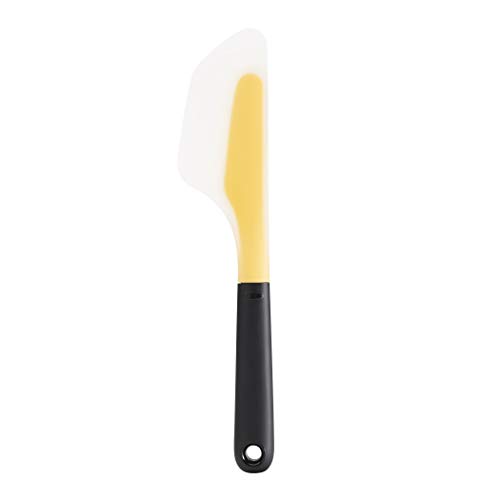
OXO Good Grips Small Flip and Fold Silicone Omelet Turner
Ideal shape and size for making omelets or quesadillas in 8" or other small pans
As an affiliate, we earn on qualifying purchases.
As an affiliate, we earn on qualifying purchases.

Amazon Grocery, Cream of Tartar, 5 Oz
One 5 ounce container of Cream of Tartar
As an affiliate, we earn on qualifying purchases.
As an affiliate, we earn on qualifying purchases.