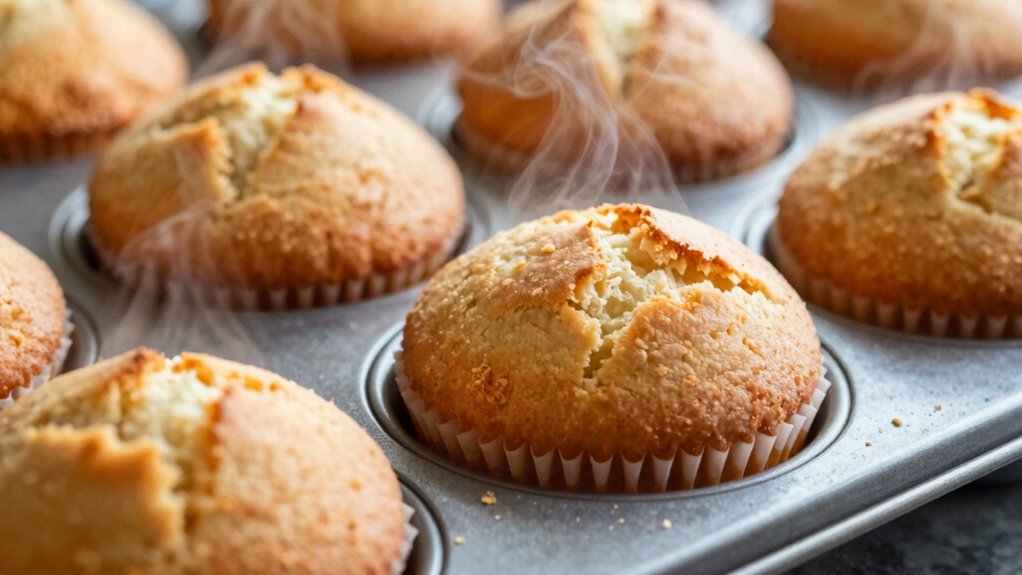

If your cupcakes sink after baking because you took them out 10 minutes too early, it’s likely they hadn’t fully set or finished rising. Removing them prematurely can cause collapse since residual heat hasn’t helped them solidify properly. It’s important to wait until they are fully baked, domed, and firm on top before taking them out. Keep these tips in mind—continue on to find out how to prevent this from happening again.
Key Takeaways
- Removing cupcakes too early prevents the batter from fully setting, causing collapse as residual heat continues to cook them.
- Cupcakes may sink if oven temperature was too high initially, causing rapid rise and subsequent collapse after removal.
- Using expired or inactive leavening agents reduces proper rising, leading to sinking shortly after baking.
- Opening the oven door prematurely or jostling the pan can cause temperature fluctuations, destabilizing the cupcakes’ structure.
- Inconsistent or unverified oven temperature can result in insufficient or uneven baking, making cupcakes prone to sinking after removal.

If your cupcakes sink after baking, it can be frustrating and confusing. You might wonder what went wrong—was it the oven temperature, the ingredients, or something else? One common mistake is removing the cupcakes from the oven too early, especially if you’re checking them before they’ve fully set. To prevent sinking, you need to pay attention to the baking temperature and ingredient freshness, as both play vital roles in achieving a perfect rise.
First, verify your oven is at the correct baking temperature. Too high, and the cupcakes may rise rapidly and then collapse; too low, and they might not rise enough. Use an oven thermometer to confirm the actual temperature, since many home ovens run hotter or cooler than the dial indicates. When the oven is at the right temperature, the heat causes the leavening agents—baking powder or baking soda—to produce gases that lift the batter. If the oven isn’t hot enough, the gases won’t expand properly, resulting in flat or sunken cupcakes. Conversely, if it’s too hot, the outside can set too quickly, trapping gases inside and causing the cupcake to rise rapidly then deflate once removed from heat.
Verify your oven’s temperature with a thermometer to prevent cupcakes from sinking.
Ingredient freshness also impacts the rise. Old baking powder or baking soda can lose potency, meaning they won’t produce enough gas to lift the batter. Always check the expiration date and test your leavening agents before mixing your batter—add a small amount to vinegar or warm water; if it bubbles vigorously, it’s still active. Fresh ingredients ensure a reliable reaction, giving your cupcakes a good rise and preventing sinking. Also, measure your ingredients carefully—using too much liquid or too little flour can affect the batter’s structure, leading to collapse after baking.
Another factor is your timing when removing cupcakes from the oven. Many bakers pull them out too early, expecting them to look perfectly set, but cupcakes continue to cook slightly after leaving the oven due to residual heat. If you test them before they’ve fully developed structure—by inserting a toothpick and seeing moist batter—you risk deflating them. Wait until the toothpick comes out clean and the cupcakes look domed and firm on top. Once you take them out, avoid opening the oven door prematurely or jostling the pan, as sudden temperature changes can cause the cupcakes to sink.

AcuRite 00620A2 Stainless Steel Oven Thermometer (150°F to 600°F)
Oven and grill safe for leave-in use while cooking
As an affiliate, we earn on qualifying purchases.
As an affiliate, we earn on qualifying purchases.
Frequently Asked Questions
Can Using Different Oven Types Affect Cupcake Sinking?
Yes, different oven types can affect whether your cupcakes sink. For example, a convection oven circulates air more evenly, so you might need to adjust the oven temperature slightly. Also, the type of baking vessel matters—metal heats quickly, while glass or ceramic heats more slowly, impacting how evenly your cupcakes rise. Always monitor your oven’s temperature and adapt baking times based on your oven’s specific characteristics to prevent sinking.
Does Altitude Influence Cupcake Rising and Sinking?
Altitude effects can considerably influence your cupcake rising and sinking. At higher baking elevation, the lower air pressure causes leavening gases to expand faster, which might make your cupcakes rise too quickly then sink. To counter this, you should adjust your recipe by increasing flour or decreasing leavening agents. Understanding your baking elevation helps you tweak ingredients and baking time, ensuring your cupcakes stay fluffy and perfectly risen.
How Does Ingredient Freshness Impact Cupcake Stability?
Think of ingredient freshness as the heartbeat of your cupcakes; when ingredients are preserved well and of high quality, they create a stable foundation. Fresh ingredients provide the necessary moisture and leavening, helping your cupcakes rise evenly and hold their shape. If ingredients are old or compromised, your cupcakes may sink or collapse. Prioritize ingredient preservation and quality for a confident, resilient bake that stands tall and tastes divine.
Can Overmixing Batter Cause Cupcakes to Sink?
Yes, overmixing batter can cause cupcakes to sink. When you mix at too high a speed or mix for too long, you develop too much gluten, which affects batter consistency. This creates a dense, heavy batter that doesn’t rise properly during baking. To prevent this, mix just until the ingredients are combined and keep mixing speed moderate. This ensures a light, fluffy cupcake that holds its shape.
Are There Specific Frosting Types That Contribute to Sinking?
A little weight can make a big difference; yes, certain frosting types can contribute to sinking. Heavier frostings like cream cheese or buttercream with high moisture content add extra weight, causing cupcakes to sink if not balanced. To avoid this, choose lighter frostings or incorporate less moisture. Remember, too much of a good thing can cause trouble, so keep frosting weight in check to maintain perfect cupcakes.

Cake Tester, 2 Packs Cake Testers for Baking and Cakes Testing Stick Doneness Endurance CakeTester Skewer 7.9 in Stainless Steel Rondauno
Cake Tester Stick: Our baking cake tester is ideal for helping gauge when your cakes or cupcakes are…
As an affiliate, we earn on qualifying purchases.
As an affiliate, we earn on qualifying purchases.
Conclusion
So, next time you whip up those cupcakes, remember timing is everything. Did you really need to take them out 10 minutes earlier? If you want perfectly risen cupcakes, trust the toothpick test and follow the recommended baking time. Rushing or removing them too soon can lead to sinking. Why settle for flat cupcakes when a few extra minutes can make all the difference? Happy baking and enjoy those fluffy treats!
Cake Tester, 2 Packs Cake Testers for Baking and Cakes Testing Stick Doneness Endurance CakeTester Skewer 7.9 in Stainless Steel Rondauno
Cake Tester Stick: Our baking cake tester is ideal for helping gauge when your cakes or cupcakes are…
As an affiliate, we earn on qualifying purchases.
As an affiliate, we earn on qualifying purchases.
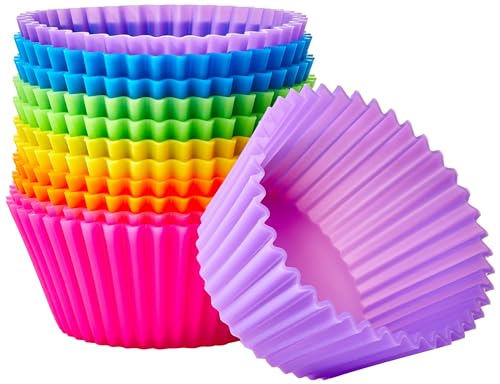
Amazon Basics Reusable Non-Stick Silicone Baking Cups, BPA Free, Muffin Liners, Dishwasher Safe, Microwave and Oven Safe, 2.9 x 2.9 x 1.3 in (LxWxH), Multicolor, 12-Pack
Reusable round baking cups (12-pack) in assorted colors; ideal for baking, lunch/snack cups, and more
As an affiliate, we earn on qualifying purchases.
As an affiliate, we earn on qualifying purchases.