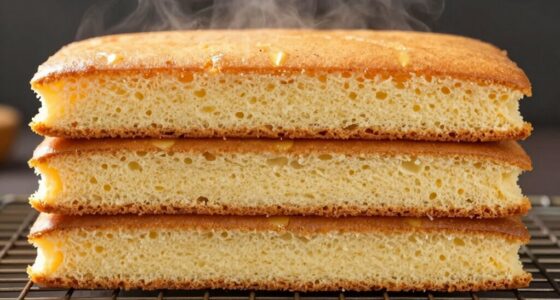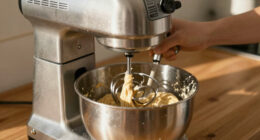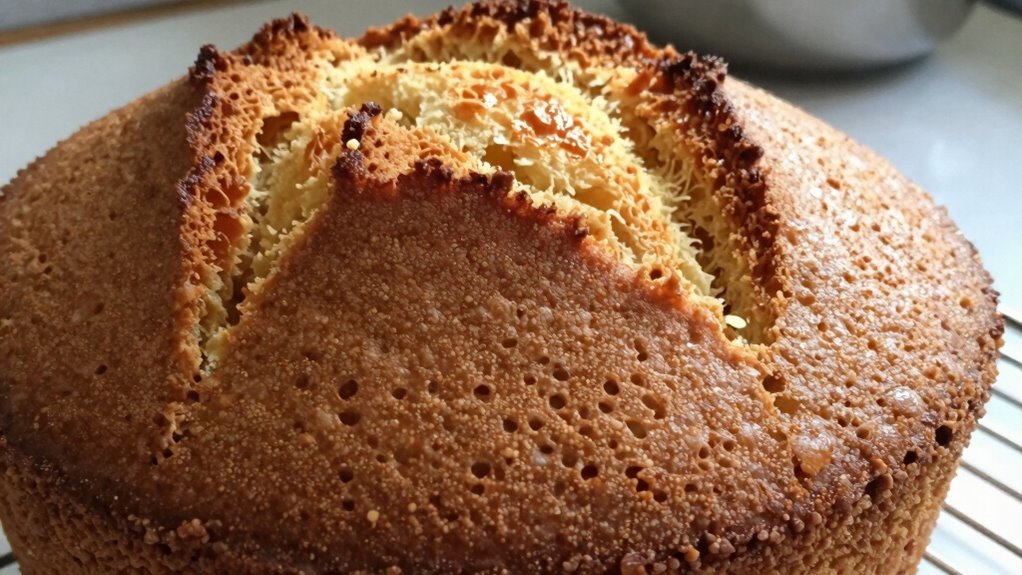

Tunnels in your cake happen when the oven isn’t hot enough, batter is overmixed, or air gets trapped inside. To prevent this, make sure your oven is properly calibrated and preheated, mix just until ingredients combine, and avoid overmixing to minimize air pockets. Gently tap the pan to release large bubbles and place it in the center of the oven for even heat. Keep these tips in mind, and you’ll discover more ways to perfect your cake texture.
Key Takeaways
- Overmixing batter can trap excess air, which expands into tunnels during baking. Mix just until combined.
- Using an oven that’s too hot causes rapid outside set and uneven rise, leading to tunnels. Preheat thoroughly and use an oven thermometer.
- Large air bubbles in the batter or trapped during pouring can expand into tunnels; tap pans gently to release them.
- Inconsistent oven temperature or poor calibration can cause uneven baking, promoting tunnel formation. Ensure proper oven calibration.
- Inadequate leavening or expired leavening agents can cause uneven gas release, resulting in tunnels; always use fresh, high-quality ingredients.
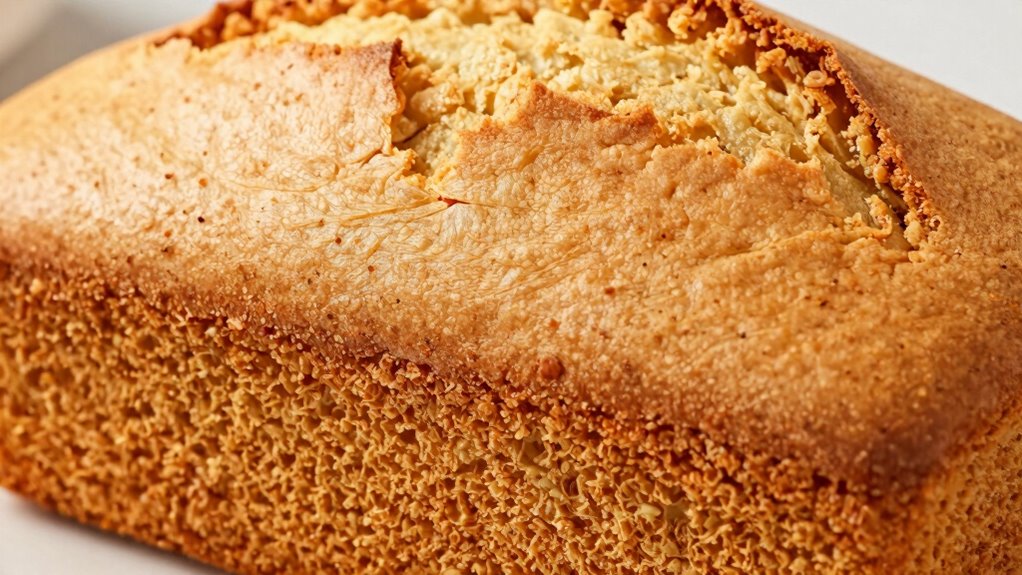
Cake tunnels, also known as air pockets or voids, can undermine the structure and appearance of your baked goods. When you cut into a cake and see large tunnels running through it, it’s frustrating because it suggests something went wrong during baking. One common cause is the baking temperature. If your oven is too hot, the outside of the cake will set quickly while the inside remains underbaked, trapping air that forms tunnels as the cake cools and contracts. Conversely, if the oven temperature is too low, the batter may not rise evenly, leading to inconsistent texture and potential tunnels. To prevent this, always preheat your oven thoroughly and use an oven thermometer to guarantee your baking temperature is accurate. Proper oven calibration helps your cake bake evenly, reducing the risk of tunnels forming. Additionally, the baking process involves precise timing and controlled heat to ensure a uniform rise and structure.
Ingredient quality also plays a critical role in preventing these air pockets. Using fresh, high-quality ingredients ensures consistent rising and a stable structure. For instance, fresh baking powder or baking soda produces better leavening, giving your cake a uniform rise without creating large voids. Poor-quality ingredients, or expired leavening agents, may produce uneven gas release, resulting in tunnels. Additionally, the fat content and flour quality influence the batter’s stability. Using fresh, unspoiled ingredients creates a smoother batter that traps air evenly and bakes into a consistent crumb. When you measure ingredients precisely and opt for reputable brands, you give your cake the best chance to rise evenly and avoid unwanted tunnels.
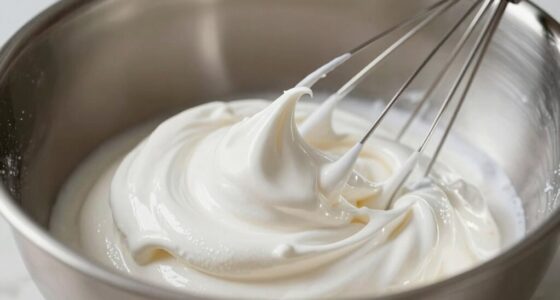
Mixing technique also impacts tunnel formation. Overmixing can incorporate excessive air into the batter, which may expand too rapidly during baking and cause tunnels. Conversely, undermixing can lead to uneven distribution of leavening agents, creating pockets of gas that form tunnels. Mix just until the ingredients are combined, and avoid vigorous stirring once the flour is added. This helps ensure the air incorporated during mixing distributes evenly throughout the batter, promoting a smooth, even rise.
Finally, don’t forget to tap the filled cake pans gently on the counter before baking. This step releases any large air bubbles that might be trapped, preventing them from expanding into tunnels. Also, place your pans in the center of the oven and avoid opening the door during baking, which can cause temperature fluctuations and uneven baking. By paying attention to your baking temperature, ingredient quality, mixing techniques, and handling, you greatly reduce the chances of tunnels forming, resulting in a beautifully baked, evenly textured cake.

AcuRite 00620A2 Stainless Steel Oven Thermometer (150°F to 600°F)
Oven and grill safe for leave-in use while cooking
As an affiliate, we earn on qualifying purchases.
As an affiliate, we earn on qualifying purchases.
Frequently Asked Questions
Can Using Different Oven Racks Cause Tunnels in My Cake?
Yes, using different oven racks can cause tunnels in your cake. If you place the rack too high or too low, it affects oven heat circulation, leading to uneven baking. Proper oven rack positioning guarantees even heat distribution, preventing tunnels. Also, make sure your batter distribution is even before baking. When you position the rack correctly, it helps your cake bake uniformly, reducing the chances of tunnels forming.
Does the Type of Pan Material Affect Tunnel Formation?
Think of your pan as a conductor guiding heat through your cake; the material matters. If you use a metal pan, its excellent heat conduction ensures even baking, reducing tunnels. On the other hand, glass or silicone pans conduct heat differently, often causing uneven rise and tunnel formation. Choosing the right pan material helps your cake rise uniformly, avoiding those unwanted tunnels and giving you a perfect, even crumb.
How Does Altitude Influence Tunnel Development in Cakes?
Altitude impacts tunnel development in cakes because lower air pressure affects your baking environment, causing gases to expand more rapidly. This rapid expansion can create tunnels or holes inside your cake. To prevent this, you should adjust your recipe by increasing liquids and decreasing leavening agents, and bake at a slightly lower temperature. These changes help control the air pressure impacts, ensuring a more even crumb and fewer tunnels.
Can Overmixing Batter Lead to Tunnels in the Baked Cake?
Imagine your batter as a lively dance floor—overmixing is like forcing dancers into tight circles. When you overmix, you break down the delicate structure of the ingredients, especially with improper ingredient ratios, creating gluten strands that form tunnels. Use gentle mixing techniques, combining ingredients just until smooth, and keep an eye on ingredient ratios. This way, your cake bakes evenly, with a tender crumb, free from unwanted tunnels.
Are Tunnels More Common With Certain Cake Flavors or Recipes?
Tunnels tend to be more common in dense cake recipes like pound cakes or fruitcakes. Certain cake flavors, such as chocolate or carrot, may also be more prone due to their ingredients and batter consistency. When you use heavy or moist ingredients, you’re more likely to create tunnels if you don’t mix carefully. To avoid this, stick to proper mixing techniques and recipe instructions specific to your cake flavor and type.

HOTEC Heat Resistant 600℉ Food Grade Silicone Rubber Spatula Set for Baking, Cooking, and Mixing Non Stick Dishwasher Safe BPA-Free Multicolor Set of 5
[ HIGH QUALITY ] : 100% made of Food Grade Silicone Material. Low Carbon and Environmentally Friendly Non-toxic,…
As an affiliate, we earn on qualifying purchases.
As an affiliate, we earn on qualifying purchases.
Conclusion
So, next time your cake develops tunnels, remember it’s likely due to overmixing or uneven heating. While some believe these tunnels are just a baking quirk, studies suggest they actually result from trapped air or temperature inconsistencies. By mixing gently and baking at the right temperature, you can prevent tunnels and achieve a smooth, perfect crumb. Don’t let these hidden flaws ruin your creation—trust your instincts and tweak your technique for flawless results every time.

11-Piece Nonstick Baking Pans Set – Professional Grade Carbon Steel Bakeware with Premium Coating- Dishwasher Safe, Stackable, Oven Safe to 450°F (Champagne)
【11-PIECE NONSTICK BAKEWARE SET】Upgrade your kitchen with the 11-piece Carbon Steel Baking Pan Set, including small, medium and…
As an affiliate, we earn on qualifying purchases.
As an affiliate, we earn on qualifying purchases.
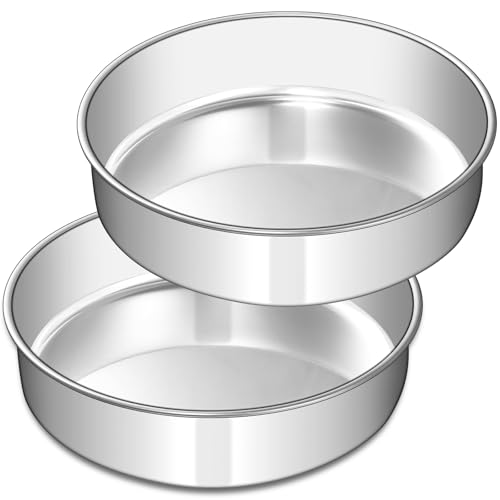
EWFEN 8 Inch Cake Pan Set of 2, Stainless Steel Round Layer Cake Baking Pans Tins, Non-Toxic & Healthy, Leak-proof & Easy Clean & Dishwasher Safe
SAFE & HEALTHY: EWFEN round cake pans are made of pure stainless steel without toxic materials, No harmful…
As an affiliate, we earn on qualifying purchases.
As an affiliate, we earn on qualifying purchases.