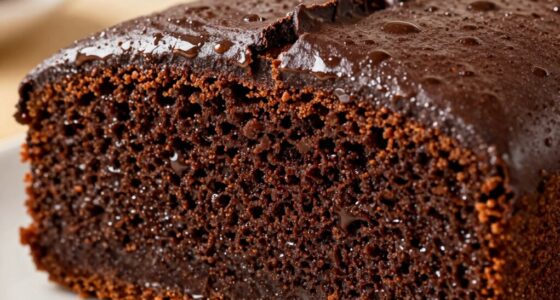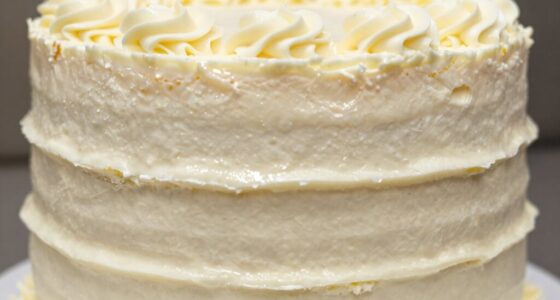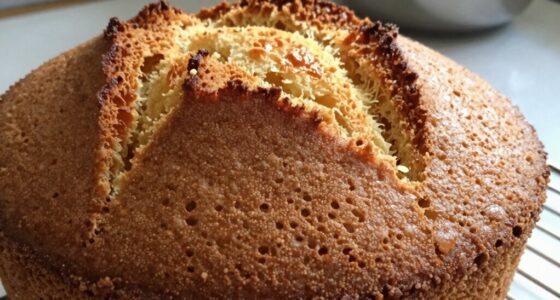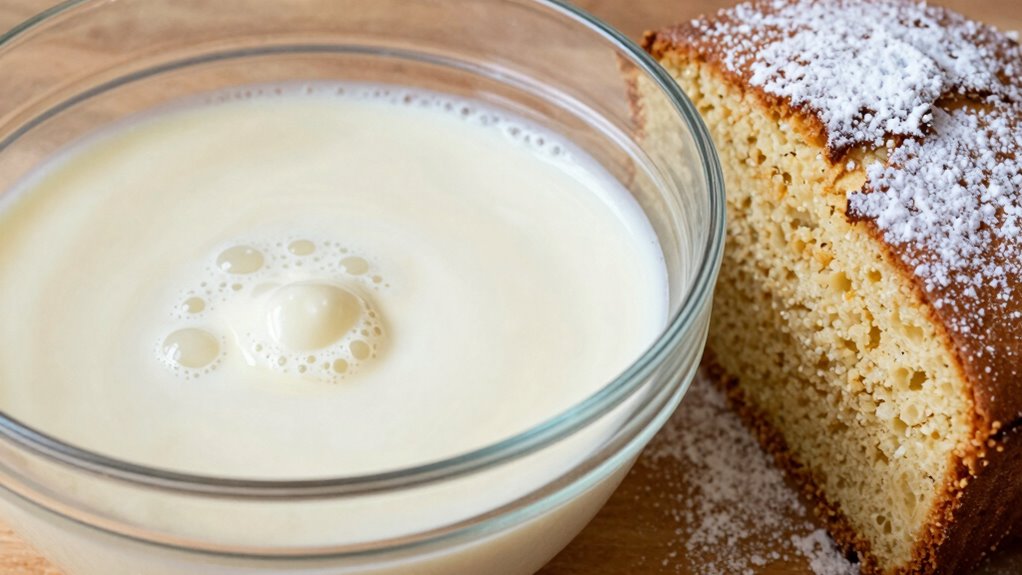

Using buttermilk in your cake improves moisture, tenderness, and flavor by creating a softer, more delicate crumb. Its acidity reacts with baking soda or powder to produce bubbles that help the cake rise evenly, making it lighter and fluffier. It also balances sweetness with a subtle tang that enhances taste. Plus, buttermilk keeps your cake moist longer after baking. If you keep exploring, you’ll discover even more ways it transforms your baking experience.
Key Takeaways
- Buttermilk tenderizes the crumb, making the cake softer, moister, and more delicate.
- Its acidity reacts with baking soda or powder, creating carbon dioxide for better rising.
- It adds a subtle tang that balances sweetness and enhances overall flavor.
- Buttermilk improves batter stability and promotes even rising during baking.
- It helps break down proteins, resulting in a refined texture and longer-lasting freshness.
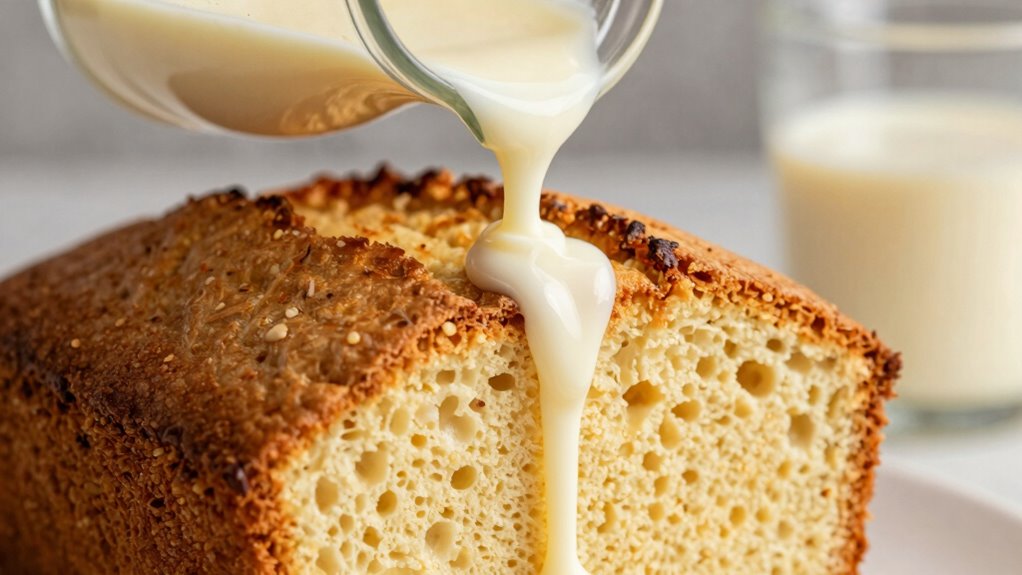
Have you ever wondered why buttermilk is a secret ingredient in many cake recipes? The answer lies in its unique properties that influence both the texture and flavor of your baked goods. When you see buttermilk in a recipe, it often acts as a key component that sets the stage for a tender, moist crumb. But what exactly does it do, and why is it so special? One reason is that buttermilk can be used as a dairy substitution, especially in recipes that call for milk but need a bit more tang or richness. Its acidity plays an essential role in this, providing a gentle tang that enhances flavor. Plus, because buttermilk is slightly acidic, it reacts with baking soda or baking powder to produce carbon dioxide bubbles, which help your cake rise and develop a soft, airy structure.
Using buttermilk in baking isn’t just a matter of replacing milk; it actively changes the chemical reactions during baking. The baking acidity of buttermilk is indispensable because it tenderizes the gluten in flour, resulting in a softer, more delicate crumb. This acidity also helps break down the proteins in flour, contributing to a finer texture. When you incorporate buttermilk, you’re not only adding moisture but also encouraging a more uniform crumb, preventing the cake from becoming dense or dry. If you’re avoiding dairy or need a dairy substitute, buttermilk can often be replaced with combinations like milk mixed with lemon juice or vinegar, but keep in mind that these alternatives might not perfectly mimic the flavor and acidity levels of real buttermilk.
Another benefit is that buttermilk’s tang balances the sweetness in your cake, giving it a more complex flavor profile. It adds a subtle tang that elevates the overall taste, making the cake taste richer and more refined. Because of its acidity, buttermilk also helps activate baking soda more effectively, ensuring your cake rises evenly without the need for excessive leavening agents. This results in a lighter, fluffier texture. Additionally, the acidity helps keep the cake moist for longer, so it stays fresh and tender even days after baking. Furthermore, acidic ingredients like buttermilk can also improve the overall stability of the batter, leading to a more consistent rise. When you bake with buttermilk, you’re leveraging both its functional and flavor-enhancing qualities, which is why it remains a staple in many classic cake recipes.

Organic Valley, Organic Low Fat Cultured Buttermilk, Pasteurized, Quart, 32 Ounces
Package contains one 32 ounce quart of Organic Valley, Organic Pasteurized Low Fat Cultured Buttermilk
As an affiliate, we earn on qualifying purchases.
As an affiliate, we earn on qualifying purchases.
Frequently Asked Questions
Can I Substitute Buttermilk With Milk in Cake Recipes?
Yes, you can substitute milk for buttermilk in cake recipes, but be aware of the flavor impact. Milk lacks the tangy taste and acidity that buttermilk provides, which can affect the cake’s overall flavor and texture. To mimic buttermilk, you might add a tablespoon of lemon juice or vinegar to your milk. This small adjustment helps maintain the acidity and guarantees your cake remains moist and tender.
How Does Buttermilk Affect the Cake’s Shelf Life?
Using buttermilk can extend your cake’s shelf life by helping prevent spoilage. Its acidity slows down bacterial growth, keeping your cake fresher longer. When you include buttermilk, you’re not only enhancing flavor and texture but also improving spoilage prevention. If you’re concerned about how long your cake stays good, adding buttermilk is a smart choice. It ensures your cake remains moist and delicious for a more extended period.
Is Buttermilk Necessary for Gluten-Free Cake Recipes?
You don’t need buttermilk for gluten-free cake recipes if you’re exploring dairy alternatives or vegan baking. Plant-based options like almond milk, soy milk, or coconut milk work well as substitutes, providing moisture and acidity. These alternatives help achieve the right texture and flavor, making your gluten-free, vegan cakes just as delicious without dairy. Simply swap the buttermilk with your preferred non-dairy substitute to get the best results.
What’s the Best Way to Store Buttermilk for Baking?
To store buttermilk effectively, keep it refrigerated at or below 40°F, ensuring it stays fresh and safe. Use airtight containers to prevent absorption of other odors and to maintain shelf stability. Store it towards the back of the fridge where temperature is most consistent, and always check the expiration date before baking. Proper storage tips help preserve its quality, flavor, and usability for your recipes.
Does Buttermilk Change the Cake’s Texture or Just Flavor?
Buttermilk definitely impacts your cake’s texture and flavor. It creates a tender, moist crumb thanks to its acidity, which reacts with baking soda or baking powder to produce a light rise. Plus, it enhances the flavor, adding a subtle tang that makes your cake taste richer and more complex. So, when you use buttermilk, you’re not just changing the flavor—you’re also giving your cake a better, more appealing texture.
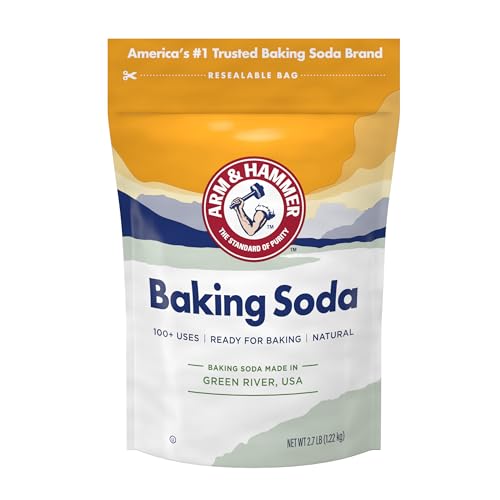
ARM & HAMMER Baking Soda Made in USA, Ideal for Baking, Pure & Natural, 2.7lb Bag
Ideal for Baking: Made with fine baking soda particles from Grade 1 baking soda to create fluffier recipes;…
As an affiliate, we earn on qualifying purchases.
As an affiliate, we earn on qualifying purchases.
Conclusion
Adding buttermilk to your cake can transform its texture and flavor, making it moist and tender with a subtle tang. It’s a small change that can elevate your baking game, proving that sometimes the simplest ingredients make the biggest difference. Remember, “The proof of the pudding is in the eating,” so don’t be afraid to experiment and enjoy the delicious results. Trust in the process, and your cakes will always turn out better than expected.

4PCS Cake Arch Guide Tool,Adjustable Fondant Cake Arc Ruler,Practical Baking Writing Swag Guide Gadgets Accessories,Decorative Marking Divider Aid,Pastry Decorating Supplies for Home Kitchen Bakeries
【Cake Arch Tool】You will get 4 piece of flip cake arc ruler. With these, you can ensure that…
As an affiliate, we earn on qualifying purchases.
As an affiliate, we earn on qualifying purchases.

Riccle Piping Bags and Tips Set, 11.8 Inch 100 Anti Burst Piping Bags, 124 Pcs Cake Decorating Kit with 16 Piping Tips, 1 Reusable Pastry Bags, 3 Cake Scrapers, 2 Couplers, and 2 Icing Bags Ties
Riccle Piping Bags and Tips Set, 11.8 Inch 100 Anti Burst Piping Bags, 124 Pcs Cake Decorating Kit…
As an affiliate, we earn on qualifying purchases.
As an affiliate, we earn on qualifying purchases.