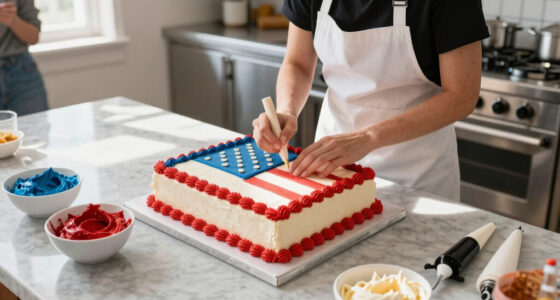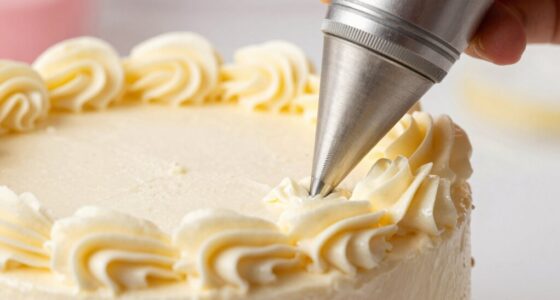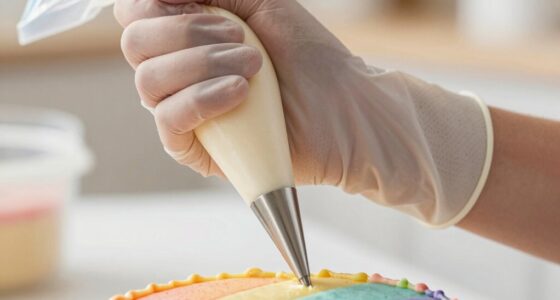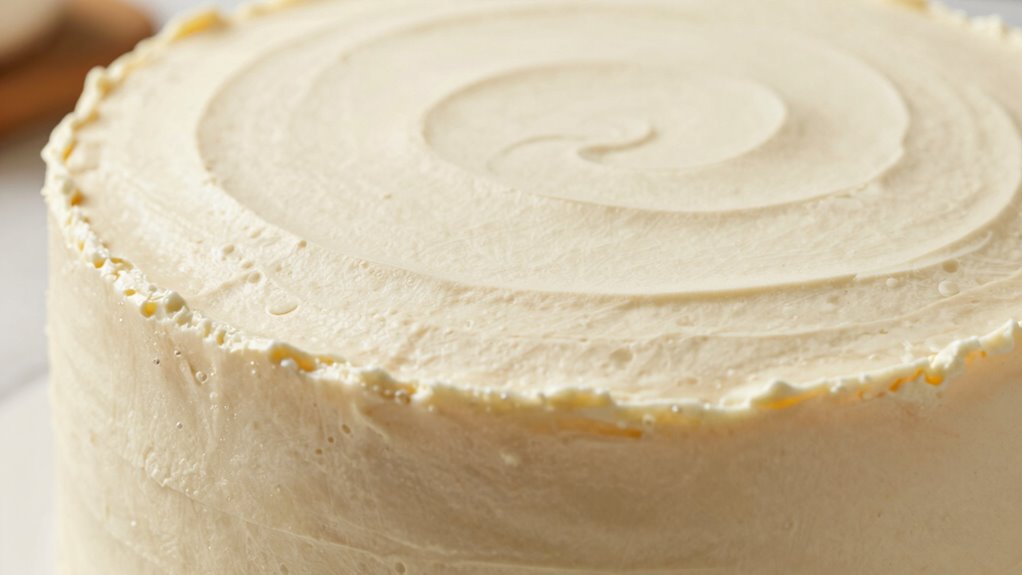

To judge your cake layers’ evenness, start by inspecting from the side and top views for hills, valleys, or gaps. Use a level or straight edge to check for flatness and look for high spots or dips that need trimming. Gently press on the layers to test stability and confirm they’re aligned. After applying a crumb coat, reassess and correct any uneven areas. Keep these tips in mind to achieve a smooth, professional finish—more details await if you keep going.
Listen free for 30 days with Audible
Thousands of audiobooks and originals — cancel anytime.
As an affiliate, we earn on qualifying purchases.
Key Takeaways
- Check side and top views for hills, valleys, or gaps in the layers.
- Use a level or straight edge to ensure the surface is flat and even.
- Gently press on layers to test stability and detect any unevenness or wobbliness.
- Apply a thin crumb coat and refrigerate to seal crumbs and reveal surface imperfections.
- Reassess with a straight tool after crumb coating to identify high spots and uneven areas.
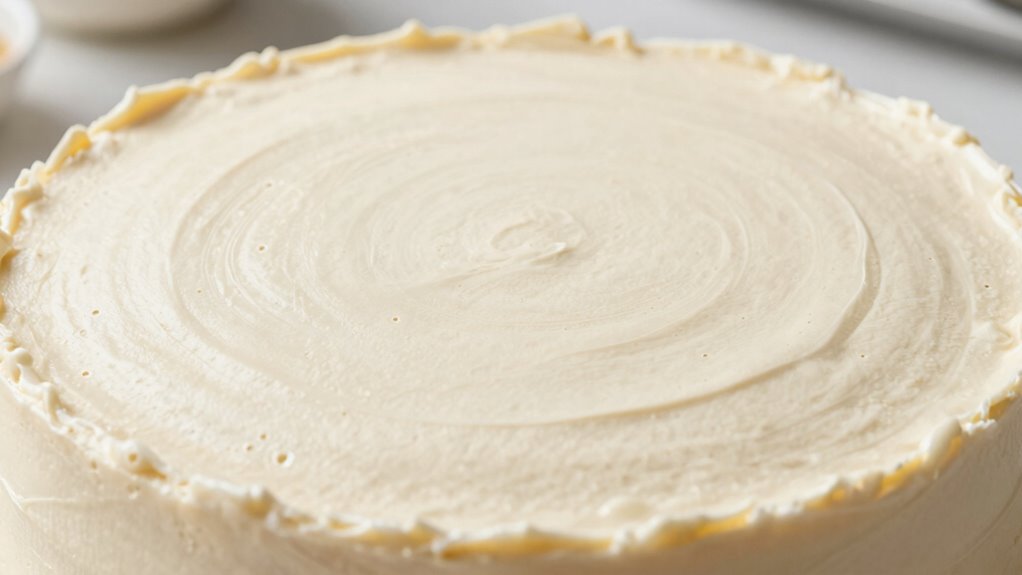
Before you start frosting your cake, it’s crucial to assess the evenness of your layers. An uneven cake can cause issues later, especially when you’re trying to achieve a smooth, professional finish. First, examine your layers from the side and the top. Look for any noticeable hills, valleys, or gaps. If the layers aren’t level, your frosting and fondant smoothing will be more difficult, and your final cake may look uneven. Use a level or a straight edge to check the surface of each layer. If you spot any high spots or dips, trim them carefully with a serrated knife. This step helps create a flat, stable foundation for your crumb coat and subsequent decorations.
Next, consider the shape of your layers. Sometimes, even if the height is consistent, the shape may be slightly irregular. Gently press down on the layers to see if they feel stable and even. If a layer feels wobbly or uneven, reinforce it with a thin layer of frosting or a sturdy cake board underneath before stacking. Once the layers are aligned, apply a thin crumb coat. The crumb coat acts as a sealing layer, trapping loose crumbs and providing a smooth surface for fondant smoothing later on. When applying the crumb coat, ensure it’s even and covers all sides. This initial layer doesn’t have to be perfect, but it should be thin enough to see where the cake may still be uneven underneath. After applying, refrigerate the cake for about 30 minutes or until the crumb coat firms up. This step makes the surface easier to work with and helps prevent crumbs from mixing into your final frosting.
Once the crumb coat is set, you can assess the cake’s evenness again. Run a straight tool, like a cake scraper or a long offset spatula, around the sides. If you notice any high spots or uneven patches, gently scrape them down or add a little more frosting to fill in low areas. This process ensures your cake is as level as possible before you move onto fondant smoothing or additional layers of frosting. Maintaining proper layer evenness from the start is essential for achieving a polished finish. Paying close attention to the cake’s structure during this stage will save you time and effort later. Additionally, using a level or a straight edge can help you verify that the layers are truly even. Checking the cake’s surface thoroughly can reveal subtle irregularities that might otherwise go unnoticed. When the cake is perfectly even, and the crumb coat is smooth, you’re ready to proceed with fondant smoothing or detailed decorating. Taking the time to judge and fix layer evenness early on makes a significant difference in how your final cake turns out. A well-prepared base simplifies the smoothing process and results in a polished, professional look. Remember, proper assessment of your layers is a vital step in achieving a flawless cake finish.
As an affiliate, we earn on qualifying purchases.
Frequently Asked Questions
Can Uneven Layers Affect the Cake’s Overall Stability?
Uneven layers can compromise your cake’s stability, especially during fondant smoothing or applying decorative techniques. When layers aren’t level, the cake may lean or wobble, making it harder to achieve a sleek finish. To guarantee stability, check your layers before frosting, use a leveling tool, and fill gaps evenly. Properly aligned layers give you a solid base, making decorating with fondant smoother and more professional-looking, preventing future structural issues.
What Tools Can Help Assess Layer Evenness Accurately?
Did you know that a level cake layer can improve your frosting results by 50%? To assess layer evenness accurately, use a bubble level or a straight-edge ruler—these tools give you precise measurements for perfect cake decoration. A level surface guarantees your frosting techniques are smooth and attractive. Regularly checking with these tools helps prevent uneven layers, making your cake look professional and ensuring a stable, beautiful finish every time.
How Does Layer Thickness Impact Frosting Application?
Layer thickness considerably impacts frosting application because uneven layers can cause cake stacking issues and make frosting spread unevenly. If the layers are too thick, frosting may struggle to adhere properly, leading to sliding or cracking. Conversely, thin layers might require more frosting to achieve a smooth finish. Ensuring consistent layer thickness allows for better control of frosting consistency, resulting in a cleaner, more professional-looking cake.
Should I Trim Uneven Layers Before Frosting?
Yes, you should trim uneven layers before frosting. Studies show that uneven layers can cause frosting to slide or crack, compromising your cake’s appearance and stability. In cake decorating, precise baking techniques make a big difference in achieving a professional look. Trimming uneven layers guarantees a flat, stable surface, making frosting application smoother and more even. This small step elevates your baking game and results in a beautifully finished cake.
Can Temperature Influence the Evenness of Baked Layers?
Yes, temperature effects can influence the evenness of baked layers. If your oven runs too hot or unevenly, it can cause layers to rise unevenly or crack, affecting baking consistency. Maintaining a consistent oven temperature guarantees your layers bake evenly, resulting in a smoother, more uniform surface. Always preheat your oven properly and use an oven thermometer if needed. This helps you achieve even layers, making frosting application much easier.
As an affiliate, we earn on qualifying purchases.
Conclusion
Before you frost, take a moment to assess your layer’s evenness. Imagine applying frosting to a cake with uneven layers—some parts may spill over, while others remain dry. For instance, Sarah once skipped this step and ended up with a lopsided finish. By checking for smooth, level surfaces beforehand, you guarantee your frosting glides on flawlessly, creating a professional look. Remember, a little prep now saves you from messy surprises later!
As an affiliate, we earn on qualifying purchases.
As an affiliate, we earn on qualifying purchases.
Flea & tick season Picks
flea and tick prevention
As an affiliate, we earn on qualifying purchases.