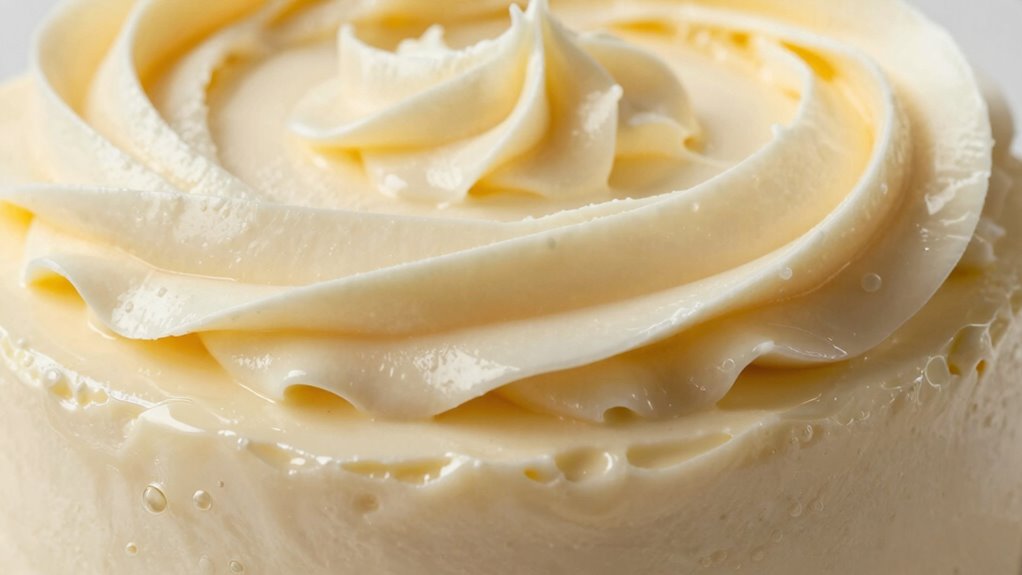
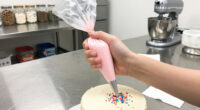
Even if your buttercream looks smooth, it might still pipe poorly because its consistency, temperature, or technique isn’t quite right. If the buttercream is too soft, it won’t hold shape, and if it’s too stiff, piping becomes difficult. The right texture is slightly cool, soft enough to pipe but firm enough to maintain detail. Paying attention to these factors can make a big difference. Keep exploring to find out how to perfect your piping every time.

Get baking supplies delivered free with Prime
- Fast, free delivery on millions of items
- Prime Video, Amazon Music and more included
- Member-only deals all year
Key Takeaways
- The buttercream may be properly smoothed but lacks the right consistency for piping, making it difficult to control flow.
- Overly soft or stiff buttercream can cause poor piping performance despite a smooth surface.
- Using incorrect tools or tips can hinder piping quality, even if the surface looks good.
- Temperature fluctuations can affect buttercream’s texture, impacting piping ability.
- Surface smoothness doesn’t guarantee proper texture or firmness needed for detailed piping work.
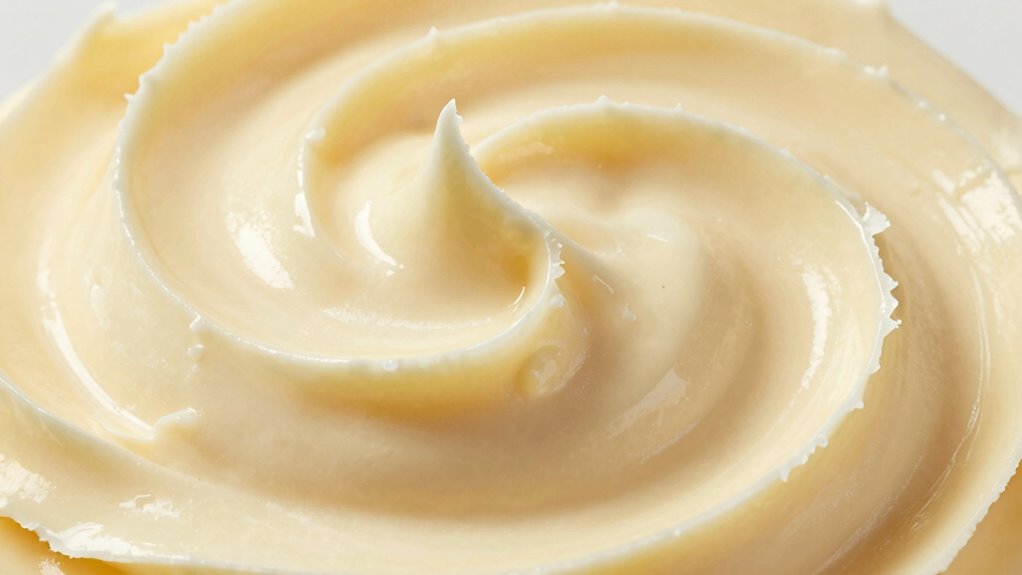
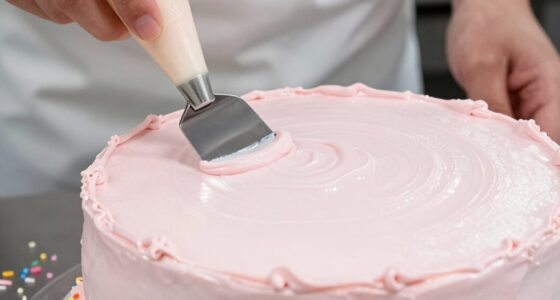
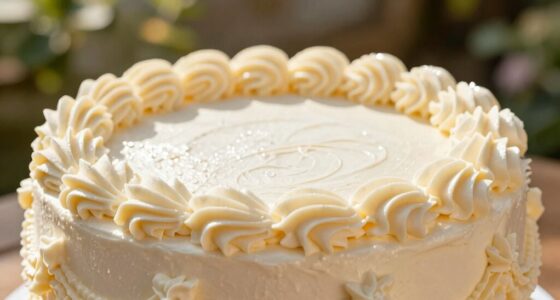
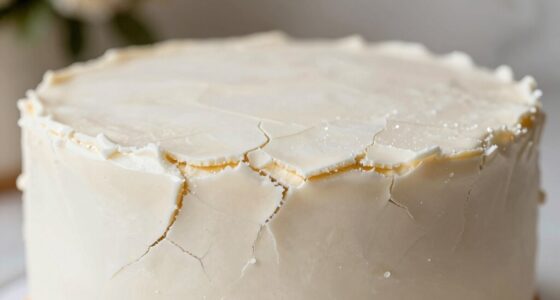
Have you ever noticed how buttercream can look perfectly smooth on a cake but still refuse to pipe neatly? It’s a common frustration among bakers and decorators. The smooth appearance often suggests that the buttercream is the right consistency, but when you try to add delicate borders, rosettes, or intricate designs, it falls flat. The key lies in understanding the differences between the surface finish and piping performance. A smooth buttercream surface can be achieved with proper spreading techniques, but piping requires the right texture, temperature, and tools. One often overlooked aspect is how color contrast influences the perception of the piping’s precision. Using a high-contrast color, like dark piping on a light background, makes mistakes more apparent, whereas subtle shades can hide uneven lines and irregularities. So, if you’re struggling with piping, consider adjusting your color contrast to better visualize your work and catch flaws early.
Additionally, fondant techniques can sometimes provide insight into why buttercream piping doesn’t meet expectations. Fondant offers a smooth, firm surface that’s easier to work with for detailed decorations, which is why many decorators switch between buttercream and fondant to achieve specific effects. If you’re familiar with fondant techniques, you know how essential it is to maintain the right temperature and consistency—not too soft, not too stiff. When you return to buttercream, applying principles like proper temperature control and using quality tools can markedly improve piping results. The buttercream should be at a slightly cool room temperature—soft enough to pipe but firm enough to hold its shape, avoiding the pitfalls of too-soft or too-hard textures. Recognizing how buttercream consistency and making adjustments accordingly can significantly improve your piping precision. It’s also helpful to understand how ingredients influence texture, as they can affect how well the buttercream pipes and holds its shape. Achieving the ideal consistency also involves understanding the role of ingredients in the recipe, as different fats and stabilizers can impact how well the buttercream pipes. It’s helpful to experiment with temperature and texture adjustments to find the perfect balance for your specific buttercream recipe. Getting your buttercream to pipe perfectly also involves understanding the importance of consistency. Too soft, and it’s hard to control; too stiff, and it’s difficult to pipe smoothly. Using a star tip or a fine round tip requires a buttercream that holds its shape without tearing or collapsing. You might find that adjusting the buttercream recipe—adding a bit of powdered sugar or reducing liquid—can help achieve that ideal piping consistency. Also, maintaining your piping bag and tip clean and dry ensures a smooth flow. Remember, practice makes perfect, and by paying attention to these details—color contrast for better visualization, applying fondant techniques to understand surface properties, and perfecting your buttercream consistency—you’ll notice a marked improvement in your piping results.
As an affiliate, we earn on qualifying purchases.
Frequently Asked Questions
Can Adding More Powdered Sugar Improve Pipeability?
Adding more powdered sugar can improve pipeability by making your buttercream stiffer, which helps with detailed piping. It also enhances flavor and allows for better color customization, giving you more control over your design. However, too much can make the frosting overly sweet or dry. So, add powdered sugar gradually, tasting as you go, to balance improved pipeability with flavor and color adjustments.
Does the Type of Butter Affect Piping Quality?
Choosing the right butter impacts your piping; using high-quality, unsalted butter yields smoother, more workable buttercream. I once experimented with different butters for flavor variations and found that European butter’s higher fat content made piping easier and colors more vibrant. The type of butter influences not just taste but also texture, ensuring your decorations look professional. So, opt for good butter to achieve flawless piping and beautiful color options.
How Does Room Temperature Impact Buttercream Texture?
Room temperature considerably impacts buttercream texture because it affects temperature stability and ingredient consistency. When your butter is too warm, it becomes too soft, causing the buttercream to become runny and difficult to pipe neatly. Conversely, if it’s too cold, the butter may be too firm, making it hard to work with. Maintaining a consistent room temperature ensures your ingredients blend well, resulting in smooth, stable buttercream that’s easy to pipe.
Is It Better to Refrigerate Buttercream Before Piping?
Refrigerating buttercream before piping can be beneficial, especially if you want cleaner lines or detailed designs. It firms up the texture, making it easier to pipe precisely. Plus, it helps hold color mixing and flavor variations better, preventing bleeding or melting. Just remember to let it sit at room temperature briefly before piping to regain smoothness. Refrigeration makes your work neater and enhances the overall appearance of your decorated cake.
What Tools Are Best for Piping Textured Designs?
You should use specialized piping tips, like star, ruffle, or leaf tips, for textured designs. Notably, 85% of bakers find that the right tip makes all the difference. When mastering piping techniques, focus on consistent pressure and steady hand movements. Color mixing can add depth, so keep your buttercream vibrant. With the proper tools and technique, you’ll create eye-catching textures that elevate your decorating game effortlessly.
professional cake decorating tools
As an affiliate, we earn on qualifying purchases.
As an affiliate, we earn on qualifying purchases.
Conclusion
So, next time your buttercream looks flawless on the surface but refuses to pipe, remember: it’s probably just pretending to be perfect. It’s like that friend who’s all dressed up but can’t hold a candle to real skill. Don’t blame yourself — blame the buttercream’s vanity. Embrace the quirks, and maybe, just maybe, you’ll find that beauty in imperfection is the true art of cake decorating. Or, at least, a good excuse to try again.
buttercream consistency thermometer
As an affiliate, we earn on qualifying purchases.
As an affiliate, we earn on qualifying purchases.
As an affiliate, we earn on qualifying purchases.
Columbus Day / Indigenous Peoples' Day Picks
long weekend sales
As an affiliate, we earn on qualifying purchases.