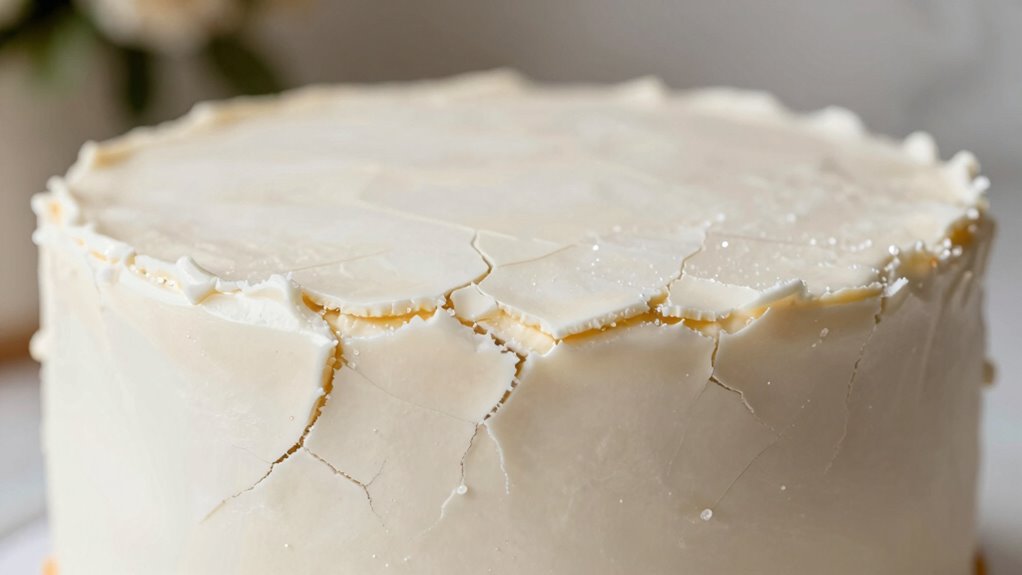

Fondant cracks at the worst moment because it often loses its flexibility due to improper handling or environmental conditions. If it’s too dry, stiff, or sticky, it can’t stretch smoothly over your cake, leading to cracks just when you need it to look perfect. Sudden temperature changes or exposure to drafts can also cause it to brittle or tear. Keep in mind these common issues, and you’ll discover ways to prevent cracks before they happen.

Get baking supplies delivered free with Prime
- Fast, free delivery on millions of items
- Prime Video, Amazon Music and more included
- Member-only deals all year
Key Takeaways
- Sudden changes in temperature or humidity cause fondant to become brittle or overly soft, leading to cracking during critical moments.
- Insufficient kneading results in poor elasticity, making fondant more prone to tearing when stretched over the cake.
- Working in a dry or drafty environment accelerates surface drying, increasing the risk of cracks during smoothing.
- Applying fondant too quickly or with uneven pressure can cause stress and cracks at the most inconvenient times.
- Using improperly adjusted fondant with incorrect ingredients reduces flexibility, making it vulnerable to cracking during application.
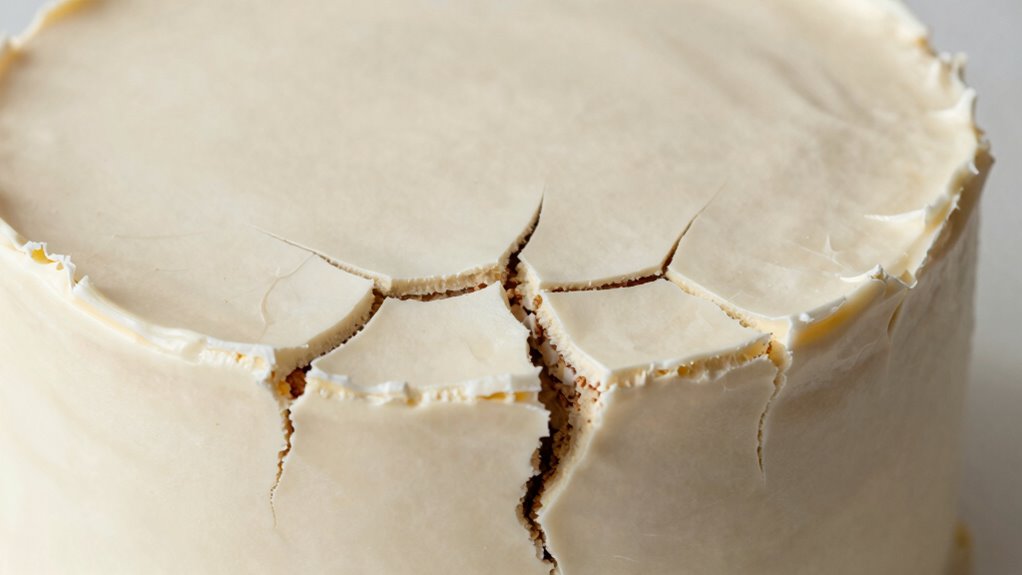
Ever wondered why your fondant sometimes develops cracks? It’s frustrating, especially when you’re just about to present your masterpiece. One of the main reasons is the lack of fondant flexibility. When fondant lacks adaptability, it can’t stretch smoothly over your cake’s surface, making it prone to cracking. Proper elasticity depends on the ingredients and how you handle the fondant. If it becomes too dry or stiff, it loses its ability to bend without breaking. Conversely, if it’s too soft or sticky, it can also crack when you try to smooth it out. Achieving the right balance means kneading your fondant thoroughly until it feels supple and pliable. Adding small amounts of shortening or glycerin can help improve its elasticity, making it easier to work with and less likely to crack. Additionally, understanding environmental factors such as humidity and temperature can help you adjust your techniques accordingly. environmental factors play a significant role in why your fondant cracks at the worst possible moment. Humidity, temperature, and even air circulation can affect how fondant behaves. On a dry day, low humidity causes the fondant to dry out quickly, making it brittle and prone to cracking. High temperatures can soften the fondant, leading to tearing or sagging, but as it cools or dries, cracks can form unexpectedly. Moving from a cold environment to a warm one can also cause sudden changes in texture, resulting in cracks. Additionally, drafts from fans or air conditioning units can cause uneven drying, increasing the risk of cracks appearing right before your event. To combat these environmental challenges, try to work in a controlled setting, keep your fondant covered when not in use, and avoid exposing your cake to sudden temperature changes. Proper storage and handling are essential to preserve the pliability of your fondant and prevent cracks. Understanding these factors can help you prevent cracks before they happen. Always knead your fondant thoroughly to ensure good elasticity, and store it properly to maintain its pliability. When working in challenging environmental conditions, take extra precautions—cover your cake with a fondant smoother or a damp cloth to retain moisture, and work quickly to avoid drying out the surface. Being aware of climatic influences can help you adapt your technique for different conditions. If you notice cracks forming, don’t panic; sometimes a quick smoothing with a fondant smoother or a gentle re-knead can fix minor issues before they ruin your design. Paying attention to the elasticity of your fondant and the environmental factors around you is crucial to creating a flawless, crack-free cake that’s ready to impress.
As an affiliate, we earn on qualifying purchases.
Frequently Asked Questions
Can I Fix Cracked Fondant Easily?
Yes, you can fix cracked fondant easily. First, soften your fondant slightly by kneading it or warming it a bit. Use a small amount of water or edible glue to gently smooth over the cracks, pressing them out. To prevent future issues, store your fondant properly and apply smooth icing techniques. Keep a spare bit of fondant handy for quick repairs and better overall cake presentation.
Does Temperature Affect Fondant Cracking?
You notice your fondant cracked during a hot day, and yes, temperature definitely impacts fondant cracking. When it’s too warm, fondant loses its elasticity, becoming brittle and prone to cracks. Proper temperature regulation keeps the fondant pliable, preventing cracks. For example, keeping your workspace cool and storing fondant in a cool environment helps maintain its elasticity. Maintaining consistent, moderate temperatures ensures your fondant stays smooth and crack-free.
Is Homemade Fondant More Prone to Cracking?
Homemade fondant can be more prone to cracking because its consistency varies more than store-bought versions, and it’s easier to accidentally introduce air or uneven sugar crystallization during preparation. If your homemade fondant isn’t perfectly smooth or has uneven sugar crystallization, it’s more likely to crack when you roll it out or apply it to your cake. Ensuring a smooth, consistent texture helps prevent these cracks, especially during critical moments.
How Long Does Fondant Typically Last Before Cracking?
Did you know fondant can last up to two weeks without cracking if stored properly? Generally, it stays flexible for about 1-2 days before cracking, but humidity effects and storage conditions matter. Keep it in an airtight container at room temperature, away from humidity and direct sunlight. If stored correctly, your fondant can remain smooth and crack-free for a decent amount of time before issues arise.
Do Different Brands of Fondant Crack Differently?
Different brands of fondant can crack differently because of variations in fondant texture and brand consistency. Some brands may use ingredients that create a softer, more pliable fondant, reducing cracking, while others might produce a stiffer texture that’s prone to cracking under stress. You’ll notice these differences especially when working with delicate or detailed designs, so experimenting with various brands helps you find the best one for smooth, crack-free results.
As an affiliate, we earn on qualifying purchases.
Conclusion
Understanding why fondant cracks helps you avoid those frustrating moments before your big event. Remember, factors like temperature, humidity, and improper storage play a big role. Did you know that over 60% of bakers experience cracking issues at least once? By mastering proper techniques and environmental controls, you can guarantee your cake looks flawless every time. Don’t let cracked fondant ruin your hard work—stay prepared, stay confident, and keep practicing for that perfect finish!
As an affiliate, we earn on qualifying purchases.
As an affiliate, we earn on qualifying purchases.
Halloween Picks
halloween
As an affiliate, we earn on qualifying purchases.