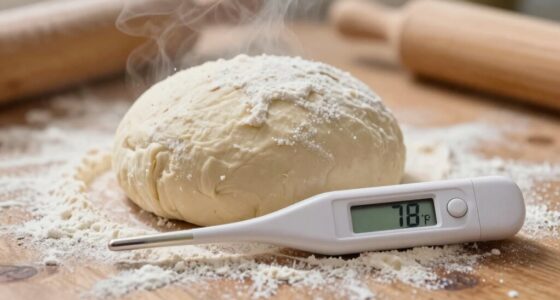
In warm environments, your starter ferments faster, so you need to adjust your feeding schedule to prevent acid overload. Monitor bubble activity and smell to catch signs of over-acidity, and feed more frequently with fresh flour and water. Keep your starter in cooler spots or use insulated containers to stabilize temperatures. Managing hydration and pH levels carefully helps maintain balance. If you want to learn how to control acid buildup effectively, keep exploring these strategies.
Key Takeaways
- Monitor fermentation activity closely; adjust feeding frequency to prevent excessive acid buildup.
- Keep starter at a stable, optimal temperature around 75°F to maintain microbial balance.
- Use gentle aeration and regular feeding to promote healthy yeast activity and control acid levels.
- Recognize signs of over-acidification, like sour smell or sluggish bubbles, and respond promptly.
- Store starter in cooler, stable environments away from heat sources to avoid accelerated fermentation and acid overload.
How Warm Temperatures Speed Up Fermentation

Warm temperatures accelerate fermentation because they increase the activity of yeast and bacteria, speeding up the process overall. When you keep your starter in a warm environment, you’ll notice it ferments faster, which can be advantageous if you’re short on time. However, this also means you’ll need to pay close attention to fermentation timing to prevent overfermentation or acid buildup. Different starter variations respond differently to heat, so adjusting your feeding schedule may be necessary. For example, a starter kept at higher temperatures might reach peak activity sooner, requiring more frequent feedings or shorter intervals between feedings. Staying vigilant helps you manage fermentation effectively, ensuring your starter remains healthy and balanced without rushing into overacidification. Additionally, monitoring temperature control is key to maintaining optimal fermentation conditions and avoiding undesirable outcomes. Proper fermentation management techniques can help mitigate risks associated with warm environments, such as acid overload, ensuring a healthy balance in your starter. Being aware of fermentation dynamics can further assist in fine-tuning your process to prevent unwanted acid buildup, especially as temperature fluctuations can influence fermentation stability.
Why Acid Overload Happens in Hot Conditions
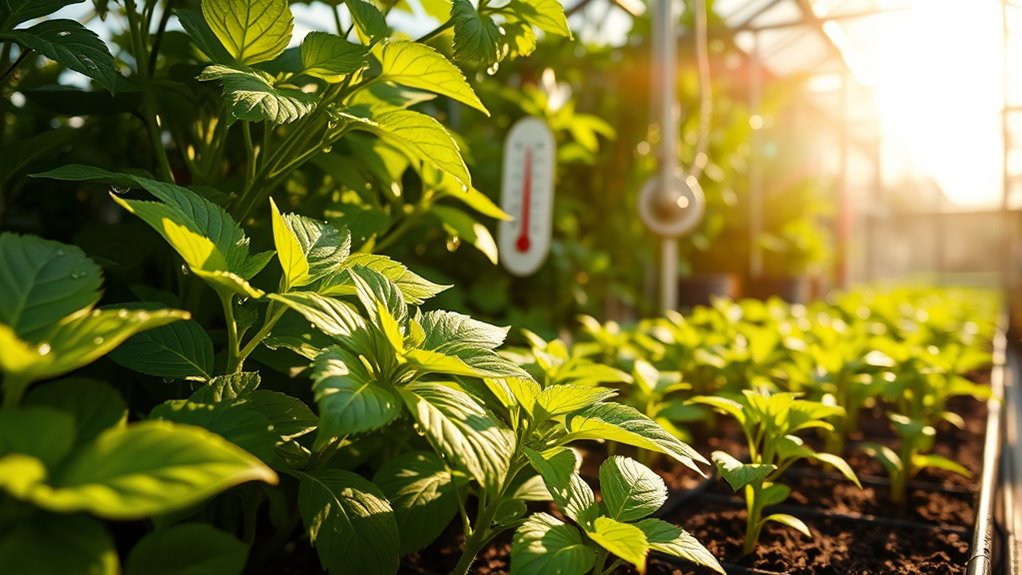
When fermentation occurs in hot conditions, the rapid activity of yeast and bacteria can lead to an accumulation of acids beyond healthy levels. This disrupts starter health, as too many acids can inhibit yeast activity and weaken the starter’s overall balance. In warm environments, microbes produce acids faster, pushing fermentation out of control. Without proper management, these acids build up, causing an acid overload that hampers fermentation balance. You might notice a sour smell or a liquid that’s more acidic than usual. To keep your starter healthy, it’s essential to understand how heat accelerates acid production and take steps to control fermentation. Maintaining a stable temperature helps prevent acid overload, ensuring your starter remains lively and productive. Additionally, monitoring fermentation conditions regularly can help detect early signs of acid overload before it impacts your starter. Recognizing microbial activity patterns can also help bakers modulate fermentation rates and prevent undesirable outcomes, especially by understanding the effect of temperature on microbial behavior. Paying attention to temperature control is crucial in managing acid levels effectively and maintaining a healthy fermentation environment.
How to Monitor Your Starter’s Activity in the Heat
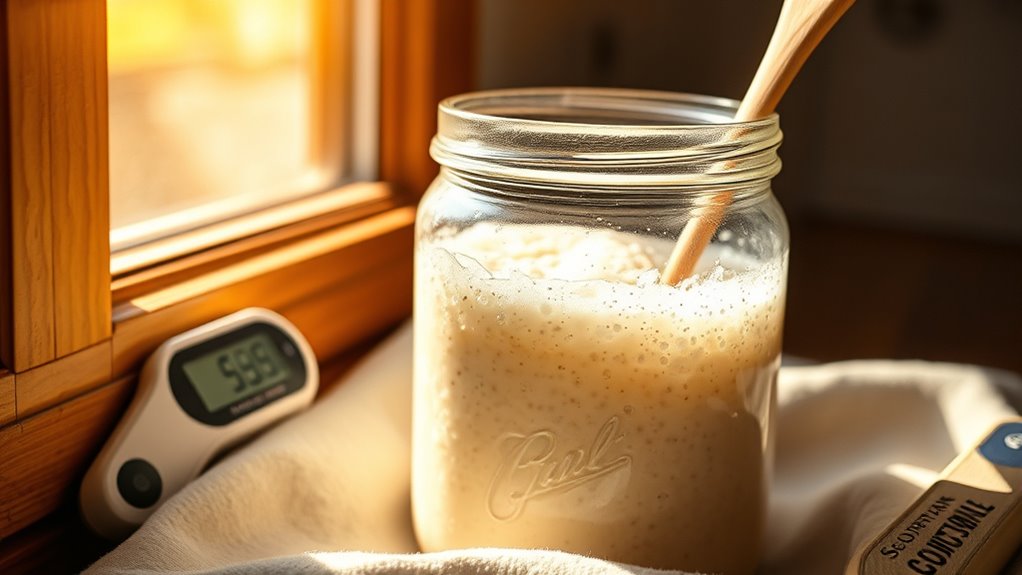
Keep an eye on your starter’s bubble activity to see how lively it is. You should also adjust your feeding schedule based on how active it looks in the heat. Monitoring these signs helps you maintain the right balance and avoid overfeeding or underfeeding. Additionally, observing the fermentation process can provide insights into the health of your starter during warm weather. Understanding the solar energy influence on temperature can help you predict and control the warmth around your starter, ensuring optimal conditions. Recognizing the microbial activity within your starter can further aid in maintaining its vitality during hotter days, as increased temperature fluctuations can significantly impact microbial growth and stability. Being aware of environmental factors like humidity and airflow can also help maintain a stable environment for your starter in warm conditions.
Observe Bubble Activity
Have you noticed bubbles forming in your starter? This is a key indicator of active fermentation signs. Bubble activity shows that yeast and beneficial bacteria are working, releasing carbon dioxide as they consume the sugars. In warm environments, fermentation speeds up, so keep a close eye on the size and frequency of bubbles. Large, steady bubbles suggest your starter is healthy and fermenting properly. If bubbles are scarce or slow, it might be a sign to adjust your feeding schedule or temperature. Consistent bubble activity helps prevent acid overload by ensuring the yeast remains active and balanced. Remember, in hot conditions, monitoring these fermentation signs closely helps you maintain a lively, well-balanced starter.
Track Feeding Frequency
In hot environments, monitoring how often you feed your starter is essential to keep it healthy and active. Regular feeding intervals ensure proper starter hydration, preventing over- or under-fermentation. Track its activity daily to adjust feeding times accordingly. If bubbles slow or the starter looks dull, increase feeding frequency. Use this table as a guide:
| Condition | Feeding Interval | Notes |
|---|---|---|
| Active, bubbly | Every 12 hours | Maintain hydration and activity |
| Slightly sluggish | Every 8-10 hours | Boost activity with more frequent feedings |
| Overly sour, dense | Every 14-16 hours | Reduce acidity and balance hydration |
| Dormant or sluggish | Every 20-24 hours | Prevent over-acidification |
Monitoring the activity level of your starter helps you determine the optimal feeding schedule and prevent acid overload. Consistent observation also aligns with the importance of balanced designs in creating a stable and healthy environment for your starter. Additionally, understanding plant properties can help you select suitable ingredients to support your starter’s health. Recognizing the net worth of your starter can also provide insights into its vitality and success in your baking endeavors.
When and How to Adjust Feeding Schedules in Warm Weather

As temperatures rise, it becomes essential to adjust your starter management to guarantee healthy growth. Warm weather accelerates fermentation, so you should shorten your feeding intervals to prevent acid overload. Monitor your starter culture closely; if it’s bubbling vigorously and rising quickly, it’s a sign to feed more frequently. Typically, reduce feeding intervals from every 12-24 hours to every 8-12 hours in warm conditions. Always observe your starter’s activity and consistency—if it becomes overly sour or liquidy, you may need to feed even more often or adjust the feeding amount. Maintaining consistent feeding schedules helps balance fermentation, avoiding excessive acid buildup while supporting strong, healthy starter development. Proper starter management is essential for preserving the longevity and vitality of your culture in warm environments. Additionally, understanding the fermentation process can help you better anticipate how your starter will behave as temperatures change, especially by recognizing signs of overfermentation or underfeeding.
How Hydration Levels Affect Acid Production

Hydration levels play a crucial role in determining how much acid your starter produces during fermentation. When your starter has higher hydration, the liquid consistency becomes more fluid, which encourages faster microbial activity. This increased activity leads to more acid production, especially in warm environments where microbes are more active. Conversely, lower hydration results in a thicker, dough-like consistency that slows fermentation and reduces acid output. Proper hydration helps balance acid levels, preventing over-acidification that can harm your starter’s health. By adjusting hydration, you control the fermentation rate, ensuring your starter remains vigorous without becoming overly acidic. Monitoring hydration effects allows you to fine-tune your feeding schedule and maintain a stable, healthy starter in warm conditions. Additionally, understanding the impact of fermentation temperature on microbial activity can further help you manage acid production effectively. Maintaining consistent feeding routines can also contribute to more predictable fermentation and acid levels, especially in varying environmental conditions.
What Are Heat-Resistant Cultures, and Should You Use Them?

Heat-resistant cultures are specially selected or engineered strains of microorganisms that can survive and ferment effectively at higher temperatures. These cultures often include dairy cultures and probiotic strains designed for warm environments. Using heat-resistant cultures can help you maintain consistent fermentation without rushing or risking acid overload. They’re especially useful if your ambient temperature is above ideal ranges.
Consider these points:
- They enable reliable fermentation in hot climates
- They reduce the risk of stalled or incomplete cultures
- They promote steady acid production
- They are ideal for dairy-based fermentations
- They help prevent unwanted microbial contamination
Should you use them? If your environment tends to be warm, heat-resistant cultures can give you better control, ensuring your starter stays active and your fermentation remains balanced.
How to Store Your Starter in Cooler Spots to Keep It Balanced

To keep your starter healthy, find cooler spots in your home that maintain a steady temperature. Make sure to monitor these areas regularly to prevent temperature swings. Proper placement and consistent checks help you keep your starter balanced and active.
Optimal Cooler Placement
Ensuring your starter stays healthy requires thoughtful placement within your cooler. To maintain an ideal balance, position your starter culture away from direct cold spots that could slow fermentation speed. Keep it in a consistent, moderate temperature zone to encourage steady activity. Avoid placing it near the freezer or coldest corners, which can hinder fermentation and affect flavor development. Instead, find spots with stable, cool temperatures that support balance. Consider these tips:
- Store your starter on a middle shelf for consistent temperature
- Keep it away from the refrigerator door to avoid temperature fluctuations
- Use a small, insulated container if needed for extra temperature stability
- Avoid proximity to frozen items or vents that cause drafts
- Rotate your starter periodically for even temperature exposure
This placement helps your starter culture thrive and ferment evenly.
Monitoring Temperature Levels
Monitoring temperature levels is essential for keeping your starter in a balanced environment. Small temperature fluctuations can considerably impact your starter culture’s health and fermentation process. To prevent overheating or excessive cooling, regularly check the temperature of storage spots, especially in cooler areas. Use a reliable thermometer to track changes and ensure it stays within the ideal range for your starter. By maintaining consistent temperatures, you help avoid acid overload caused by uneven fermentation. If you notice temperature swings, adjust the placement of your starter—moving it to cooler spots or insulating it with a cloth. Keeping a steady temperature minimizes stress on the starter culture and promotes steady, healthy activity, ensuring your starter remains active and balanced over time.
How to Manage pH and Acid Levels Safely

Managing pH and acid levels safely is essential for maintaining a healthy environment in your aquatic system. Proper control prevents acid overload, which can harm starter hydration and disrupt yeast activity. To keep pH stable, regularly test water parameters and adjust as needed. Use gentle methods, like aeration, to promote gas exchange and prevent acid buildup. Avoid sudden chemical changes that could shock the system. Keep an eye on temperature since it influences yeast activity, which affects acid production. Consider adding natural buffers if pH swings occur frequently. Maintain good filtration to remove excess acids. Remember, consistent monitoring and gradual adjustments are key to balancing pH levels effectively.
- Regularly test water pH and acid levels
- Maintain consistent temperature for yeast activity
- Use gentle aeration to prevent acid buildup
- Add natural buffers if needed
- Avoid abrupt chemical interventions
Can Salt and Additives Help Control Acidification?

Salt can act as a buffer, helping to slow down acidification during fermentation. Additives can also be used to adjust and stabilize pH levels effectively. Understanding these tools allows you to better control starter health in warm environments.
Salt’s Buffering Role
Although salt is primarily known for its flavor-enhancing qualities, it also plays a significant role in buffering pH levels within a warm environment. Its salt buffering capacity helps maintain more stable conditions, aiding in acid control during fermentation. By moderating pH fluctuations, salt prevents rapid acidification that can harm starter cultures.
Consider these points:
- Salt increases the pH buffering capacity of your mixture
- It slows down excessive acid buildup
- Salt helps maintain a consistent environment
- Proper salt levels support healthy microbial activity
- Overuse can hinder fermentation, so balance is key
Using salt strategically enhances acid control, ensuring your starter stays within ideal pH ranges. This buffering role is crucial for managing acidity levels effectively in warm conditions.
Additives Modulate pH
Additives beyond salt can substantially influence pH control during fermentation, helping to prevent excessive acidification in warm environments. By adjusting the pH, these additives support your starter culture’s stability and activity, ensuring a balanced fermentation process. For example, buffering agents like calcium carbonate or magnesium carbonate can neutralize excess acids, maintaining a more favorable pH level. Other additives, such as small amounts of alkaline substances, can also slow down acid production without halting fermentation altogether. Using these additives thoughtfully allows you to fine-tune the environment, reducing the risk of over-acidification. This control is especially critical in warm conditions where fermentation tends to speed up, making it easier to keep your starter culture healthy and active without compromising flavor or texture.
What Are the Best Practices for Keeping Your Starter Healthy in Warm Conditions

When keeping your starter healthy in warm conditions, temperature control is essential. Warmth accelerates fermentation timing, increasing the risk of acid overload. To maintain a strong starter culture, monitor the temperature closely and keep it around 75°F (24°C). Consider refrigerating or placing your starter in a cooler spot if it gets too warm. Regularly feed your starter with fresh flour and water to sustain its vitality. Avoid overfeeding, which can cause rapid acid buildup. Keep your container clean and covered to prevent contamination. Stir or fold the starter gently to distribute yeast and bacteria evenly. By managing these practices, you ensure your starter remains balanced, vigorous, and ready for baking without succumbing to over-acidification.
Frequently Asked Questions
How Do I Recognize Signs of Acid Overload in My Starter?
You’ll notice acid overload in your starter if it develops a strong, sour smell and forms a liquid layer called hooch. During starter feeding, if it becomes overly bubbly or produces a vinegary aroma, it’s a sign of excess acidity. To prevent this, maintain proper temperature control—keep it warm but not hot—and avoid overfeeding. Regularly check your starter’s smell and consistency to catch issues early.
Can I Use Natural Remedies to Reduce Acidity?
Imagine your starter as a lively garden; natural remedies like herbal remedies and dietary adjustments can help balance its acidity. You can add gentle herbs like chamomile or ginger, which soothe and reduce excess acidity. Incorporate more alkaline foods, such as leafy greens or cucumbers, to help maintain harmony. These natural methods support your starter’s health without harsh chemicals, keeping your baking lively and your environment balanced.
What Are Symptoms of a Starter That’s Too Acidic?
If your starter is too acidic, you’ll notice fermentation slowdown and flavor changes, like sourness becoming overpowering. You might see a thinner or discolored surface, and it may develop an unpleasant smell. These symptoms indicate excess acidity, which can hinder yeast activity. To fix it, balance the pH by feeding with fresh flour and water, and consider adjusting your feeding schedule to prevent further acid buildup.
How Often Should I Test pH Levels During Warm Weather?
During warm weather, you should test your starter’s pH levels daily to guarantee proper starter maintenance. For example, if a baker notices rising acidity signs, testing pH every morning helps catch acid buildup early. Regular pH monitoring allows you to adjust feedings or temperature if needed. This proactive approach keeps your starter healthy, preventing over-acidification and ensuring consistent fermentation, especially in hot conditions where acidity can quickly develop.
Are There Specific Flour Types Better for Warm, Acidic Environments?
In warm, acidic environments, opt for flours with higher protein content, like bread or whole wheat flour, because their characteristics support stronger gluten development and better starter hydration. These flours help maintain stability and prevent acid overload. Avoid softer, low-protein flours, as they can become overly acidic quickly. Adjust hydration levels accordingly, ensuring your starter remains active and balanced without risking over-acidification.
Conclusion
By mastering warm environment management, you’ll turn your starter into a fiery, unstoppable force of fermentation—like a tiny volcano ready to erupt with perfect bubbles and tangy flavor. With careful monitoring, timely adjustments, and smart storage, you’ll tame the heat, prevent acid overload, and keep your starter thriving like a lush, balanced garden in the desert. Stay vigilant, and watch your bread rise to legendary heights—warm weather woes don’t stand a chance!