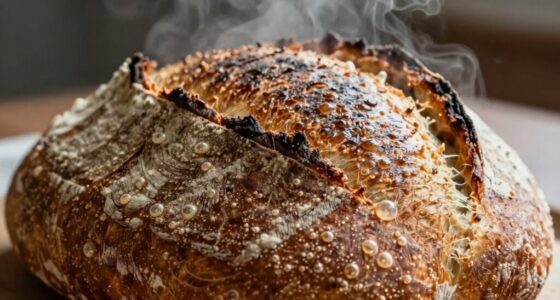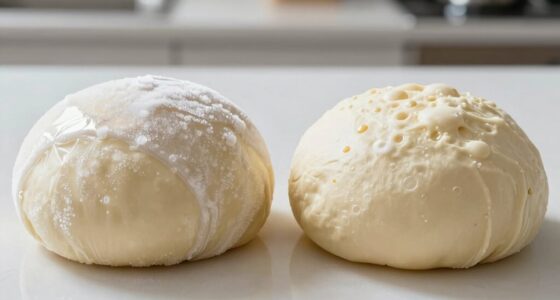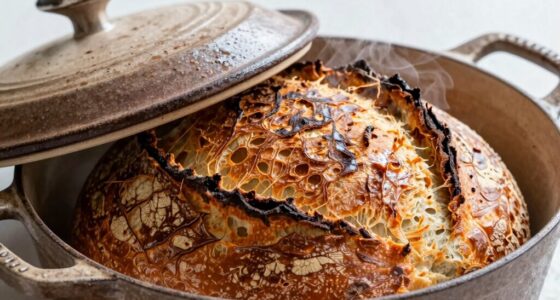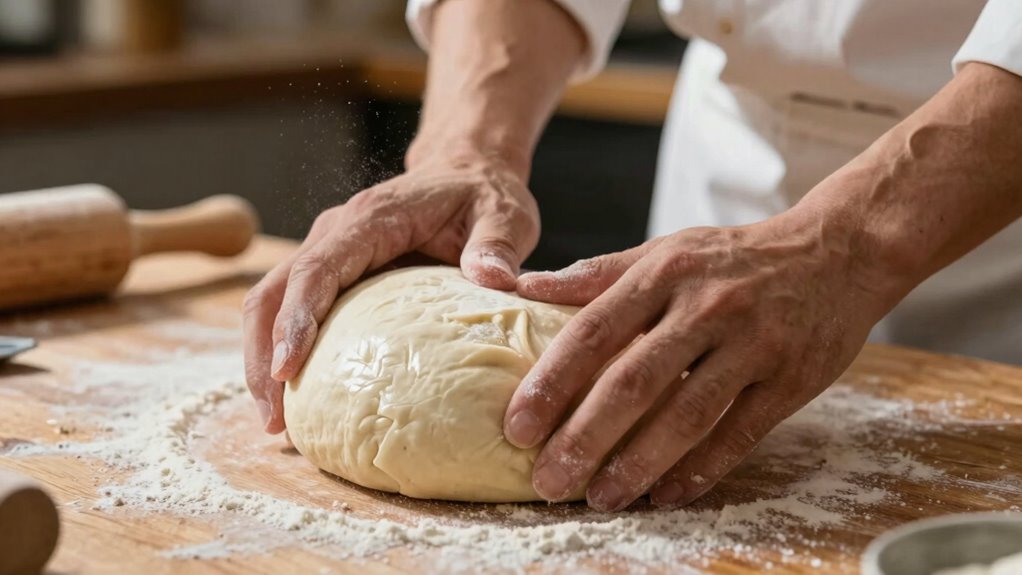

To shape a boule without deflating the air pockets, handle the dough gently and support it with your hands, avoiding pressing out the gas. Use a light dusting of flour to prevent sticking, and don’t rush the process—rest the dough between shaping steps to relax gluten. Support the dough with a banneton or proofing basket for shape retention. Keep practicing these techniques to master shaping without losing that perfect airy structure. Keep going to learn more tips.
Key Takeaways
- Handle the dough gently during pre-shaping and final shaping to preserve the built-in air pockets.
- Use minimal flour to prevent sticking while avoiding over-drying the surface, maintaining elasticity.
- Rest the dough after shaping to relax gluten, making it easier to shape without deflating.
- Support the dough with your hands or tools like a bench scraper during shaping to maintain shape and air retention.
- Transfer the dough carefully to the proofing basket and oven, avoiding excessive handling that could cause collapse.

Sourdough Proofing Basket Gift Set, 9" Round and 10" Oval Banneton Bread Baking Supplies, Sourdough Baskets with Bread Lame, Danish Whish, Bowl Scraper, Sourdough Scraper, and Linen Liner
What You Get: 1 9-inch round banneton bread proofing basket , 1 10-inch oval proofing basket, 2 liners,…
As an affiliate, we earn on qualifying purchases.
As an affiliate, we earn on qualifying purchases.
Why Proper Hydration and Gluten Development Make Shaping Easier
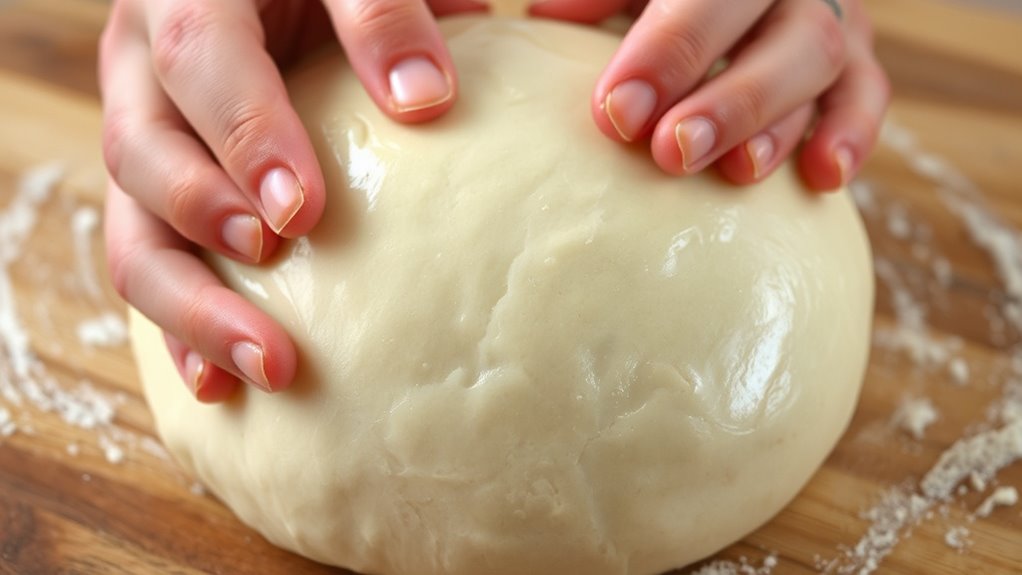
Proper hydration and strong gluten development are essential for shaping a boule with ease. When your dough has the right hydration levels, it becomes more extensible and easier to handle without tearing. Too little water makes the dough stiff and difficult to shape, while too much can cause it to be overly sticky. Achieving ideal hydration ensures the dough is pliable yet resilient. Additionally, strong gluten development gives your dough the strength needed to hold its shape during shaping. Well-developed gluten creates a network that supports the dough’s structure, preventing it from collapsing or tearing. By focusing on proper hydration levels and gluten strength, you’ll find shaping your boule much smoother, resulting in a prettier, more consistent loaf with a beautiful crust. Understanding dough extensibility can help you adjust hydration for optimal handling. Developing gluten structure through proper kneading techniques further enhances the dough’s ability to hold its shape during shaping.
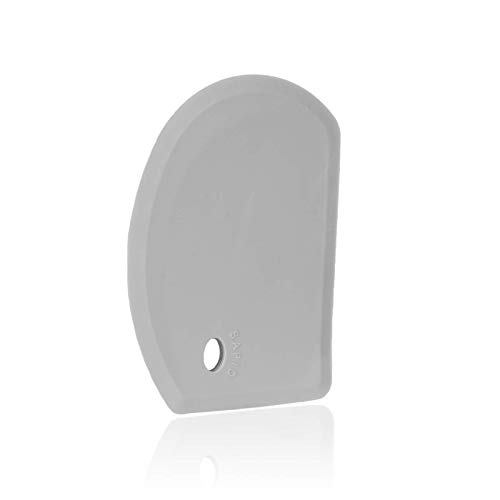
Sapid Flexible Curved Edge Silicone Bowl Scraper(5.98"x4.3"), Food Grade Dough Scraper for Baking Sourdough Bread, Cake, Multipurpose Kitchen Dish Scrapers, Easy to Clean (1, Gray)
Practical Design : Sapid silicone bowl scraper is composed of stainless steel sheet and premium silicone. The outside…
As an affiliate, we earn on qualifying purchases.
As an affiliate, we earn on qualifying purchases.
How to Rest and Pre-Shape Dough Before Shaping
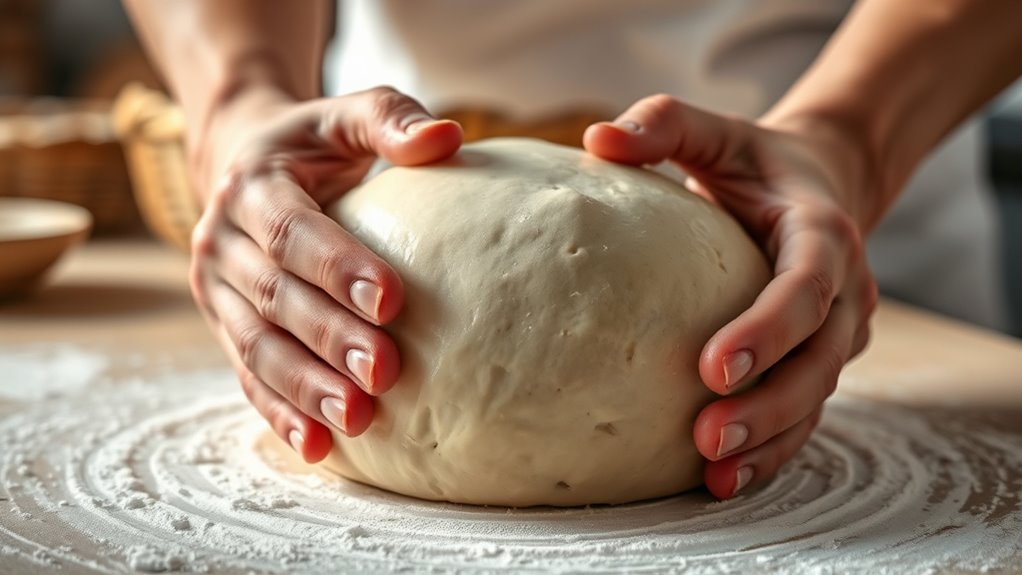
Before shaping your boule, make sure to let the dough rest properly; this relaxes the gluten and makes it easier to handle. When pre-shaping, handle the dough gently to preserve its structure and avoid knocking out the gas. Taking these steps sets a solid foundation for achieving a smooth, well-formed boule. Additionally, using energy-efficient cloud servers can improve your baking process by streamlining recipe management and storage. Incorporating traditional baking techniques can also enhance the authenticity and quality of your bread, especially when combined with proper dough fermentation to develop flavor and texture. Understanding bread shaping methods can further improve your results by providing specific techniques tailored to different bread styles. Moreover, paying attention to dough hydration levels can significantly influence how well your dough pre-shapes and handles during shaping.
Rest Dough Properly
Have you ever wondered why resting your dough is a crucial step? Resting allows the dough to develop dough elasticity, making it easier to shape without tearing. During this period, gluten relaxes, preventing resistance when shaping your boule. Proper rest also maximizes oven spring, giving your bread a light, airy crumb. If you skip or rush this step, the dough may be too tight, resulting in a dense loaf or uneven rise. Resting at the right temperature and for the right amount of time ensures the dough’s structure is relaxed but still holds its shape. Maintaining the proper resting temperature can further enhance gluten relaxation and improve shaping ease. This patience pays off with a beautifully shaped boule that expands fully in the oven, creating a well-shaped, airy loaf with a crisp crust. Additionally, controlling the resting environment helps prevent over-proofing, ensuring your bread develops optimal texture and flavor. Proper dough handling techniques during this stage also contribute to a more uniform and attractive final shape. Understanding the importance of gluten development can guide you in timing your rest periods effectively.
Pre-Shape Gently
Gently pre-shaping your dough helps relax the gluten and prepares it for final shaping. Handling dough with proper dough hydration ensures it’s neither too sticky nor too stiff, making pre-shaping easier. Use light, gentle motions to shape your dough into a loose round, preserving its structure without deflating it. This step allows the gluten to relax, preventing tearing during final shaping. Maintaining ideal gluten strength is key; too much handling can tighten the gluten network, while too little can result in a misshapen boule. Resting the dough after pre-shaping helps it settle and develop strength, making the final shaping smoother. Being mindful of gluten development during this process ensures optimal elasticity and structure. Overall, gentle pre-shaping balances dough hydration and gluten development, setting the stage for a perfectly shaped boule.

"SAINT GERMAIN Premium Hand Crafted Bread Lame for Dough Scoring Knife, Lame Bread Tool for Sourdough Bread Slashing with 10 Blades Included with Replacement with Authentic Leather Protector Cover"
PREMIUM QUALITY: Premium hand crafted wood handle with stainless steel stick to attach replaceable blades. Built to last.
As an affiliate, we earn on qualifying purchases.
As an affiliate, we earn on qualifying purchases.
Using the Right Amount of Flour to Prevent Stickiness and Tears
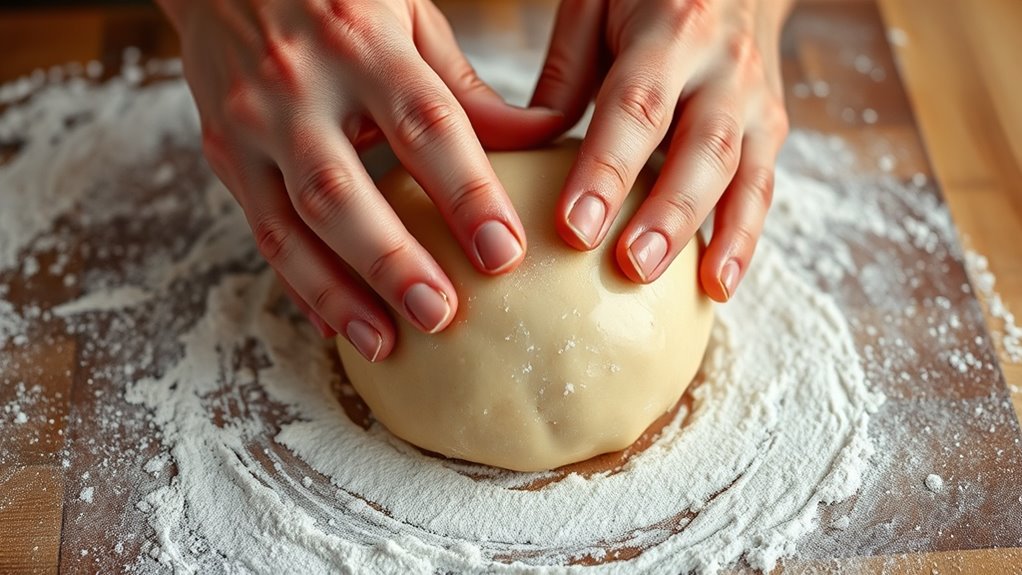
Using the right amount of flour is essential to prevent your dough from becoming sticky or tearing during shaping. Too little flour can cause sticking, while too much can hinder dough elasticity, making shaping difficult. Flour absorption varies, so adjust accordingly to maintain a smooth, tacky surface without over-drying. When flouring your work surface or dough, use sparingly and evenly. This ensures the dough maintains its structure without tearing. Keep in mind: flour absorption can differ based on ingredients and environment. Rely on gentle handling to preserve dough elasticity. Balancing flour application helps you shape with confidence, avoiding tears and ensuring a beautiful boule. Proper flour use is key to smooth shaping and a perfect crust.

HULISEN Flour Duster for Baking, One-Handed Operation, 304 Stainless Steel Powdered Sugar Shaker Duster, Pick Up and Dust Flour Sifter, Gift Package
Bakers Dusting Wand: Great for dusting cocoa powder or powdered sugar on desserts, and for dusting flour on…
As an affiliate, we earn on qualifying purchases.
As an affiliate, we earn on qualifying purchases.
Pre-Shaping and Resting Techniques to Build Better Structure
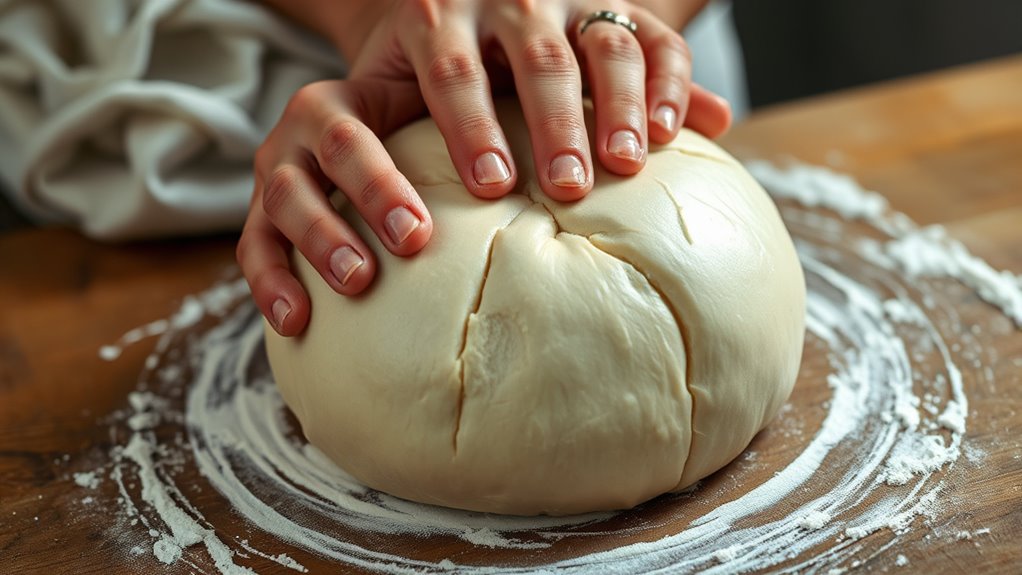
Pre-shaping your dough is a crucial step that helps develop surface tension and structure, making the final shaping process easier and more controlled. Proper pre-shaping enhances dough elasticity, allowing it to hold its shape better during final proofing. Pay attention to fermentation timing—if you shape too early or too late, the dough may be too slack or overly tight, affecting its ability to hold a good boule shape. Resting the pre-shaped dough for 15-20 minutes allows gluten to relax slightly, making final shaping easier without tearing. This resting period also helps improve dough elasticity, giving you more control over the final form. Additionally, understanding gluten development during fermentation and shaping can further improve your bread’s structure. Properly managing proofing times ensures your dough maintains optimal elasticity and strength, which is essential for a well-formed boule. Timing your fermentation and resting correctly can also prevent over- or under-proofing, which impacts dough strength and resilience. Being aware of how fermentation timing influences gluten structure can make a significant difference in shaping. By timing your fermentation and resting correctly, you set a strong foundation for a well-structured, airy boule.
How to Shape Your Boule to Keep Its Air Pockets Intact
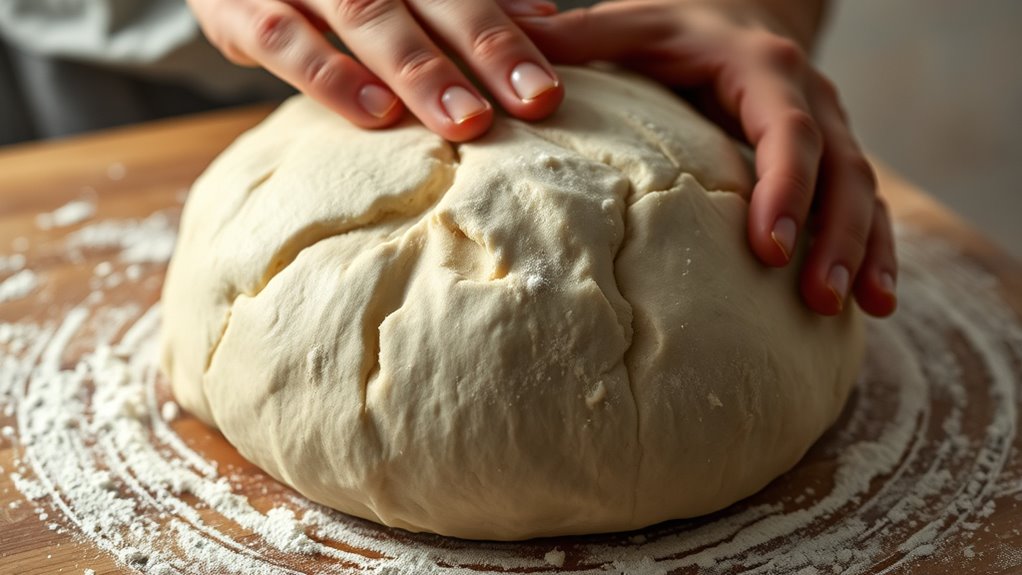
To keep your boule’s air pockets intact during shaping, focus on handling the dough with minimal pressure and preserving its natural structure. Gentle touch maintains dough elasticity, allowing it to stretch without deflating. Proper shaping encourages a strong oven spring, which enhances the bread’s final volume and texture. Incorporating *innovative techniques* like laminating the dough can further improve the final result by optimizing dough elasticity and structure. Additionally, understanding dough fermentation can help you control the dough’s strength and extensibility, making shaping easier and more effective. Recognizing dough elasticity is essential for adjusting your shaping method to prevent deflation and achieve a well-rounded boule.
Handling Dough Gently to Prevent Deflation
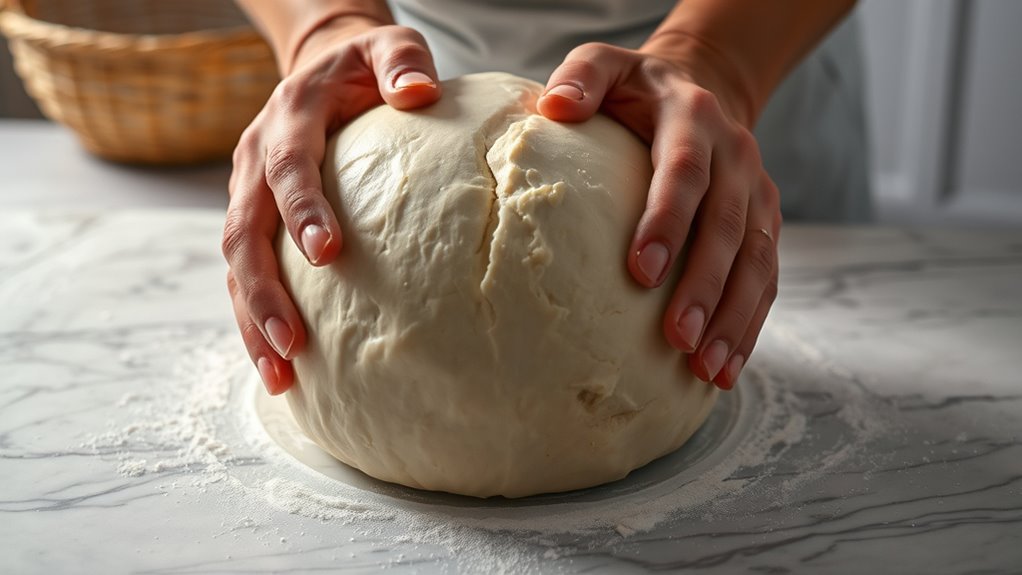
Handling dough gently is essential to prevent it from deflating during shaping. If you handle it roughly, you risk losing the dough’s natural elasticity and damaging the fermentation’s delicate structure. Timing matters: shape too early, and the dough isn’t ready; too late, and it may be over-proofed. Use these tips to keep your dough airy:
| Tip | Explanation |
|---|---|
| Use light touch | Avoid pressing down hard, which forces out gas. |
| Support with your hands | Gently lift and fold without stretching excessively. |
| Mind fermentation timing | Shape when dough is just right—buffy but elastic. |
| Rest if needed | Let the dough relax if it resists shaping. |
Being mindful of the fermentation process ensures your dough maintains its proper rise and texture. Incorporating connected fitness technology such as timers and smart kitchen tools can help monitor fermentation stages more accurately. With patience and care, you’ll preserve those perfect air pockets and achieve a beautifully shaped boule.
How to Use a Banneton or Proofing Basket for Perfect Shape
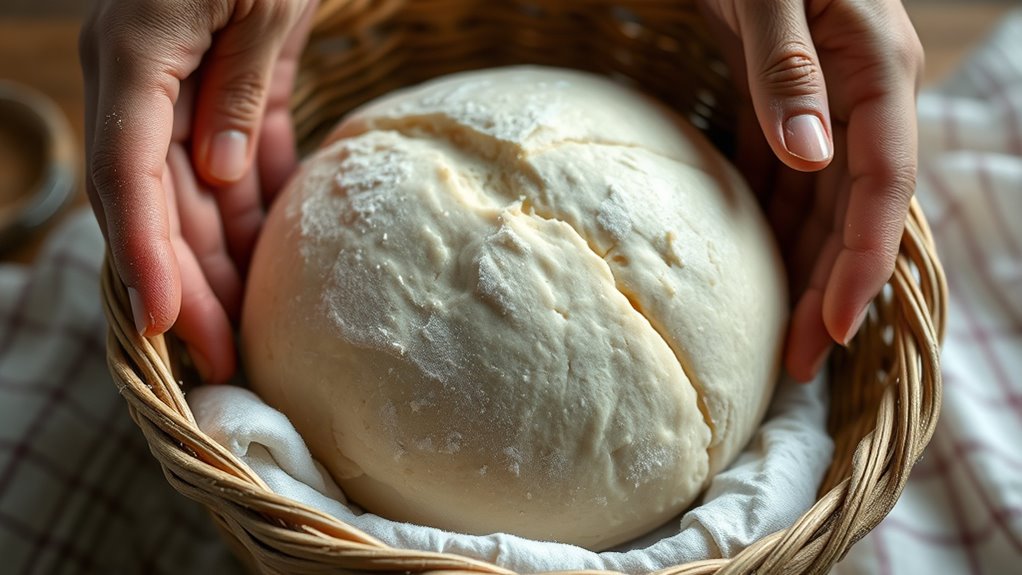
Using a banneton or proofing basket can considerably enhance the shape of your loaf by providing gentle support during the final rise. The banneton benefits include helping your dough retain its round, uniform shape while developing gluten structure. A proofing basket creates surface tension, preventing spreading and flattening. To maximize these benefits, lightly dust the basket with flour before placing your shaped dough inside. Make certain your dough is well-floured on the surface to prevent sticking. When transferring, gently turn the dough out onto a baking sheet or peel without deflating it.
- Use rice flour or coarse wheat bran to dust your proofing basket for easy release.
- Avoid over-flouring, which can create a thick crust on your loaf.
- Keep the proofing basket in a cool, draft-free area during final rise.
Transferring and Baking Your Boule Without Collapsing
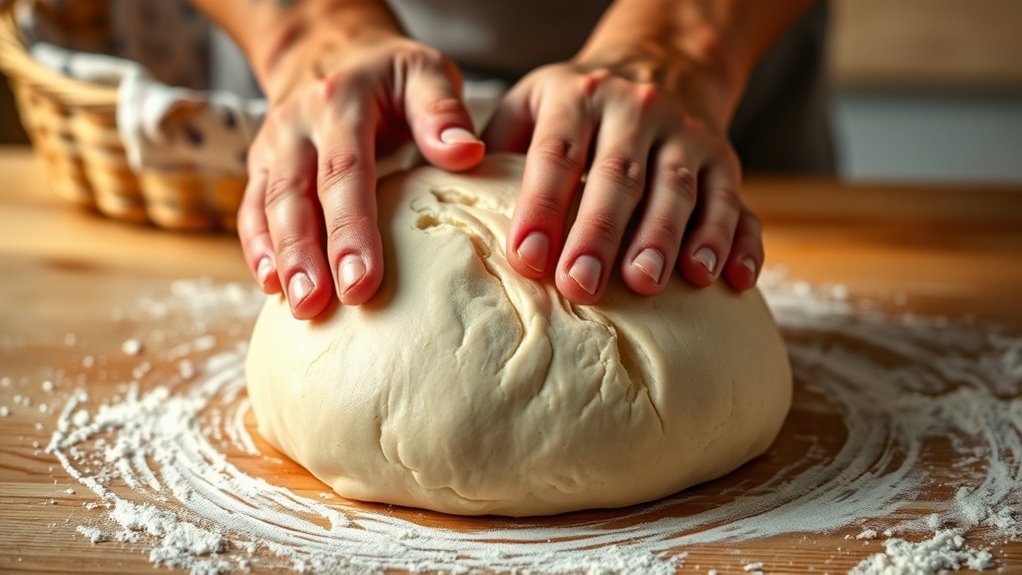
Once your boule has finished its final proof in the basket, it’s time to transfer it onto your baking surface for the oven. To prevent collapsing, handle the dough gently, supporting its dough elasticity. Lightly dust the surface with a flour type that offers enough grip without sticking—rice flour or all-purpose flour work well. Carefully invert the basket onto a piece of parchment paper or a peel, allowing the boule to slide off smoothly. Use your hands or a bench scraper to adjust its position if needed. When ready, slide the parchment with the boule onto a preheated baking stone or baking sheet. Baking promptly helps maintain the dough’s structure, ensuring your boule bakes up beautifully without deflating.
Frequently Asked Questions
Can I Shape a Boule Without Any Special Tools?
Yes, you can shape a boule without special tools. Use your hands for gentle hand shaping, focusing on creating surface tension by pulling the dough taut as you form a round shape. Keep the dough’s surface smooth and tight, which helps maintain its structure during baking. This method allows you to develop the proper dough tension without any additional tools, resulting in a beautifully shaped boule with a rustic appearance.
What Common Mistakes Cause Deflation During Shaping?
You cause deflation during shaping if you press too hard or handle the dough roughly, disrupting gluten development. Rushing fermentation timing can also make the dough more fragile, leading to easier collapse. To avoid this, be gentle, maintain a light touch, and wait for proper fermentation. This ensures the dough’s structure stays intact, helping you shape a beautiful boule without losing its airy, open crumb.
How Does Temperature Affect Shaping and Proofing?
Temperature plays a vital role in shaping and proofing your boule. You need to keep your oven temperature steady to guarantee proper oven spring. A warm fermentation environment speeds up yeast activity, making the dough more pliable, but too warm can cause over-proofing. Cooler temperatures slow fermentation, so you might need longer proofing. Maintaining consistent temperatures helps you shape confidently without deflating your dough and achieves perfect rise.
Is It Necessary to Score the Boule Before Baking?
Yes, scoring your boule before baking is necessary. It allows the bread to expand properly during baking, preventing unwanted bursting. Scoring also helps control the bread’s shape and enhances its appearance. While artificial leavening like commercial yeast or sourdough starter aids gluten development, scoring guarantees the bread’s structure holds. Without scoring, the dough might deflate or crack, compromising the final texture and presentation.
How Do I Troubleshoot a Flat or Dense Boule?
Like a master sculptor refining their work, you need to troubleshoot a flat or dense boule by examining fermentation control and ingredient quality. Verify your dough ferments properly—over or under-proofing can lead to dense bread. Use high-quality ingredients and accurate measurements. Also, check your oven’s temperature and baking time; too low or short can cause flatness. Adjust these factors, and your boule will rise beautifully, achieving the airy interior you desire.
Conclusion
Remember, shaping your boule is both an art and a craft. Handle the dough gently, like a delicate squire tending to a noble steed, and give it proper rest and support. With patience and practice, you’ll master the perfect boule without deflating all your efforts. Even the legendary bakers of yore would agree—patience and gentle hands turn humble dough into a crusty masterpiece. Keep at it, and enjoy the sweet reward of your labor.