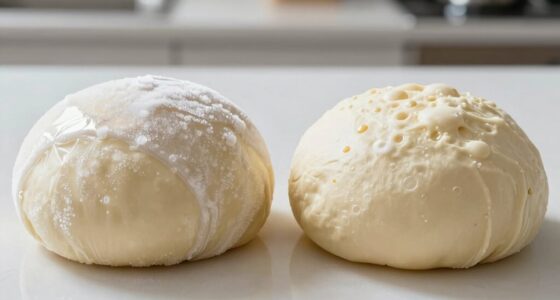
Controlling dough temperature is key to predictable fermentation and consistent results. When you measure it accurately with a thermometer, you can adjust by changing water or environment to keep it around 75-78°F. Warmer dough speeds up fermentation, while cooler slows it down. Maintaining a steady temperature prevents over- or under-proofing, helping your bread turn out perfect each time. Keep exploring to learn simple tips that make managing dough temperature easier and more effective.
Key Takeaways
- Maintaining dough around 75°F to 78°F ensures consistent fermentation and optimal dough development.
- Use a thermometer to accurately measure and monitor dough temperature during mixing and proofing.
- Adjust water temperature or proofing environment to quickly achieve desired dough temperature.
- Proper temperature control prevents over-proofing or under-proofing, ensuring predictable rise and texture.
- Covering dough and managing ambient conditions help maintain stable temperature throughout fermentation.
Understanding the Science Behind Dough Temperature
Understanding the science behind dough temperature is essential because it directly influences how your dough behaves during mixing, fermentation, and baking. Temperature affects fermentation kinetics, which determines how quickly yeast converts sugars into carbon dioxide and alcohol. Warmer dough speeds up yeast activity, leading to faster fermentation, while cooler temperatures slow it down. This balance impacts dough rise, texture, and flavor development. Too hot, and yeast can become overactive or die; too cold, and fermentation stalls. By grasping how temperature impacts fermentation kinetics, you can better predict and control your dough’s behavior, ensuring consistent results. Knowing the science behind these processes helps you fine-tune your technique, avoid over-proofing or under-proofing, and produce high-quality baked goods every time. Additionally, understanding temperature control techniques allows for more precise management of fermentation times and outcomes. Recognizing the role of temperature in fermentation helps bakers optimize their processes and achieve desired product qualities. Furthermore, implementing accurate temperature measurement methods ensures you maintain ideal conditions throughout the process.
How to Measure Dough Temperature Accurately
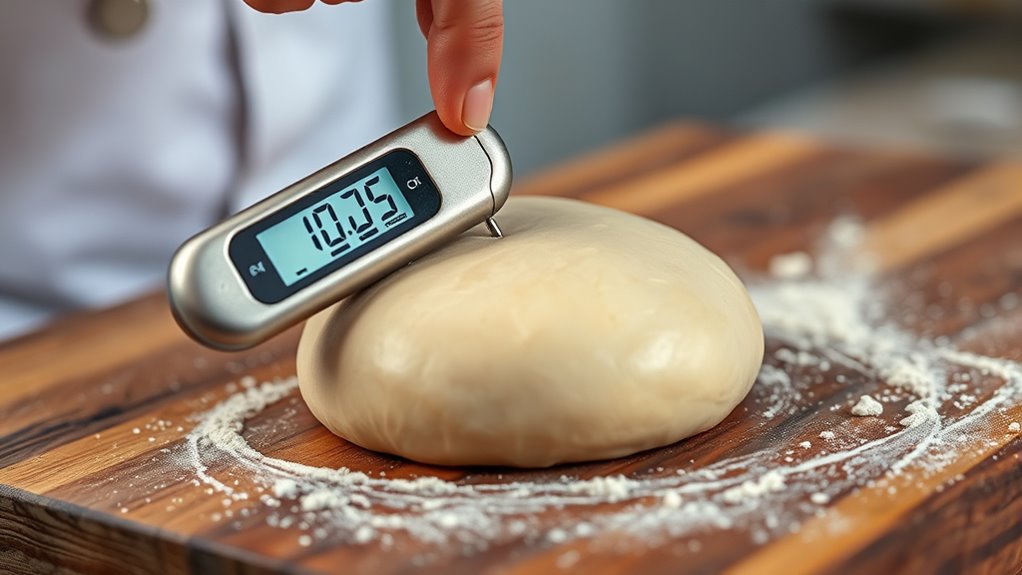
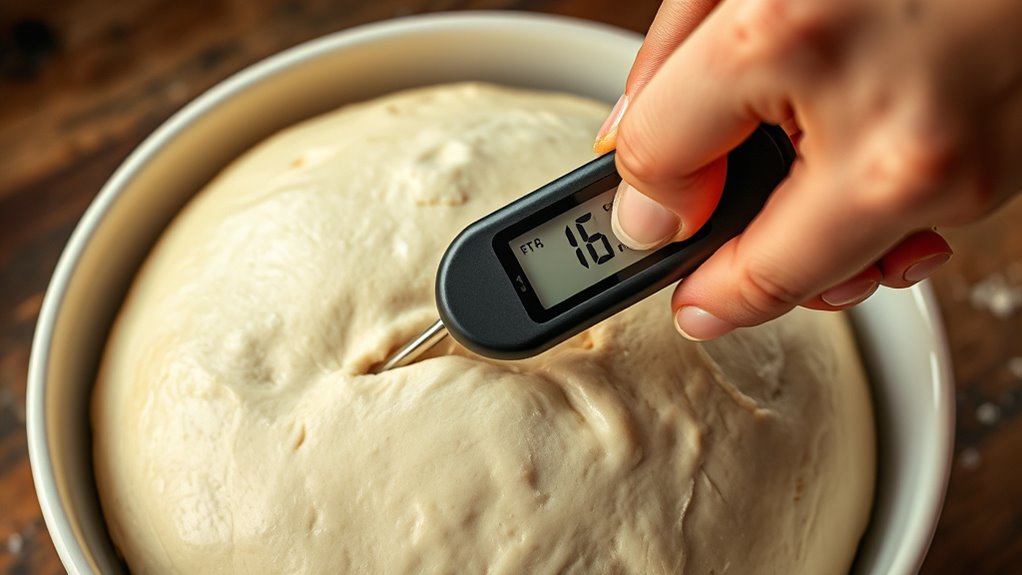
Accurately measuring dough temperature is essential for maintaining ideal fermentation and baking results. To achieve this, proper dough temperature calibration is crucial, ensuring your temperature measurement tools provide precise readings. Use a digital instant-read thermometer or a thermocouple probe for quick, accurate results. Before measuring, sanitize your tools to prevent contamination. Insert the thermometer probe into the center of the dough, avoiding contact with the sides or bowl, which can distort readings. Take multiple measurements if needed to confirm consistency. Regularly calibrate your temperature measurement tools according to the manufacturer’s instructions to maintain accuracy. Additionally, understanding the importance of dough temperature can help you fine-tune your baking process for more consistent outcomes. By paying close attention to calibration and measurement technique, you’ll gain consistent control over your dough’s temperature, leading to more predictable fermentation and better baking outcomes.
How to Adjust Dough Temperature for Better Fermentation

Adjusting dough temperature effectively boosts fermentation and improves your bread’s texture and flavor. To do this, start by manipulating your proofing environment—warm it slightly for faster fermentation or cool it for slower, more controlled rise. Also, pay attention to ingredient temperature; using warmer water or ingredients can raise dough temperature, while cooler ingredients lower it. If your dough is too cold, gently warm the environment or slightly increase ingredient temperature. Conversely, if it’s too warm, cool down the proofing space or use colder ingredients. Keep in mind that small adjustments make a big difference, and aim for a consistent dough temperature to ensure predictable fermentation. Proper control of your proofing environment and ingredient temperature is key to achieving ideal dough performance, since temperature fluctuations can significantly influence fermentation speed and yeast activity. consistent dough temperature is essential for reliable fermentation outcomes. Additionally, monitoring ambient temperature helps maintain the desired dough temperature throughout the process, making it easier to achieve reliable fermentation. Maintaining temperature stability through careful adjustments can prevent unexpected fermentation issues and ensure consistent results.
What Is the Ideal Dough Temperature for Perfect Bread?
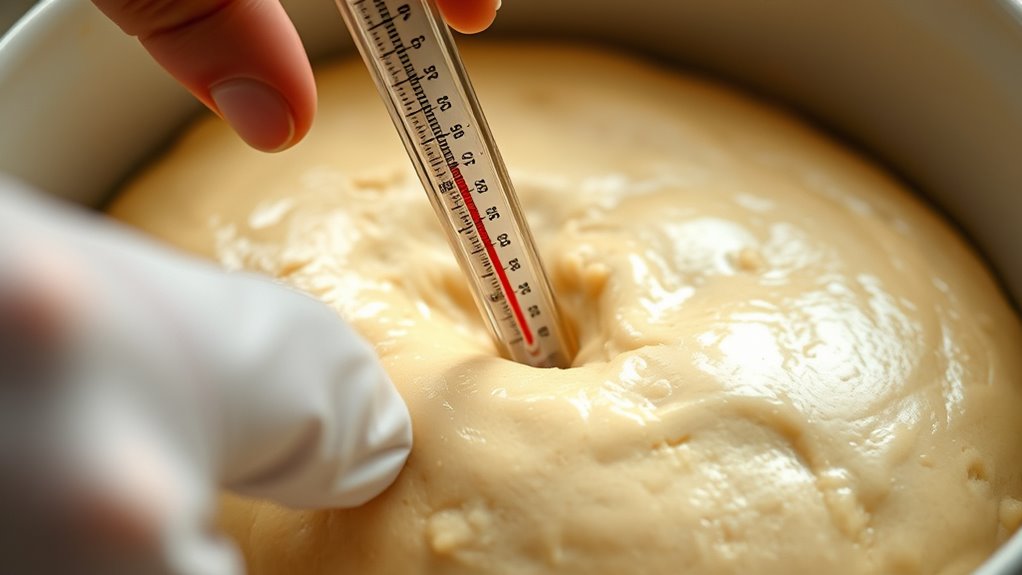
The perfect bread starts with the right dough temperature, which influences how well your yeast ferments and how the gluten develops. For essential dough temperature, aim for around 75°F to 78°F (24°C to 26°C). This range supports efficient fermentation, ensuring your dough rises predictably. To achieve this, you can use dough temperature optimization techniques like adjusting water temperature or ambient conditions. Maintaining consistent dough temperature is vital for predictable results, so employing fermentation control techniques helps prevent over- or under-proofing. Remember, slight variations can impact gluten development and yeast activity. By dialing in the ideal dough temperature, you set a strong foundation for perfect bread with maximum volume, texture, and flavor. Consistent temperature management is your shortcut to reliable baking success.
Easy Tips for Maintaining Consistent Dough Temperatures
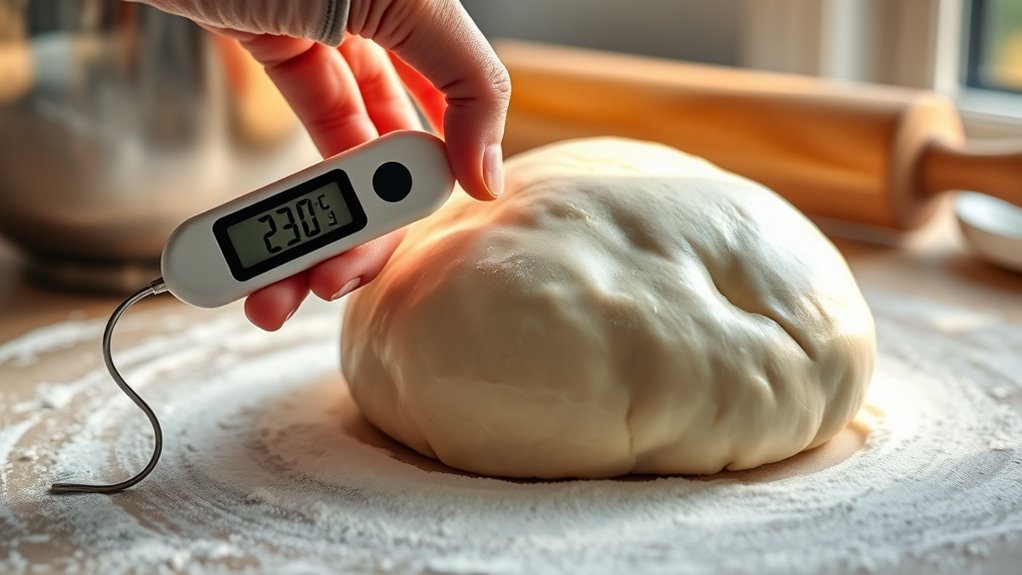
Maintaining consistent dough temperatures is essential for reliable baking, and doing so doesn’t have to be complicated. Start by controlling your environment: use warmer or cooler water to adjust dough hydration, which directly influences temperature. Keep your workspace at a steady temperature and cover dough properly to prevent temperature fluctuations during fermentation. Use a thermometer to monitor dough temperature regularly, ensuring it stays within your target range. If dough gets too warm, refrigerate briefly; if too cold, warm it gently. Be mindful of fermentation timing—temperature affects how quickly your dough develops. Additionally, understanding seasonal checklists can help you adapt your environment for optimal results throughout the year. Recognizing effective temperature management techniques can significantly improve your baking consistency. In addition, incorporating proper fermentation control into your routine can lead to more predictable and desirable bread outcomes. Being aware of your home environment and making small adjustments can make a big difference in maintaining the right dough temperature. Developing a routine to monitor and adjust temperature is a crucial baking skill that can elevate your bread-making success. By managing these factors, you’ll achieve consistent fermentation, resulting in predictable proofing, better gluten development, and superior bread quality every time.
Frequently Asked Questions
Can Dough Temperature Influence Bread Flavor Development?
Yes, dough temperature influences bread flavor development. When you control the temperature, you affect how yeast and bacteria interact with ingredients, creating flavor nuances. Warmer dough speeds up fermentation, producing more complex flavors, while cooler dough results in milder tastes. By managing dough temperature, you guide ingredient interactions, ensuring consistent flavor profiles and a more predictable, desirable bread flavor with each bake.
How Quickly Does Dough Temperature Affect Fermentation Speed?
Dough temperature acts like a switch, turning fermentation speed up or down almost instantly. Within 30 minutes, even a slight change in temperature can considerably alter fermentation timing. If you maintain temperature consistency, you keep fermentation predictable, ensuring ideal rise and flavor. Conversely, fluctuating temperatures can cause unpredictable results, making your timing a rollercoaster. So, keep your dough’s warmth steady for a smooth, reliable fermentation process.
Are There Any Safety Concerns With Adjusting Dough Temperature?
Adjusting dough temperature generally isn’t a safety risk if you follow proper hygiene and avoid extreme temperatures. However, you should be cautious about dough safety; very high temperatures can promote bacterial growth, while very low temps might hinder fermentation. Always monitor your dough carefully, keep it at safe, recommended temperatures, and avoid temperature risks like contamination or spoilage. Proper handling guarantees safe, high-quality fermentation results.
Is There a Difference in Dough Temperature Requirements for Different Bread Types?
Think of dough temperature requirements like tuning a musical instrument—you need the right pitch for each bread type. You’ll find that dough consistency and fermentation timing vary, so adjusting temperature is key. For delicate pastries, cooler temps slow fermentation for fine textures, while hearty sourdoughs thrive with warmer dough for quicker rise. Tailoring temp guarantees each bread’s unique qualities develop perfectly, giving you consistent, delicious results every time.
How Does Ambient Temperature Impact Dough Temperature Control?
Ambient effects substantially impact your dough temperature, making it harder to maintain consistent warmth or coolness. When the environment is warm, your dough heats up quickly, risking over-fermentation, while cold surroundings slow down fermentation. To achieve temperature stabilization, you must adjust your techniques, like using cooler or warmer ingredients, controlling room temperature, or adding insulation. This ensures your dough stays within the ideal temperature range for predictable fermentation and consistent bread quality.
Conclusion
Mastering dough temperature is like tuning a finely crafted instrument—you’ll create harmonious, predictable fermentation every time. By understanding the science, measuring accurately, and making simple adjustments, you hold the key to perfect bread. Keep your dough’s temperature steady, and watch your baking soar. Think of it as your secret recipe for reliable, delicious results—your baking symphony is just a thermometer away from perfection. Happy baking!