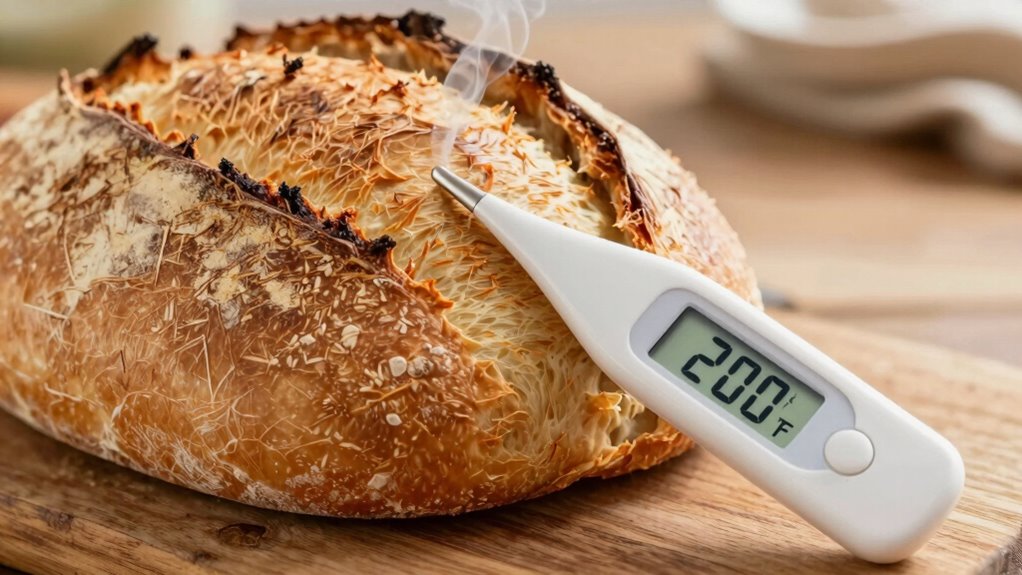

The best way to think about internal temperature in bread is as your guide to doneness, crust, and texture. It shows whether the bread is fully baked inside, avoiding underbaking or overbaking. This temperature also reflects crust color, hydration levels, and starch gelatinization, which affect the crumb and crust quality. By monitoring this, you can tweak baking time and conditions for perfect results every time. Keep going to discover how to interpret those readings for excellent bread.
Key Takeaways
- View internal temperature as a precise indicator of bread doneness and texture development.
- Use temperature to balance crust color, hydration, and crumb structure for ideal results.
- Recognize that different bread types require specific internal temperature targets.
- Monitor temperature alongside visual cues and feel for consistent baking outcomes.
- Adjust baking time and temperature based on internal readings to prevent under or overbaking.
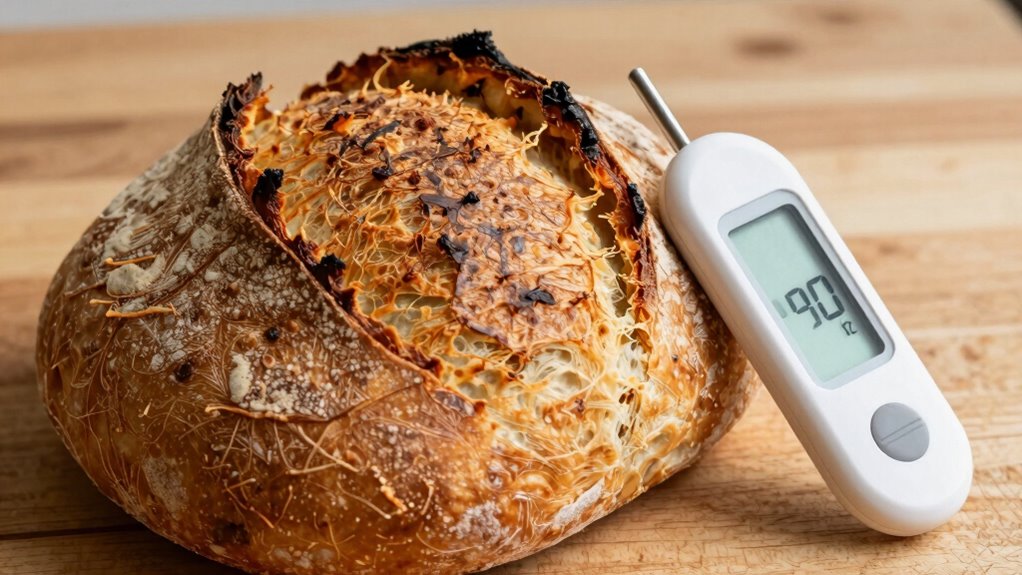
Understanding the internal temperature of bread is vital to achieving perfect results, whether you’re baking a simple loaf or artisanal bread. As you bake, the internal temperature acts as a reliable indicator of doneness, helping you avoid underbaking or overbaking. But it’s not just about reaching a specific number; it’s about understanding what that temperature reveals about your bread’s texture and development. For instance, knowing when the bread has reached the right internal temperature can tell you if the crust has developed properly and if the dough hydration was on point. These factors are interconnected, influencing how the bread bakes and how its crust forms.
Monitoring internal temperature reveals bread’s doneness, crust development, and dough hydration for perfect baking results.
When you measure the internal temperature, you’re effectively gauging the progress of the Maillard reaction and starch gelatinization inside the loaf. Proper crust development depends on reaching a temperature that allows the exterior to caramelize and form that appealing, golden-brown crust. If the temperature is too low, the crust may remain pale and soft, while too high can lead to burnt or overly hard crusts. Achieving the perfect crust isn’t just about the oven temperature but also about understanding how the internal temperature correlates with crust formation.
Dough hydration plays a vital role here. Higher hydration levels often mean a wetter, more extensible dough that can lead to a more open crumb and a thinner, crispier crust. When you bake with well-hydrated dough, the internal temperature rises more evenly, promoting uniform crust development. On the other hand, lower hydration doughs tend to develop a thicker crust that requires higher internal temperatures to reach the desired doneness. Monitoring the internal temperature helps you adjust baking times based on your dough’s hydration level, making sure you don’t underbake or overshoot. Additionally, baking temperature control can influence how the internal temperature interacts with crust development and crumb texture. Achieving consistent results also involves understanding oven behavior, which can vary from oven to oven and affect internal temperature readings.
Furthermore, understanding the internal temperature and dough behavior can help you troubleshoot issues like uneven baking or overly dense bread. You should aim for an internal temperature of around 190°F to 210°F (88°C to 99°C) depending on the type of bread. For lean loaves like baguettes, 200°F is often ideal, signaling that starches have gelatinized fully and the crumb is set. For richer, denser breads, a slightly higher temperature ensures the interior is baked through without overcooking the crust. As you become more familiar with your oven and dough, using a thermometer becomes second nature, helping you achieve consistent results. Remember, internal temperature isn’t just a number; it’s a window into the bread’s internal structure, crust development, and overall doneness. Developing an intuitive understanding of internal temperature and oven behavior will help you refine your baking skills over time. With practice, you’ll learn to interpret it alongside your senses, baking bread that’s perfectly baked every time.
digital bread internal temperature thermometer
As an affiliate, we earn on qualifying purchases.
As an affiliate, we earn on qualifying purchases.
Frequently Asked Questions
How Does Ambient Room Temperature Affect Bread’s Internal Temperature?
Ambient room temperature influences your bread’s internal temperature by affecting fermentation and oven humidity. When the room is warmer, fermentation speeds up, raising the internal temperature faster, while cooler rooms slow it down. You should monitor oven humidity to guarantee consistent baking conditions, as it impacts crust development and internal heat. Adjust your proofing environment or baking time accordingly to achieve perfectly baked bread with ideal internal temperature.
What Internal Temperature Indicates Perfectly Baked Sourdough?
Imagine slicing into a warm loaf—perfectly baked sourdough hits an internal temperature of about 200-210°F. During the cooling process, this temperature guarantees a crisp crust and tender crumb. Keep your oven set to the right temperature, and use an instant-read thermometer to check. When your bread reaches this range, you know it’s ready, with the right balance of heat inside and a beautiful crust outside.
How Does Crust Thickness Influence Internal Temperature Readings?
Crust thickness affects internal temperature readings because a thicker crust acts as insulation, slowing heat conduction into the bread’s interior. When the crust is thick, the internal temperature might read lower than the actual doneness, as heat struggles to penetrate. Conversely, a thin crust allows more efficient heat conduction, giving a more accurate internal temperature reading. So, account for crust thickness to better judge when your bread is perfectly baked.
Can Internal Temperature Vary Between Different Bread Types?
Absolutely, internal temperature can vary wildly among bread types—like a chameleon in a bakery. For instance, a crusty sourdough might hit its perfect internal temp sooner than a dense rye, thanks to differences in bread texture and crumb moisture. So, don’t rely on a one-size-fits-all thermometer reading; instead, consider the bread’s unique characteristics to determine doneness. Who knew bread was so temperamental?
What Tools Are Best for Measuring Bread’s Internal Temperature?
You should use a digital instant-read thermometer for measuring bread’s internal temperature, as it provides quick, accurate readings. Insert the probe into the center of the loaf, avoiding the crust, which can be cooler. Remember, dough hydration influences baking time and internal temperature, so monitor closely. A thermometer helps you achieve the perfect crust and crumb by ensuring your bread reaches the ideal internal temperature for thorough doneness.
instant-read oven thermometer for bread baking
As an affiliate, we earn on qualifying purchases.
As an affiliate, we earn on qualifying purchases.
Conclusion
When it comes to perfect bread, internal temperature is your secret weapon—you’ll be the master of golden crusts and fluffy insides. Trust your thermometer like a trusty compass guiding you through a baking adventure. Once you hit that magic internal temp, your bread transforms from good to legendary—a true marvel in the oven! So, keep an eye on those numbers, and watch your bread rise to legendary heights you never thought possible.
As an affiliate, we earn on qualifying purchases.
dough hydration and temperature gauge
As an affiliate, we earn on qualifying purchases.
As an affiliate, we earn on qualifying purchases.