
Capacity in kitchen scales refers to the maximum weight they can measure accurately, vital for handling large ingredients or bulk baking. Resolution is about the smallest measurement change the scale can detect, essential for measuring tiny amounts like spices or delicate pastries. Both factors influence how well a scale meets your specific culinary needs. Understanding the difference helps you pick the right tool. Keep exploring to learn more about choosing the perfect kitchen scale for you.

Get baking supplies delivered free with Prime
- Fast, free delivery on millions of items
- Prime Video, Amazon Music and more included
- Member-only deals all year
Key Takeaways
- Capacity refers to the maximum weight a kitchen scale can measure accurately.
- Resolution indicates the smallest weight difference the scale can detect and display.
- Higher capacity is suitable for bulk ingredients, while higher resolution is ideal for precise measurements.
- Both capacity and resolution affect the scale’s suitability for specific culinary tasks.
- Understanding both ensures selecting a scale that fits your weighing needs accurately.
When choosing a kitchen scale, understanding its capacity and resolution is vital to guaranteeing it meets your cooking and baking needs. Capacity refers to the maximum weight the scale can measure accurately, while resolution indicates the smallest increment or unit it can detect. These two factors determine how precise your measurements will be and whether the scale can handle the types of ingredients or portions you typically work with. If you’re baking delicate pastries or measuring small quantities of spices, high resolution becomes especially important. Conversely, if you’re weighing large quantities of ingredients for recipes like bread dough, a higher capacity might be a priority. Additionally, the measurement resolution can significantly impact your ability to accurately weigh ingredients for specific culinary needs. A clear understanding of these differences can help you select the most suitable scale for your cooking and baking tasks. Regularly checking your scale’s accuracy through calibration ensures consistent results and prevents measurement errors that could affect your recipes. Proper calibration methods also play an essential role in maintaining your scale’s precision over time. Most digital scales offer easy calibration options, often involving a calibration weight or following on-screen instructions to reset the zero point. Analog scales, on the other hand, may require manual adjustments, such as turning a dial or screw to guarantee accuracy. When comparing digital versus analog scales, you should consider how each handles calibration and ease of use. Digital models typically provide more consistent calibration options, often with built-in functions that keep measurements reliable. Analog scales, while sometimes more durable and less dependent on batteries, may need more frequent manual adjustments to stay precise. Furthermore, long-term accuracy depends heavily on proper calibration and maintenance practices. Proper calibration ensures your measurements remain reliable and consistent over time, regardless of the scale type.
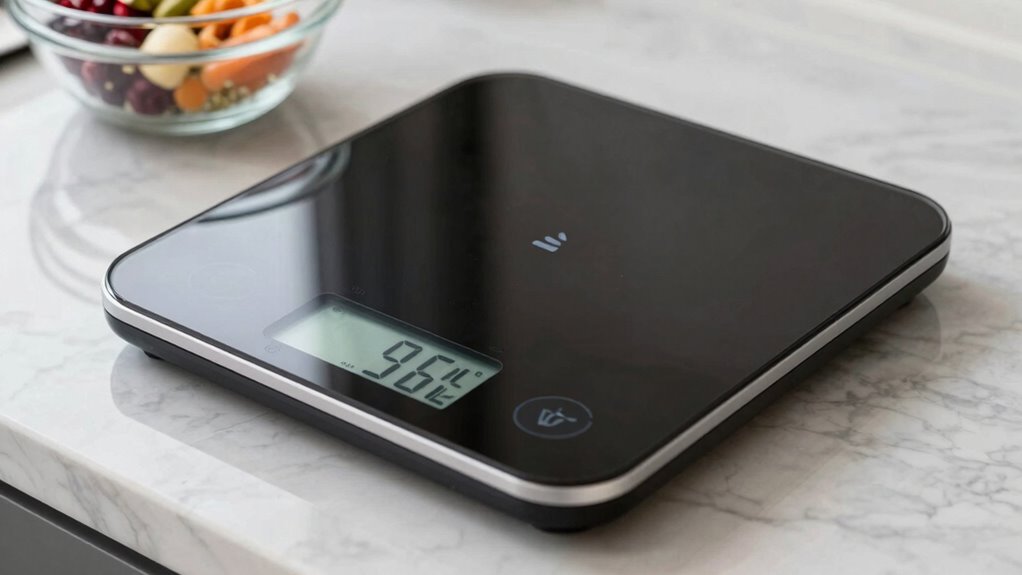
digital kitchen scale with high resolution
As an affiliate, we earn on qualifying purchases.
As an affiliate, we earn on qualifying purchases.
Frequently Asked Questions
How Do I Choose the Right Capacity for My Cooking Needs?
To choose the right capacity for your cooking needs, consider the types and quantities of ingredients you frequently use. If you often measure large batches, opt for a scale with higher capacity, ensuring it can handle ingredient density without overloading. Also, prioritize scale durability so it withstands frequent use. This way, you get accurate measurements while ensuring your scale remains reliable and long-lasting for all your culinary adventures.
Can Resolution Affect Measurement Accuracy?
When it comes to measurement, resolution can definitely affect accuracy because higher resolution means better precision, helping you measure smaller amounts consistently. If your scale’s resolution is too low, it’s like trying to hit a moving target—your measurements may lack consistency and precision. So, choose a scale with appropriate resolution to guarantee your measurements are reliable, making your cooking more precise and consistent every time.
Are Higher Resolution Scales More Expensive?
Yes, higher resolution scales tend to be more expensive because they offer greater precision sensitivity. This increased sensitivity requires more advanced technology and tighter calibration frequency to maintain accuracy. You’ll find that these scales often cost more upfront, but they’re worth it if you need precise measurements. Keep in mind, regular calibration is essential to guarantee your high-resolution scale continues providing accurate readings over time.
Do Capacity and Resolution Impact Battery Life?
Yes, capacity and resolution can impact battery life. Higher capacity scales often require more power, leading to increased battery drain, especially if they have larger or more advanced displays. Similarly, scales with higher resolution might consume more power due to the need for precise measurements and more complex electronics. To improve power efficiency, choose a scale that balances your capacity and resolution needs with the scale’s battery life, or look for models with better power management features.
How Often Should I Calibrate My Kitchen Scale?
Calibration is like tuning a musical instrument—you need to do it regularly for accurate results. You should calibrate your kitchen scale at least once a month or whenever you notice inconsistent readings. Regular calibration ensures precise measurements, which is essential for successful cooking and baking. Proper scale maintenance, including calibration, keeps your device reliable and extends its lifespan, so make it a routine part of your kitchen care.
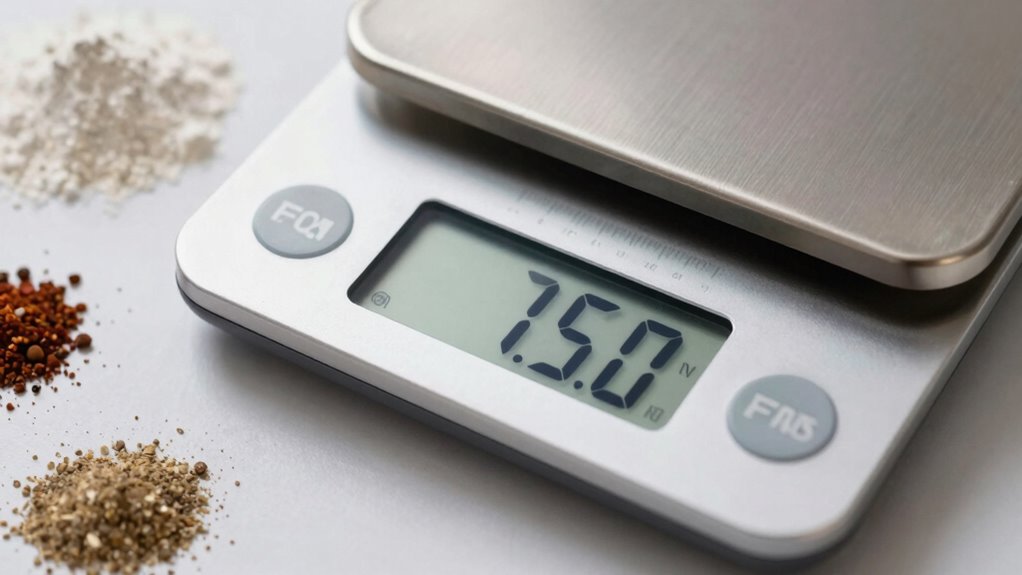
large capacity food scale for baking
As an affiliate, we earn on qualifying purchases.
As an affiliate, we earn on qualifying purchases.
Conclusion
Think of your kitchen scale as a finely tuned instrument—its capacity is like the size of a swimming pool, holding large quantities, while resolution is the depth of detail in each drop. Understanding the difference helps you pick the right tool for every task, ensuring precision and efficiency. When you match your scale’s capacity and resolution to your cooking needs, you’re like a chef wielding a perfectly balanced knife—ready to create culinary masterpieces with confidence.
As an affiliate, we earn on qualifying purchases.
As an affiliate, we earn on qualifying purchases.
Halloween Picks
halloween
As an affiliate, we earn on qualifying purchases.