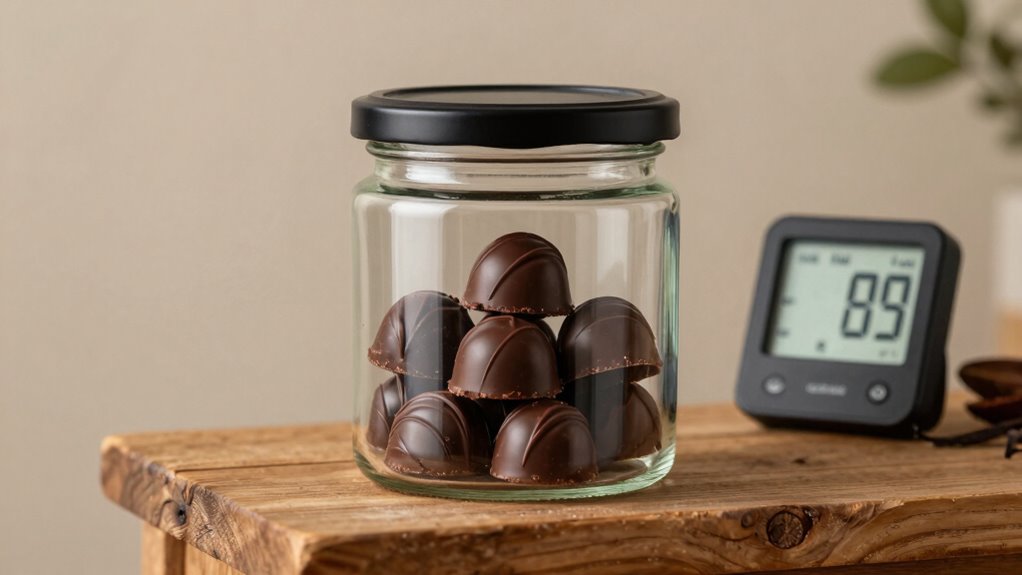

To safely store chocolate, keep it in a cool, dark place between 15°C–18°C (59°F–64°F) to prevent melting and bloom. Control humidity around 50–60% by using dehumidifiers or silica gel packs, and avoid storing near strong odors or moisture sources. Use airtight containers to block odors and contaminants, and avoid refrigeration unless necessary to prevent condensation. Proper storage preserves flavor and texture — learn more about creating the ideal environment for your chocolate.
Key Takeaways
- Store chocolate in a cool (15°C–18°C), dark, and temperature-stable environment to prevent bloom and texture changes.
- Maintain humidity levels between 50–60% using dehumidifiers or silica gel packs to prevent mold and moisture absorption.
- Use airtight, odor-proof containers to shield chocolate from strong smells and contaminants.
- Keep chocolate away from direct sunlight and strong odors, storing in a dedicated, odor-free area.
- Refrain from refrigeration unless necessary, to avoid condensation and blooming, and ensure proper wrapping for long-term storage.

Rubbermaid Brilliance Pantry Airtight Food Storage Container, BPA-Free 7.8 Cup, Ideal for Brown Sugar – Efficient, Leak-Proof and Dishwasher-safe
- Secure, Leak-Proof Seal: Keeps food fresh and prevents spills
- Crystal-Clear Design: Allows easy viewing of contents
- Space-Saving Modular Design: Optimizes pantry or cabinet storage
As an affiliate, we earn on qualifying purchases.
As an affiliate, we earn on qualifying purchases.
What’s the Best Temperature to Store Chocolate?
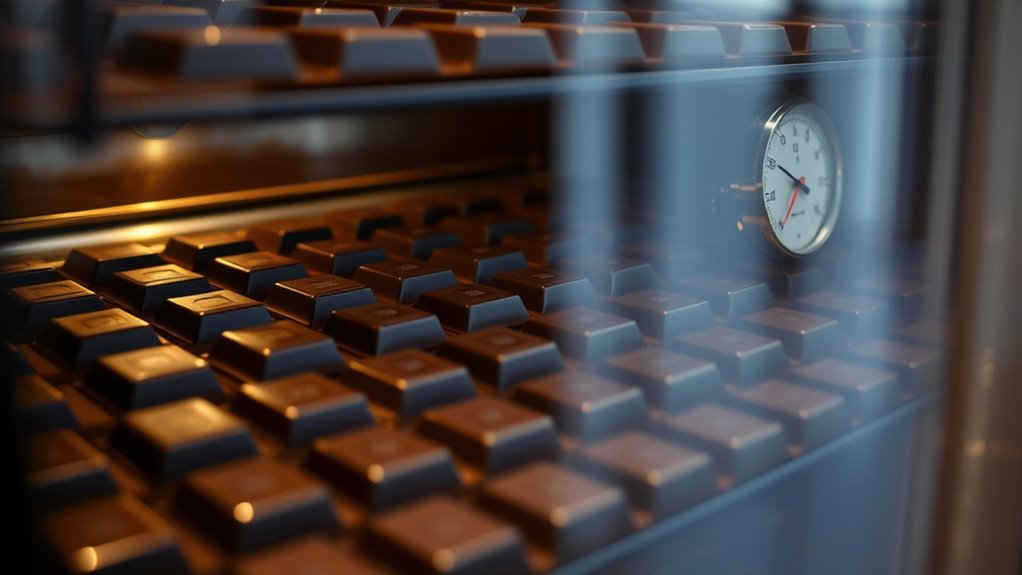
The ideal temperature to store chocolate is between 15°C and 18°C (59°F and 64°F). At this range, you prevent unwanted chocolate crystallization, which can cause bloom or texture changes. Maintaining this temperature helps preserve the chocolate’s glossy appearance and smooth consistency. During the tempering process, controlled cooling allows cocoa butter crystals to form properly, giving your chocolate a shiny finish and satisfying snap. If the temperature rises above 18°C, the crystals melt and reform unpredictably, ruining the temper. Too cold, and chocolate can become dull and drab. Keeping your chocolate within this temperature window ensures it stays fresh, glossy, and easy to work with, whether you’re storing or tempering it for baking or decoration. Proper temperature control is essential for achieving the ideal texture and appearance in your finished chocolate products. Additionally, maintaining a consistent temperature helps prevent temperature fluctuations that can compromise chocolate quality. For optimal results, storing chocolate in a cool, dark place away from strong odors is also recommended to preserve its flavor and aroma. Incorporating smart home technology such as climate-controlled storage options can further help maintain these ideal conditions automatically.

BEDRED Dehumidifier, 95OZ Dehumidifier for Home 1000 sq ft – Quiet with Auto Shut Off & Relaxing 7 Color Ambient Light, Ideal for Livingroom, Bedroom, Basement (Black)
- Cooling Technology: Thermoelectric dehumidification for moisture removal
- Auto Shut-Off: Automatically powers down when tank is full
- Ambient Lighting: 7-color soothing LED light for ambiance
As an affiliate, we earn on qualifying purchases.
As an affiliate, we earn on qualifying purchases.
How Can You Control Humidity to Keep Your Chocolate Perfect?
High humidity levels can quickly compromise the quality of your chocolate by causing it to become sticky, bloom, or develop mold. To prevent this, focus on humidity regulation in your storage area. Keep your chocolate in a cool, dry place with consistent humidity levels, ideally between 50-60%. Use a dehumidifier or silica gel packs to absorb excess moisture if needed. Ensure your storage environment is well-ventilated to reduce moisture buildup. Proper humidity control is essential for mold prevention, which can ruin your chocolate’s texture and appearance. Regularly monitoring environmental conditions helps maintain optimal storage parameters. Avoid storing chocolate near sources of humidity, such as sinks or dishwashers. By maintaining stable humidity, you protect your chocolate’s quality and extend its shelf life, ensuring it remains delicious and visually appealing. Additionally, careful consideration of storage materials can help prevent moisture transfer and preserve your chocolate’s freshness over time. Implementing climate control systems can further optimize storage conditions for long-term preservation and moisture management strategies are key to keeping your chocolate in perfect condition.
![Dry & Dry 5 Gram [50 Packets] Silica Gel Packets Silica Gel Desiccants, Silica Gel Packs - Rechargeable Moisture Absorbers for Food Storage, Electronics, 3D Filament & Safes](https://m.media-amazon.com/images/I/51ioFKpJqOL._SL500_.jpg)
Dry & Dry 5 Gram [50 Packets] Silica Gel Packets Silica Gel Desiccants, Silica Gel Packs – Rechargeable Moisture Absorbers for Food Storage, Electronics, 3D Filament & Safes
- Packet Size: 2 x 2.7 inches
- Coverage Area: 600 cubic inches per packet
- Usage Tips: Use in sealed containers for protection
As an affiliate, we earn on qualifying purchases.
As an affiliate, we earn on qualifying purchases.
How Do You Protect Chocolate From Odors and Contaminants?

To protect your chocolate from odors and contaminants, you need to create a sealed environment that keeps unwanted smells out and prevents cross-contamination. Use airtight containers designed for food storage to minimize odor absorption and block external scents from reaching your chocolate. Make certain containers are clean and dry before use to avoid introducing new contaminants. Keep chocolate away from strong-smelling foods like spices or coffee, which can transfer odors. Regularly check containers for any damage or leaks that could compromise contamination prevention. Label containers clearly to avoid mix-ups and store chocolate in a cool, dark place to further reduce scent transfer. Additionally, understanding home storage best practices can help maintain your chocolate’s flavor and quality over time. Implementing air circulation strategies within storage areas can also help prevent moisture buildup that could affect chocolate quality. Proper temperature control is essential to prevent melting or blooming, which can compromise texture and appearance. By maintaining a sealed environment, you safeguard your chocolate’s flavor and quality from odors and unwanted contaminants, especially when combined with moisture management techniques to ensure optimal storage conditions.

LIFETIME 60103 Deck Storage Box, 80 Gallon, Desert Sand/Brown
- Exterior Dimensions: 3 ft 3 in. L x 2 ft W x 2 ft 2 in. H
- Interior Capacity: 80 Gallons
- Lid Mechanism: Spring-hinge opens >90°, lockable
As an affiliate, we earn on qualifying purchases.
As an affiliate, we earn on qualifying purchases.
How to Choose the Right Containers and Storage Environment?
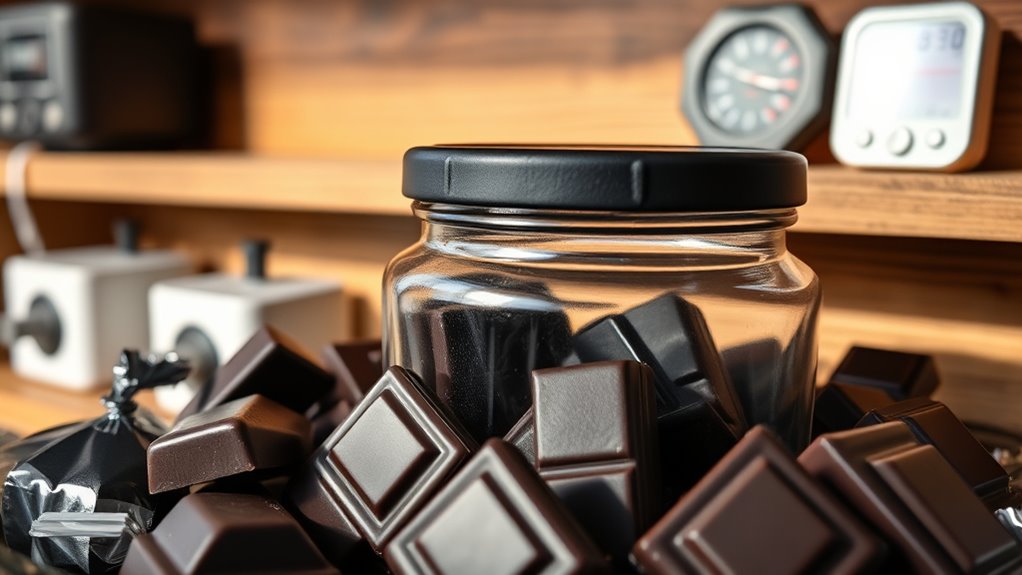
Choosing the right containers and storage environment is key to maintaining your chocolate’s quality and freshness. Use airtight containers to prevent odors from seeping in or escaping, and choose a location that offers an ideal environment—cool, dark, and consistent in temperature. Avoid places with fluctuating humidity or direct sunlight, which can cause blooming or spoilage. To help you decide, here’s a quick comparison:
| Feature | Benefits |
|---|---|
| Airtight containers | Keep odors out, maintain freshness, prevent moisture |
| Ideal environments | Stable temperature, low humidity, darkness |
| Exposure to light | Causes discoloration and flavor changes |
| Fluctuating temps | Leads to condensation and texture issues |
Additionally, understanding storage conditions can help preserve your chocolate’s flavor and texture over time. Proper storage is essential to prevent spoilage and to extend the lifespan of your treats. Pick containers and spaces that meet these criteria to keep your chocolate at its best.
What Are the Best Tips for Short- and Long-Term Chocolate Storage?
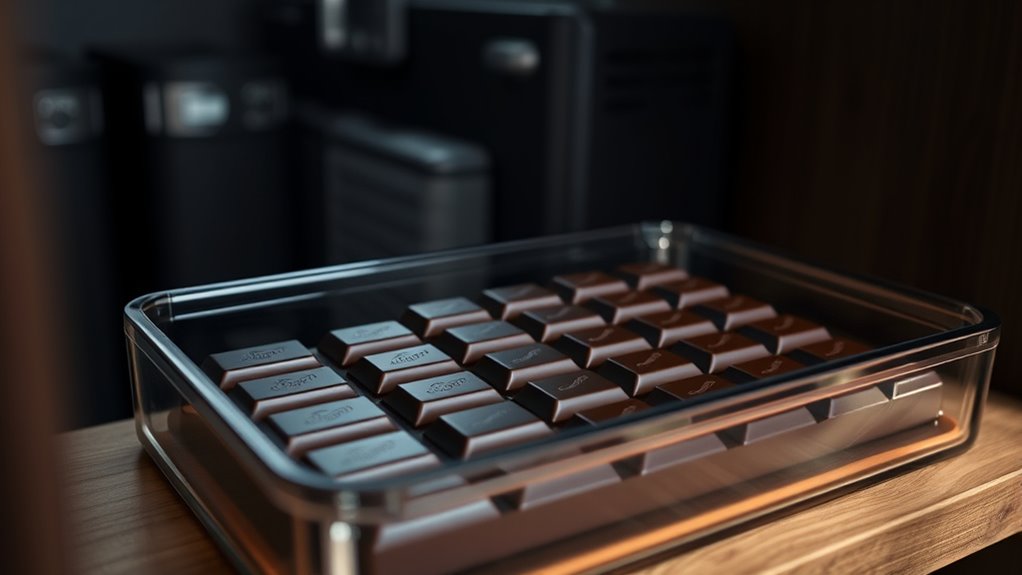
Properly storing your chocolate guarantees it stays fresh and delicious, whether you’re keeping it for a few days or several months. To preserve chocolate flavor and extend shelf life, keep it in a cool, dark place at consistent temperatures, ideally between 60-70°F. Use airtight containers to prevent odors from seeping in and to reduce moisture exposure. Avoid refrigeration unless necessary, as it can cause condensation and bloom. For long-term storage, consider wrapping chocolate tightly and placing it in a dedicated, odor-free area. Keep chocolates away from strong-smelling foods and direct sunlight. By following these tips, you’ll maintain ideal flavor, prevent spoilage, and ensure your chocolate remains enjoyable over time. Additionally, storing your chocolate in a reliable storage environment can help maintain consistent conditions and protect it from temperature fluctuations or humidity issues.
Frequently Asked Questions
How Does Sunlight Exposure Affect Stored Chocolate Quality?
Sunlight exposure causes significant sunlight degradation in stored chocolate, leading to UV damage that affects its flavor and texture. When you leave chocolate in direct sunlight, the UV rays break down the fats and cocoa solids, causing it to develop a waxy or dull appearance and a stale taste. To keep your chocolate at its best, store it in a cool, dark place away from sunlight, preventing UV damage and preserving quality.
Can Vacuum Sealing Improve Chocolate Storage Longevity?
Vacuum sealing can definitely improve chocolate storage longevity by preserving its freshness. When you vacuum seal chocolate, you remove air and limit exposure to humidity, odors, and temperature fluctuations that can cause spoilage or flavor loss. This method helps keep your chocolate pristine for longer periods. Just make sure the chocolate is properly cooled and dry before sealing, and store it in a cool, dark place for ideal results.
What Are Common Storage Mistakes That Spoil Chocolate?
You spoil chocolate by using improper packaging materials and storing it in the wrong location. Avoid airtight containers that trap moisture, which can cause blooming or mold. Don’t store chocolate in warm, humid places like the kitchen or near heat sources, as temperature fluctuations can lead to melting or spoilage. Always choose a cool, dry, and odor-free storage location, and use appropriate packaging to protect your chocolate’s quality.
How Does Altitude Influence Chocolate Storage Conditions?
Did you know that at high altitudes, air pressure drops by about 1% every 1,000 feet? Altitude effects create storage challenges for chocolate because lower pressure can cause moisture to seep in or lead to blooming. You should adjust storage conditions, keeping chocolate in airtight containers and away from temperature fluctuations. This helps prevent spoilage, ensuring your chocolate stays fresh longer despite altitude effects.
Are There Specific Storage Tips for Different Types of Chocolate?
You should tailor storage techniques based on chocolate types. For dark chocolate, keep it in a cool, dark place to prevent bloom, while milk and white chocolates benefit from slightly higher humidity levels to retain texture. Store truffles and filled chocolates in airtight containers to avoid odors. Always avoid temperature fluctuations, as they can cause condensation or melting. Proper storage preserves flavor, texture, and appearance across all chocolate varieties.
Conclusion
Storing chocolate properly is key to maintaining its quality and flavor. Did you know that improper storage can cause chocolate to develop a white film called bloom, which affects its texture and appearance? By controlling temperature, humidity, and odors, you can keep your chocolate fresh for months. Remember, most chocolate stays good for up to a year if stored correctly. Keep these tips in mind, and your chocolate will stay delicious and perfect every time.