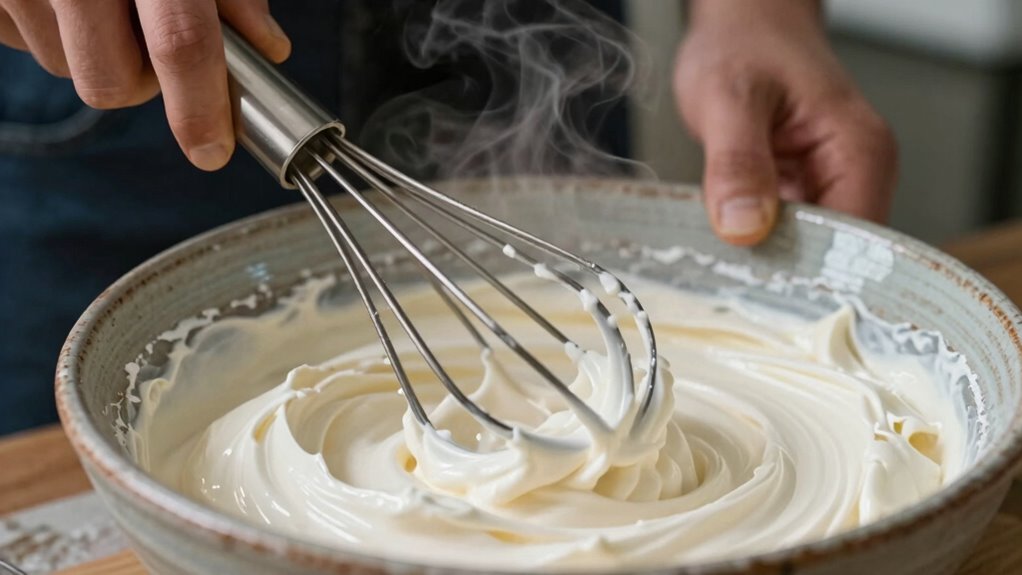
To achieve even mixing without a mixer, focus on using a sturdy, comfortable whisk and proper technique. Hold the whisk firmly with a relaxed grip, and use quick, rhythmic motions, keeping your wrist flexible and engaging your whole arm. Start slow to prevent splattering and gradually increase speed as your mixture smooths out. Pay attention to visual and auditory cues to know when you’ve incorporated ingredients thoroughly. Continue exploring these tips to perfect your manual mixing skills.
Key Takeaways
- Use a sturdy, comfortable whisk and ensure ingredients are at proper temperature for better control.
- Hold the whisk firmly with a relaxed grip and employ quick, rhythmic wrist and arm motions.
- Start slow to prevent splattering, then gradually increase speed as the mixture smooths out.
- Maintain the whisk at a slight angle and use folding techniques when combining dry and wet ingredients.
- Listen for auditory cues and observe visual changes to gauge proper mixing and incorporate air effectively.
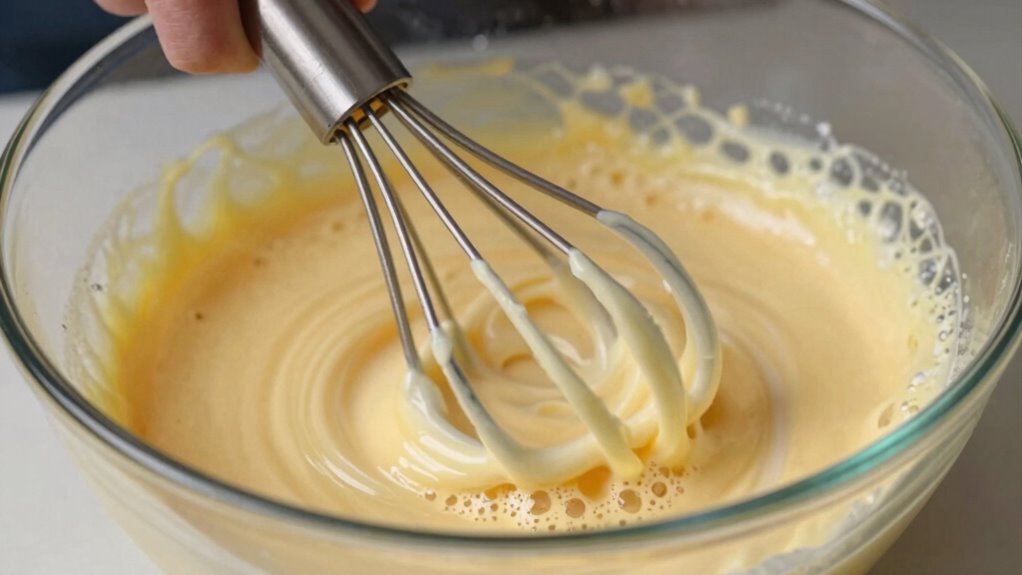
Mixing ingredients without a mixer might seem challenging at first, but with the right techniques, you can achieve smooth, well-blended results every time. The key lies in mastering hand whisk techniques and applying effective manual mixing tips that help you control the process and avoid lumps. When you’re working without an electric mixer, your goal is to incorporate ingredients thoroughly while maintaining the right texture, whether you’re whipping cream, blending batter, or mixing dry ingredients.
Start by choosing the right tool: a sturdy, preferably stainless-steel whisk with a comfortable handle gives you better control and durability. Before you begin, verify your ingredients are at the right temperature; for example, room temperature eggs or softened butter blend more easily and uniformly. As you start mixing, hold the whisk firmly with a relaxed grip, and use quick, rhythmic motions. This approach increases the surface area of the whisk, helping you incorporate air and break down lumps more effectively.
When using hand whisk techniques, it’s vital to keep your wrist flexible and use your arm to generate a consistent, vigorous motion rather than relying solely on your wrist. This technique prevents fatigue and provides the strength needed to blend ingredients thoroughly. For thicker mixtures, like dough or batter, start slow to combine ingredients without splattering, then gradually increase your speed as the mixture begins to smooth out. For lighter, airy ingredients such as whipped cream or egg whites, begin with slow, steady motions, then switch to faster, more vigorous whisking once the mixture starts to thicken.
Manual mixing tips also involve paying attention to your technique’s angle and movement pattern. For example, when whisking eggs, keeping the whisk at a slight angle and using a circular motion helps incorporate more air. When mixing dry ingredients into wet ones, use a folding motion to prevent overworking the batter, which can lead to tough baked goods. Consistency is vital, so take your time and stop periodically to scrape down the sides of your bowl to ensure everything combines evenly.
Additionally, understanding the importance of visual and auditory cues can significantly enhance your manual mixing effectiveness, as these cues help you recognize when ingredients are properly combined. Lastly, be patient and persistent. It might take a few tries to get the hang of hand whisk techniques, but with practice, you’ll develop a feel for the right pressure and motion needed for different recipes. Remember, manual mixing tips like maintaining steady rhythm, adjusting speed gradually, and choosing the proper tool are your best allies in achieving smooth, well-blended results without a mixer. With a little effort, you’ll master the art of even mixing by hand, producing delicious dishes with confidence and finesse.
As an affiliate, we earn on qualifying purchases.
Frequently Asked Questions
Can I Use a Fork Instead of a Whisk?
Yes, you can use a fork instead of a whisk for manual beating. A fork substitution works well when you need to incorporate air into ingredients like eggs or batter. Just hold the fork firmly and use quick, vigorous motions to beat and mix thoroughly. While it may take a bit more effort, manual beating with a fork can still achieve a good, even mix, especially for small tasks or light mixing.
How Do I Prevent Lumps When Mixing?
Like a skilled artist avoiding unintended smudges, you prevent lumps by gradually incorporating dry ingredients into wet ones, using steady, circular mixing techniques. Sift dry ingredients beforehand to break up clumps, and add liquids slowly while whisking vigorously. Keep your mixture moving consistently, and don’t rush—these simple lump prevention techniques guarantee smooth, uniform batter. With patience and attention, you’ll create a perfectly blended mixture every time.
What Types of Ingredients Work Best With Hand-Whisking?
You’ll find that ingredients with smooth, liquid textures, like eggs, milk, and oil, work best with hand-whisking. Use sturdy mixing tools like a balloon whisk to efficiently incorporate these ingredients without lumps. Avoid thick, chunky, or stubborn textures like flour or mashed fruits, which can be hard to blend evenly by hand. Focus on gentle, consistent motions to achieve smooth, well-blended results with your chosen ingredients.
How Long Should I Whisk to Achieve Proper Consistency?
You should whisk for about 2 to 5 minutes, depending on the ingredient and desired consistency. To achieve proper consistency tips, look for smoothness, incorporation, and slight thickening. Keep whisking until you see these signs, especially when beating eggs or batter. Remember, consistent, vigorous whisking helps you reach the right texture faster, so don’t hesitate to increase your speed or duration if needed.
Can Hand-Whisking Incorporate Air Into the Mixture?
Yes, hand-whisking can incorporate air into your mixture, improving its texture. As you whisk vigorously, you introduce tiny air bubbles that help lighten and fluff the mixture, making it more airy and smooth. To achieve ideal air incorporation and texture improvement, keep whisking briskly and consistently. This method works well for recipes like whipped cream, egg whites, or batters that benefit from added volume and a lighter feel.
As an affiliate, we earn on qualifying purchases.
Conclusion
Remember, sometimes the simplest tools get the job done best. With your hand-whisk, you can achieve perfect mixes without a fancy mixer, proving that patience and effort pay off. Don’t underestimate the power of manual work—it’s often more rewarding and effective. As the saying goes, “Where there’s a will, there’s a way.” So next time you’re in a pinch, grab your whisk and trust your hands—you might just surprise yourself with the results.
As an affiliate, we earn on qualifying purchases.
As an affiliate, we earn on qualifying purchases.