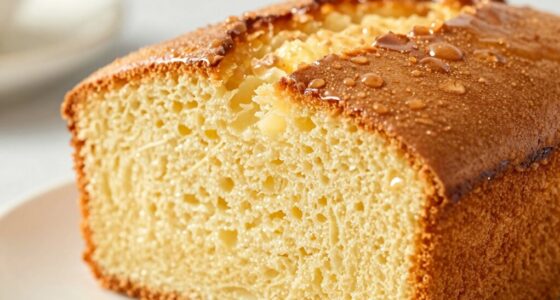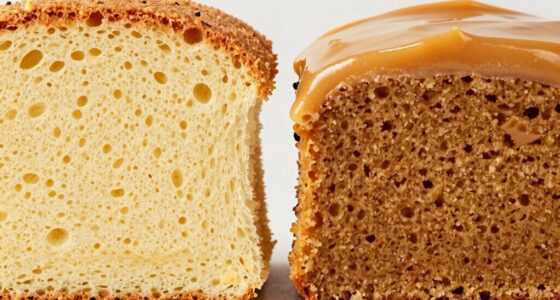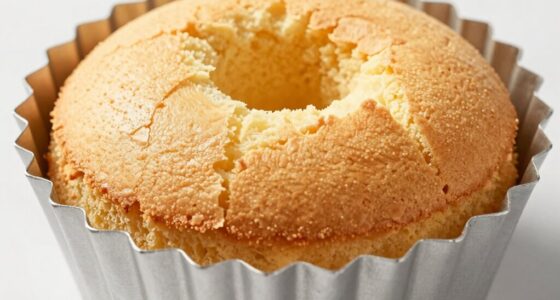
To build a sturdy, moist layer cake without dryness, choose recipes with ingredients like buttermilk, sour cream, or yogurt for added moisture and stability. Avoid overmixing your batter, and bake at the right temperature until a toothpick comes out moist. Apply simple syrup during assembly to lock in moisture, and use firm frosting to support layers. Handle everything carefully, and you’ll create a beautiful, durable cake with all the moistness you want—more tips await if you continue.

Get baking supplies delivered free with Prime
- Fast, free delivery on millions of items
- Prime Video, Amazon Music and more included
- Member-only deals all year
Key Takeaways
- Use dense, moisture-retaining ingredients like buttermilk, sour cream, or yogurt to enhance stability and moisture.
- Incorporate simple syrup brushed onto layers to add moisture and prevent dryness.
- Bake at the correct temperature and test with a toothpick to avoid overbaking and dryness.
- Cool cakes properly before stacking to maintain structure and prevent crumbling.
- Apply stable frosting to support layers and handle the cake gently during assembly and decorating.
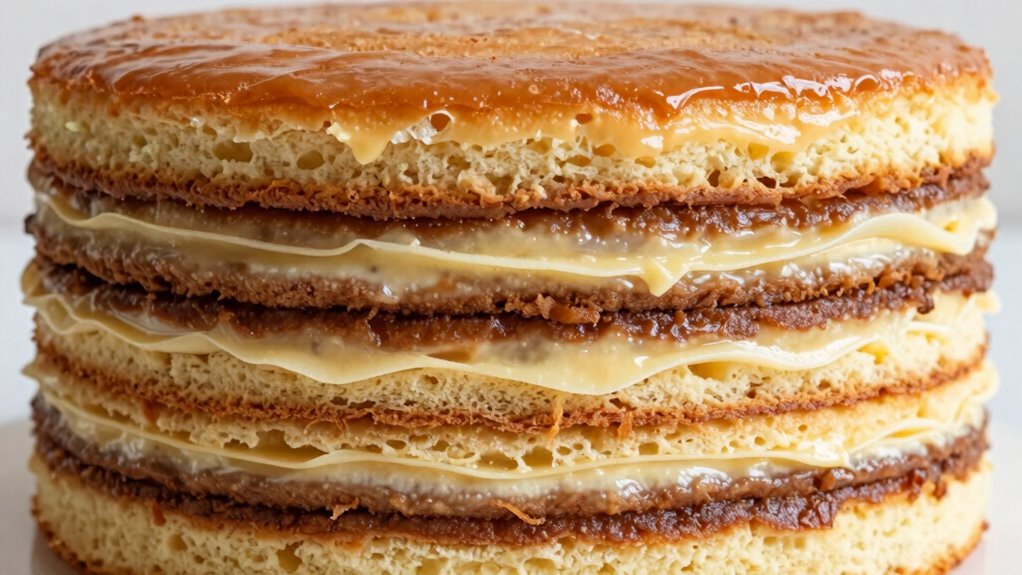
Layer cakes are a classic dessert that can impress both visually and taste-wise, but achieving the perfect balance between moistness and structure can be tricky. To build a sturdy layer cake that holds together well without becoming dry, you need to pay close attention to cake stability and moisture retention. These elements are essential for ensuring your cake doesn’t collapse or crumb apart when sliced or stacked.
First, selecting the right recipe is key. Look for recipes designed for stability, often those with slightly denser crumb structures that can support multiple layers. Incorporate ingredients that help retain moisture, such as buttermilk, sour cream, or yogurt. These ingredients not only boost flavor but also enhance moisture retention, keeping your cake tender and fresh longer. Also, avoid overmixing the batter, as it can lead to a tough, dry crumb and weaken the cake’s structure. Mix just until the ingredients are incorporated; this preserves the delicate gluten structure that provides stability.
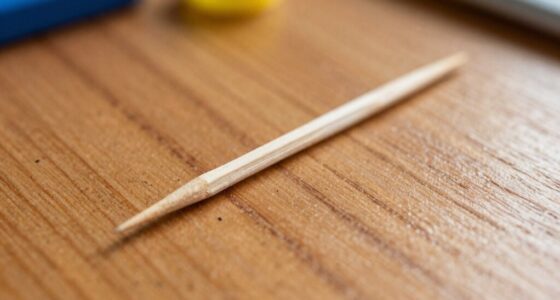
Baking at the correct temperature and for the right amount of time is equally important. Overbaking dries out the cake and compromises moisture retention, so keep a close eye on it. Use a toothpick inserted into the center—if it comes out with moist crumbs, your cake is done. After baking, let the cake cool in the pan for a few minutes before transferring it to a wire rack. Proper cooling prevents excess moisture loss and helps maintain the cake’s structural integrity.
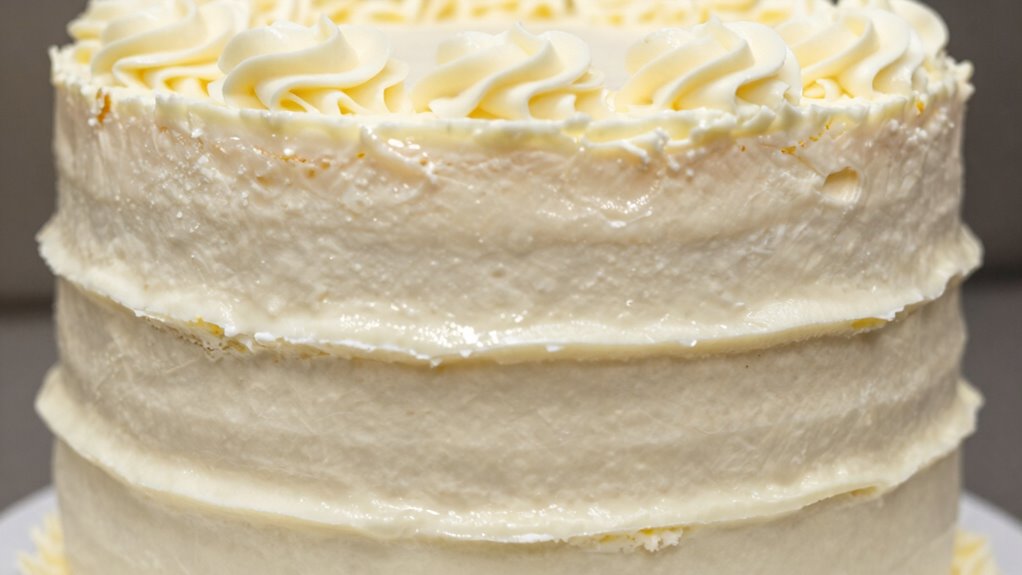
When it’s time to assemble, consider applying a simple syrup over each layer. A sugar syrup infused with flavoring can be brushed onto the cake to boost moisture retention and add a layer of flavor. This extra step also helps prevent the cake from drying out during assembly and storage. Using a stable buttercream or cream cheese frosting can further support the structure, as these frostings act as a firm exterior that holds the layers securely in place.
Finally, when stacking and decorating, avoid pressing down too hard, which can squish the cake and cause uneven layers or breakage. Chill the assembled cake before decorating to help the frosting set and the layers to firm up, giving your cake additional stability. By focusing on these practices—choosing the right ingredients, monitoring baking, and incorporating moisture-boosting techniques—you’ll create a layer cake that’s both beautifully sturdy and delightfully moist, impressing everyone with your skill and attention to detail.
As an affiliate, we earn on qualifying purchases.
Frequently Asked Questions
Can I Use Alternative Flours for Sturdier Layer Cakes?
Yes, you can use alternative flours for sturdier layer cakes. Opt for flours with higher gluten content like bread flour or add essential wheat gluten to boost structure. These flours also enhance nutritional value, offering more fiber and nutrients. Keep in mind, different flours absorb liquids differently, so adjust your recipe accordingly. This way, you’ll create a sturdy, moist cake without sacrificing taste or nutritional benefits.
What Is the Best Way to Prevent Sinking Layers?
Think of your cake as a balanced tightrope walk; to prevent sinking layers, guarantee proper cake pan preparation with parchment and butter, creating a sturdy foundation. Use fresh ingredients because their vitality supports your cake’s rise. Avoid overmixing, which can deflate your batter’s structure. With these steps, your cake will stand tall, like a confident acrobat, avoiding collapse and achieving perfect, level layers.
How Does Cake Temperature Affect Structure and Moisture?
You should pay attention to cake temperature because it impacts both structure and moisture. After baking, cool your cake properly to prevent it from becoming dense or soggy. Keep your oven temperature consistent to ensure even baking and avoid over-drying your layers. When you cool your cake, do so gradually, which helps maintain moisture and prevents cracks, resulting in a sturdy yet moist cake with good structure.
Are There Specific Frosting Types That Help With Stability?
Ever wondered how to keep your cake layers from sliding? Opt for frosting types like cream cheese, which offer excellent frosting stability and add moisture without making your cake soggy. Cream cheese advantages include its creamy texture and natural tang, helping to hold layers firmly. It’s ideal for stability, especially in warm environments. So, yes, choosing the right frosting, like cream cheese, guarantees your cake stays beautifully stacked and delicious.
How Can I Adjust Recipes for High-Altitude Baking?
To modify for high-altitude baking, you should make specific modifications to your recipes. Increase the oven temperature slightly, reduce leavening agents, and add a bit more liquid. Altitude adjustments help prevent over-expansion and dryness. You might also want to slightly decrease sugar and increase flour. Experimenting with these recipe modifications ensures your cake maintains its structure and moisture, giving you a sturdy, delicious layer cake even at high elevations.
As an affiliate, we earn on qualifying purchases.
Conclusion
By mastering the art of building sturdy layer cakes, you’re crafting edible architecture that stands tall and moist like a well-tended garden. With the right balance of ingredients and techniques, you prevent dryness from sneaking in like an unwelcome shadow, ensuring every slice reveals a harmonious dance of flavor and texture. So, layer with confidence, knowing your cake’s structure is as resilient as a fortress, yet as tender as a whisper—delightfully perfect in every bite.
silicone pastry brushes for simple syrup
As an affiliate, we earn on qualifying purchases.
As an affiliate, we earn on qualifying purchases.
sturdy buttercream frosting for cakes
As an affiliate, we earn on qualifying purchases.
As an affiliate, we earn on qualifying purchases.
Halloween Picks
halloween
As an affiliate, we earn on qualifying purchases.