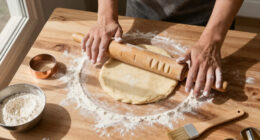
When your dough gets too sticky to handle, try the hand-wetting trick: dip your fingers in water and gently pat or lift the dough. This prevents it from sticking without adding more flour, which can toughen the dough or alter its texture. It’s especially helpful for high-hydration or gluten-free doughs. Using this simple method keeps your dough manageable and preserves its structure—if you want to master more tips, keep exploring.

Get baking supplies delivered free with Prime
- Fast, free delivery on millions of items
- Prime Video, Amazon Music and more included
- Member-only deals all year
Key Takeaways
- Dip your fingers in water to prevent dough from sticking, avoiding unnecessary flour addition.
- Use moist fingers to gently lift or pat the dough, maintaining proper hydration and control.
- Hand-wetting helps handle high-hydration or gluten-free doughs that are naturally sticky.
- This technique prevents over-drying or toughening the dough by adding extra flour.
- It offers a simple, effective way to manage sticky dough and reduce baking frustration.
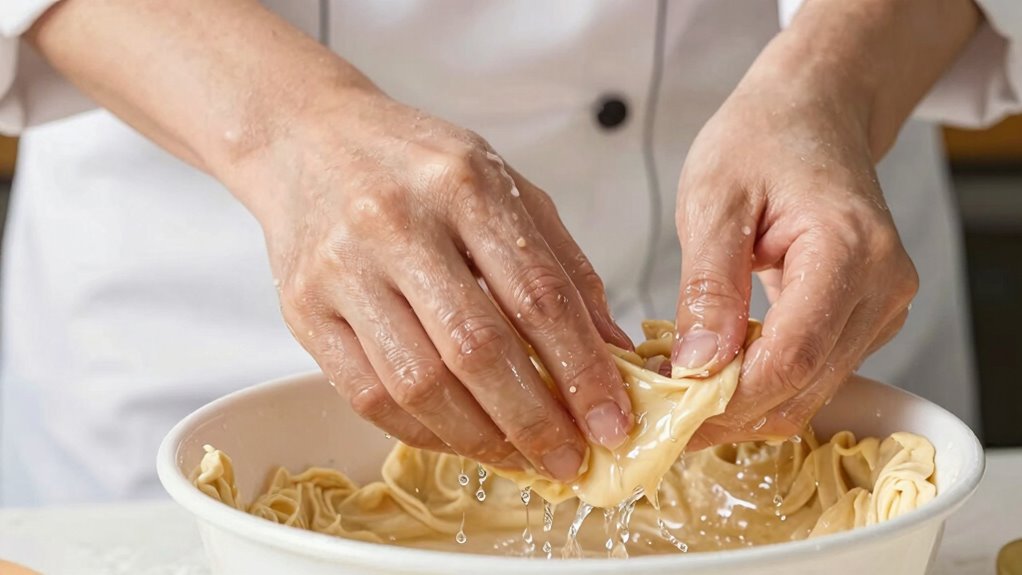
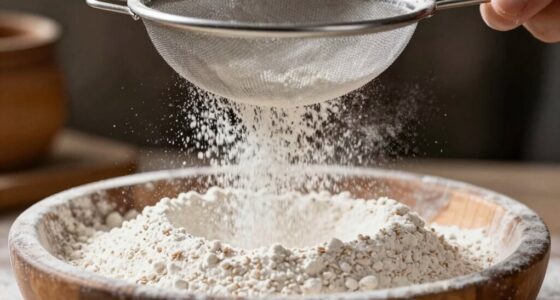
If you’ve ever tried to make bread or pastry dough and ended up with a sticky, unmanageable mess, you’re not alone. Sticky dough panic is a common frustration for both amateur and seasoned bakers. The key to overcoming this challenge lies in understanding dough hydration and how it influences texture. Dough hydration refers to the ratio of water to flour in your recipe. Too little water and your dough will be dry and crumbly; too much, and it becomes sticky and difficult to handle. When your dough is excessively wet, it can feel like an impossible task to shape or knead without it sticking everywhere. Instead of adding more flour, which can toughen your dough or alter its final texture, a simple trick is to adjust your approach with a hand-wetting method.
Using your fingers to wet your hands can be surprisingly effective. When you notice your dough sticking excessively to your work surface or hands, dip your fingers in water and then gently pat or lift the dough. This helps prevent it from sticking without incorporating additional flour, which can dilute gluten development and change the dough’s structure. This technique is especially useful when working with high-hydration doughs like ciabatta or sourdough, where excess flour can interfere with the desired open crumb. It’s also a helpful way to manage dough made with alternative flours, such as almond or chickpea flour, which often have different absorption properties compared to traditional wheat flour. These flours can absorb water differently, sometimes leading to unexpectedly sticky or dry results. By moistening your hands, you maintain control without overcorrecting the hydration level or introducing unwanted ingredients.
Additionally, experimenting with alternative flours can help you better understand how different ingredients affect dough hydration. Some flours absorb more water than others, so adjusting your recipe’s water content accordingly is essential. When you switch to gluten-free or specialty flours, expect some trial and error. Using the hand-wetting trick allows you to handle these doughs more effectively, especially when they become sticky or difficult to shape. Remember, the goal is to keep your dough manageable without compromising its integrity, and a little water on your hands can be just the trick.
As an affiliate, we earn on qualifying purchases.
Frequently Asked Questions
Can I Use Other Liquids Besides Water to Wet My Hands?
Yes, you can use alternative liquids for dough hydration, but water is usually best. If you want to avoid sticking, try lightly wetting your hands with milk, oil, or even a splash of vinegar. Keep in mind, these options can change the dough’s texture and flavor. Use them sparingly to prevent altering the recipe too much, and always test small amounts first to see how it affects your dough.
Will Wetting My Hands Affect the Dough’s Texture or Taste?
Wetting your hands won’t substantially affect the dough’s hydration or taste. The small amount of moisture from hand-wetting mainly helps prevent sticking and makes handling easier. Since only a thin layer of water contacts the dough, it won’t alter the overall texture or flavor. Just ensure your hands are moist enough to work smoothly, and you’ll maintain the dough’s integrity without impacting its hydration or taste.
How Often Should I Re-Wet My Hands During Kneading?
Did you know that re-wetting your hands every 3-5 minutes during kneading helps maintain ideal dough consistency? You should re-wet your hands as needed, especially when the dough begins sticking excessively. This simple step prevents tearing and ensures even kneading. Keep your hands slightly damp throughout the process, adjusting depending on how sticky the dough feels. Consistent re-wetting improves kneading techniques and results in a smoother, better-textured dough.
Is This Technique Suitable for All Types of Dough?
This hand-wetting technique works well for many types of dough, especially sticky or high-hydration doughs, helping you achieve the right dough consistency. However, for stiffer or less hydrated doughs, it might not be as effective and could affect kneading techniques. Always adjust your approach based on the dough’s texture, and use hand-wetting sparingly to maintain proper kneading techniques without over-softening the dough.
Are There Alternative Methods to Prevent Dough Sticking?
Yes, there are alternatives to prevent dough from sticking. You can use flour alternatives like cornstarch or rice flour, which work well for gluten-free or sensitive recipes. Applying a thin layer of oil or non-stick spray on your hands or work surface also helps reduce sticking without adding extra flour, keeping your dough smooth and manageable. Experiment to find what works best for your specific dough and baking needs.
As an affiliate, we earn on qualifying purchases.
Conclusion
Next time your dough turns sticky and stubborn, just dip your fingers in water, feeling the coolness seep into your hands. Watch as the dough transforms, becoming smoother and easier to handle, like a gentle wave easing onto the shore. With this simple trick, you regain control, turning chaos into calm. Embrace the rhythm of your hands working in harmony with the dough, and let this moisture work its magic, guiding you to perfect, pliable dough every time.
As an affiliate, we earn on qualifying purchases.
As an affiliate, we earn on qualifying purchases.
Halloween Picks
halloween
As an affiliate, we earn on qualifying purchases.