
Baking straight from the fridge works well for doughs like cookies, pie crusts, or laminated pastries, as their cold temperature helps keep the structure and prevents sticking. However, if your dough isn’t properly chilled or is too cold, it may bake unevenly, resulting in a dense or chewy texture. Keep in mind that some recipes benefit from proper tempering before baking. Want to discover more tips to perfect your baking routine?
Key Takeaways
- Baking cold dough is ideal for flaky pastries and cookies, ensuring better structure and less sticking during shaping.
- Not suitable if dough wasn’t properly cooled or mixed, which can cause uneven baking or undesirable textures.
- Cold dough may require slightly longer baking times due to slower heat penetration.
- Dough that’s too cold might produce thicker, chewier results or affect lamination in laminated doughs.
- Proper preparation and understanding ingredient temperature effects are essential for successful baking straight from the fridge.
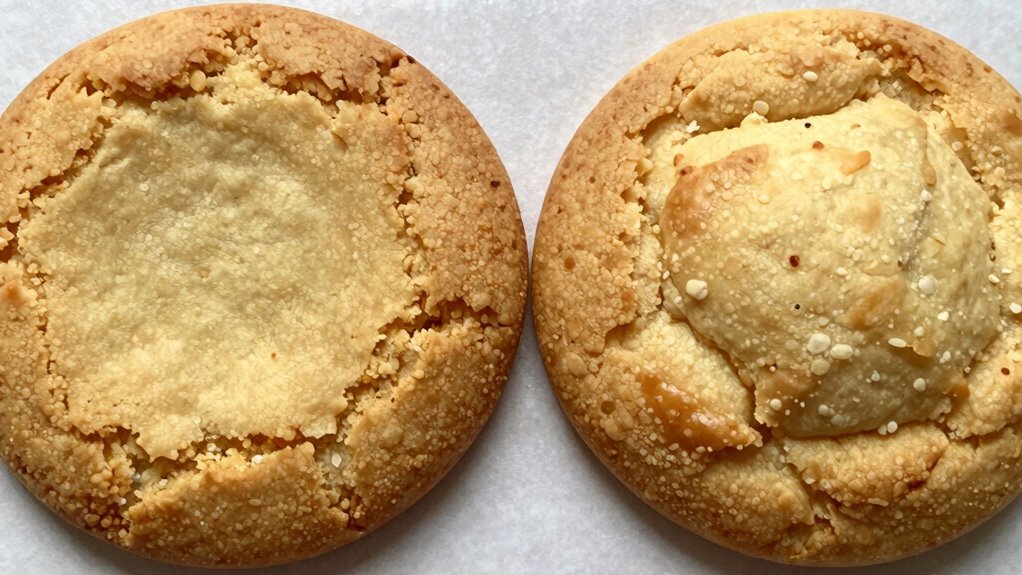
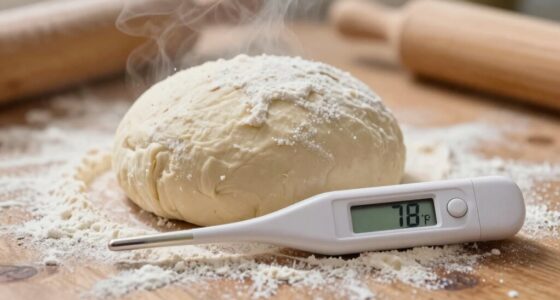
Baking straight from the fridge might seem unconventional, but it’s a practical trick that can save you time and reduce mess. When you start with chilled dough, you’re working with a different dough consistency that can affect your final product. The key is understanding how ingredient temperature impacts the dough’s behavior during baking. Cold dough tends to be firmer and less sticky, making it easier to handle and shape without sticking to your hands or rolling pin. This can be especially helpful if you’re working with sticky or delicate doughs, like pie crusts or cookies.
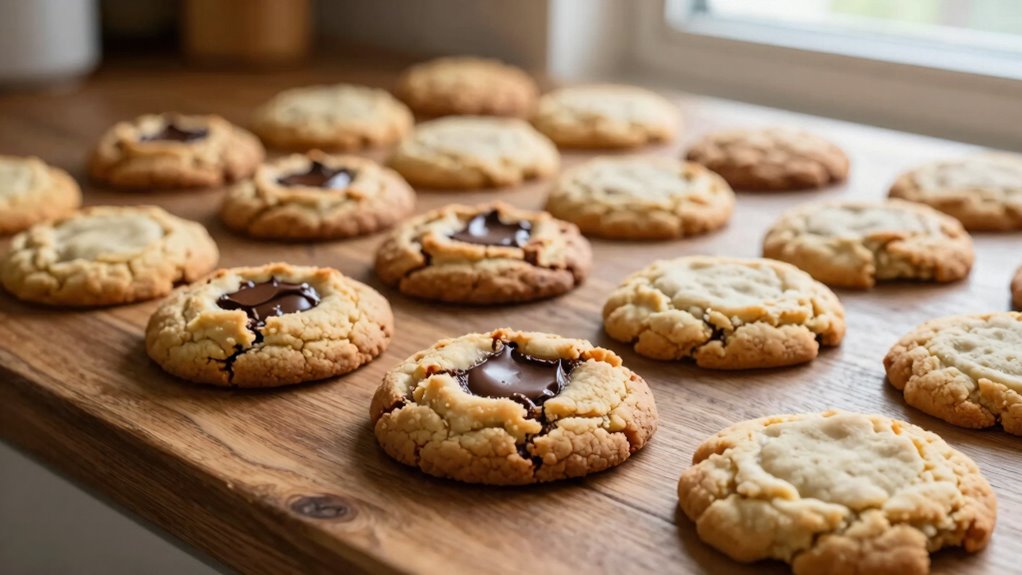
However, not all doughs respond well to baking straight from the fridge. The success depends heavily on the dough’s initial ingredient temperature. Dough that’s been properly chilled can maintain its structure better, resulting in a flaky crust or tender crumb. But if the ingredients weren’t well mixed or the dough wasn’t cooled sufficiently, baking from the fridge might lead to uneven baking or a dense texture. For example, cookie dough that’s too cold might spread less in the oven, producing thicker, chewier cookies rather than the crisp exterior you want. Conversely, pie dough that’s been chilled properly will hold its shape well and produce a flaky crust.
Properly chilled dough maintains structure, ensuring flaky crusts and tender crumbs without uneven baking or dense textures.
Temperature also plays a role in how quickly your dough bakes. When dough is cold, the heat needs to penetrate more deeply, which could extend baking times or cause uneven baking if your oven isn’t preheated properly. That’s why it’s essential to adjust baking times slightly and monitor your baked goods closely. If you’re baking with dough straight from the fridge, give it a few extra minutes and check for doneness rather than relying solely on the recipe’s standard times.
Another consideration is how the dough’s temperature affects its handling. Cold dough is less likely to become overly soft or sticky during shaping, reducing mess and making your baking process cleaner and more efficient. This is especially helpful when working with doughs that are prone to tearing or sticking, such as puff pastry or laminated doughs. In these cases, starting with a chilled dough can help you achieve a better lamination and more even layers.

Koolstuffs Silicone Baking Mat, Nonstick and Reusable, 3 Pack
- Nonstick Surface: Prevents sticking without oil or paper
- Easy to Clean: Food releases easily, dishwasher safe
- Reusable Design: Durable for daily use, eco-friendly
As an affiliate, we earn on qualifying purchases.
Frequently Asked Questions
Can I Freeze Baked Goods to Refrigerate Later?
Yes, you can freeze baked goods for later use. Use freezer storage to keep them fresh longer and guarantee proper wrapping to prevent freezer burn. Freezing helps preserve flavor, so your baked treats stay tasty when you reheat them. Make sure to label and date everything, and thaw them properly before enjoying. This way, you extend their shelf life without sacrificing taste or texture.
How Long Can Dough Safely Stay in the Fridge?
You can safely keep dough in the fridge for up to 3 days, which allows fermentation and flavor development. Interestingly, dough ferments best within this window, enhancing taste without becoming overly sour. Beyond that, bacteria can develop, risking spoilage. To get the best results, store your dough in an airtight container and bake sooner rather than later to enjoy fresh flavor and ideal fermentation.
Does Refrigeration Affect the Rising Process?
Refrigeration slows down fermentation, so your dough’s rising process is affected. When you chill dough, yeast activity decreases, leading to a fermentation slowdown. This means your dough won’t rise as quickly as it would at room temperature. However, this also allows you to control the rise, often resulting in better flavor. Just remember, if you refrigerate too long, yeast activity might halt entirely, so timing is key.
Should I Let Chilled Dough Come to Room Temperature Before Baking?
Think of your dough as a performer waiting backstage; letting it warm to room temperature before baking is like giving it a moment to stretch and prepare. For consistent baking, you should let chilled dough come to room temperature, ensuring ideal dough temperature. This step helps achieve baking consistency, preventing uneven rising and texture issues. So, give your dough that brief pause—it makes all the difference for perfect baked goods.
Can Refrigerating Change the Texture of Baked Items?
Refrigerating baked items can cause texture alteration, making them either softer or drier depending on the product. It might also impact flavor preservation, sometimes dulling the taste or causing changes over time. To minimize these effects, store baked goods properly and consume them within a few days. If you want to maintain the original texture and flavor, consider reheating or storing them at room temperature instead of prolonged refrigeration.

Amazon Basics Non-Stick Silicone Baking Mat, Food Safe, Dishwasher Safe, Heat Resistant, 16.5" x 11.6", Beige/Gray, Rectangular, 4-Pack
- Pack Size: 4-pack baking mats
- Food Safety: Food-safe silicone material
- Reusable: Reusable and durable
As an affiliate, we earn on qualifying purchases.
Conclusion
Baking straight from the fridge is like walking a tightrope—you might land perfectly or tumble. When you know your dough’s temperament, it can save time and boost flavor. But if you ignore its needs, you risk a sticky mess or flat results. Think of your fridge as a backstage pass; understanding its quirks lets you take center stage with confident, bakery-worthy creations. So, experiment wisely, and let your oven be your trusty spotlight.

Cake Decorating Tools Supplies Kit - 82Pcs Baking Accessories with Turntable Stand Leveler 12 Piping Tips 52 Bags Icing Comb Scrapers Spatulas Cupcake Cookie Frosting Fondant Bakery Set for Beginners
- Complete Cake Decorating Kit: Includes tools for beginners and pros
- 360° Spinning Turntable: Smooth 11-inch diameter cake stand
- Versatile Decorating Tools: Scrapers, spatulas, and couplers included
As an affiliate, we earn on qualifying purchases.

Cake Decorating Tools Supplies Kit: 236pcs Baking Accessories with Storage Case - Piping Bags and Icing Tips Set - Cupcake Cookie Frosting Fondant Bakery Set for Adults Beginners or Professional, Blue
- Complete Baking Supplies: Includes tools, tips, and accessories
- Pattern Chart & Baking Book: Guides for decorating techniques and patterns
- Beginner-Friendly Design: Suitable for children and novice bakers
As an affiliate, we earn on qualifying purchases.