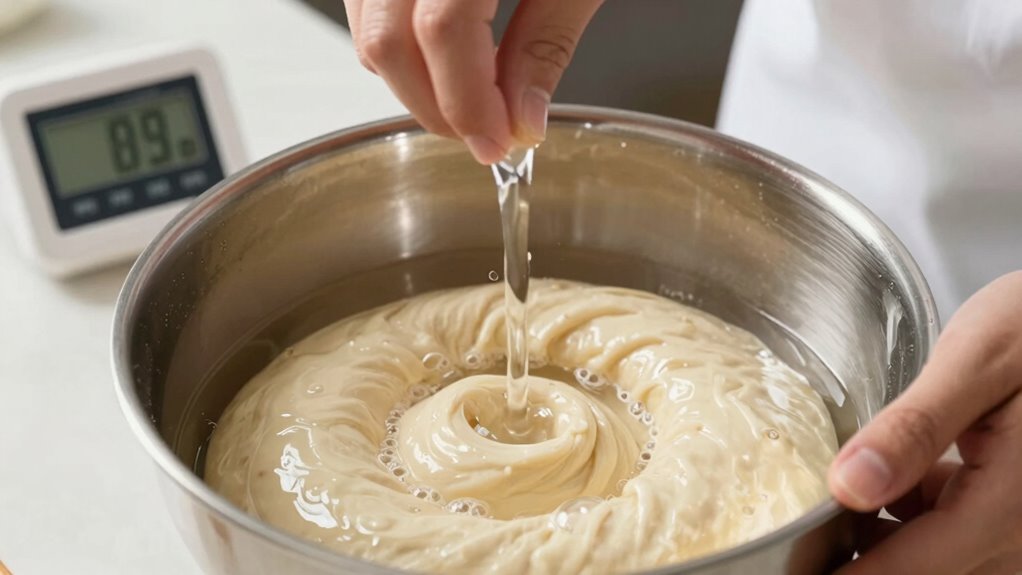
For spiral mixing, aim for dough temperatures between 75°F and 78°F (24°C to 28°C) for standard breads, with slight adjustments based on the type—higher for enriched or sourdoughs, and cooler for leaner loaves like baguettes. Maintaining these targets helps guarantee proper gluten development, fermentation, and overall consistency. To keep your process on track, specific measurement and control tips are vital; if you look further, you’ll discover how to optimize your dough temperatures effectively.

Get baking supplies delivered free with Prime
- Fast, free delivery on millions of items
- Prime Video, Amazon Music and more included
- Member-only deals all year
Key Takeaways
- Ideal dough temperature for spiral mixing generally ranges from 75°F to 78°F (24°C to 28°C).
- Adjust ingredient temperatures and mixing time to maintain target dough temperature for specific bread types.
- Use calibrated thermometers (digital or probe) to accurately measure dough temperature at the center.
- Factors like ambient conditions and ingredient temperature influence dough temperature during mixing.
- Maintaining proper dough temperature ensures optimal gluten development, fermentation, and consistent baked results.
As an affiliate, we earn on qualifying purchases.
Why Does Dough Temperature Matter in Spiral Mixing?

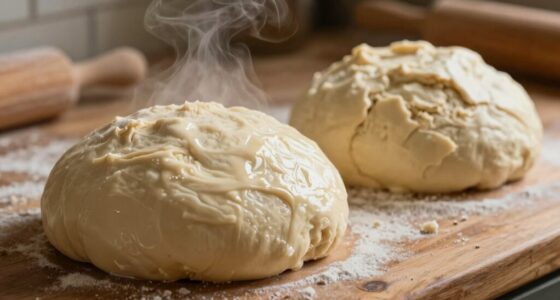
Dough temperature plays an essential role in spiral mixing because it directly influences gluten development and yeast activity. When the ingredient temperature is too high or too low, it can hamper dough fermentation, slowing down or preventing proper rise. Maintaining an ideal dough temperature ensures that gluten strands develop correctly, giving the dough strength and elasticity. It also affects yeast performance, as yeast activity depends on the right temperature range to produce carbon dioxide efficiently. If the dough is too cold, fermentation slows, resulting in dense bread. Conversely, if it’s too warm, fermentation can speed up excessively, causing over-proofing. Controlling ingredient temperature during mixing helps you achieve consistent fermentation, better texture, and reliable rise, which are essential for high-quality baked goods. Precise temperature control can also help optimize energy use in bakeries, aligning with sustainable practices. Additionally, understanding the science of fermentation enables bakers to fine-tune their processes for optimal results. Properly managing dough temperature is a key factor in producing consistent and high-quality baked products, and implementing temperature monitoring tools can aid in maintaining optimal conditions throughout the baking process. Being aware of thermal behavior and how it influences dough can further improve your control during mixing and proofing.
bakery temperature control tools
As an affiliate, we earn on qualifying purchases.
As an affiliate, we earn on qualifying purchases.
What Are the Ideal Dough Temperatures for Different Breads?
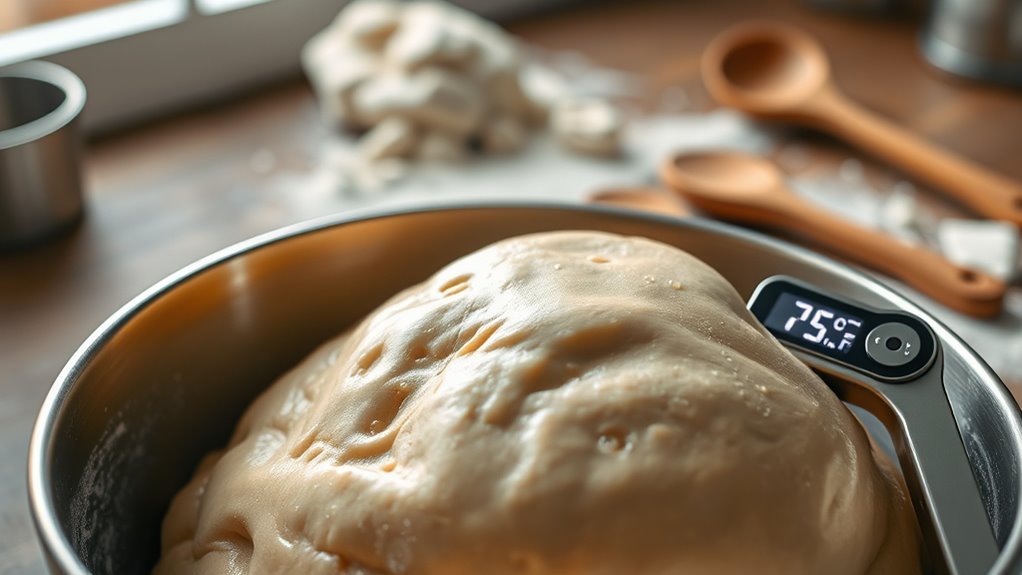
Understanding the ideal dough temperatures helps you achieve consistent results across different breads. Standard doughs typically aim for around 75°F to 78°F, but specialty breads like whole wheat often require slight adjustments. By knowing these targets, you can optimize fermentation and texture for each type you bake. Additionally, maintaining proper auditory processing techniques can help bakers better interpret dough behavior and improve overall results. Recognizing how temperature control impacts fermentation is essential for producing high-quality bread with consistent qualities.
Standard Dough Temperatures
Achieving the perfect rise and texture depends heavily on maintaining the right dough temperature for each type of bread. Generally, standard dough temperatures range from 75°F to 82°F (24°C to 28°C), depending on the bread’s style. For softer, enriched breads like brioche, slightly higher temperatures aid dough hydration and yeast activity. Conversely, leaner loaves such as baguettes benefit from cooler doughs to slow fermentation control. Consistent dough temperature ensures predictable fermentation, preventing overproofing or underproofing. Knowing the standard range helps you fine-tune your spiral mixing process, guaranteeing ideal yeast activity and gluten development. By maintaining these temperatures, you create ideal conditions for dough hydration and fermentation, resulting in consistent texture, flavor, and rise across different bread types.
Temperature for Whole Wheat
Have you ever wondered how temperature influences whole wheat bread? Whole wheat benefits from a slightly higher dough temperature to maximize fermentation and gluten development. Proper dough temperature impacts the dough’s extensibility and rise, affecting texture and flavor. For whole wheat, aim for a dough temperature between 78°F and 82°F (25°C to 28°C). This range supports excellent yeast activity without over-fermentation. Maintaining consistent temperatures ensures the dough’s elasticity and fermentation rates are reliable. Understanding the science of fermentation can help bakers optimize their results. Consistent temperature control is essential for achieving desired bread characteristics. Additionally, using accurate temperature measurements with a reliable thermometer can help maintain the ideal range. Properly managing dough temperature is crucial for consistent baking outcomes. Here’s a quick overview:
| Dough Type | Ideal Temperature | Benefits |
|---|---|---|
| Whole Wheat | 78°F – 82°F | Better gluten, flavor, rise |
| White Bread | 75°F – 78°F | Softer crumb, quicker rise |
| Sourdough | 80°F – 85°F | Rich flavor, good fermentation |
| Rye Bread | 75°F – 80°F | Improved fermentation, structure |
Variations for Specialty Breads
Different specialty breads require specific dough temperatures to develop their unique textures and flavors. Proper fermentation control depends on maintaining the right ingredient temperature, which influences yeast activity and gluten development. For example:
- Sourdoughs thrive at slightly warmer temperatures, around 78-82°F, to promote active fermentation while avoiding over-proofing. Controlling fermentation is essential for achieving the desired tang and texture. Maintaining consistent dough temperature helps bakers better manage fermentation times and outcomes. Recognizing the impact of temperature on fermentation speed allows bakers to adjust proofing times accordingly.
- Brioche and enriched breads benefit from cooler dough temperatures, about 75-77°F, to prevent excessive yeast activity and ensure tender crumb.
- Baguettes and crusty loaves often require a slightly higher temperature, around 80-85°F, to encourage a good oven spring and crust formation.
Maintaining evidence‑based insights into dough temperature helps bakers fine-tune their processes and achieve consistent results.
Adjusting dough temperature based on these variations helps you regulate fermentation and achieve the desired bread characteristics.
professional dough temperature probe
As an affiliate, we earn on qualifying purchases.
As an affiliate, we earn on qualifying purchases.
What Factors Affect Dough Temperature During Mixing?
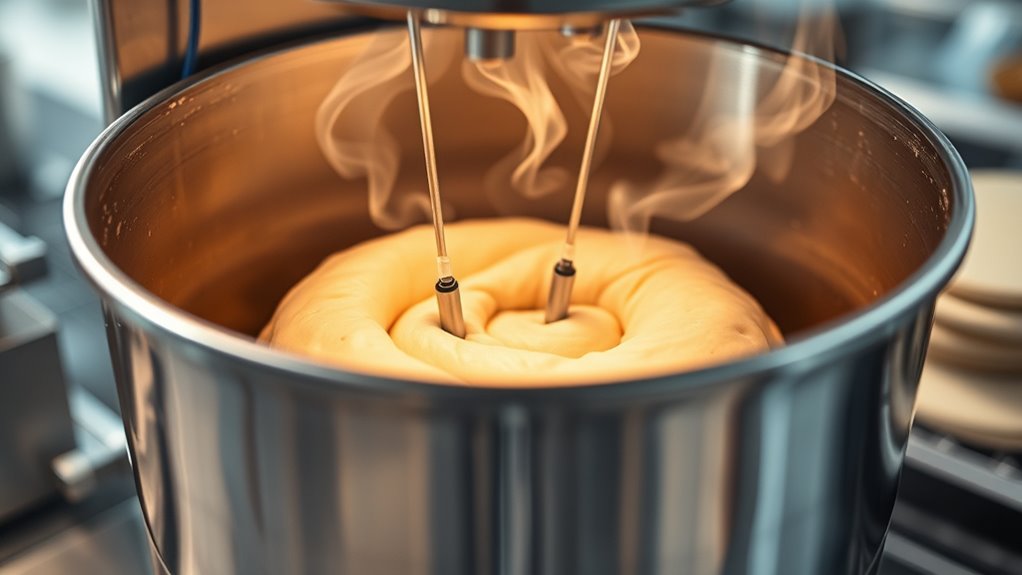
Several factors influence the temperature of dough during mixing, and understanding them helps you control the final product. Ingredient freshness plays a role—fresh ingredients can introduce slight temperature variations, especially if refrigerated or at room temperature. Ambient humidity also impacts dough temperature; high humidity can cause ingredients like flour to absorb moisture, slightly raising temperature, while low humidity may lead to faster drying and cooler dough. Additionally, the temperature of your ingredients, the mixing process duration, and the equipment used all contribute. Warm ingredients or prolonged mixing generate more heat, increasing dough temperature. Conversely, chilled ingredients and shorter mixing times help keep the dough cooler. Being aware of these factors allows you to make adjustments, ensuring you reach the ideal dough temperature for *conducive*, fermentation and bread quality. Monitoring heat transfer during mixing can further help you manage temperature changes effectively. Understanding thermal dynamics in the mixing process can help you optimize your technique and achieve consistent results. Incorporating temperature control techniques and understanding thermal transfer principles can also enhance your ability to maintain desired dough temperatures throughout the process.
baking dough temperature monitor
As an affiliate, we earn on qualifying purchases.
As an affiliate, we earn on qualifying purchases.
How Can You Measure Dough Temperature Accurately?
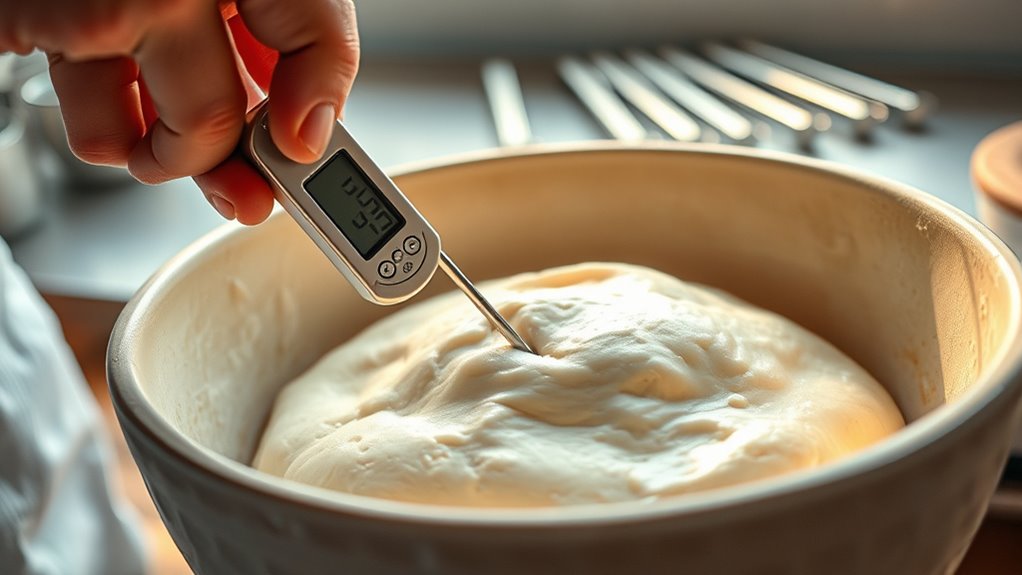
To measure dough temperature accurately, you need reliable tools and proper techniques. Make certain your thermometers are calibrated regularly for precise readings. Use consistent measurement methods to ensure your results are trustworthy and repeatable.
Calibration of Thermometers
Accurately measuring dough temperature hinges on properly calibrating your thermometer. Proper thermometer calibration guarantees your readings are reliable, directly impacting temperature accuracy. To calibrate effectively:
- Fill a glass with ice and cold water, then insert your thermometer, ensuring it doesn’t touch the glass bottom.
- Wait a minute for the reading to stabilize, then adjust the thermometer if it has a calibration nut or note the reading.
- Repeat the process with boiling water (at 212°F or 100°C at sea level), confirming the thermometer reads correctly or adjusting accordingly.
This simple calibration process helps maintain the precision needed for ideal dough temperatures. Regular calibration ensures your thermometer remains accurate over time, preventing errors that could compromise your dough’s consistency.
Proper Measurement Techniques
Measuring dough temperature precisely requires using the right technique to get consistent, accurate readings. First, verify your thermometer is properly calibrated to avoid errors. When taking a measurement, insert the thermometer probe into the center of the dough, avoiding contact with the bowl or container sides, as these can skew results. Proper thermometer placement is essential; position the probe deep enough to reach the core of the dough for an accurate reading. Before each use, confirm your thermometer’s calibration with a known temperature reference. Keep the thermometer steady during measurement, and wait a few seconds until the reading stabilizes. Additionally, understanding the importance of proper measurement techniques can significantly improve your baking consistency and success. Incorporating calibrated thermometers and following proper procedures minimizes errors and ensures precise control of dough temperature. Being aware of measurement accuracy helps in making informed adjustments during the mixing process. Regularly checking your thermometer’s accuracy verification can further enhance your confidence in the readings.
How Do You Control and Adjust Dough Temperature Effectively?
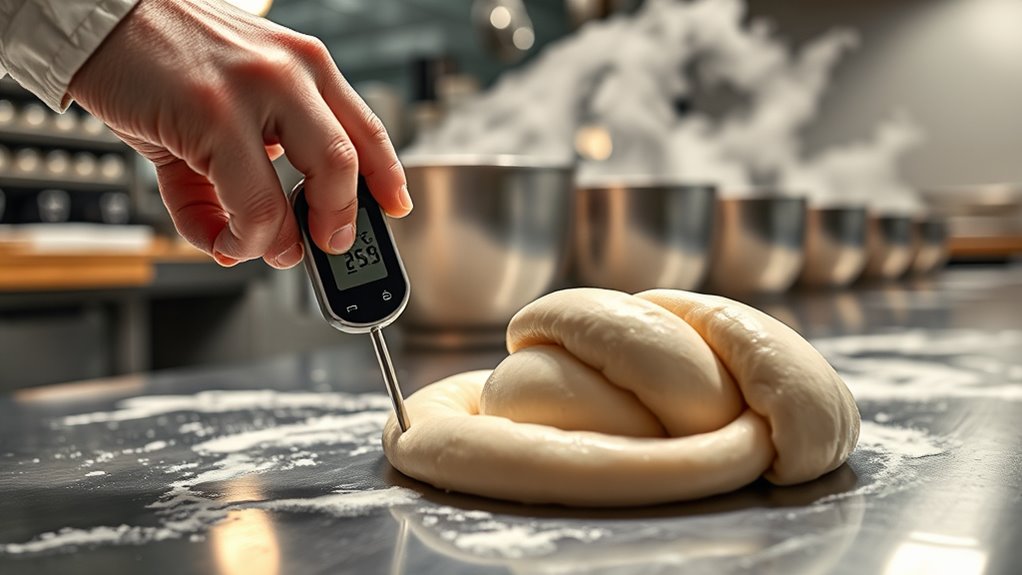
Controlling dough temperature starts with understanding how each ingredient and process affects heat. Your first step is ingredient sourcing: select ingredients at the right temperature and consider their thermal properties. Next, focus on environmental control: keep your workspace cool or warm as needed, using air conditioning or heating to stabilize ambient conditions. Finally, adjust your process: if the dough’s too warm, incorporate colder water or ice; if too cold, warm ingredients slightly or reduce mixing time. By managing ingredient temperature, maintaining a stable environment, and making precise adjustments during mixing, you keep your dough within the ideal temperature range. This proactive approach ensures consistent fermentation and ultimately better bread quality.
How to Keep Dough Temperature Consistent During Mixing
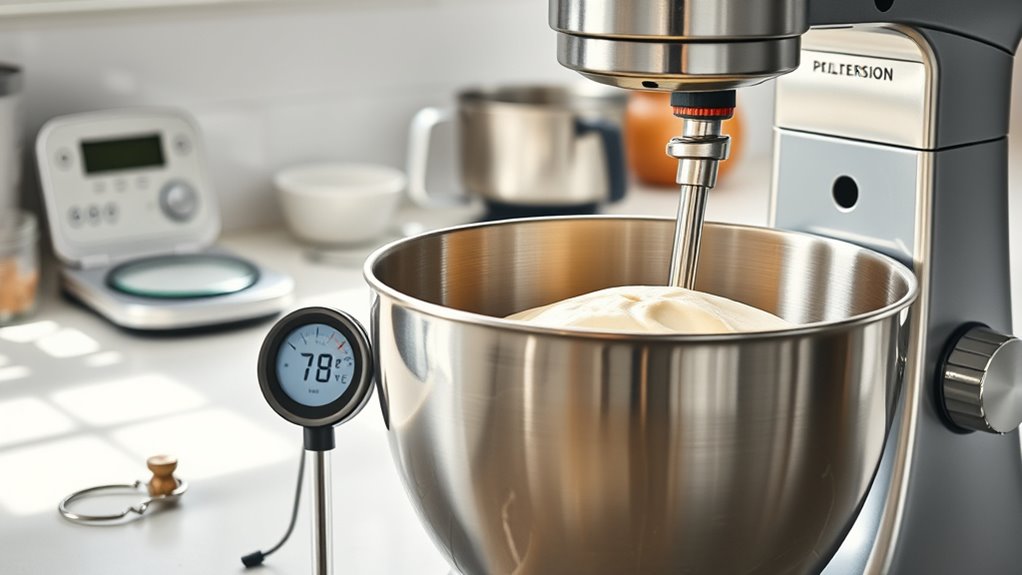
Maintaining a consistent dough temperature during mixing requires you to actively monitor and adjust your process as you go. Start by controlling ingredient sourcing—use water and ingredients at a known temperature to reduce variability. Keep an eye on ambient conditions, like room temperature and humidity, which influence dough heat. To manage these factors, consider pre-heating or chilling ingredients and adjusting mixing times. Use the following table to guide adjustments:
| Condition | Action |
|---|---|
| Warm ambient environment | Use chilled ingredients or shorten mixing time |
| Cold ambient environment | Warm ingredients slightly or extend mixing time |
| High humidity | Cover ingredients and dough during mixing |
| Low humidity | Ensure ingredients are moisture-controlled |
This approach helps you maintain consistent dough temperature despite environmental fluctuations.
Common Dough Temperature Problems and How to Fix Them
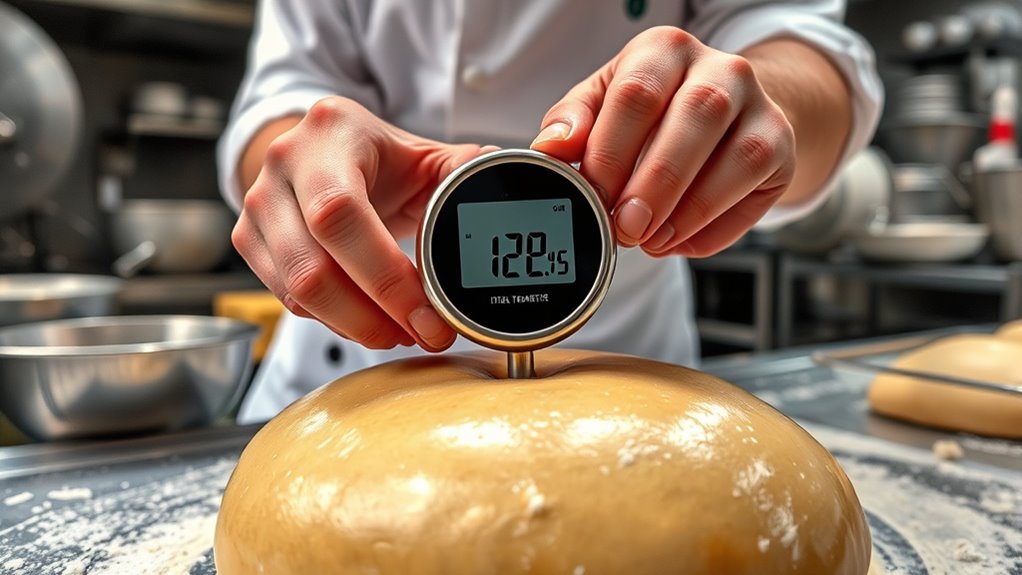
When dough temperature falls outside the ideal range, it can lead to poor fermentation, weak gluten development, or overly fast or slow proofing. Temperature fluctuations often cause inconsistent results, so addressing them is essential. To fix this, consider these steps:
- Identify the cause: Check for drafts or cold spots that cause uneven temperatures.
- Adjust ingredient temperatures: Use warmer or cooler water and ingredients to reach the target dough temperature.
- Monitor and stabilize: Keep a consistent environment and avoid sudden temperature changes during mixing.
What Equipment Helps Achieve and Monitor the Right Dough Temp?

To achieve and monitor the right dough temperature effectively, investing in specialized equipment is essential. A digital thermometer with high thermometer accuracy allows you to measure dough temperature precisely, preventing guesswork that can lead to inconsistencies. Infrared thermometers are useful for quick surface readings, but a probe thermometer provides more reliable internal measurements. Additionally, tools that help control mixing speed, such as variable-speed mixers, enable you to adjust the process to maintain ideal temperature. Consistent mixing speed ensures even heat distribution and prevents overheating. Combining accurate thermometers with equipment that offers precise control of mixing parameters ensures you hit your target dough temperature every time, leading to better consistency and dough quality.
Frequently Asked Questions
How Does Ambient Temperature Influence Dough Temperature During Mixing?
Ambient temperature markedly influences dough temperature during mixing because it causes temperature fluctuations that affect heat transfer. When the environment is warmer, your dough warms up faster, making it harder to control the final temperature. Conversely, cooler surroundings slow down heat absorption, requiring adjustments in mixing time or temperature of ingredients. Being aware of ambient influence helps you maintain consistent dough temperature, ensuring better fermentation and bread quality.
What Are the Best Practices for Pre-Conditioning Ingredients?
You should pre-condition ingredients by ensuring ingredient quality and proper equipment calibration. Use fresh, high-quality ingredients for consistent results. Before mixing, measure and warm or chill ingredients to the desired temperature, preventing temperature fluctuations. Regularly calibrate your equipment to maintain accuracy. By managing ingredient temperatures and quality, you’ll achieve ideal dough consistency and performance during spiral mixing, leading to better baking outcomes.
How Long Should Dough Stay at Target Temperature Before Fermentation?
You should let your dough rest at the target temperature for about 30 to 60 minutes before fermentation. This vital window guarantees your dough reaches perfect fermentation timing, releasing maximum flavor and texture. During this rest, the dough’s temperature stabilizes, making fermentation predictable and consistent. Don’t rush this step—allowing proper dough resting at the right temperature transforms your bread into a masterpiece, with best rise and flavor.
Can Using Different Flour Types Affect Dough Temperature Targets?
Yes, using different flour types can affect dough temperature targets. Higher protein flours tend to absorb more water, which can influence how quickly your dough heats up during mixing. You might need to adjust your temperature targets because flours with higher water absorption and protein content can generate more heat, requiring slight modifications to keep your dough at the ideal temperature for fermentation.
What Safety Precautions Are Necessary When Working With Hot or Cold Ingredients?
Did you know that cross contamination risks increase by 30% when handling hot or cold ingredients improperly? When working with hot liquids, always wear heat-resistant gloves to prevent burns and use proper tools. Keep ingredients separate to avoid cross contamination, and sanitize surfaces frequently. For cold ingredients, store them correctly and handle swiftly to maintain safety. These precautions help protect you and guarantee food safety standards are met.
Conclusion
Maintaining the right dough temperature is key to consistent bread quality. Did you know that even a 2°F difference can alter gluten development and loaf volume? By understanding ideal temps, measuring accurately, and controlling your environment, you can enhance your results every time. Keep your dough steady, troubleshoot issues promptly, and use the right equipment. Mastering temperature ensures your spiral mixing yields the perfect loaf—delicious, uniform, and bakery-quality every time.
Columbus Day / Indigenous Peoples' Day Picks
long weekend sales
As an affiliate, we earn on qualifying purchases.