To get that open, airy crumb, you need to find the right balance between dough strength and extensibility. Too strong, and your dough resists shaping and expansion; too weak, and it tears easily and won’t hold its shape. Proper fermentation, hydration, and flour choices help develop gluten just enough for elasticity without sacrificing stretchiness. Mastering this balance is key to perfect bread, and you’ll uncover more tips to fine-tune your dough further as you continue.
Key Takeaways
- Balancing dough strength and extensibility ensures proper shaping and expansion for an open crumb.
- Proper fermentation develops gluten to maintain strength while increasing flexibility.
- Higher hydration enhances extensibility but may weaken overall dough strength if overdone.
- Adjusting ingredients like flour type and water ratio fine-tunes the dough’s balance.
- Visual cues and fermentation timing are key to achieving the optimal balance for airy bread.

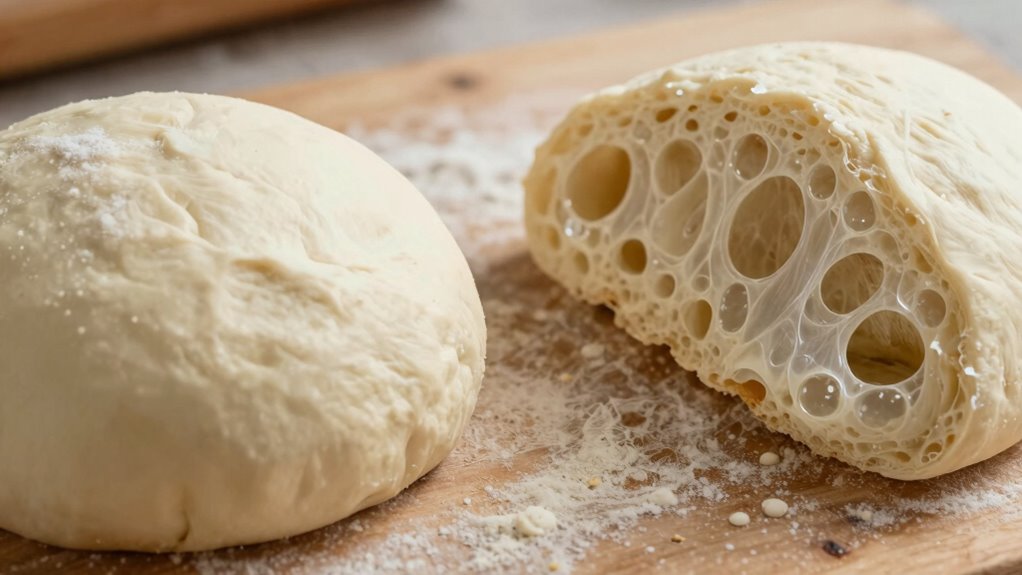
Understanding the difference between dough strength and extensibility is key to mastering bread baking. These two qualities directly influence your bread’s texture, rise, and crumb structure. When you work with dough, you want to find the right balance so it can stretch without tearing, yet hold enough structure to trap gases and create that desirable open crumb. Achieving this balance hinges on understanding how fermentation timing and ingredient ratios impact these dough properties. Proper fermentation not only develops flavor but also modifies the gluten network, affecting both strength and extensibility. Dough strength refers to how well the gluten network holds together, giving the dough its elasticity and ability to maintain shape. When you have a strong dough, it resists tearing during shaping and baking, providing a sturdy framework for the bread. Extensibility, on the other hand, is about how far you can stretch the dough without it snapping. A highly extensible dough can expand easily, which helps develop those large, irregular holes in your crumb that are characteristic of artisan loaves. If the dough is too weak, it won’t hold its shape, and if it’s too stiff, it won’t expand properly.
Mastering dough balance is essential for perfect bread texture and rise.
Fermentation timing plays a significant role here. During fermentation, enzymes break down proteins and starches, weakening the gluten network slightly to increase extensibility. If you ferment too long, the gluten can weaken excessively, leading to dough that’s too extensible and prone to tearing. Conversely, under-fermentation results in a dough that’s too strong and tight, making it difficult to stretch and shape. Proper timing, often dictated by visual cues and temperature, guarantees the dough reaches an ideal point where gluten is developed enough to provide strength but still flexible enough for expansion.
Ingredient ratios are equally essential. A higher hydration level, meaning more water relative to flour, generally enhances extensibility because the gluten strands can stretch more easily. However, too much water can weaken the dough’s overall strength, making it difficult to shape and handle. Conversely, increased flour content or less water produces a stiffer dough that’s stronger but less extensible. Adjusting flour types, such as incorporating bread flour with higher protein content, can also boost dough strength without sacrificing too much extensibility.

Superbaking Multipurpose Bench Scraper, 6" Grill & Dough Scraper with Ruler
- Versatile Food Scraper: Divide dough and transfer ingredients
- Premium Materials: Beech wood handle with steel blade
- Ergonomic Design: Comfortable grip reduces hand fatigue
As an affiliate, we earn on qualifying purchases.
As an affiliate, we earn on qualifying purchases.
Frequently Asked Questions
How Does Hydration Level Affect Dough Strength and Extensibility?
Higher hydration levels increase water absorption, making your dough more extensible and easier to stretch. However, too much water can weaken gluten development, reducing dough strength. Conversely, lower hydration results in firmer dough with stronger gluten but less extensibility. Finding the right hydration balance allows you to optimize gluten development and achieve the desired open crumb, giving your bread both structure and a light, airy texture.
Can Mixing Techniques Influence Dough’s Balance Between Strength and Extensibility?
Yes, mixing methods and kneading techniques can influence your dough’s balance between strength and extensibility. For a stronger dough, use longer kneading to develop gluten thoroughly. If you want more extensibility, incorporate gentle mixing or stretch-and-fold techniques to avoid overworking the dough. Adjusting your approach helps you control how the dough stretches and holds together, giving you the open crumb and texture you’re aiming for.
What Role Does Fermentation Time Play in Dough Properties?
Fermentation time is the secret sauce for dough properties. Longer fermentation allows enzymes to break down gluten, improving extensibility and flavor development, but overdoing it can weaken dough structure. You get a dough that’s easier to shape and yields a better open crumb, but if you wait too long, it might become too slack. Timing is everything—balance it right, and you’ll bake bread that’s both flavorful and perfectly textured.
Are There Specific Flour Types Optimized for Both Strength and Extensibility?
You should look for flours with medium to high protein content, around 11-14%, which promote strong gluten development. These flours, like bread or high-gluten flour, offer the strength needed for structure while maintaining enough extensibility for a good open crumb. Whole wheat or specialty flours can also be optimized if blended correctly, ensuring your dough balances strength and extensibility for the perfect bake.
How Can I Test Dough’s Strength and Extensibility at Home?
Start with a stretch-and-poke test to see how your dough responds. Gently stretch the dough to check its extensibility, then poke it to gauge its strength—if it springs back quickly, it’s strong; if it’s soft, it’s extensible. For a precise test, dust a surface with cornstarch, then press gently to see how easily it flattens. This simple method helps you understand your dough’s delicate balance.

Superbaking Sourdough Banneton Bread Proofing Basket, 9" Round, Set of 2
- Bake Two Loaves Simultaneously: Includes two 9-inch proofing baskets
- Splinter-Free, Smooth Finish: Made of premium Indonesian Rattan
- Includes Silicone Bread Sling: For easy bread handling and transfer
As an affiliate, we earn on qualifying purchases.
As an affiliate, we earn on qualifying purchases.
Conclusion
Balancing dough strength and extensibility is key to achieving that perfect open crumb. Too much strength, and your bread might be dense; too much extensibility, and it could collapse. Interestingly, studies show that ideal doughs have a gluten network strength within a specific range, increasing bread volume by up to 30%. By understanding and manipulating these traits, you can consistently bake lighter, airier loaves. Keep experimenting, and you’ll master the art of perfect bread every time.

King Arthur 100% Organic Bread Flour, Unbleached, 5 lb (Pack of 1) – Non-GMO Project Verified, No Preservatives
- High Protein Content: 12.7% protein for better rise
- Versatile Baking Use: Ideal for bread, rolls, and pizza
- Premium Quality Assurance: Non-GMO, USDA Organic, Kosher
As an affiliate, we earn on qualifying purchases.
As an affiliate, we earn on qualifying purchases.
dough strength and extensibility tools
As an affiliate, we earn on qualifying purchases.
As an affiliate, we earn on qualifying purchases.