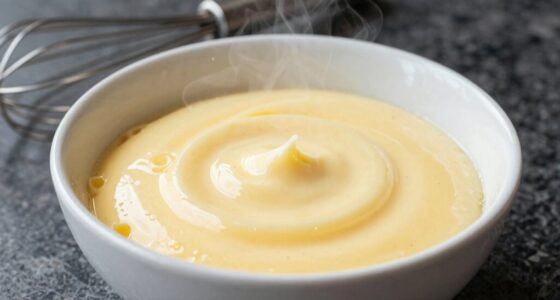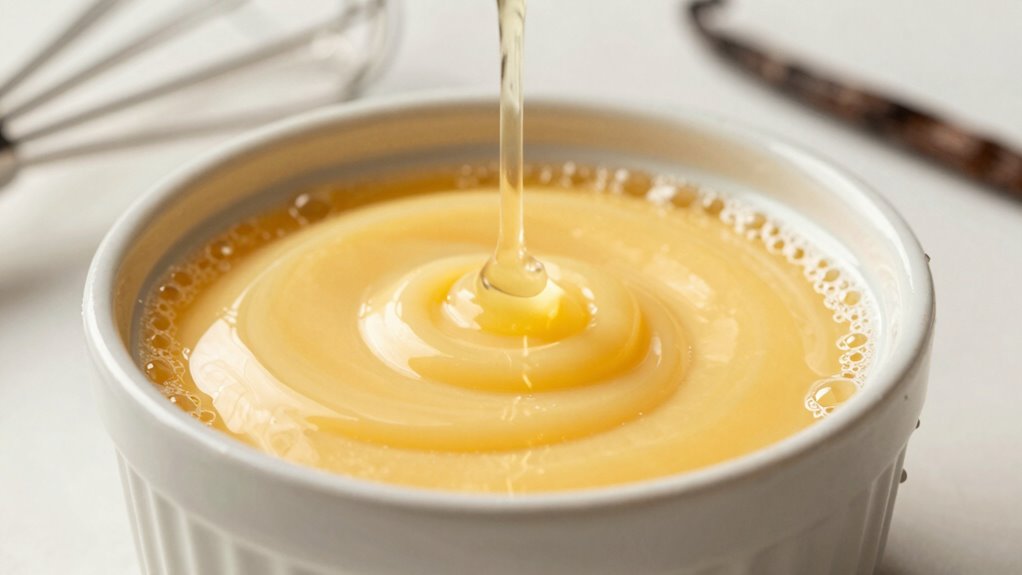

To prevent scrambled eggs in your custard, start with fresh, high-quality eggs and cook gently over low heat. Whisk eggs gradually into warm liquids, using slow, steady movements, and strain the mixture to remove lumps. Keep the heat consistent with a water bath if possible. If curdling occurs, whisk vigorously or blend to smooth it out. For more tips on achieving a silky custard, continue exploring the key techniques involved.

Get baking supplies delivered free — and shop member deals
- Fast, free delivery on millions of items
- Access to Prime Big Deal Days deals on October 6–7
- Prime Video, Amazon Music and more included
Key Takeaways
- Use gentle, low heat and a water bath to prevent rapid protein coagulation.
- Temper eggs by gradually incorporating hot liquid while whisking vigorously.
- Strain custard through a fine sieve to remove lumps and cooked egg bits.
- Incorporate stabilizers or thickeners carefully to improve texture and prevent curdling.
- Whisk or blend immediately if curdling occurs, and strain to restore smoothness.
As an affiliate, we earn on qualifying purchases.
Why Does Custard Curdle? Common Causes Explained

Custard can curdle when the proteins in eggs coagulate unevenly, causing the mixture to become lumpy or grainy. This often happens if the eggs used aren’t fresh enough or if their quality is poor, leading to unstable protein structures. Egg quality impacts how smoothly the custard sets; fresher eggs tend to produce a more uniform texture. Similarly, dairy freshness plays an essential role—using spoiled or sour milk can interfere with the custard’s consistency, making it more prone to curdling. When you combine eggs with dairy that isn’t fresh, the risk increases because the proteins and fats don’t blend properly. To prevent curdling, always choose high-quality, fresh eggs and dairy, ensuring the proteins coagulate evenly and the custard remains smooth. Additionally, controlling the cooking temperature and stirring gently can help maintain an even heat distribution, reducing the chances of protein coagulation and curdling. Proper heating techniques, such as cooking over low heat or using a double boiler, can also significantly minimize the risk of curdling by providing gentle heat distribution.
As an affiliate, we earn on qualifying purchases.
Why Gentle Heat and Slow Cooking Are Key to Perfect Custard
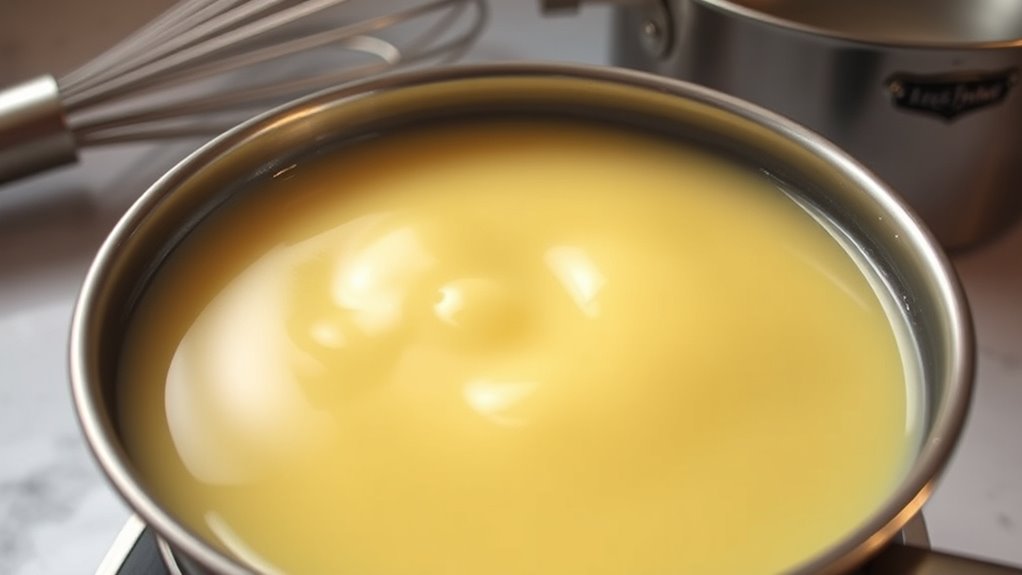
Applying gentle heat and slow cooking guarantees your custard sets smoothly without curdling. This careful process allows heat to evenly penetrate, promoting better flavor enhancement and a silky texture. Rapid or high heat can cause proteins to tighten too quickly, resulting in a lumpy or scrambled consistency. By controlling the temperature, you give the custard time to thicken gradually, ensuring a uniform, creamy result. Using gentle heat also preserves delicate flavors, enhancing the overall taste. Additionally, slow cooking improves presentation techniques, as it helps create a smooth surface and a professional-looking finish. Patience during this process is key—you’ll achieve a beautifully set custard that’s both delicious and visually appealing, without the risk of unwanted curdling or scrambled eggs. Understanding water chemistry can also help prevent issues like curdling, ensuring a perfect final product. Proper temperature control minimizes protein coagulation, which is vital for a smooth custard texture. Incorporating a gentle heat method such as a water bath can further aid in maintaining consistent temperature and avoiding sudden temperature spikes. Additionally, maintaining a steady cooking environment helps sustain the ideal conditions for custard setting. Using precise temperature control techniques can make the difference between a perfect custard and a failed one.
As an affiliate, we earn on qualifying purchases.
How to Temper Eggs and Prevent Curdling in Custard

To prevent curdling when adding eggs to your custard, it’s vital to temper them properly. Start by making certain your eggs are at the right egg temperature—lukewarm is ideal. Gradually add a small amount of the hot custard to the eggs while whisking vigorously; this gentle increase in temperature stabilizes the proteins. Use consistent whisking technique to distribute heat evenly. To illustrate, consider this process:
| Step | Tip |
|---|---|
| Prepare eggs at egg temperature | Warm eggs prevent shock from hot liquids |
| Add custard gradually | Avoid sudden temperature jumps |
| Whisk constantly | Keeps mixture smooth and uniform |
| Incorporate slowly | Prevents curdling and ensures silky texture |
Additionally, understanding the protein stability of eggs can help you better control the texture of your custard.
As an affiliate, we earn on qualifying purchases.
Do Stabilizers and Thickeners Help Custard Set Better?
Stabilizers and thickeners can be game-changers in achieving the perfect custard texture. They help improve setting and prevent issues like curdling or runny consistency. Understanding how to use them effectively guarantees your custard turns out just right every time. Additionally, employing visual and auditory cues can aid in monitoring the custard’s consistency during preparation. Using the right exfoliation techniques can also contribute to a smoother, more stable custard surface and texture. Being aware of halal standards for ingredients ensures your custard remains compliant with dietary requirements. Moreover, selecting the appropriate stabilizer or thickener based on your recipe can significantly enhance the final outcome. Recognizing the role of culinary science can help fine-tune your technique for better results.
Role of Stabilizers
Stabilizers and thickeners play an important role in helping custard set more reliably by enhancing the mixture’s structure and preventing unwanted separation. They can improve the texture, making it smoother and creamier, while also supporting egg substitution when you want to reduce eggs or avoid them altogether. Using stabilizers can help maintain consistency, especially if you’re experimenting with alternative ingredients, ensuring the custard still holds its shape. Additionally, some stabilizers contribute to flavor enhancement by balancing the richness and adding subtle notes that complement other ingredients. This way, you get a well-set custard that’s stable, delicious, and visually appealing. Overall, stabilizers are key to creating a perfectly textured, professional-looking dessert without sacrificing taste or stability.
Impact of Thickeners
Thickeners play a essential role in helping custard set properly by increasing viscosity and creating a stable gel-like structure. They improve texture and prevent scrambling. For example:
- Gelatin stabilization enhances firmness and guarantees the custard holds its shape.
- Cornstarch thickening boosts viscosity, making the custard smooth and less prone to curdling.
- Combining gelatin with cornstarch can provide extra stability, especially in chilled desserts.
- Properly used thickeners help prevent scrambled eggs by controlling protein coagulation.
Using these thickeners effectively guarantees your custard sets evenly and maintains a silky texture, avoiding unwanted scrambled eggs. Their impact is essential for achieving the perfect consistency in your desserts.
Optimal Usage Tips
To guarantee your custard sets perfectly, it’s essential to use stabilizers and thickeners correctly. These ingredients help improve the custard’s texture and consistency without compromising its delicate flavor. When selecting stabilizers or thickeners, consider how they will affect the custard flavor—some may add subtle taste nuances. Use them in moderation, following package instructions, to avoid a rubbery or overly firm result. Stir thoroughly to ensure even distribution. For best serving suggestions, chill the custard well to let it set fully. Proper use of stabilizers and thickeners ensures your dessert remains silky and smooth, making it ideal for layered dishes, pies, or simple custard cups. When applied correctly, they help achieve professional-looking, delicious results every time. Additionally, understanding the proper tool techniques can help you mix and incorporate these ingredients more effectively.
How to Mix and Strain Custard for a Silky Smooth Finish

To achieve a silky smooth custard, you need to mix gently to prevent curdling and incorporate air evenly. Using proper straining methods helps remove any cooked egg bits or lumps, ensuring a flawless texture. Pay attention to your techniques, and your custard will turn out perfectly smooth and refined. Incorporating the right water resistance features in your tools can help maintain consistency even in humid conditions.
Gentle Mixing Techniques
Achieving a silky smooth custard relies heavily on gentle mixing techniques that prevent curdling and incorporate air bubbles. To do this effectively, focus on your whisking techniques and mixing speed.
- Use soft, steady whisking to avoid introducing too much air, which can cause bubbles.
- Maintain a slow mixing speed to keep the custard smooth and evenly blended.
- Whisk in a circular motion, gradually incorporating ingredients without over-agitating.
- When straining, use a fine sieve and a gentle, steady motion to remove lumps without disturbing the custard’s delicate texture.
- Incorporating temperature control helps prevent the custard from curdling, ensuring a consistently silky finish.
These techniques ensure your custard stays silky and smooth, free of curdles or lumps. With patience and precision, your custard will set beautifully every time.
Proper Straining Methods
Proper straining is essential for achieving a custard with a perfectly smooth texture. Start by carefully separating your eggs to avoid any shell fragments or yolk contamination, which can cause lumps. Once your eggs are separated, whisk the yolks thoroughly before combining them with other ingredients. When pouring your custard mixture through a fine-mesh strainer, use a spatula to gently press out any curdled bits or cooked egg proteins, ensuring a silky finish. If your recipe involves cheese, incorporate it gradually to prevent clumping, then strain again if needed. This extra step removes any coagulated proteins or lumps, guaranteeing your custard remains velvety and smooth. Proper straining, coupled with careful egg separation and cheese incorporation, is key to a flawless dessert.
How to Fix Curdled Custard and Salvage Your Dessert
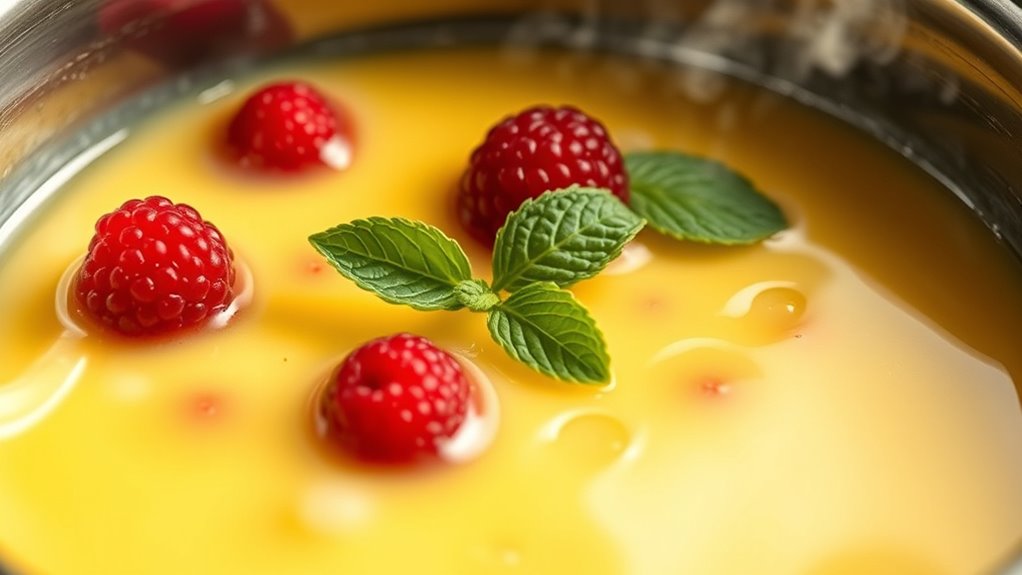
When your custard curdles, it can feel like your dessert is ruined, but don’t panic. You can often rescue it by following these steps:
- Remove from heat immediately to prevent further curdling.
- Whisk vigorously or use an immersion blender to smooth out the curdled texture.
- Add a small splash of cold milk or cream, then gently reheat while stirring constantly.
- Strain the custard through a fine sieve to improve its appearance and enhance dessert presentation.
- Understanding custard stabilizers can help prevent curdling in future preparations.
If the custard’s flavor is still intact, you can serve it as a sauce or incorporate it into other desserts. Fixing curdled custard preserves your effort and allows you to enjoy rich, flavorful custard that complements your chosen custard flavors.
Frequently Asked Questions
Can I Use Alternative Thickeners for Custard Setting?
Yes, you can use alternative thickeners for custard setting. Options like cornstarch, flour, or arrowroot powder work well as custard stabilizers, helping prevent scrambled eggs. Just whisk them with a small amount of cold liquid before adding to your mixture to avoid lumps. These alternatives can give your custard a smooth, creamy texture without compromising flavor, making your dessert perfect every time.
What Are the Best Storage Methods to Prevent Custard From Curdling?
To prevent custard from curdling, you should use proper refrigeration techniques and choose the right storage container options. Cover your custard with plastic wrap directly on the surface to prevent a skin from forming, then store it in an airtight container. Keep your custard chilled at a consistent temperature, ideally below 40°F (4°C). Avoid frequent temperature fluctuations, and consume within a few days for the best quality.
How Does Sugar Affect the Custard’s Setting Process?
Did you know that adding sugar can increase custard viscosity by up to 30%? Sugar affects the custard’s setting process by delaying protein coagulation, which helps prevent scrambled eggs. It also reduces sugar crystallization, leading to a smoother texture. By controlling sugar levels, you guarantee your custard sets properly, avoiding curdling and achieving that perfect, silky finish in your desserts.
Are There Specific Types of Eggs That Work Best?
You should choose fresh eggs for the best custard consistency, as they have a firmer whites and yolks that help the custard set smoothly. Avoid older eggs because they tend to be thinner and can cause a runnier texture or scramble more easily. Egg selection is essential; fresh eggs provide better structure, making your dessert creamy and stable. Always crack eggs carefully to prevent introducing any unwanted imperfections.
Can I Make Custard Without Eggs That Still Sets Properly?
You can make custard without eggs, turning it into a blank canvas waiting for your touch. Egg substitutes like cornstarch, arrowroot, or silken tofu act as thickening alternatives, helping your dessert set properly. Use these thickening agents carefully, simmering until the mixture thickens like a gentle tide. While it won’t replicate traditional custard perfectly, it’ll still deliver a creamy texture and rich flavor, just in a new, exciting way.
Conclusion
With a gentle touch and patience, you can turn any custard mishap into a sweet lesson. Sometimes, the most delicate moments teach us the importance of slow, caring processes. Remember, even when things don’t go as planned, there’s beauty in the effort and grace in the recovery. Embrace the journey, knowing that every imperfect step brings you closer to mastering the art of perfect desserts. Trust in your skills, and let your passion shine through.
Halloween Picks
halloween
As an affiliate, we earn on qualifying purchases.