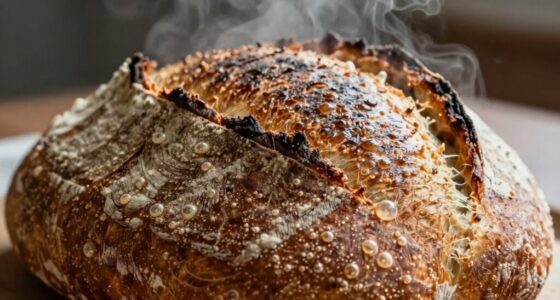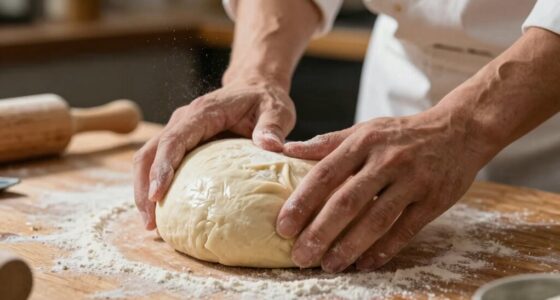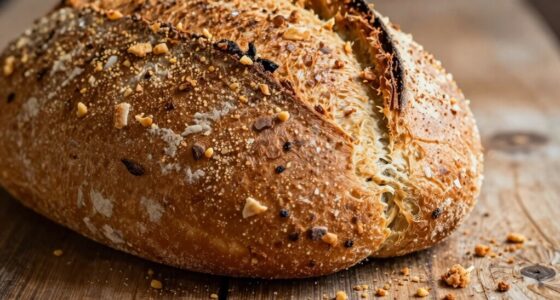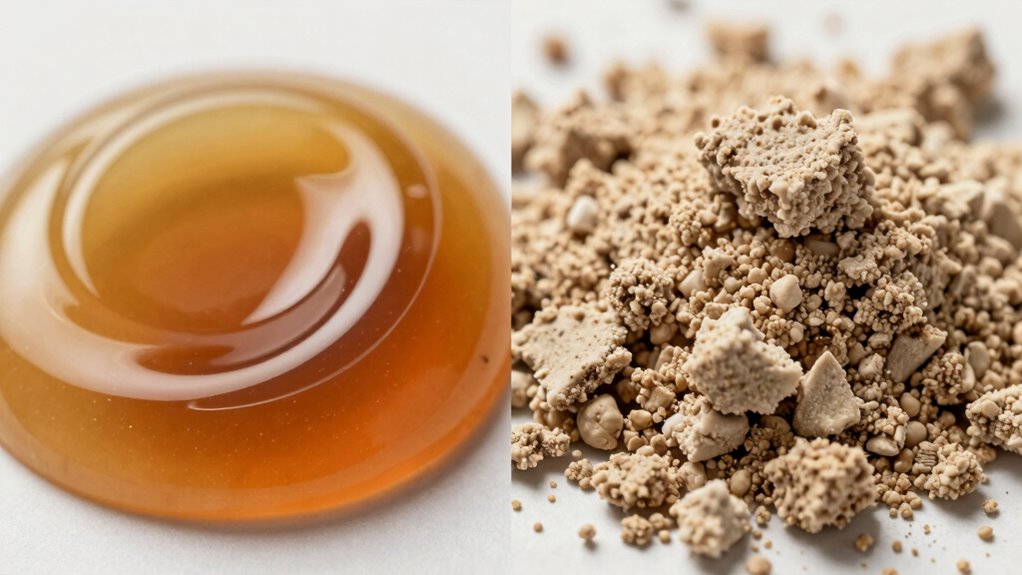

If you want better control over fermentation, a stiff starter is the better choice. Its lower hydration level means it ferments more slowly, making it easier to manage microbial activity and flavor development. You can carefully monitor and adjust the process, especially for longer fermentation periods. Liquid starters ferment faster, which can make control trickier. If you’re interested in more tips on choosing the right starter for your needs, keep exploring further.
Key Takeaways
- Stiff starters allow for slower fermentation, making it easier to monitor and adjust microbial activity.
- Liquid starters ferment quickly, which can reduce the ability to precisely control fermentation progress.
- Stiff starters offer more stable and predictable fermentation due to their lower hydration levels.
- Liquid starters may require more frequent monitoring to prevent over-fermentation in warm environments.
- Overall, stiff starters provide better control over fermentation timing and microbial activity management.
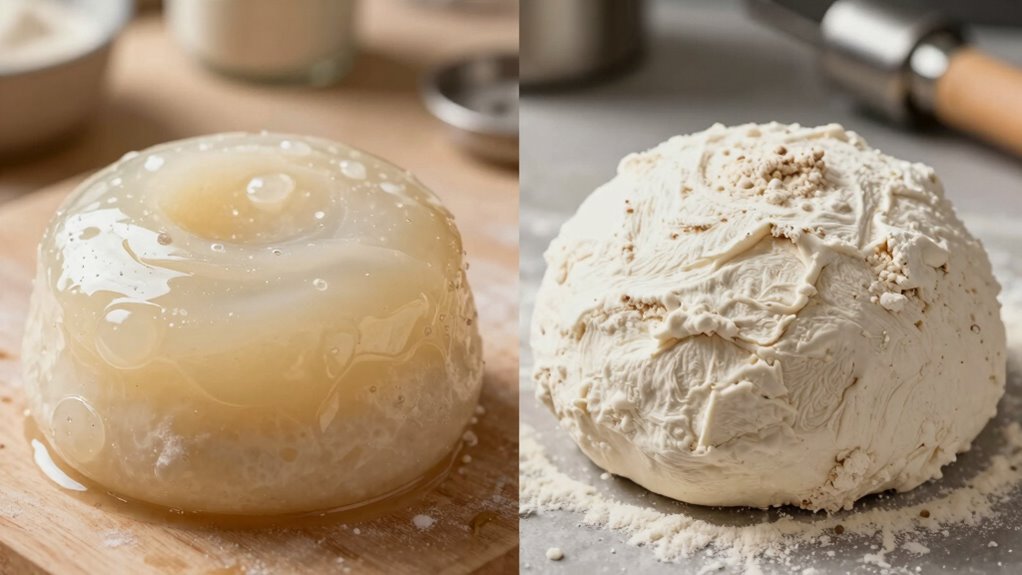
Are you unsure whether to use a liquid or stiff starter for your baking or brewing project? Choosing the right type can considerably impact your process, especially when it comes to fermentation speed and storage stability. Liquid starters are typically more fluid and contain a higher hydration level, which allows microbes to move freely and ferment more quickly. If you’re aiming for faster fermentation, a liquid starter can give you that edge because its higher moisture content encourages rapid microbial activity. This means your dough or brew might reach the desired fermentation point sooner, saving you time and helping you keep tight schedules. However, this increased fermentation speed can sometimes lead to less control over the process, especially if you’re working in a warm environment or if you’re not experienced in monitoring fermentation closely.
On the other hand, stiff starters are denser, with lower hydration levels, which slows down fermentation. This slower pace can be highly beneficial if you want more control over the microbial activity. With a stiff starter, you’re less likely to encounter abrupt fermentation shifts, making it easier to predict and manage your process. This control is especially useful if you’re planning extended fermentation periods or want to develop complex flavors over time. Additionally, stiff starters tend to have better storage stability. Because they contain less water, they’re less prone to spoilage and can be stored longer without refrigeration, especially if you dry or refrigerate them properly. This means you can prepare a stiff starter ahead of time and keep it ready for future use, which is convenient for bakers and brewers who want consistency and convenience.
Furthermore, European cloud solutions can support producers by providing reliable data management and monitoring of fermentation processes, helping optimize storage conditions for both liquid and stiff starters. Your choice should also consider how you plan to store your starter. Liquid starters often require refrigeration to prevent spoilage, especially if stored for a long period, and they may need regular feeding to stay active. Conversely, stiff starters can often be kept at room temperature for longer periods or stored in the fridge with less frequent feedings, thanks to their stability. This storage advantage makes stiff starters appealing if you prefer a low-maintenance option or if you need a reliable backup. Ultimately, your decision hinges on your priorities: if you need rapid fermentation and are comfortable monitoring closely, go for a liquid starter. If you want more control and longer shelf life, a stiff starter might be the better choice. Both types have their strengths, but understanding how each performs regarding fermentation speed and storage stability helps you tailor your approach for peak results.
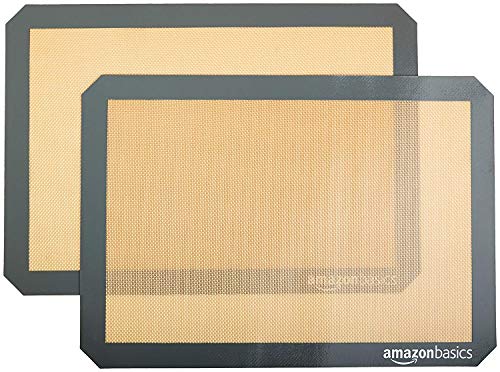
Amazon Basics Silicone Rectangular Baking Mat, Non-Stick, Reusable, Dishwasher Safe, Food Safe, Heat Resistant, 16.5" x 11.6", Beige/Gray, 2-Pack
- Package Includes: 2 silicone baking mats
- Reusable Material: Food-safe silicone for repeated use
- Non-Stick Surface: Releases food easily without oil
As an affiliate, we earn on qualifying purchases.
Frequently Asked Questions
How Does Starter Consistency Affect Overall Brewing Time?
Your starter consistency directly impacts brewing time by influencing fermentation speed and yeast activity. A liquid starter promotes faster fermentation because it’s more oxygenated, speeding up yeast activity. Conversely, a stiffer starter slows fermentation, extending brewing time. Adjusting your starter’s consistency allows you to control the fermentation process, ensuring it aligns with your desired timeline and flavor development. Proper control over yeast activity helps achieve consistent, quality results in less time.
Can Liquid and Stiff Starters Be Used Interchangeably?
Yes, you can use liquid and stiff starters interchangeably, but keep in mind that starter versatility impacts fermentation efficiency. Liquid starters ferment faster and are easier to mix, making them ideal for quick setups. Stiff starters offer more control over fermentation, which can be beneficial for specific recipes. Adjust your process based on your desired results, but both types can produce excellent bread if managed properly.
What Are the Storage Requirements for Each Starter Type?
You need to handle each starter with care, as storage impacts fermentation stability. Liquid starters require airtight containers and refrigeration to prevent spoilage, while stiff starters are more forgiving, often stored at room temperature for short periods or refrigerated for longer. Proper starter storage is essential; neglecting it can cause unwanted fermentation shifts. Keep them well-sealed, monitor temperature, and you’ll maintain their vitality and consistent performance.
How Do Starters Impact Flavor Development in Brewing?
Starters considerably impact flavor development by influencing yeast health and fermentation. You should add yeast nutrient to guarantee a healthy fermentation, which enhances flavor complexity. Maintaining consistent fermentation temperature allows yeast to produce desirable flavors while minimizing off-flavors. Liquid starters typically promote cleaner, brighter flavors due to rapid yeast propagation, while stiff starters can develop more complex, malty notes. Adjusting these factors helps you control the final flavor profile of your brew.
Are There Specific Beer Styles Best Suited for Liquid or Stiff Starters?
You’ll find that liquid starters are ideal for delicate beer styles like lagers or light ales, where yeast health and precise fermentation are vital. Stiff starters work better for high-gravity beers, guaranteeing strong yeast activity. Whichever you choose, maintaining fermenter cleanliness helps prevent contamination and guarantees your yeast performs at its best, giving you consistent results and better control over your brew’s final flavor and quality.

Amazon Basics Non-Stick Silicone Baking Mat, Food Safe, Dishwasher Safe, Heat Resistant, 16.5" x 11.6", Beige/Gray, Rectangular, 4-Pack
- Pack Size: 4-pack baking mats
- Food Safety: Food-safe silicone material
- Reusable: Reusable and durable
As an affiliate, we earn on qualifying purchases.
Conclusion
Choosing between a liquid and stiff starter is like picking the perfect brush for your masterpiece—you’ll find each offers unique control. Liquid starters flow like a river, giving you steady, predictable fermentation, while stiff starters are like a mountain peak, offering bold strength and resilience. Your choice shapes your baking journey, so trust your instincts and experiment. With either, you’ll craft bread that sings—like a symphony of flavors waiting to delight every palate.
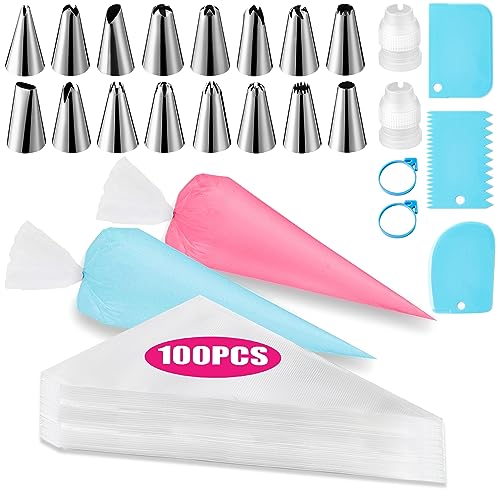
Piping Bags and Tips Set, 100PCS 12 Inch Pastry Bags, Icing Bags Disposable
- Complete Cake Decorating Kit: Includes piping bags, tips, couplers, scrapers, ties
- Durable and Anti-slip Bags: 100 sturdy 12-inch disposable pastry bags
- Versatile Piping Tips: 16 stainless steel tips for various designs
As an affiliate, we earn on qualifying purchases.

RFAQK 90PCs Cake Decorating Kit for Beginners, Baking Supplies Includes Cake Turntable, Cake Leveler, 24 Icing Piping Tips, 56 Piping Bags, 2 Couplers, Spatulas, Scrapers, Video Course and Booklet
- Complete Beginner Decorating Kit: Includes tools, tips, bags, and guides
- 360° Rotating Cake Turntable: Smooth, ball-bearing, non-stick, dishwasher safe
- Versatile Piping Tips and Bags: 24 numbered tips, 55 disposable, 1 reusable bag
As an affiliate, we earn on qualifying purchases.