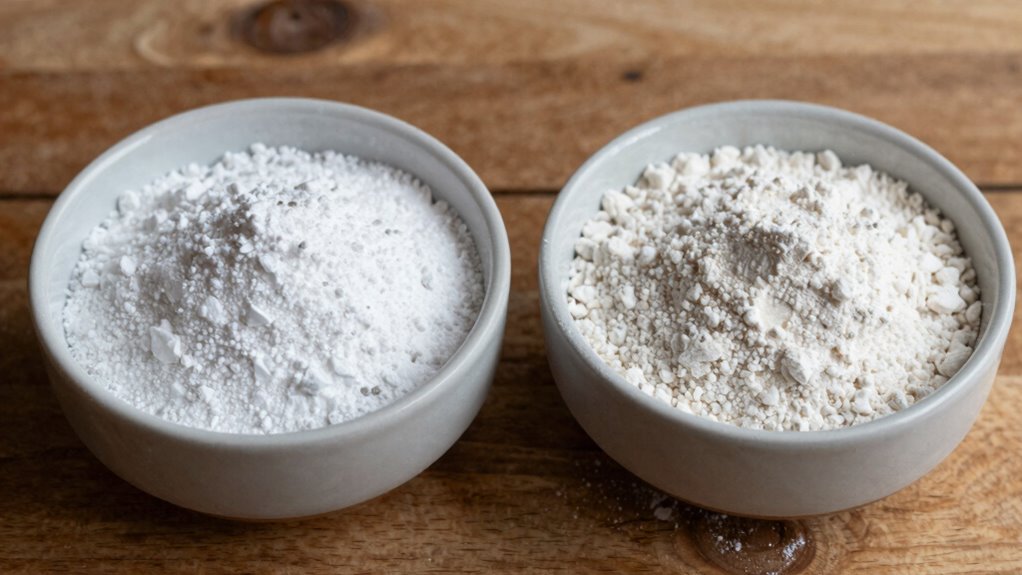

If you use baking soda instead of baking powder, your recipe can turn out dense, off-flavor, or fail to rise properly because they react differently. Baking soda needs an acid to activate, while baking powder contains both an acid and a base for reliable leavening. Knowing when and how to swap them is key to successful baking—keep exploring the differences to guarantee your baked goods turn out perfect every time.
Key Takeaways
- Baking soda requires an acid in the recipe to produce carbon dioxide; without it, baked goods won’t rise properly.
- Substituting baking powder for baking soda can cause off-flavors and improper rise if not adjusted correctly.
- Using baking soda instead of baking powder may result in dense, flat baked goods due to insufficient leavening.
- Baking powder contains both acid and base, ensuring consistent rise; replacing it with baking soda needs additional acidic ingredients.
- Incorrect substitutions can alter flavor, texture, and appearance, ruining the intended outcome of baked recipes.

Amazon Grocery, Baking Soda for Baking and Freshening, 16 Oz
- Size: 16 oz carton
- Uses: Baking, cleaning, freshening
- Packaging: Made in the USA
As an affiliate, we earn on qualifying purchases.
As an affiliate, we earn on qualifying purchases.
What Are the Chemical Properties of Baking Soda?
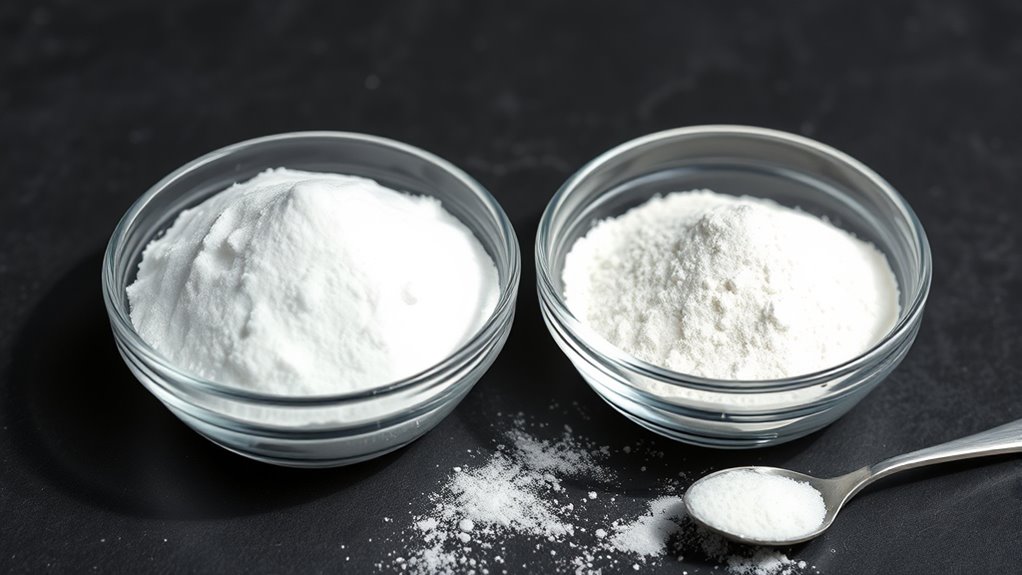
Baking soda, also known as sodium bicarbonate, is a chemical compound with the formula NaHCO₃. Its unique chemical properties allow it to participate in various chemical reactions, especially when combined with acids. When exposed to moisture and acids, baking soda releases carbon dioxide gas, creating bubbles that help dough or batter expand. This process is essential in baking to achieve the desired texture. Additionally, baking soda acts as a pH buffer, maintaining a balanced pH level in recipes. This pH balance guarantees the proper chemical environment for reactions to occur smoothly. Its ability to neutralize acids and produce carbon dioxide makes baking soda a versatile ingredient in baking, cleaning, and even personal care products.

Clabber Girl Baking Soda, 12 Ounce
- Pure Baking Soda: 100% Sodium Bicarbonate
- Ideal for Baking: Use in favorite recipes
- Versatile Cleaner: Household deodorizer and cleaner
As an affiliate, we earn on qualifying purchases.
As an affiliate, we earn on qualifying purchases.
How Does Baking Powder Help Your Baked Goods Rise?

Baking powder helps your baked goods rise by producing carbon dioxide gas, which creates bubbles in the dough or batter. It reacts with moisture to activate this process quickly, giving your baked items a light, airy texture. As a result, your treats become fluffier and more tender.
Produces Carbon Dioxide
When baking powder reacts with moisture and heat, it produces carbon dioxide gas that creates bubbles in the dough or batter. This gas forms tiny pockets, giving your baked goods a light, airy texture. Baking soda applications rely on an acid to generate this gas quickly, but baking powder contains both acid and base, making it a self-contained leavening agent. This means it can produce carbon dioxide without additional ingredients, simplifying recipes. If you don’t have baking powder, baking soda alternatives like cream of tartar or buttermilk can also help produce carbon dioxide, but they require careful balancing of ingredients. Understanding how baking powder produces carbon dioxide helps you get the rise you want, especially when substituting or adjusting recipes. Additionally, the leavening process is essential for achieving the desired volume and texture in baked goods.
Reacts With Moisture
As soon as baking powder comes into contact with moisture in your batter or dough, it starts to react immediately. This moisture activation triggers the ingredient interaction that’s essential for leavening. The acid and base in baking powder combine quickly, releasing carbon dioxide gas that creates bubbles and lifts your baked goods. Leavening performance depends on this rapid reaction, ensuring your baked goods rise evenly and consistently. You’ll notice:
- The reaction begins as soon as moisture is present, ensuring consistent rising.
- It’s designed for recipes with liquid or moisture-rich ingredients.
- This instant activation helps avoid the need for additional heat to start leavening.
- Understanding the chemical reaction involved helps bakers time their mixing and baking process more effectively.
This quick response makes baking powder ideal for recipes where immediate rise is needed, providing reliable ingredient interaction that results in a light, airy texture.
Enhances Texture
By producing carbon dioxide gas during your mixing process, baking powder creates tiny bubbles that become trapped in the batter or dough, giving your baked goods a lighter, softer texture. This process considerably improves texture by enhancing crumb structure, making each bite feel airy and tender. The gas bubbles expand as the heat rises, allowing the dough or batter to rise evenly and develop a uniform crumb. Without baking powder, your baked goods might turn out dense or heavy, lacking that desirable lightness. The texture improvement achieved with baking powder ensures a more appealing mouthfeel and better overall consistency. Additionally, chemical leavening like baking powder offers a reliable and predictable rise to your baked goods, unlike biological leavening agents such as yeast. Proper use of leavening agents ensures your baked goods achieve the perfect rise and texture every time. Understanding how leavening works can help you better control the outcome of your recipes. For best results, it’s important to measure baking powder accurately to avoid off-flavors or insufficient rising. So, when you want a soft, fluffy interior, baking powder is your go-to leavening agent to optimize crumb structure and elevate your baked creations.

Clabber Girl Double Acting Baking Powder, 8.1 Ounce
- Gluten-Free and Vegan: Suitable for gluten-free and vegan diets
- Pop Top Can: Convenient pop top with leveling edge
- Airtight Plastic Overcap: Protects from moisture for shelf stability
As an affiliate, we earn on qualifying purchases.
As an affiliate, we earn on qualifying purchases.
What Are the Key Differences Between Baking Soda and Baking Powder?
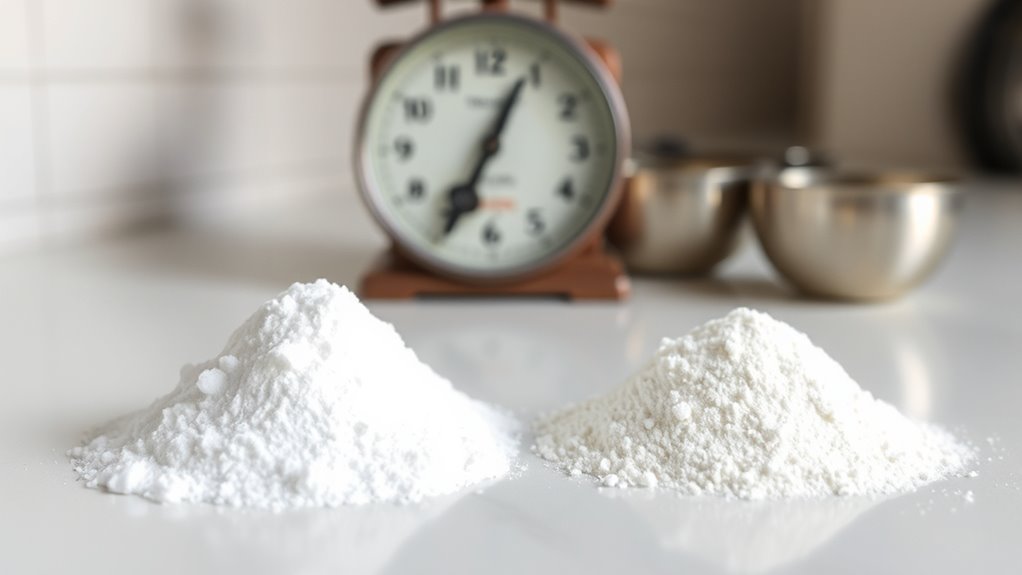
Baking soda and baking powder are both leavening agents used to help baked goods rise, but they work in different ways. Baking soda is a pure chemical (sodium bicarbonate) that reacts with acids, producing carbon dioxide for leavening. Baking powder contains baking soda plus an acid and a drying agent, activating with moisture or heat. Historically, baking techniques relied on natural leaveners like whipped eggs or fermentation, but these include baking soda’s cultural uses of leaveners across various cuisines. To distinguish their roles:
- Baking soda requires an acid for activation
- Baking powder is double-acting, releasing gas twice
- Their differences influence recipe outcomes and flavor profiles
Understanding these distinctions helps you prevent recipe failures and honors traditional baking methods.

ARM & HAMMER Pure Baking Soda 8 oz
- Multi-purpose Baking Soda: For baking, cleaning, deodorizing
As an affiliate, we earn on qualifying purchases.
As an affiliate, we earn on qualifying purchases.
Which Recipes Need Baking Soda Versus Baking Powder?
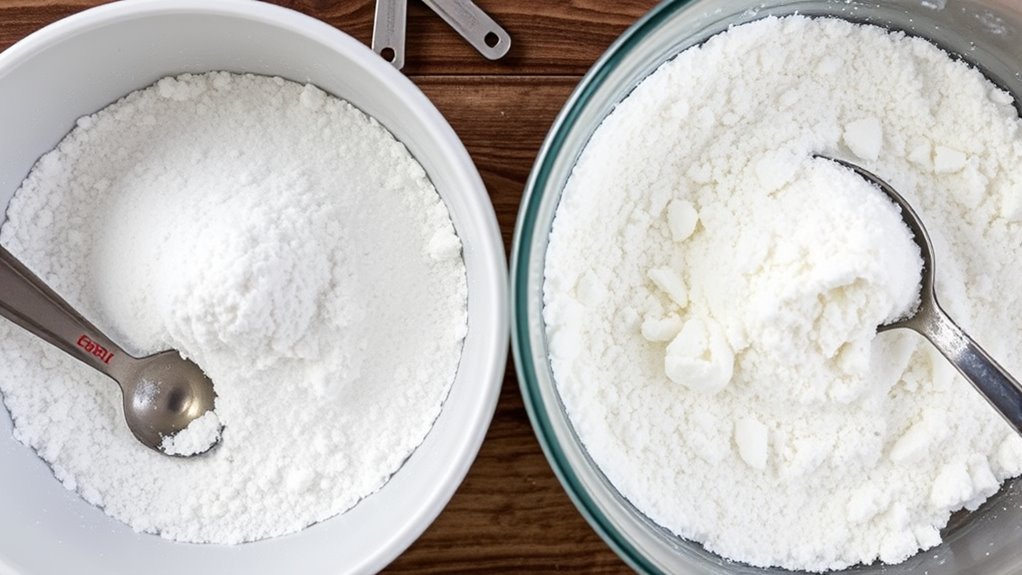
Choosing the right leavening agent depends on the recipe you’re making. Baking soda works best in recipes with acidic ingredients, like buttermilk or yogurt, and influences flavor pairing and baking techniques. Baking powder, which contains both acid and base, is ideal for recipes lacking acidity, providing a reliable rise. Additionally, understanding the chemical reactions involved can help you troubleshoot and perfect your baked goods. Properly balancing these agents can also prevent common baking mistakes, ensuring your recipes turn out just right.
What Happens If You Use Baking Soda Instead of Baking Powder?

If you accidentally use baking soda instead of baking powder, your baked goods may not rise properly and could develop an off-putting metallic taste. Baking soda’s history dates back centuries as a simple leavening agent, but it requires an acid to activate its leavening power. Without proper balancing, it can produce an unpleasant flavor. Since baking powder manufacturing involves combining baking soda with acid salts and stabilizers, it’s designed for straightforward use. Using baking soda alone can lead to:
- Insufficient rise, resulting in dense textures
- Excessive browning due to rapid CO₂ release
- Metallic or bitter flavors from unneutralized soda
This mishap highlights the importance of understanding how baking soda works as a leavening agent and why baking powder was developed—to guarantee consistent, reliable results in baking. Baking chemistry
When Should You Use Baking Powder Instead of Baking Soda?

Use baking powder when your recipe doesn’t include acidic ingredients, as it already contains the acid needed to help your baked goods rise. If you want a lighter, airier texture, baking powder is your best choice. Consider the leavening effect you desire to decide whether baking powder is the right leavening agent for your recipe. Additionally, understanding the safety considerations involved in proper leavening can help prevent mishaps in your baking. Being aware of how brewing methods influence the outcome can also guide your choice of leavening agents.
Acidic Ingredient Presence
When your recipe doesn’t contain an acidic ingredient like buttermilk, yogurt, or citrus juice, baking powder becomes the better leavening choice. This is because the acidic ingredient presence is minimal or absent, preventing unwanted baking soda reactions that could lead to off-flavors or uneven rise. Baking powder contains both an acid and a base, which react smoothly when combined with moisture, producing carbon dioxide for leavening without extra acidity. Consider using baking powder if:
- Your recipe lacks natural acids that trigger baking soda reactions
- You want a neutral flavor without residual alkalinity
- You need a consistent rise, unaffected by varying acidity levels
These factors ensure your baked goods rise properly without interference from unreacted baking soda.
Desired Leavening Effect
Baking powder is the go-to leavening agent when you want a reliable, consistent rise in your baked goods, especially in recipes that lack acidic ingredients. It produces a steady leavening effect, ensuring your baked items are light and fluffy without the risk of uneven rising. Additionally, baking powder enhances flavor by providing a subtle lift that balances sweetness and richness. Its shelf stability makes it convenient to store and use over time without losing potency. This makes it ideal for recipes like cakes, biscuits, and muffins where you want predictable results. Using baking powder helps you achieve the desired leavening effect without relying on the presence of acids, ensuring your baked goods turn out perfectly every time. Understanding leavening agents can help you determine the best choice for your specific recipe. Chemical reactions involved in leavening are fundamental to achieving the perfect texture.
How Can You Measure and Store Baking Leaveners Correctly?
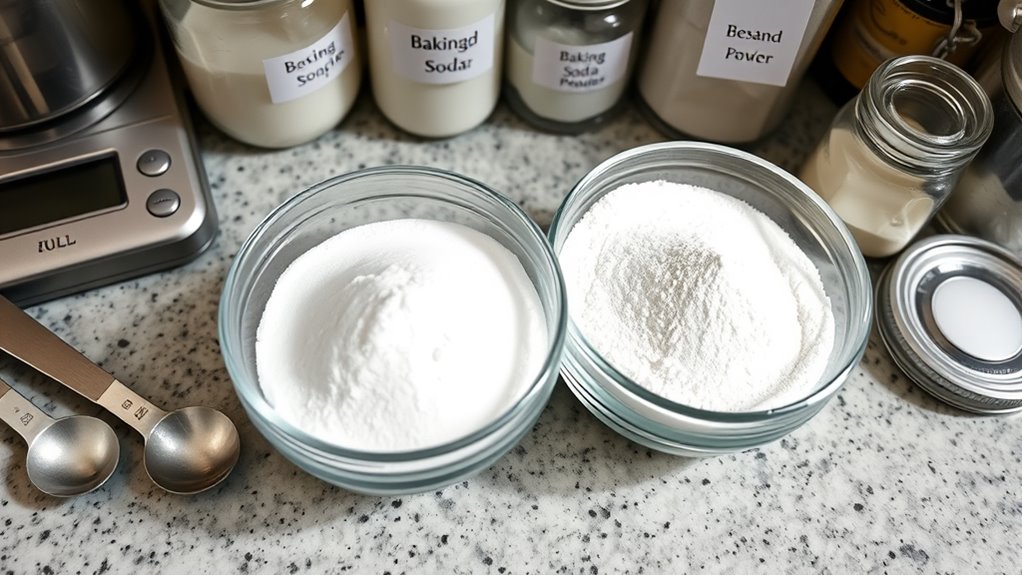
Measuring and storing baking leaveners correctly guarantees your baked goods rise perfectly every time. To guarantee measuring accuracy, use measuring spoons or a scale designed for dry ingredients, avoiding guesswork. Proper storage tips include keeping baking soda and powder in airtight containers, away from moisture and heat, to maintain potency. Be sure to label containers clearly and store them in a cool, dry place. This prevents clumping and preserves freshness, so leaveners work effectively when baking. Consider these tips for ideal results:
- Use precise measuring tools for consistency
- Keep leaveners airtight and away from humidity
- Store in a cool, dark location to extend shelf life
- Regularly check and replace expired leaveners to ensure optimal performance based on proper air purifier maintenance practices].
How Do You Safely Substitute Baking Soda and Baking Powder?
Since baking soda and baking powder serve different roles in recipes, it’s important to understand how to substitute one for the other safely. For ingredient substitution, use a precise conversion: generally, replace 1 teaspoon of baking powder with 1/4 teaspoon of baking soda plus 1/2 teaspoon of an acid like lemon juice or vinegar. Always consider the recipe’s acidity and adjust accordingly. Safety precautions include avoiding excessive substitutions, which can cause off-flavors or unwanted reactions. When substituting, start with small amounts and taste or test the batter if possible. Keep in mind that incorrect swaps may affect texture and rise. Being cautious and understanding the roles of each leavening agent ensures your baked goods turn out as intended.
How Can You Recognize When Your Baked Goods Didn’t Leaven Properly?

Have you ever opened your oven to find that your baked good is flatter or denser than expected? That’s a sign your leavening didn’t work properly. Recognizing this issue involves observing a few telltale signs. Look for:
A flat, dense baked good signals improper leavening—check freshness and mixing techniques.
- A dense, heavy texture instead of light and airy
- Flat or sunken tops that didn’t rise properly
- Lack of bubbles or uneven crumb structure
These symptoms often point to common baking mistakes, such as incorrect measurements or expired leavening agents. Troubleshooting tips include checking the freshness of your baking soda or powder, ensuring proper mixing, and adjusting ingredient ratios. Paying close attention to these details helps you identify when your baked goods didn’t leaven correctly and prevents similar issues in future baking sessions. For added confidence, research leavening agent freshness to ensure proper leavening and consistent rise. It’s also helpful to understand the chemical reactions involved in leavening to better troubleshoot and perfect your baked goods.
Frequently Asked Questions
Can Baking Soda and Baking Powder Be Used Interchangeably in All Recipes?
You can’t use baking soda and baking powder interchangeably in all recipes because they trigger different chemical reactions. Baking soda needs acid to activate, while baking powder already contains an acid, releasing carbon dioxide when mixed with liquid. Substituting one for the other can impact flavor and leavening, often ruining your baked goods. Always follow the recipe’s specified ingredient to guarantee proper rise and taste.
How Does Acidity Affect the Effectiveness of Baking Soda?
A word to the wise: “You are what you eat.” Acidity plays a vital role in baking soda’s effectiveness through acid-base reactions. When there’s enough acid in your recipe, baking soda reacts, producing carbon dioxide that helps your baked goods rise. Without proper pH balance, the reaction stalls, and your baked goods may turn out flat or off-taste. So, make certain your recipe has enough acid to activate the baking soda properly.
What Are Common Signs of Expired Baking Leaveners?
You’ll notice expired baking leaveners lose their effectiveness, leading to flat baked goods. Check the expiration signs on the packaging, such as a past date or a change in color or texture. Freshness indicators include a strong, sharp smell for baking soda or a fizzing reaction when mixed with vinegar. If these signs are absent, it’s best to replace them, ensuring your recipes rise properly and turn out light and fluffy.
Are There Health Risks Associated With Incorrect Leavening Agent Use?
Using the wrong leavening agent can pose health risks if ingested in large amounts, including stomach upset or allergic reactions. Improper leavening may also cause your baked goods to collapse or turn out dense, which can increase the risk of choking or digestion issues. Always verify you’re using the correct leavening agent in proper quantities to avoid health risks and achieve the best baking results.
How Does Altitude Influence the Choice of Baking Soda or Baking Powder?
At high altitudes, your baked goods face a wild rollercoaster ride, so you need to tweak your leavening agents. Altitude adjustments change leavening behavior, making baked goods rise too fast or collapse. You might favor baking powder for more controlled rising or adjust the amount of baking soda. Keep experimenting until your recipes soar perfectly—think of it as taming the mountain’s mischievous influence on your baking adventures.
Conclusion
Understanding the differences between baking soda and baking powder is like knowing the right tools for a craft project—you need the right one for the perfect result. Using the wrong leavener can turn your baking into a flop, like a cake that won’t rise or cookies that spread too much. So, measure carefully, follow your recipe, and store your ingredients properly. With a little attention, your baked goods will turn out as delightful as a perfectly baked masterpiece.