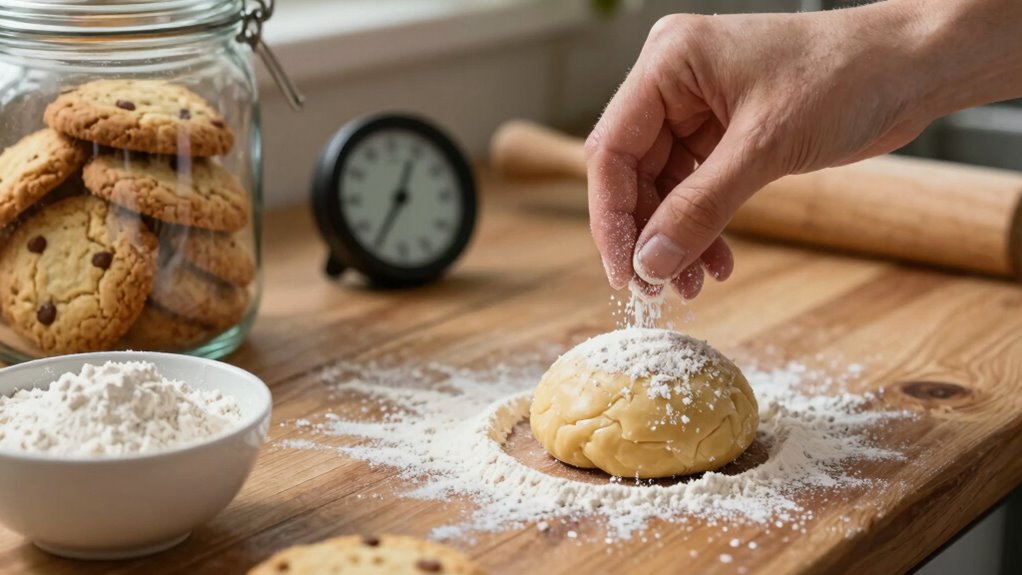
To adjust recipes for humidity, start by reducing the flour slightly—about 1-2 tablespoons per cup—since more moisture makes dough wetter. Use airtight containers to store dry ingredients and keep them dry, or dry out damp ingredients in a low oven if needed. When measuring, spoon sugar into cups rather than scooping to prevent clumping. Paying attention to ingredient behavior in different environments helps you achieve consistent cookies every time—learn more to master these tips.

Get baking supplies delivered free with Prime
- Fast, free delivery on millions of items
- Prime Video, Amazon Music and more included
- Member-only deals all year
Key Takeaways
- Reduce flour slightly (1-2 tablespoons per cup) to prevent overly soft or spread-out cookies in humid conditions.
- Store dry ingredients in airtight containers or use desiccants to keep them dry and prevent moisture absorption.
- Spoon sugar into measuring cups instead of scooping to avoid packing and clumping caused by humidity.
- Add a small amount of extra flour if cookie dough feels too loose or sticky due to high moisture levels.
- Dry damp ingredients by spreading on a baking sheet and low oven drying before use to maintain proper dough consistency.
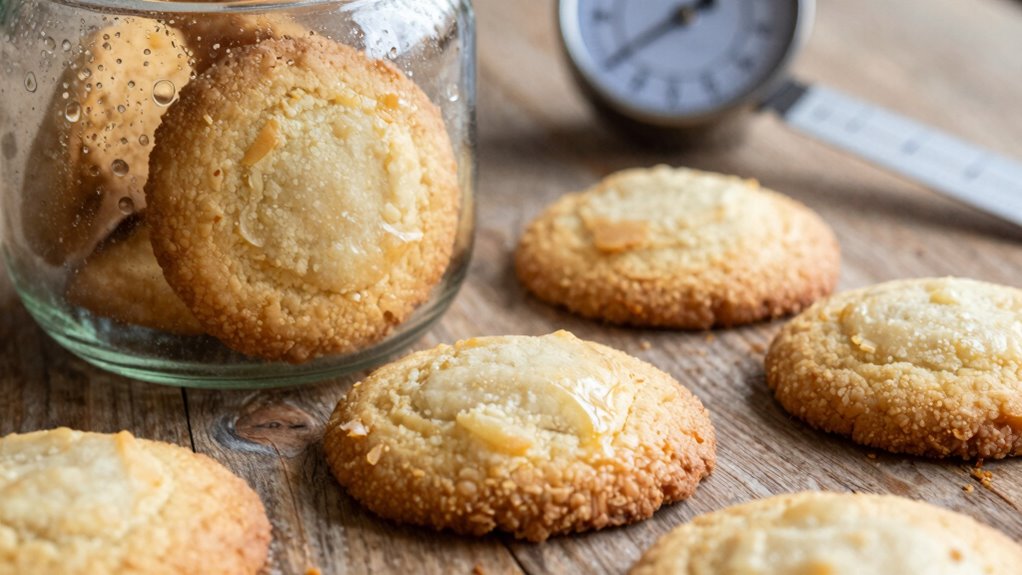
Humidity can considerably impact your baking and cooking results, especially when it comes to measuring ingredients. High moisture levels in the air can cause your doughs and batters to behave differently, making it essential to adapt your recipes accordingly. When baking cookies in humid conditions, you might notice that they spread too much or turn out softer than intended. To prevent this, you need to adjust your ingredient measurements and storage methods to account for the moisture in the environment.
Humidity can alter ingredient behavior, so adjust measurements and storage to ensure perfect baked goods every time.
One of the most effective ways to combat humidity‘s effects is by making thoughtful ingredient substitutions. For example, when working with flour, you might find that it absorbs more moisture from the air, leading to a dough that’s wetter than usual. To counteract this, reduce the amount of flour slightly—by about 1 to 2 tablespoons per cup—so your dough isn’t overly sticky. Conversely, in very humid conditions, you might need to add a little extra flour if your dough feels too loose. Similarly, when measuring sugar, be aware that humidity can cause it to clump and pack differently, so it’s best to spoon it into your measuring cup rather than scooping directly from the bag. This ensures more accurate measurements and consistent results.
Storage tips are equally important for maintaining ingredient quality in humid environments. Keep dry ingredients like flour, sugar, and baking powder in airtight containers to prevent them from absorbing excess moisture. Using vacuum-sealed bags or storage bins with tight-fitting lids can help keep humidity at bay. If you notice your flour or sugar has become slightly damp or clumpy, spread it out on a baking sheet and let it dry in a low oven for a few minutes, stirring occasionally. Additionally, store your baked cookies in airtight containers to keep them crisp and prevent them from becoming soft due to the surrounding humidity. Adding a small silica gel packet or a piece of bread in your container can help absorb excess moisture and keep your cookies fresh longer. Understanding how wild edible plants interact with their environment can also inform better storage and ingredient choices for baking.
Adjusting for humidity isn’t just about ingredient measurements; it’s also about understanding how your environment influences your baking. By making sensible ingredient substitutions and following proper storage tips, you can keep your baked goods consistently delicious, regardless of the weather outside. Practicing these adjustments will help you develop a better feel for how humidity affects your recipes, ultimately leading to more reliable and tasty results every time you bake cookies or other treats.
Frequently Asked Questions
How Can I Tell if My Dough Has Too Much Moisture?
You can tell if your dough has too much moisture by checking its moisture indicators—if it feels excessively sticky or overly soft, that’s a sign. The dough consistency should be firm enough to hold its shape without being greasy or overly wet. If it’s too moist, you might notice it spreading too much during baking or sticking excessively to your hands. Adjust by adding a little more flour until you reach the right consistency.
Should I Refrigerate Cookie Dough in High Humidity?
In high humidity, refrigerate your cookie dough to prevent it from turning into a sticky, unmanageable mess. This keeps the dough consistency just right and preserves the flavor, so your cookies bake perfectly. Without refrigeration, moisture can flood in like a tidal wave, ruining your batch. Chilling your dough helps it stay firm, manageable, and flavorful, giving you consistent, delicious cookies every time, even on the most humid days.
Can Humidity Affect Baking Time and Temperature?
Yes, humidity can influence baking time and temperature because it affects the moisture content in your ingredients. When it’s humid, dough and batter may require a slightly lower baking temperature or shorter baking time to prevent over-moistening or burning. Keep an eye on your baked goods, and consider adjusting your oven’s temperature or baking duration to ensure your cookies turn out perfect despite high humidity.
Is It Better to Use Alternative Sweeteners in Humid Climates?
Did you know that humidity can increase moisture absorption by up to 25%? In humid climates, using alternative sweeteners like stevia or erythritol can help because they absorb less moisture than traditional sugar. This helps prevent cookies from becoming overly sticky or spreading too much. So, switching to alternative sweeteners not only balances sweetness but also manages moisture, ensuring your baked goods stay perfect despite high humidity.
How Do I Store Baked Cookies to Keep Them Crisp?
To keep your baked cookies crisp, store them properly by placing them in an airtight container lined with a paper towel to absorb moisture. Avoid stacking cookies directly on each other; instead, layer them with parchment paper. Keep the container in a cool, dry place, and limit exposure to humidity. Proper cookie storage is key for crispness preservation, ensuring your cookies stay fresh and crunchy for longer.
Conclusion
Remember, adjusting recipes for humidity can make all the difference in your baked goods. Did you know that humidity can increase flour’s weight by up to 10%, affecting your dough’s consistency? By tweaking ingredients—like adding a little more flour or reducing liquids—you’ll achieve perfect cookies every time, no matter the weather. Stay attentive to your environment, and your treats will turn out just right, ensuring delicious results no matter the season.
Halloween Picks
halloween
As an affiliate, we earn on qualifying purchases.