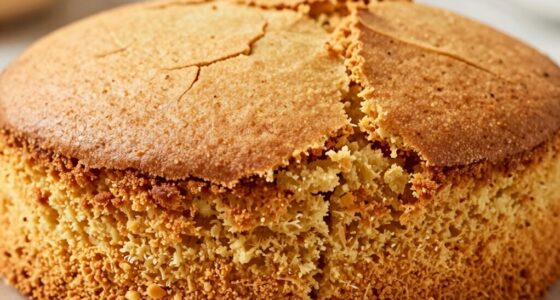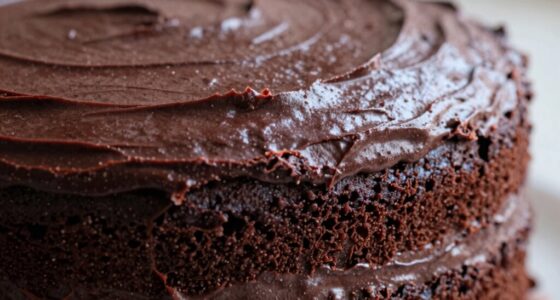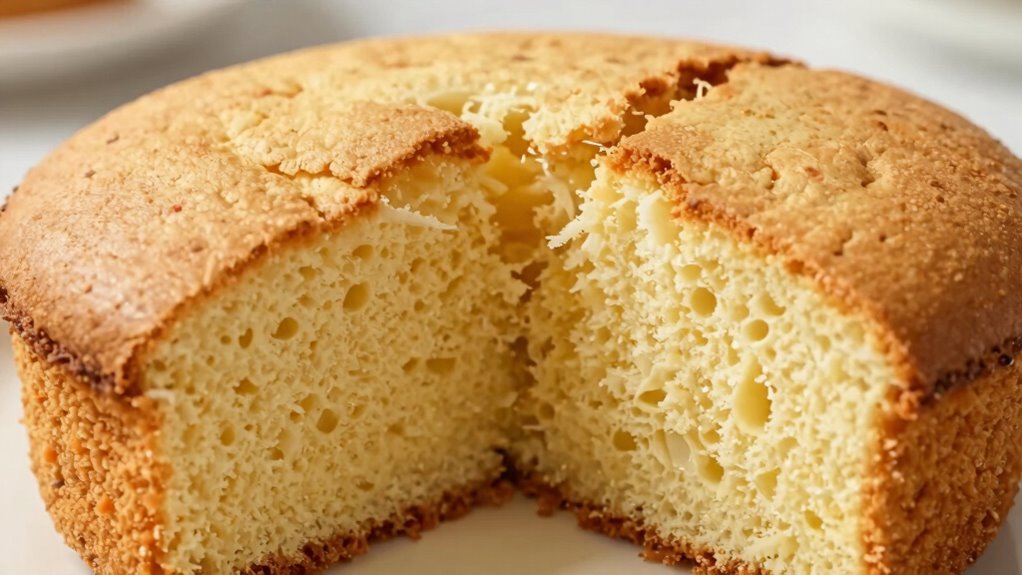
Cakes sink in the middle mainly because of uneven rising caused by improper mixing, incorrect oven temperature, or outdated ingredients. To fix it fast, verify you measure ingredients accurately, don’t overmix, and use fresh baking powder or soda. Check your oven’s temperature with a thermometer to prevent under or overheating. Proper leavening and temperature help your cake stay even, and more tips below can help you avoid sinking altogether.
Key Takeaways
- Ensure your oven is properly calibrated and at the correct temperature before baking.
- Use fresh, accurate ingredients and measure carefully to maintain proper batter consistency.
- Avoid overmixing the batter, which can lead to a dense texture that sinks during baking.
- Check that leavening agents are fresh and used in correct amounts to promote even rising.
- Allow the cake to cool gradually in the oven or on a wire rack to prevent sudden sinking.
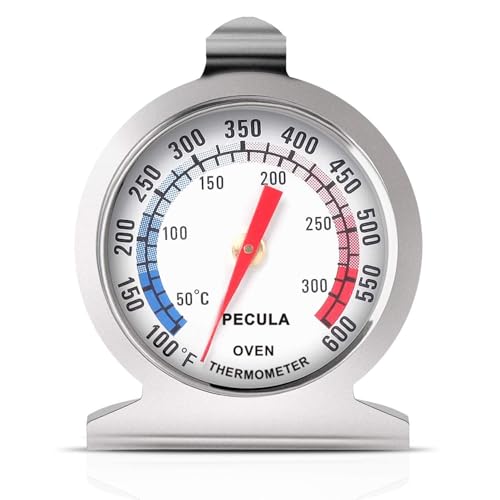
Stainless Steel Oven Thermometer 50-300°C/100-600°F, Analog Instant Read, Battery-Free Kitchen Cooking Thermometer, Hook & Stand Design Food Thermometer for Oven, Grill, Smoker, Fryer
Clear Dial Display: PECULA's analog oven thermometer delivers precise, instant readings from 50–300°C / 100–600°F. Its dial features…
As an affiliate, we earn on qualifying purchases.
As an affiliate, we earn on qualifying purchases.
What Causes Cakes to Sink in the Middle?
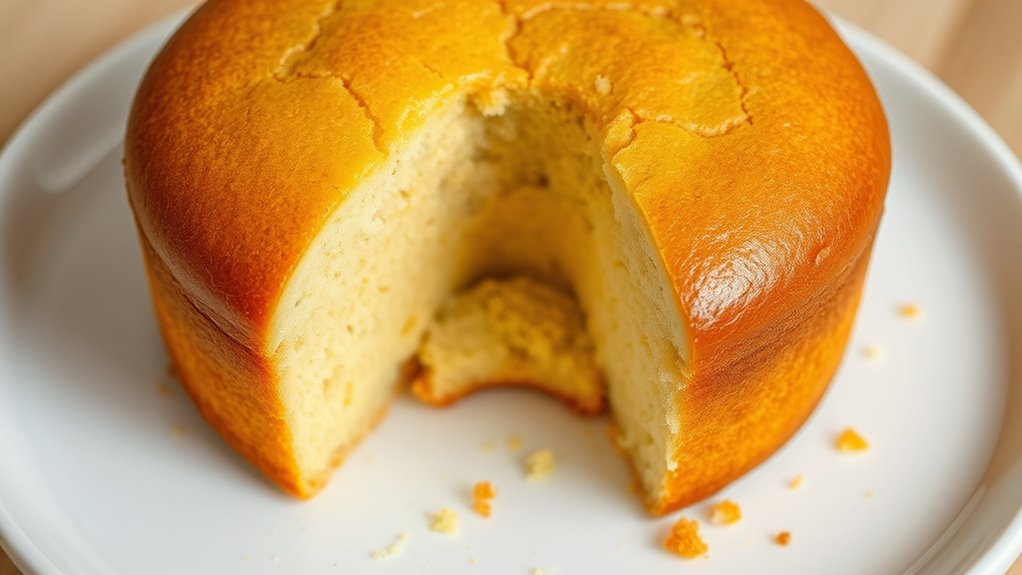
Cakes often sink in the middle because of uneven rising during baking. One common cause is cake density; if your batter is too dense, it won’t rise properly, leading to sinking. This often happens when ingredient quality is off—using old or low-quality flour or baking powder can compromise the batter’s ability to develop a good rise. Overmixing can also make the batter too heavy, increasing density and causing the center to collapse. Additionally, uneven heat distribution in your oven can prevent proper rising, but the primary culprits are dense batter and poor ingredient quality. To prevent sinking, ensure you use fresh, high-quality ingredients and mix your batter just enough to combine everything smoothly. This helps maintain the right cake density for a stable rise, and consistent oven temperatures are crucial for even baking. Properly measuring ingredients also plays a vital role in achieving a balanced batter and preventing sinking. Moreover, understanding how leavening agents work can help you adjust your recipe to achieve optimal rise and prevent the center from collapsing. Being aware of baking techniques such as proper oven placement and avoiding opening the oven door early can further help in ensuring even rising.

Amazon Grocery, Baking Powder, Double Acting, 8.1 Oz
One 8.1 ounce can of Double Acting Baking Powder
As an affiliate, we earn on qualifying purchases.
As an affiliate, we earn on qualifying purchases.
How to Mix Cake Batter for a Perfect Rise

The way you mix your cake batter plays a vital role in achieving a perfect rise and preventing sinking. Proper mixing techniques ensure the batter has the right consistency and incorporates ingredients evenly. To get this right:
- Mix wet and dry ingredients separately before combining gently to avoid overmixing.
- Use a folding method to keep air bubbles intact, maintaining lightness.
- Stop mixing as soon as the batter is smooth and just combined; overmixing develops gluten, leading to dense cakes.
- Pay attention to Free Floating techniques that help maintain the batter’s stability and prevent collapse during baking.
Maintaining the correct batter consistency is key—aim for a smooth, pourable texture that isn’t too runny or stiff. This balance helps create the lift needed for a well-risen cake and minimizes the risk of sinking in the middle.

Pwnllaf 13 Inch Danish Dough Whisk, 304 Stainless Steel Dough Whisk with Long Smooth Wooden Handle – Dutch Whisk Sourdough Bread Tools for Pizza, Pastry & Cake Batter Mixing Easy & Quick
【13 Inch 304 Stainless Steel Danish Dough Whisk】 – Danish whisk unique open-coil dual-loop heart-shaped flow design(stable and…
As an affiliate, we earn on qualifying purchases.
As an affiliate, we earn on qualifying purchases.
How to Check and Maintain Accurate Oven Temperature
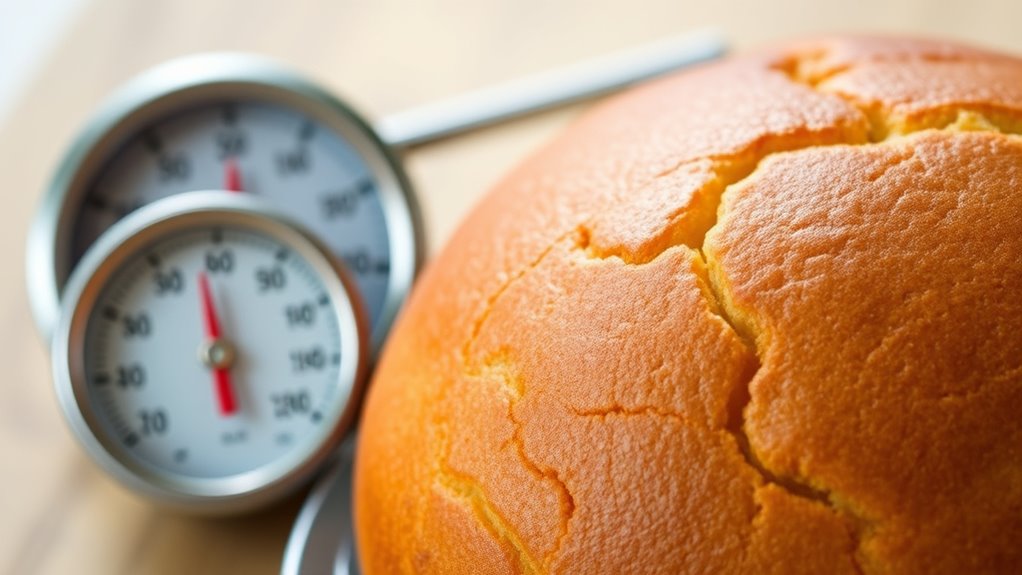
To guarantee your cake bakes evenly, you need an accurate oven temperature. Use an oven thermometer to verify the displayed temperature, and make sure to preheat thoroughly. If needed, calibrate your oven to keep it at the correct heat for perfect baking results. Regularly checking and maintaining your oven’s temperature accuracy can prevent uneven baking and sinking cakes.
Use an Oven Thermometer
An oven thermometer is essential for ensuring your oven temperature matches what’s set on the dial. Without it, you can’t trust your oven’s temperature accuracy, which is vital for baking perfect cakes. To check your oven’s accuracy, place the thermometer in the center of the oven and preheat. Then, compare the thermometer’s reading to your oven’s display. Here’s what to do next:
- Wait 10-15 minutes for the oven to fully heat.
- Record the thermometer’s temperature reading.
- Adjust your oven’s dial if the thermometer shows a different temperature.
Using an oven thermometer helps you catch temperature discrepancies early, ensuring your cake bakes evenly and preventing sinking in the middle. Accurate oven temperature is key to successful baking. Detecting passive voice can also improve clarity and engagement in your writing.
Preheat and Calibrate Properly
Since oven temperatures can vary from the setting on the dial, it’s crucial to preheat your oven thoroughly and calibrate it regularly. This helps ensure your baked goods cook evenly and prevents cakes from sinking in the middle. Use reliable baking tools like an oven thermometer to check the actual temperature, not just the dial. Proper calibration enhances oven safety by reducing the risk of overheating or underheating, which can compromise your cake’s rise. To calibrate, compare the oven thermometer reading with your oven’s dial, then adjust the thermostat if needed. Always preheat fully before baking, avoiding sudden temperature changes. Regular oven maintenance can further improve your oven’s performance and baking outcomes. Maintaining your oven’s temperature accuracy helps you achieve consistent results, saves time and ingredients, and keeps your baking safe and successful.

2PCS Cooling Racks for Cooking and Baking – 10" x 15"Heavy Duty Stainless Steel Wire Rack for Baking, Grilling, Roasting – Oven & Dishwasher Safe – Fits Jelly Roll Sheet Pan-Silver
QUALITY STAINLESS STEEL CONSTRUCTION: Made from food grade stainless steel instead of metal plating or coating, the grill…
As an affiliate, we earn on qualifying purchases.
As an affiliate, we earn on qualifying purchases.
Fast Fixes When Your Cake Sinks After Baking
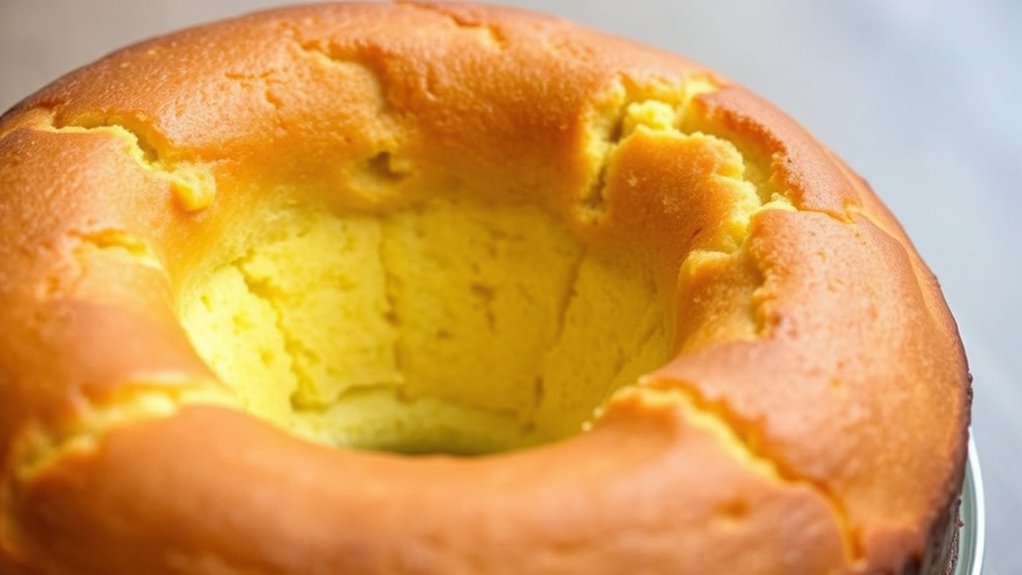
If your cake sinks after baking, start by checking your oven temperature to make certain it’s accurate. You might need to adjust your baking time or temperature to prevent overmixing or underbaking. These quick fixes can save your cake from collapsing and improve your results. Additionally, understanding baking fundamentals such as ingredient ratios and mixing techniques can help prevent sinking in the future. Ensuring proper oven calibration is essential for consistent baking outcomes. Paying attention to ingredient freshness can also impact the rise and texture of your cake, helping to avoid sinking. Proper mixing techniques ensure that air is evenly incorporated, which supports a stable rise. Regularly monitoring baking environment conditions can also help achieve more predictable results.
Check Oven Temperature
Sometimes, a cake sinks in the middle because the oven temperature isn’t set correctly. An inaccurate baking temperature can cause the batter to rise too quickly and then collapse. To fix this, check your oven’s calibration with an oven thermometer. Follow these steps:
- Place an oven thermometer in the center of the oven and preheat.
- Compare the displayed oven temperature with the thermometer’s reading.
- Adjust the oven’s temperature settings or calibration to match the correct baking temperature.
This ensures your oven heats evenly and accurately, preventing over- or under-baking. Proper oven calibration helps maintain a consistent baking temperature, reducing the risk of sinking cakes. Always verify your oven’s temperature before baking to ensure perfect results.
Adjust Baking Time
Even with a properly calibrated oven, your cake can still sink in the middle if it’s not baked for the right amount of time. To fix this, consider adjusting your baking time. If your cake sinks, it might be underbaked, so extend the baking duration slightly. Keep an eye on the edges; they should be golden and pulling away from the pan. Use oven temperature control wisely—if your oven runs hot, reduce the temperature slightly and bake a bit longer. Conversely, if it’s too cool, increase the temperature or bake a few extra minutes. Make small adjustments and test with a toothpick or cake tester. Proper baking time guarantees the cake sets evenly, preventing sinking caused by insufficient baking. Oven calibration can help ensure your oven heats accurately for consistent results.
Prevent Cake Sinking by Using the Right Leavening Agents
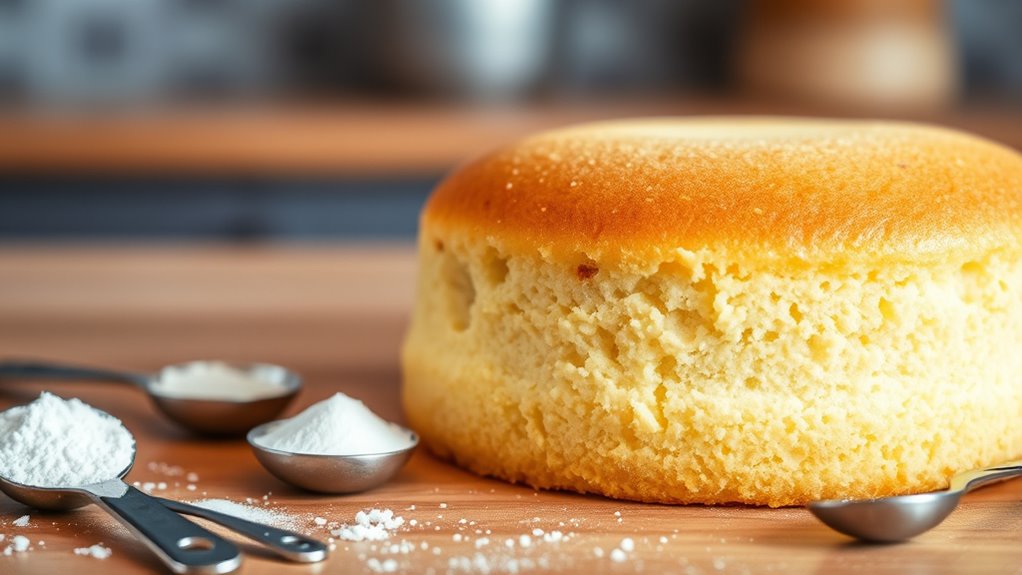
Using the right leavening agents is essential for preventing cakes from sinking in the middle. When your leavening balance is off, it can cause uneven rising and collapse. To get it right:
- Use the correct amount of baking powder or baking soda—too much causes over-expansion, too little leads to insufficient lift.
- Ensure your batter consistency is just right—if it’s too runny or too stiff, the leavening won’t work effectively.
- Mix ingredients thoroughly but not excessively, as overmixing can break down leavening bubbles, impacting rise.
Signs Your Oven Needs Calibration to Avoid Sinking Cakes

If your cakes consistently sink in the middle despite following the recipe, your oven might need calibration. Poor oven calibration can lead to inaccurate temperature readings, causing your baked goods to underbake or overbake. Signs your oven needs calibration include uneven baking results, such as edges browning too quickly while the center remains raw, or a cake that sinks despite proper leavening. To check temperature accuracy, use an oven thermometer; if the actual temperature differs from the dial setting, calibration is necessary. An uncalibrated oven won’t provide consistent heat, increasing the risk of sinking cakes. Regular calibration ensures your oven maintains the correct temperature, preventing common baking issues and helping your cakes turn out perfectly every time. Additionally, understanding your oven’s temperature distribution can help identify uneven heating patterns that contribute to sinking. Proper oven calibration is essential for maintaining consistent heat and achieving evenly baked cakes, especially in recipes that rely heavily on precise temperatures.
Frequently Asked Questions
Can Overmixing Cause a Cake to Sink in the Middle?
Yes, overmixing can cause a cake to sink in the middle. When you overmix, you alter the batter consistency by developing too much gluten, which weakens the structure. This mixing technique leads to excessive air incorporation and a batter that’s too thin, making the cake rise unevenly and sink. To avoid this, mix just until the ingredients are combined, maintaining a smooth but not overworked batter.
Does Opening the Oven Door Too Early Affect Cake Rising?
Yes, opening the oven door too early can affect your cake’s rise. When you open the oven door, it causes temperature fluctuations, which can cause the cake to collapse or sink in the middle. To prevent this, keep the oven door closed until the cake is almost done. This helps maintain a consistent temperature and makes sure your cake rises properly without collapsing.
What Role Does Humidity Play in Cake Sinking?
Humidity effects can secretly sabotage your cake’s rise, causing it to sink in the middle. When moisture levels are too high, excess humidity can weaken the structure, making it unable to support the batter as it bakes. This hidden moisture disrupts the balance needed for perfect rising. To prevent this, keep your ingredients and environment dry, and avoid baking on humid days. Your cake’s perfect rise depends on controlling moisture levels.
Can Using Expired Baking Powder Lead to Sinking Cakes?
Using expired baking powder can definitely cause your cake to sink. Over time, its baking chemical stability diminishes, reducing its leavening power. Even if stored properly within the recommended shelf life, the effectiveness decreases, leading to less rise and a denser center. Always check the expiration date and freshness of your baking powder to guarantee proper leavening and a perfectly risen cake.
How Does Altitude Affect Cake Rise and Sinking?
At high altitudes, baking effects like rapid rising and collapsing can cause your cake to sink. For example, if you bake in Denver, you might notice your cake rises quickly but then sinks. To counteract altitude effects, you should make baking adjustments like reducing leavening agents and increasing liquids. These tweaks help your cake rise evenly and prevent sinking, ensuring perfect results even at higher elevations.
Conclusion
Now you know why cakes sink and how to prevent it. While a perfectly risen cake feels like a small victory, a sunken one reminds you that even tiny mistakes matter. By mastering your batter and oven, you turn potential disasters into baking triumphs. So, embrace the process—because in baking, as in life, sometimes the best surprises come from fixing what’s fallen apart. Your next perfect cake is just a few tweaks away.