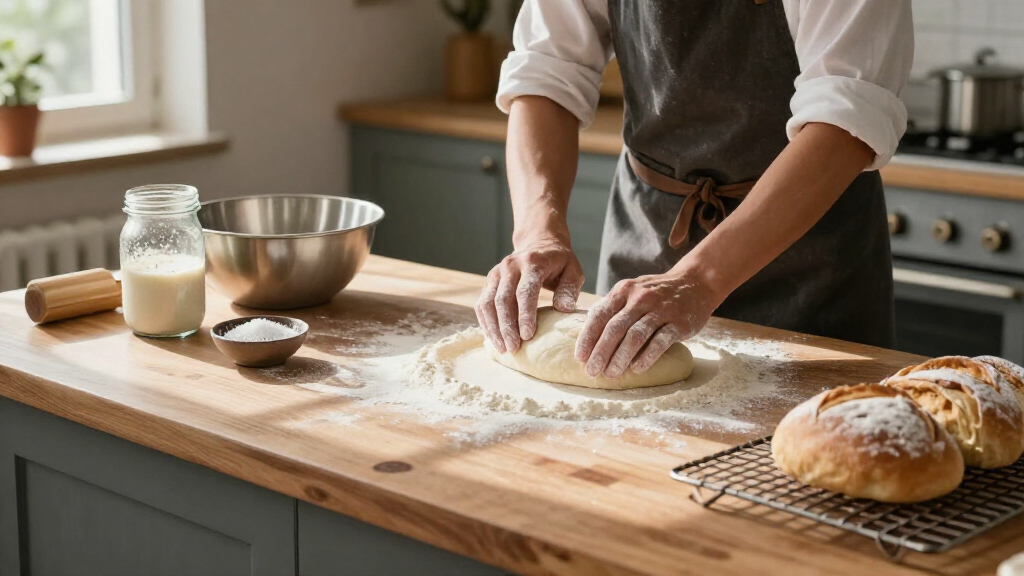
This checklist is for home bread bakers who want to gather the tools that support mixing, shaping, scoring, baking, and cooling. It includes specific picks where provided, along with practical advice for choosing each item.

Get baking supplies delivered free with Prime
- Fast, free delivery on millions of items
- Prime Video, Amazon Music and more included
- Member-only deals all year
The sections follow the bread-making workflow: measure ingredients, prepare dough, proof and score it, bake, then cool. The dough scraper section offers guidance without naming a product.
Use the checklist to match each tool to the bread you plan to bake and the space you have. Check dimensions, capacity, and compatibility before choosing, and treat the listed picks as starting points for your own needs.
Digital kitchen scale
A scale helps you measure ingredients by weight, which can make a bread recipe easier to repeat. The listed pick is the OXO Good Grips 11-Pound Digital Kitchen Food Scale. Before choosing a scale, check that its display is easy to read with a bowl or mixing vessel on the platform, and consider whether the platform will accommodate the containers you usually use.
A common buying mistake is focusing only on the maximum capacity. For bread baking, also consider how the scale handles smaller quantities and whether its controls are convenient while your hands are busy. Check the scale’s dimensions against your counter and storage space, and confirm that its units suit the recipes you follow. If you often weigh ingredients directly into a mixing bowl, make sure the scale can be used comfortably that way. A steady surface and a clear view of the reading matter more than extra features you are unlikely to use.
What to look for:
- A readable display when a bowl is on the platform
- Capacity that suits your mixing bowls and batches
- Units that match the recipes you use
- A platform that fits your usual containers
- Controls that are easy to use while baking
OXO Good Grips 11-Pound Digital Kitchen Food Scale

This digital kitchen scale weighs food up to 11 pounds in 1/8-ounce or 1-gram increments. Its pull-out display helps prevent shadows from large bowls, while the tare function, remaining-capacity indicator, and easy-to-clean platform make food preparation convenient.
Pros:
- Pull-out display helps prevent shadowing from large containers
- Measures in both US and metric increments
- Tare function supports weighing ingredients in a container
- Thin profile and easy-to-clean platform simplify storage and cleanup
Cons:
- Maximum capacity is limited to 11 pounds
- Requires four AAA batteries
Best for: Bakers who want to weigh ingredients for repeatable recipes
Not ideal for: Bakers whose usual containers do not fit the platform
Bottom line: Check the platform and display with your regular mixing bowl before choosing this scale.
Proofing basket
A proofing basket supports shaped dough during its final rise. The listed pick is the Gejoy 25 Sets Bread Proofing Baskets Kit with Cloth Liners and Scraper. Before choosing a kit, check the basket shapes and sizes against the loaves you plan to make, along with the space available in your refrigerator or proofing area.
A common mistake is choosing a basket based on quantity alone. A large set may include shapes or pieces you rarely need, while a basket that is too small can constrain the loaf you want to proof. Check what the kit includes and whether its cloth liners fit the baskets you intend to use. Think about cleaning and storage, too: liners and baskets need a place to dry and a spot where they can stay accessible. If you already have a scraper, review the kit contents so you know whether that included piece adds useful coverage for your setup. Match the basket’s size to your dough and recipe rather than assuming one size works for every loaf.
What to look for:
- Basket shapes suited to your planned loaves
- Dimensions that fit your proofing and storage space
- Cloth liners sized for the included baskets
- Kit contents that fill gaps in your setup
- A basket size matched to your dough portions
Gejoy 25 Sets Bread Proofing Baskets Kit with Cloth Liners and Scrapers, 10 Inch
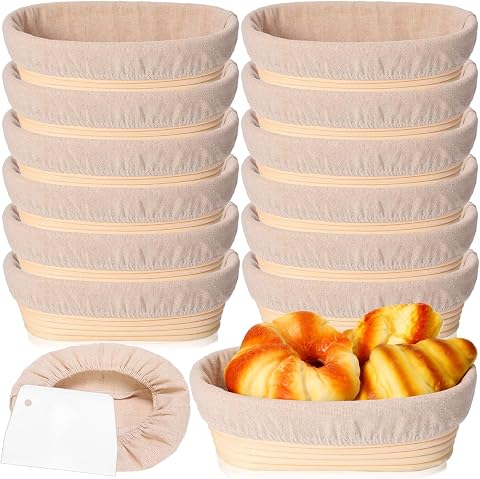
This comprehensive bread proofing kit includes 25 oval baskets, cloth liners, and plastic scrapers, ideal for making various types of bread such as sourdough and French bread at home. Made from natural rattan, these durable and easy-to-clean proofing bowls help create crispy, artisan-style bread.
Pros:
- Complete set with baskets, liners, and scrapers for versatile baking
- Made from natural, odor-free rattan for safe use
- Easy to clean and maintain, suitable for home and commercial use
- Great gift for baking enthusiasts
Cons:
- Natural rattan smell may be strong initially
- Baskets may require seasoning or preparation before first use
- Size may be too small for larger bread recipes
Best for: Bakers who want baskets and liners together
Not ideal for: Bakers who need only one specific basket size
Bottom line: Review the basket sizes and included pieces against your loaf plans before choosing the kit.
Dough scraper
A dough scraper helps gather dough from a work surface and can support portioning and shaping. Since there is no product pick for this slot, choose one by considering the tasks you want it to handle and the surface where you bake.
Common buying mistakes include choosing a scraper that is awkward to grip or too large for a compact counter. Check its width, handle comfort, and edge shape, and consider whether you prefer a flexible tool for gathering dough or a firmer one for dividing it. The scraper should be easy to control without forcing your wrist into an uncomfortable angle. If your work surface is delicate, look for guidance on whether the material is suitable for it. Think about cleanup and storage as well: a simple shape that rinses easily and fits in a drawer may be more useful than a tool that adds features you do not need. Match the scraper to your dough habits and the space you have available.
What to look for:
- A width suited to your counter and dough portions
- A comfortable grip for gathering and dividing
- An edge appropriate for your work surface
- A shape that is easy to clean
- A size that stores conveniently
Bread lame
A bread lame is used to score shaped dough before baking. The listed pick is the Bread Lame – Patented 2-in-1 Stainless Scoring Tool. Consider how it feels in your hand and whether its design suits the scoring motions you want to make on your usual loaf shapes.
A common mistake is choosing a scoring tool without considering control and handling. Check the tool’s dimensions, grip, and how its blade is held or changed, using the product details to understand its design. Think about storage and safe handling between uses, too. A tool that feels unwieldy can make it harder to guide a steady cut, especially if you are new to scoring. If you bake several loaf shapes, consider whether the form of the tool feels manageable for each one. Make sure you understand the care instructions and any blade-related requirements before bringing it into your routine. The right fit is one you can handle confidently and store safely.
What to look for:
- A grip that feels controlled in your hand
- Dimensions suited to your scoring style
- Clear details on blade handling and replacement
- Safe storage between uses
- Care instructions that fit your routine
Bread Lame – Patented 2-in-1 Stainless Scoring Tool

The Bread Lame features a patented 2‑in‑1 design that lets you switch between curved and straight blades in seconds, eliminating the need for two separate tools. Made from solid stainless steel, it is dishwasher safe, rust‑proof, and includes a secure thumb‑screw blade lock, six replacement blades, and a protective case.
Pros:
- Patented 2‑in‑1 convertible blade saves space and offers versatility.
- Solid stainless steel construction is durable, rust‑proof, and dishwasher safe.
- Secure non‑slip thumb screw lock ensures precise scoring every time.
Cons:
- Only one size available; may not suit all hand sizes or preferences.
Best for: Bakers who want a dedicated tool for scoring dough
Not ideal for: Bakers who are uncomfortable handling a bladed tool
Bottom line: Review the grip, blade handling, and storage details before choosing this lame.
Dutch oven
A Dutch oven is a covered pot used here as the bread-baking vessel. The listed pick is the Le Creuset Enameled Cast Iron Signature Deep Round Oven, 6.5 qt., Sea. Check its capacity and shape against the loaves you bake, and make sure the pot fits your oven and the place where you plan to store it.
A common buying mistake is considering capacity without checking the full dimensions or weight. Confirm that the pot fits your oven with enough room to handle it, and check that you can lift and move it safely when it is hot. Review the manufacturer’s care and use guidance, including any temperature limits and whether the lid and knob are suitable for your intended baking. The pot’s round shape may suit some recipes and loaf forms better than others, so compare it with your planned dough size. Also think about where it will cool and how you will handle it with oven mitts. Fit, safe handling, and compatibility with your oven are key checks before committing to a baking vessel.
What to look for:
- Capacity suited to your planned loaf size
- Dimensions that fit your oven
- Weight you can handle safely when hot
- Care and temperature guidance for baking
- A shape compatible with your recipes
Le Creuset Enameled Cast Iron Signature Deep Round Oven, 6.5 qt., Sea Salt

This enameled cast iron Dutch oven offers excellent heat distribution and retention, making it ideal for a variety of cooking tasks. It features a durable, easy-to-clean enamel interior and a tight-fitting lid that circulates steam, with ergonomic handles for easy lifting.
Pros:
- Excellent heat retention and distribution
- Durable, easy-to-clean enamel surface
- Compatible with all cooktops and oven-safe
Cons:
- Heavy weight may be difficult to handle
- Price may be high for some budgets
Best for: Bakers whose oven and loaf plans suit this pot
Not ideal for: Bakers who need a lighter or more compact vessel
Bottom line: Confirm the oven fit, handling weight, and care guidance before choosing this Dutch oven.
Cooling rack
A cooling rack gives a baked loaf a place to rest after it comes out of the oven. The listed pick is the Ultra Cuisine Cooling & Baking Rack Set – 8.5” x 12”, Set of 2. Check the rack dimensions against your loaves and available counter space, and consider whether two racks suit the way you bake.
A common mistake is overlooking the rack’s footprint. Measure the area where you expect to cool bread and the storage space where the racks will live between uses. Check the product details for material, care, and compatibility with your oven if you plan to use the racks for baking as well as cooling. The listed dimensions may work differently for a small loaf than for a broad one, so compare them with your usual bake. Also consider how easily you can move a hot rack and whether its construction feels stable on your counter. A set of two can be useful when you need more rack space, but first make sure you have room to use and store both.
What to look for:
- Rack dimensions suited to your loaves
- Enough counter space for cooling
- Storage space for both racks
- Care details for the listed material
- Oven compatibility if using them for baking
Ultra Cuisine Cooling & Baking Rack Set – 8.5” x 12”, Set of 2

This set includes two heavy-duty stainless steel cooling racks designed to fit quarter sheet pans. They are oven-safe up to 575°F, dishwasher safe, and ideal for baking, roasting, and cooling.
Pros:
- Heavy-duty stainless steel construction for durability
- Oven-safe up to 575°F, versatile for baking and roasting
- Dishwasher safe for easy cleaning
- Includes a free recipe ebook
Cons:
- Pan not included, may require separate purchase
- Limited to quarter sheet pan sizes
- No non-stick coating, may require greasing
Best for: Bakers who can use and store two compact racks
Not ideal for: Bakers who need a larger single cooling surface
Bottom line: Measure your counter, storage area, and loaf size against the rack dimensions.
If you are building a setup gradually, start with the tools that address your next baking step: measuring ingredients, handling dough, proofing, or baking. Consider your current recipe needs and workspace before adding a basket kit, scoring tool, or extra rack.
You do not need to assemble every tool at once. Choose pieces that fit your oven, counter, loaf sizes, and routine, then add to your setup as your baking habits grow. A thoughtful checklist can help make each new addition useful from the start.