TL;DR

Get baking supplies delivered free with Prime
- Fast, free delivery on millions of items
- Prime Video, Amazon Music and more included
- Member-only deals all year
Food Safety News published guidance on Oct. 9, 2026, for handling food and kitchen items after hurricane flooding or prolonged power outages. It says not to taste food to judge its safety, to discard items that may have contacted floodwater, and to use bottled or properly treated water.
Food Safety News published hurricane-recovery guidance on Oct. 9 advising people to discard food and some kitchen items that may have contacted floodwater, and to take precautions after prolonged power outages. The advice matters because flooding can contaminate food and utensils, while loss of refrigeration can leave food unsafe even when it looks or smells acceptable.
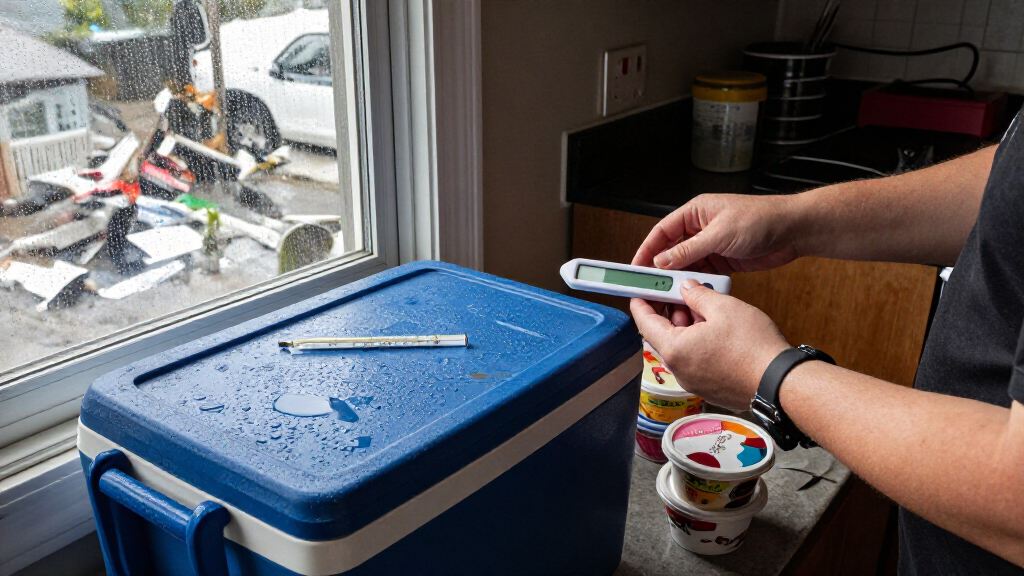
The report says never taste food to determine whether it is safe. If a refrigerator and freezer have been without power for several days, it advises throwing away the food inside and consulting official guidance on what to keep or discard after an outage. The report does not provide outage-specific time or temperature thresholds in its text.
For drinking, use bottled beverages that have not contacted floodwater, or follow public-health instructions for boiling or disinfecting water if bottled water is unavailable. Screw caps do not make bottles waterproof. Discard beverages that may have been exposed to floodwater, and discard food not held in a waterproof container if contact is possible. Screw-cap, snap-lid, pull-top and crimped-cap packages are not considered waterproof.
The report says undamaged, commercially prepared food in all-metal cans or retort pouches may be salvageable if handled according to the U.S. Department of Agriculture Food Safety and Inspection Service’s severe-storm guidance. It also recommends washing metal pans, utensils and ceramic dishes with hot, soapy water, rinsing them, then sanitizing them by boiling in clean water or soaking for 15 minutes in a mixture of one tablespoon of unscented liquid chlorine bleach per gallon of drinking water.
Protecting Food and Drinking Water
Floodwater can carry contaminants into homes and onto food-contact surfaces, while a prolonged outage can compromise refrigerated and frozen food. Appearance and taste are not reliable safety checks, so following discard guidance can help prevent illness during a period when residents may already face disrupted services and limited access to supplies.
The advice also distinguishes between items that may be cleaned and sanitized and those that should be discarded. Wooden cutting boards, plastic utensils, baby-bottle nipples and pacifiers that may have touched floodwater cannot be saved, according to the report. Replacing these items avoids relying on cleaning methods that the guidance does not consider sufficient for them.
food safety floodwater contamination test kits
As an affiliate, we earn on qualifying purchases.
As an affiliate, we earn on qualifying purchases.
Guidance for Storm Outages
The Food Safety News report addresses two common conditions after hurricanes: flooding and extended power loss. Its recommendations refer readers to separate USDA Food Safety and Inspection Service guidance for severe storms and hurricanes, including for assessing commercially packaged foods that may be salvageable.
For questions, the report lists the USDA Meat and Poultry Hotline at 1-888-674-6854, available Monday through Friday from 10 a.m. to 6 p.m. Eastern time in English or Spanish. It also lists email support at MPHotline@usda.gov and live chat through Ask USDA.
“Never taste a food to determine its safety.”
— Food Safety News
waterproof food storage containers
As an affiliate, we earn on qualifying purchases.
As an affiliate, we earn on qualifying purchases.
Local Conditions and Outage Details
The source report does not identify a particular hurricane, affected community or current emergency order. It provides general recovery advice, not a local assessment of water quality or an item-by-item outage chart in the text provided. Whether tap water is safe, which areas are under boil-water notices, and how long individual appliances were without power depend on local conditions and must be checked with relevant authorities.
The report also refers readers to a separate USDA chart and food-safety guide without reproducing all of their criteria. People should consult those resources or contact the hotline for details rather than infer that a package or food is safe based only on its appearance.
food-grade sanitizing solution for kitchen utensils
As an affiliate, we earn on qualifying purchases.
As an affiliate, we earn on qualifying purchases.
Check Local Safety Advisories
Residents recovering from a storm should follow current instructions from local health and emergency officials about drinking water, cleanup and food disposal, then use the USDA severe-storm guidance for specific salvage decisions. If uncertainty remains, the USDA Meat and Poultry Hotline, email service or Ask USDA live chat listed in the report can provide further guidance.
As recovery continues, local authorities may update water advisories and other public-safety instructions. Those updates, along with the condition of each home’s food and appliances, will determine what can be safely kept; the general recommendations do not replace local notices.
emergency water purification tablets
As an affiliate, we earn on qualifying purchases.
As an affiliate, we earn on qualifying purchases.
Key Questions
Can I taste food to check whether it is safe after a storm?
No. Food Safety News says never taste food to determine its safety. Follow official discard guidance instead.
What should I do with food after several days without power?
The report advises throwing away food in the refrigerator and freezer after several days without power. It refers readers to official outage guidance for details on what should be discarded.
Can I drink a sealed bottle that may have touched floodwater?
The report says to discard it. Screw caps are not waterproof, so a closed bottle or other beverage container may still have been contaminated.
Which kitchen items should be discarded after floodwater contact?
Discard wooden cutting boards, plastic utensils, baby-bottle nipples and pacifiers that may have contacted floodwater. Metal pans, utensils and ceramic dishes can be washed and sanitized as directed in the report.
Where can I ask about storm-related food safety?
The report lists the USDA Meat and Poultry Hotline at 1-888-674-6854, Monday through Friday from 10 a.m. to 6 p.m. Eastern time, in English or Spanish. It also lists MPHotline@usda.gov and Ask USDA live chat.
Source: rss
Fall Picks
fall essentials
As an affiliate, we earn on qualifying purchases.