
To revive stale bread without making it tough, start by lightly moistening the crust with water using your fingers or a brush. Wrap the bread loosely in foil and bake at 350°F for about 10-15 minutes, checking often. For even better results, steam the bread briefly over boiling water to bring back softness without sogginess. Mastering these simple techniques can turn stale bread into fresh-tasting slices—keep exploring for more tips to perfect the process.

Get baking supplies delivered free with Prime
- Fast, free delivery on millions of items
- Prime Video, Amazon Music and more included
- Member-only deals all year
Key Takeaways
- Lightly dampen the bread’s surface with water before reheating to restore moisture.
- Wrap the bread loosely in foil and warm it at 350°F for 10-15 minutes.
- Use steaming briefly over boiling water to rehydrate without over-softening.
- Avoid overbaking, which can make the bread tough; check softness early.
- Store bread properly in a paper bag or bread box to prevent staleness from forming.

Stale bread doesn’t have to go to waste. Instead of tossing it out, you can revive it and enjoy it again. The key lies in understanding proper bread storage and using effective baking techniques to restore its moisture and texture. When bread sits out, it begins to lose its freshness because the moisture inside evaporates, making it tough and dry. To prevent this, store your bread properly—preferably in a paper bag or bread box that allows some airflow, which helps maintain the crust while keeping the interior from drying out completely. Avoid plastic bags unless you plan to consume the bread within a day or two, as they trap moisture and can lead to mold.
Revive stale bread by proper storage and gentle reheating techniques to restore freshness and texture.
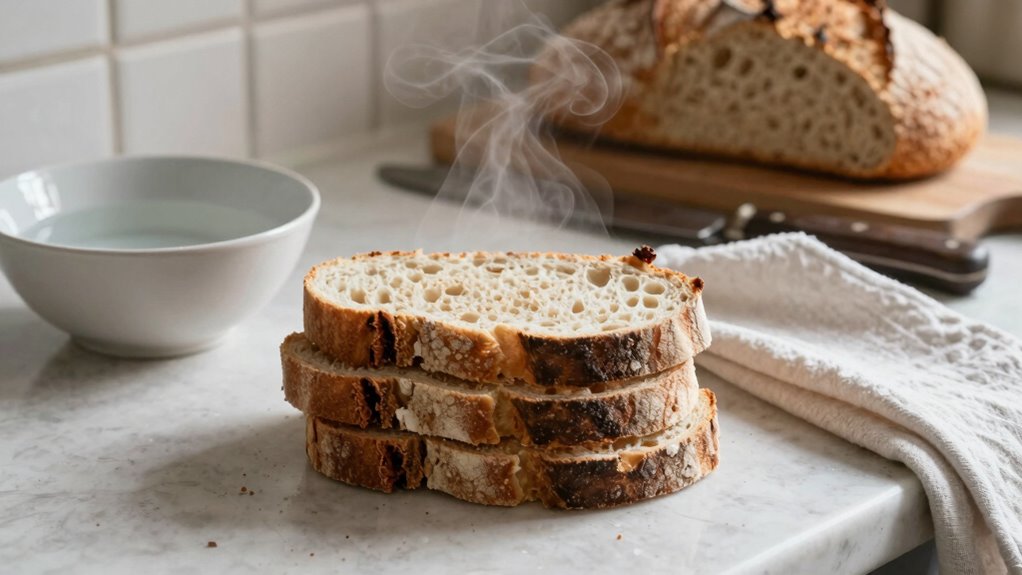
When you’re ready to revive your stale bread, the most straightforward method involves reheating it with moisture. Preheat your oven to around 350°F (175°C). Lightly dampen the bread’s surface with a little water—using your fingers or a brush—and then wrap it loosely in foil. The moisture from the water combined with the gentle heat helps rehydrate the bread, softening the interior without making the crust soggy. Place the wrapped bread on a baking sheet and bake for about 10-15 minutes. Check the bread after 10 minutes; if it feels soft and fresh, you’re all set. If it’s still a bit tough, give it a few more minutes, but avoid overbaking, which can dry it out again.
Another effective baking technique involves steaming the bread directly. You can do this by placing a heatproof bowl of water in the oven alongside the bread or by steaming it briefly over boiling water if you’re working on a stovetop. This method injects moisture into the bread, restoring its softness. Keep a close eye to prevent the bread from becoming soggy; the goal is to add just enough moisture to revive its texture. Proper contrast ratio in your oven or steaming process can make a significant difference in achieving the ideal softness.
Incorporating these bread storage tips and baking techniques can help you make the most of your bread. Rather than letting stale bread go to waste, use these simple methods to bring it back to life, keeping it tender and delicious. With a little attention to how you store and reheat your bread, you’ll find it’s easy to enjoy fresh-tasting bread even days after buying or baking it. Remember, patience and gentle reheating are your best tools in avoiding tough, rubbery results and ensuring your revived bread is as tempting as when it was fresh.
bread warming and reviving tools
As an affiliate, we earn on qualifying purchases.
As an affiliate, we earn on qualifying purchases.
Frequently Asked Questions
Can Freezing Stale Bread Help Revive It Later?
Freezing stale bread can help preserve it, but it doesn’t revive it directly. Use freezing techniques to lock in freshness and prevent further staling. When you’re ready to use it, thaw the bread at room temperature or reheat it in the oven. Proper bread preservation through freezing keeps your bread usable longer, but to restore its texture, a quick reheat or steaming is necessary after thawing.
What’s the Best Way to Store Bread to Prevent Staleness?
To keep bread fresh longer, store it properly by using bread storage techniques like keeping it in a paper bag or bread box rather than plastic, which can trap moisture and cause mold. For ultimate freshness preservation, avoid refrigeration, as it speeds up staling. Instead, store your bread at room temperature in a cool, dry place and consume it within a few days for the best taste and texture.
How Long Should I Reheat Bread for Optimal Freshness?
Ever wonder how long to reheat bread for that just-baked taste? To preserve bread moisture and avoid toughness, reheat it for about 10-15 seconds in the microwave or 10 minutes in a preheated oven at 350°F. Keep a close eye on reheating time because too long can dry it out. Adjust based on your bread’s size and thickness, ensuring it’s warm and soft without losing freshness.
Is It Safe to Microwave Bread Multiple Times?
Microwave safety is generally fine when reheating bread multiple times, but you should be cautious. Each time you microwave, the bread’s moisture can decrease, making it dry and tough. To prevent this, cover the bread with a damp paper towel to retain moisture. Avoid microwaving for too long, and try to reheat only as needed. Repeated microwaving can degrade the bread’s texture, so it’s best to use it promptly.
Can Adding Moisture Improve the Texture of Reheated Bread?
Yes, adding moisture can improve the texture of reheated bread by promoting moisture absorption. You can lightly spritz the bread with water or wrap it in a damp cloth before reheating. This method helps lock in humidity, making the bread softer and more palatable. Just be careful not to add too much moisture, or the bread may turn soggy instead of achieving a desirable texture improvement.
As an affiliate, we earn on qualifying purchases.
Conclusion
Next time your bread turns stale, remember it’s not quite done for. With a quick splash of water and a warm oven, you can breathe new life into it—like turning a forgotten relic into fresh bakery goodness. Imagine soft, warm slices emerging from the oven, contrasting sharply with the dry, crumbly loaf you once saw. Stale bread isn’t the end; it’s just a brief pause, waiting for your touch to restore its former glory.
As an affiliate, we earn on qualifying purchases.
As an affiliate, we earn on qualifying purchases.
Halloween Picks
halloween
As an affiliate, we earn on qualifying purchases.