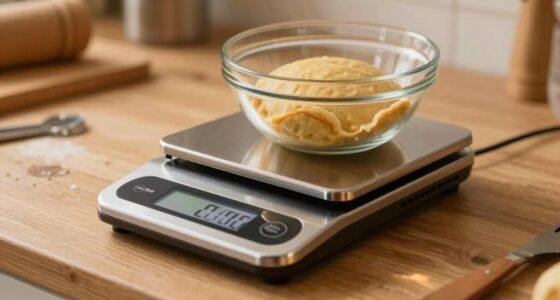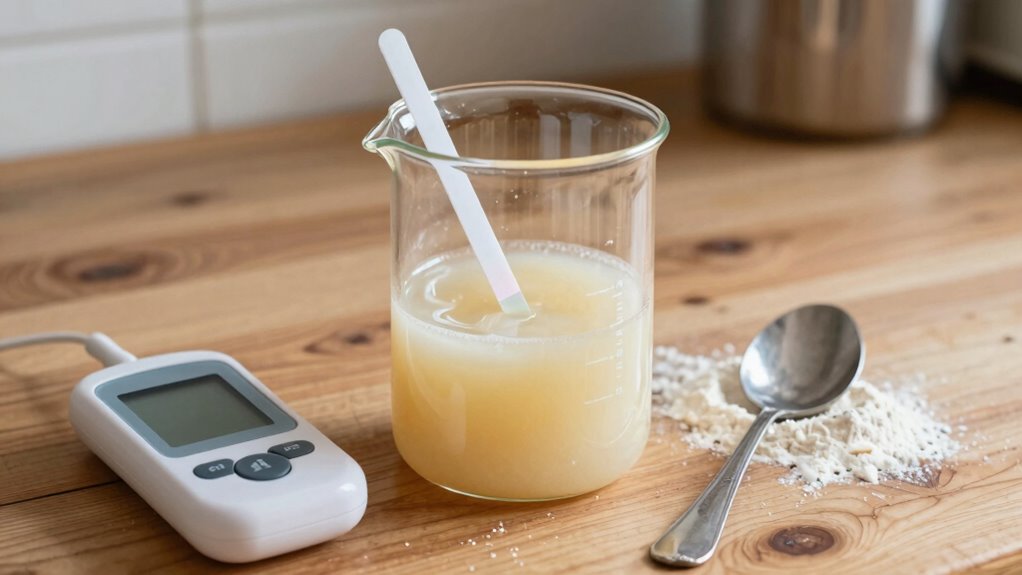

Tracking pH in sourdough helps you monitor fermentation progress and control flavor development. It shows acidity levels and indicates how far fermentation has advanced. However, pH alone doesn’t capture the full complexity of microbial activity or flavor nuances, and small inaccuracies can mislead you. Temperature, hydration, and other factors also influence fermentation. To get the best results, combine pH data with sensory cues—if you want to learn more, keep exploring how to refine your approach.
Key Takeaways
- pH tracking indicates fermentation progress but doesn’t fully reflect flavor or microbial activity complexity.
- Accurate pH measurement requires careful calibration; small errors can lead to misleading conclusions.
- pH levels alone can’t distinguish between different microbial interactions or predict final dough characteristics.
- External factors like temperature, hydration, and flour type influence fermentation beyond pH readings.
- Combining pH data with sensory evaluation provides a more comprehensive understanding of dough development.
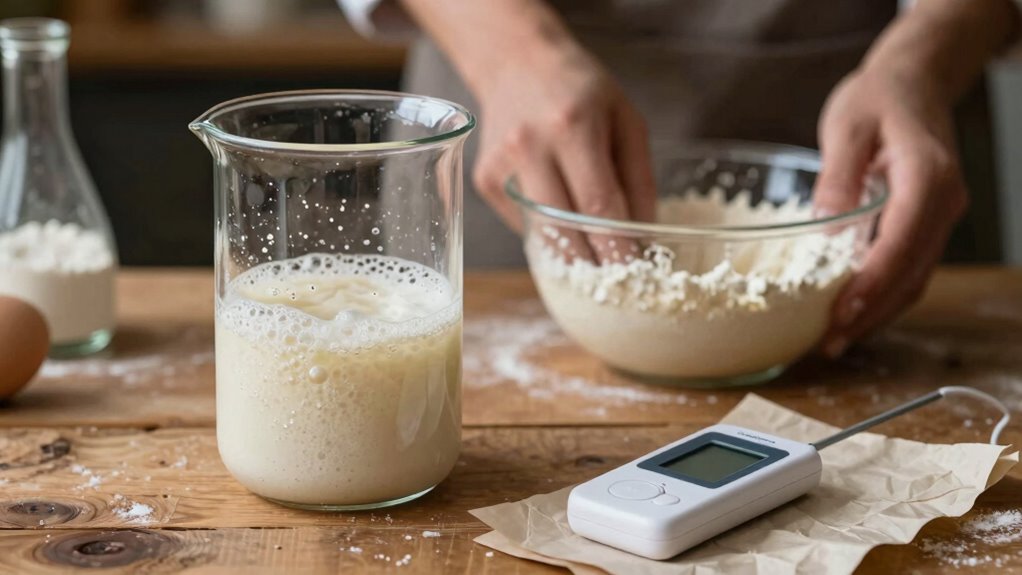
Understanding the pH levels in sourdough is essential for controlling fermentation and guaranteeing a consistent, flavorful loaf. Monitoring pH helps you grasp how the dough’s acidity develops over time, directly impacting fermentation flavor and dough acidity. As fermentation progresses, the pH drops, indicating increased acidity, which influences the tangy taste and texture of your bread. By tracking pH, you gain insight into the fermentation stage, allowing you to fine-tune fermentation times and achieve your desired flavor profile. This can be especially useful when experimenting with different flours or adjusting fermentation conditions to enhance the sourness or manage fermentation speed.
Monitoring pH reveals fermentation progress, helping you craft consistent, flavorful sourdough with optimal tang and texture.
However, while pH tracking offers valuable information, it comes with limitations. The pH scale measures hydrogen ion concentration, giving a snapshot of dough acidity, but it doesn’t tell the whole story of fermentation complexity. Fermentation flavor results from a combination of factors, including the types of bacteria and yeasts present, their activity levels, and how they interact, which pH alone can’t fully capture. For instance, two doughs might have identical pH readings but differ considerably in flavor due to variations in microbial populations or fermentation conditions. This means pH is just one piece of the puzzle and shouldn’t be relied upon solely to judge fermentation progress or flavor development.
Additionally, pH meters require careful calibration and maintenance to ensure accurate readings. Small inaccuracies can lead you astray, especially if you’re trying to match specific pH targets for consistent bread quality. The process of measuring pH can also be disruptive if you’re trying to maintain a steady fermentation environment, as it often involves opening the dough or starter, which can alter temperature and humidity levels. Plus, pH measurements don’t account for other critical factors like temperature, hydration level, or flour type, all of which influence fermentation flavor and dough acidity. Recognizing that microbial activity is a key driver of fermentation complexity can help bakers better interpret pH data in context. Moreover, understanding fermentation dynamics can lead to more nuanced baking techniques that go beyond simple pH measurements. Incorporating sensory evaluation, such as smell and visual cues, alongside pH data can provide a more comprehensive understanding of fermentation progress.
Furthermore, temperature regulation plays a vital role in fermentation, influencing microbial activity and pH changes, and should be considered alongside pH measurements for a more complete picture. In essence, pH tracking is a helpful tool that provides a quantifiable measure of dough acidity, but it shouldn’t replace traditional sensory evaluation and understanding of fermentation dynamics. Use it as a guide, but combine it with your experience, smell, and visual cues to develop a well-rounded approach to sourdough baking. Recognizing its limitations ensures you don’t become overly dependent on pH readings alone, and instead, you use them to complement your broader understanding of fermentation and bread quality.
As an affiliate, we earn on qualifying purchases.
Frequently Asked Questions
How Does pH Affect Sourdough Flavor?
You’ll notice that pH affects sourdough flavor by influencing fermentation dynamics and flavor development. As the pH drops, the dough becomes more acidic, creating tangy, complex flavors. Monitoring pH helps you understand fermentation progress and control acidity, which impacts taste. However, pH isn’t the only factor, so while tracking it offers insights, it’s limited in capturing the full flavor spectrum created during fermentation.
Can pH Testing Improve Sourdough Consistency?
Yes, pH testing can improve your sourdough consistency by helping you monitor pH variations during fermentation. By maintaining stable pH levels, you guarantee predictable sourdough flavor and texture. Regular testing allows you to adjust fermentation times or ingredients, reducing variability. While pH tracking isn’t a complete solution, it’s a useful tool to enhance sourdough stability and achieve more reliable baking results.
What Equipment Is Best for Measuring pH?
You should use a digital pH meter for measuring pH accurately. Look for one with easy calibration options to guarantee consistent readings, especially with regular pH calibration before each use. These meters often have waterproof probes, making them suitable for wet sourdough environments. Investing in a reliable digital pH meter helps you monitor fermentation better, though proper calibration and maintenance are key for precise and consistent results.
How Often Should I Check pH During Fermentation?
You should check the pH during fermentation every few hours, especially in the early stages. This helps you monitor fermentation timing and guarantee pH stability, which influences the sourdough’s flavor and texture. Frequent checks allow you to adjust fermentation conditions if needed, but avoid overdoing it to prevent disrupting the process. As fermentation progresses, you can reduce the frequency of pH measurements to maintain consistent results.
Does pH Influence Sourdough Shelf Life?
Yes, pH influences sourdough’s shelf life by affecting pH stability, which helps maintain the bread. A stable, slightly acidic environment curbs harmful microbial growth, keeping your sourdough fresher longer. When pH drops too low or rises too high, it signals imbalance, risking spoilage. Monitoring pH levels guarantees proper microbial growth, maintaining the delicate balance that extends shelf life and keeps your sourdough flavorful and safe.
sourdough fermentation pH tester
As an affiliate, we earn on qualifying purchases.
As an affiliate, we earn on qualifying purchases.
Conclusion
So, while tracking pH in sourdough might seem like the ultimate secret weapon, it’s really just a snapshot in a bubbling, complex dance. You’re trying to tame a wild, living organism with a simple number, like solving a puzzle with only one piece. In the end, you might have a perfect pH reading, but miss the subtle flavors and textures that come from the unpredictable chaos of fermentation. Ironically, that’s what makes sourdough truly special.
kitchen pH meter for bread making
As an affiliate, we earn on qualifying purchases.
As an affiliate, we earn on qualifying purchases.
professional pH meter for sourdough
As an affiliate, we earn on qualifying purchases.
As an affiliate, we earn on qualifying purchases.