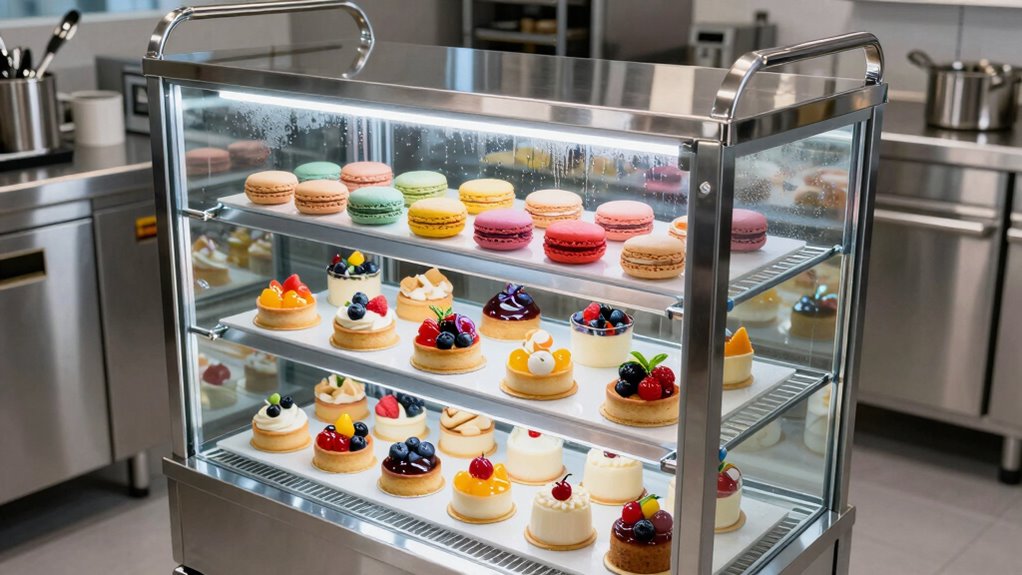

To move desserts from the kitchen to the cold display effectively, use proper tools like spatulas or cake lifters to handle each item gently. Cover or wrap fragile desserts for safe transport, and minimize handling outside the cold environment to preserve freshness. Make certain you’re using a pre-chilled display and maintain a steady temperature with regular checks. Proper spacing and careful placement prevent damage and temperature fluctuations. Keep these tips in mind to guarantee the best presentation—more expert advice awaits you.

Get baking supplies delivered free with Prime
- Fast, free delivery on millions of items
- Prime Video, Amazon Music and more included
- Member-only deals all year
Key Takeaways
- Use appropriate tools like spatulas, tongs, or cake lifters for gentle handling and minimal damage.
- Cover or wrap desserts during transit to maintain temperature and prevent contamination.
- Transfer desserts quickly and carefully to reduce handling time outside the cold environment.
- Ensure proper spacing and placement in the display to promote even cold air circulation.
- Regularly monitor and adjust the display temperature to keep desserts fresh and visually appealing.
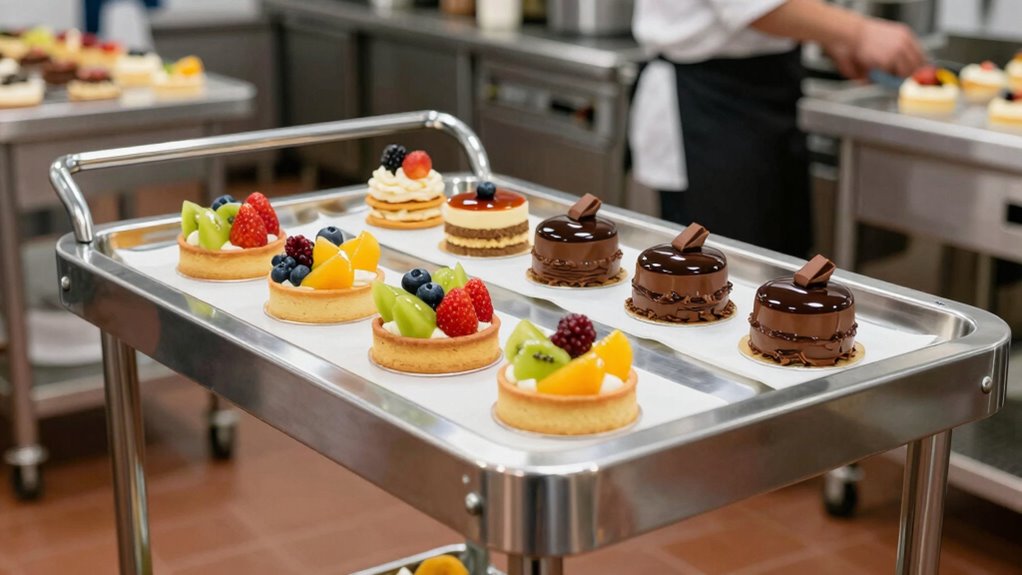
Moving desserts from the kitchen to the cold display might seem straightforward, but doing it properly is vital to preserve their quality and appearance. The way you handle this transfer directly impacts dessert presentation, which can make or break a customer’s experience. To achieve a flawless display, you need to focus on temperature control throughout the process. Sudden temperature changes can cause desserts to melt, crack, or lose their visual appeal. Hence, managing temperature carefully guarantees that your desserts stay fresh and attractive from the moment they leave the kitchen to when they’re showcased.
Start by making sure your cold display is pre-chilled to the ideal temperature for the specific desserts you’re moving. Different desserts require different conditions; for example, delicate mousses or whipped creams need colder, more stable environments, while fruit-based or gelatin desserts might tolerate slightly higher temperatures. Knowing the exact needs of each dessert allows you to prevent unwanted melting or sweating, which can ruin their presentation.
Pre-chill the display to suit each dessert’s specific temperature needs for optimal presentation.
When transferring desserts, avoid rushing. Use proper tools like spatulas, tongs, or cake lifters to gently move each item. This minimizes the risk of damaging the structure or smudging the decorative elements. If you’re handling layered or fragile desserts, consider using containers or covers to protect their appearance during transit. Always keep desserts covered or wrapped during transport if they need to be moved over a longer distance. This helps maintain consistent temperature and prevents exposure to warm air or humidity, which can compromise their integrity.
Timing is also essential. Don’t leave desserts out of the cold display for longer than necessary. Prolonged exposure to warmer air can lead to melting and a decline in dessert presentation quality. Once in the display, arrange desserts with care, ensuring they aren’t overcrowded, which can cause uneven temperature distribution or accidental damage. Proper spacing allows cold air to circulate evenly, maintaining the ideal temperature and preventing any part of the display from warming.
Finally, monitor the temperature regularly. Use a reliable thermometer to make sure the display stays within the perfect range. Adjust the refrigeration settings if needed, especially during busy hours when door openings can cause temperature fluctuations. By maintaining consistent temperature control, you keep desserts looking fresh and appealing longer, preserving their visual impact and ensuring customer satisfaction. Moving desserts properly isn’t just about efficiency; it’s a vital step in delivering an impeccable dessert presentation that delights every guest. Proper temperature control plays a crucial role in maintaining dessert quality from start to finish.
As an affiliate, we earn on qualifying purchases.
Frequently Asked Questions
What Equipment Ensures Optimal Dessert Transfer?
You should use insulated containers to keep desserts at the right temperature during transfer, preventing spoilage. Pair these with reliable temperature monitoring devices to guarantee ideal cold conditions are maintained throughout the process. This combo helps you avoid temperature fluctuations, preserves dessert quality, and maintains food safety standards. By actively monitoring and using insulated equipment, you ensure your desserts arrive fresh, appealing, and ready for display without risking quality or safety.
How Long Can Desserts Stay at Room Temperature?
At room temperature, desserts generally stay safe for up to two hours, but ambient temperature plays an essential role in dessert preservation. If it’s hot or humid, your desserts spoil faster, risking bacteria growth and texture loss. Cooler room temperatures extend freshness slightly, but it’s best to transfer desserts into refrigeration within this window. Always prioritize prompt cooling to maintain quality, safety, and flavor, especially for delicate treats.
Are There Specific Transport Methods for Fragile Desserts?
Yes, you should use specialized dessert packaging and transport insulation for fragile desserts. Secure each item carefully to prevent movement, and choose packaging that cushions and protects delicate surfaces. Insulated carriers help maintain the right temperature and prevent condensation or heat damage during transit. By combining proper packaging and insulation, you guarantee your fragile desserts arrive intact, looking appealing and tasting fresh, no matter how far you’re transporting them.
How Do Temperature Fluctuations Affect Dessert Quality?
Temperature fluctuations are like a rollercoaster ride for your desserts, risking their quality. When temperatures aren’t stable, it can cause melting, crystallization, or spoilage, severely impacting dessert preservation. Maintaining temperature stability guarantees your desserts stay fresh, glossy, and appealing. Sudden changes can compromise texture and flavor, so keep your display environment consistent. Proper temperature control is essential for delivering high-quality desserts that impress every time.
What Are the Best Practices for Cleaning Transfer Tools?
You should thoroughly clean transfer tools after each use to maintain presentation aesthetics and ingredient freshness. Use warm, soapy water and a scrub brush to remove residues, then rinse well. For added sanitation, consider a food-safe sanitizer. Make certain tools are completely dry before next use to prevent rust and contamination. Proper cleaning preserves dessert quality, keeps visuals appealing, and guarantees the freshest ingredients are showcased in your cold display.
As an affiliate, we earn on qualifying purchases.
Conclusion
By mastering the best techniques to move desserts smoothly from kitchen to display, you guarantee every treat stays fresh and appealing, delighting your customers. Did you know that improper handling can lead to up to 30% of desserts being wasted due to spoilage or damage? Don’t let that happen on your watch. With a little care and the right methods, you can minimize waste and maximize satisfaction—making every dessert a perfect ending to your customers’ experience.
cold display thermometer for desserts
As an affiliate, we earn on qualifying purchases.
As an affiliate, we earn on qualifying purchases.
pre-chilled dessert display case
As an affiliate, we earn on qualifying purchases.
As an affiliate, we earn on qualifying purchases.
Halloween Picks
halloween
As an affiliate, we earn on qualifying purchases.